

If you're thinking about paying for a coffee, a taxi, or a new laptop with Bitcoin in Moscow, stop right there. The short answer is no. While you can legally own digital assets, using them to buy goods or services inside the country is a fast track to some very expensive legal trouble.
The Russian government has drawn a very sharp line between owning crypto and spending it. Think of it like a piece of gold: you can keep it in a safe, trade it for another asset, or hold it as an investment, but you can't walk into a store and hand over a gold nugget to pay for groceries. In Russia, the only Russian ruble is the official legal tender used for all domestic transactions. Using anything else as a payment method is strictly prohibited by law.
The High Cost of Breaking the Rules
For a while, the rules were on the books, but the enforcement was a bit blurry. That ends in 2026. The authorities are clamping down on "shadow transactions" with a new set of heavy fines. If you're caught using cryptocurrency for domestic payments, the penalties are designed to hurt.
For an individual, a violation can cost between 100,000 and 200,000 rubles. For a business, the hit is much harder, with fines ranging from 700,000 to 1 million rubles. But it's not just about the cash penalty; the government will also confiscate any cryptocurrency used in the illegal payment. Essentially, you lose the money you were trying to spend and get hit with a massive fine on top of it.
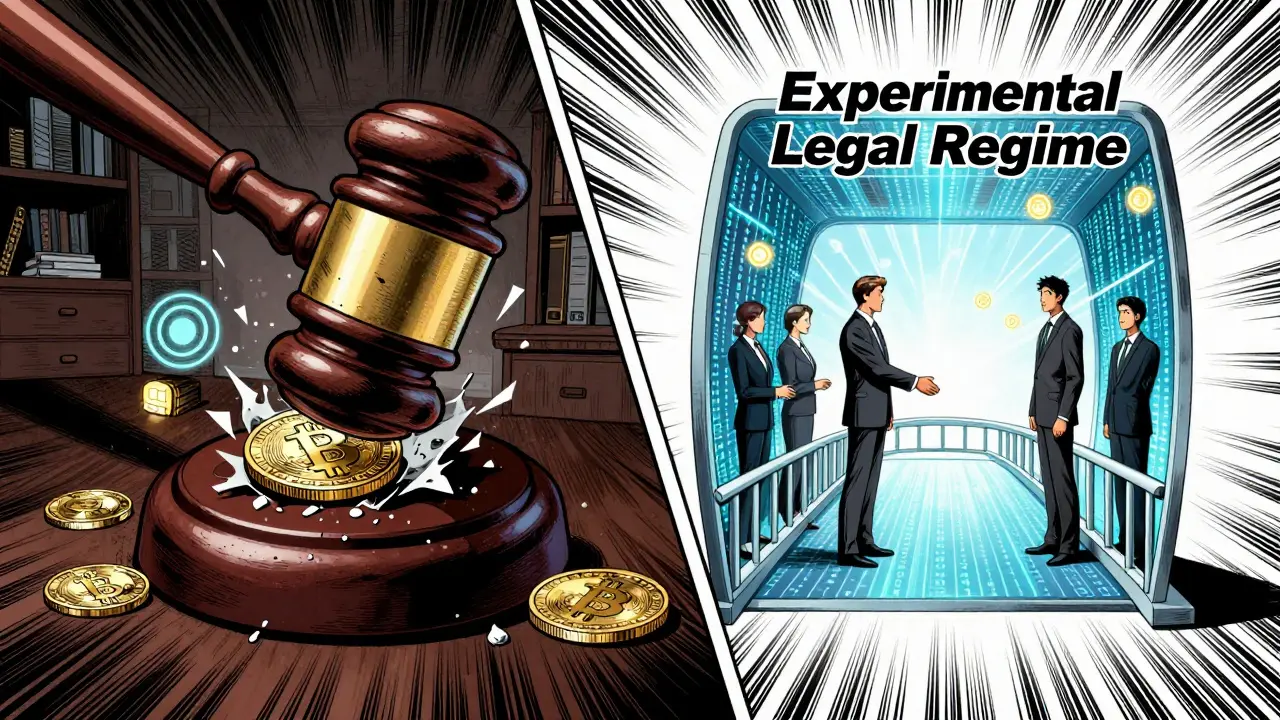
The Loophole: Experimental Legal Regimes
You might hear reports about Russian companies using crypto and wonder why they aren't in jail. The secret is the Experimental Legal Regime (or ELR), which is a specialized regulatory sandbox that allows specific commercial entities to use digital assets for international settlements.
Here is the catch: the ELR is not for the average person. It is specifically designed to help Russian companies bypass Western sanctions and settle trades with foreign partners. While the Central Bank of Russia hates the idea of crypto competing with the ruble internally, the government recognizes that crypto is a vital tool for survival in global trade when traditional banking channels are blocked.
| Activity | Domestic (Inside Russia) | International (Cross-border) |
|---|---|---|
| Buying Goods/Services | ❌ Prohibited | ✅ Allowed (under ELR for companies) |
| Holding Assets | ✅ Legal | ✅ Legal |
| Trading/Exchanging | ✅ Legal (Foreign Platforms) | ✅ Legal |
| Legal Tender Status | Only Ruble | Digital Assets (Conditional) |
Dealing with the Taxman
Owning crypto is legal, but the Federal Tax Service of Russia definitely wants their cut. If you make money from your digital assets, you have to report it. This isn't just about selling a coin for a profit; the tax net is cast very wide.
You are required to file your crypto-related income by April 30th and pay the tax by July 15th. The authorities track a variety of activities, including:
- Spot trading and exchange profits.
- Mining rewards and staking yields.
- Airdrops and lending returns.
- The sale of NFTs (Non-Fungible Tokens).
Be warned: the government is using automated systems to find undisclosed holdings. If you've ignored your taxes on a large scale-specifically transactions totaling 45 million rubles or more-you aren't just looking at a fine. You could face forced labor or imprisonment for up to five years. Even small mistakes can trigger a 50,000 ruble fine and steep penalties on the unpaid tax amount.
Where do Russians get their Crypto?
Since there are no licensed centralized local exchanges, most Russians have to use foreign platforms to buy and sell. This has created a strange paradox: Russia has a massive amount of crypto wealth-estimated at over $40 billion-but the local infrastructure for it is almost non-existent. This reliance on foreign platforms is one reason why Russia's position in the Global Adoption Index has slipped recently.
Despite the risks, the demand is huge. In 2025, crypto-facilitated trade reached 1 trillion rubles. Most of this happens in the "grey area" of cross-border settlements, where businesses use digital assets to keep their supply chains moving despite sanctions.

The Future: Will it Ever Be Legal?
There is a tug-of-war happening inside the Russian government. On one side, the Central Bank wants a total ban to protect the ruble. On the other, figures like Ivan Chebeskov from the Treasury argue that a national strategy for digital assets could actually grow the economy.
For now, the trend is "strict at home, flexible abroad." The government is doubling down on stopping crypto from becoming a domestic currency while simultaneously exploring how it can be used to fight financial isolation on the world stage.
Can I be arrested for owning Bitcoin in Russia?
No, owning cryptocurrency is not illegal in Russia. You can hold it as an investment or a digital asset. However, you can face severe legal penalties if you use that Bitcoin to pay for a product or service within Russia, or if you fail to report the income from it to the tax authorities.
What happens if I use crypto to pay for something in a Russian shop?
As of 2026, you risk heavy fines. Individuals can be fined between 100,000 and 200,000 rubles, and the cryptocurrency used for the transaction will be confiscated by the state. For businesses, the fines are even higher, reaching up to 1 million rubles.
Do I have to pay tax on mining in Russia?
Yes. While mining activities are exempt from VAT, the economic benefits (the coins you earn) are considered income and are subject to income tax. You must convert the value to rubles at the official exchange rate for reporting purposes.
What is the Experimental Legal Regime (ELR)?
The ELR is a legal "sandbox" that allows a limited number of qualified companies to use cryptocurrency for international settlements. This is specifically intended to bypass sanctions and is not available for general consumer use or domestic payments.
When are the crypto tax deadlines in Russia?
You must file your cryptocurrency-related income reports by April 30th for the previous year, and the actual tax payments must be completed by July 15th.
Next Steps for Users
If you are a foreign traveler visiting Russia, stick to the ruble for all your spending. Don't attempt to negotiate crypto payments with local vendors, as you are putting both yourself and the merchant at risk of heavy fines. If you are a Russian resident, ensure your record-keeping is meticulous; the shift toward automated detection by the tax office means that "forgetting" to report a trade is no longer a viable strategy. For those in B2B trade, look into the specific requirements for the Experimental Legal Regime to see if your business qualifies for legal cross-border settlements.








Emma Pease-Byron
April 7, 2026 AT 22:12How quaint that anyone still thinks a 'regulatory sandbox' is anything other than a convenient legal fiction for the elite to bypass the very laws they impose on the peasantry.
Arlen Medina
April 8, 2026 AT 02:40Typical Russia trying to control everything while they're practically begging for a way to trade with the world using the same tech they ban for their own people!
Sharhonda Walker
April 9, 2026 AT 10:04Just a heads up if youre useing a foreign exchange make sure you have a way to pull your funds out if things get weird because the laws there change overnight
Alexandra Lance
April 9, 2026 AT 14:36Oh honey, the 'sandbox' is just a fancy word for 'we're watching you' 🙄
It's so obvious they're just tracking the flow of capital to see who's actually loyal to the regime while the rest of us are just pawns in their little game 🕵️♀️💰
Lauren Gilbert
April 10, 2026 AT 22:54It's interesting to consider how the tension between a centralized monetary authority and the decentralized nature of blockchain reflects a larger human struggle for autonomy versus stability, where the state fears any tool that could potentially liberate the individual from financial surveillance even if it means sacrificing a bit of economic innovation in the short term.
Sonya Bowen
April 11, 2026 AT 08:04Focus on record-keeping. Use a dedicated ledger.
Suvoranjan Mukherjee
April 12, 2026 AT 19:19The ELR is basically a high-level API for state-sanctioned arbitrage! 🚀 It's a fascinating way to maintain liquidity and manage cross-border settlements when the SWIFT system is a no-go zone. Truly a wild implementation of fiscal policy!
Bruce Micciulla Agency
April 13, 2026 AT 20:06the inefficiency of this framework is staggering considering the capital flight potential when you restrict domestic utility while leaving the back door open for institutional players who can actually hedge their risks properly across borders without the ruble acting as a choke point for every single microtransaction which is just basic economics if you actually bother to look at the volatility curves
Hugo Lopez
April 15, 2026 AT 05:32I hope everyone stays safe while navigating these rules! 😊 It's definitely a tricky situation, but staying informed is the best way to avoid trouble. 🌈
Siddharth Bhandari
April 15, 2026 AT 07:03For those using foreign platforms, please double-check the KYC requirements, as some exchanges may restrict accounts based on residency or source of funds during this crackdown.
Krystal Moore
April 16, 2026 AT 00:15It is absolutely disgusting that they can just seize your assets and then fine you on top of it! Like, where is the justice in that? It's just state-sponsored theft at this point!
JERRY ORTEGA
April 17, 2026 AT 08:15just keep your keys offline and dont try to be a hero with p2p deals in a cafe man its not worth the risk
shubhu patel
April 18, 2026 AT 10:29I can see why the government is worried about the ruble's stability, especially with so much global volatility, and it's only natural that they want to protect their local economy from a sudden crash if everyone shifted to digital assets too quickly without a proper safety net in place.
June Coleman
April 20, 2026 AT 01:08Sure, because nothing says 'economic growth' like threatening people with forced labor for forgetting to report some Bitcoin. Great plan! 🙄
Emily 2231
April 20, 2026 AT 11:35The automated systems are merely the first step in a total digital panopticon designed to erode the last vestiges of financial privacy for the masses while the elites maintain their clandestine networks
Robert Coskrey
April 22, 2026 AT 04:00I agree with the assessment that meticulous record-keeping is essential!!! It is the only way to ensure compliance!!!
vijendra pal
April 23, 2026 AT 23:15Everyone knows the ELR is just for a few buddies of the govt 😂 its a joke man!! just use a cold wallet and stay quiet 🤫
david head
April 23, 2026 AT 23:59totally agree with keeping it in cold storage 🧊🚀
Patty Levino
April 24, 2026 AT 14:08If you're feeling overwhelmed by the tax dates, maybe try a simple spreadsheet to track your trades per month so you aren't rushing in April.
alex rodea
April 24, 2026 AT 15:47You can do this! Just be careful and follow the rules!
Taylor Meadows
April 26, 2026 AT 05:47You all cling to these digital tokens as a salvation, but you're just trading one master for another, and the taxman is the only one who truly wins in the end.
Manisha Sharma
April 27, 2026 AT 02:17These western laws are so weak compared to the strength of a real nation state managing its own currency, we in india understand the importance of sovereignty over these fake coins that have no real value anyway lol
Brooke Herold
April 27, 2026 AT 03:53It's a shame that such a vibrant tech community has to operate in the shadows.