

ELR Eligibility Calculator
Check ELR Requirements
Determine if your business qualifies for Russia's Experimental Legal Regime to accept crypto for international trade
Can a business in Russia legally accept Bitcoin or Ethereum as payment? The short answer is: no - unless you’re one of a tiny handful of giant, state-connected companies with tens of millions in capital and a government-approved compliance setup. For 99.8% of Russian businesses, accepting cryptocurrency for goods or services inside Russia is illegal and carries serious consequences.
Domestic Crypto Payments Are Banned - Here’s Why
The Bank of Russia has been crystal clear since 2021: cryptocurrency is not legal tender. It can’t be used to pay for coffee, groceries, or software licenses within Russia. This isn’t a gray area. It’s a hard rule. If you’re a small shop in Kazan, a tech startup in Yekaterinburg, or even a mid-sized distributor in Novosibirsk, and you start accepting Bitcoin to pay your suppliers or get paid by customers - your bank accounts will freeze. That’s not a rumor. It happened in June 2025 to TechnoPoint, a Moscow electronics retailer that accepted Bitcoin payments. Their accounts were locked for 45 days. No warning. No grace period. Just silence from the banks until they proved they’d stopped. The law behind this is Federal Law No. 259-FZ on Digital Financial Assets, passed in 2020 and updated through 2025. The Central Bank’s stance is simple: crypto must not compete with the ruble. First Deputy Governor Vladimir Chistyukhin said it outright in October 2025: “All crypto transactions between Russian residents outside the Experimental Legal Regime should carry criminal penalties.” That’s not a threat. It’s policy. Even advertising that you accept crypto can get you fined. Under Article 15.25 of the Administrative Offenses Code, amended in July 2025, businesses can be slapped with fines between 50,000 and 300,000 rubles ($620-$3,700) just for putting “We accept Bitcoin” on their website or social media. That’s why you rarely see it. Most businesses don’t risk it.The One Legal Loophole: International Trade
But here’s the twist. While you can’t accept crypto to sell a laptop to someone in St. Petersburg, you can accept it to sell oil, gas, or metals to a buyer in India, Turkey, or China. That’s thanks to a 2024 amendment to Federal Law No. 115-FZ. Russia’s government didn’t change its mind about crypto - it changed its desperation. Western sanctions cut off traditional payment channels like SWIFT. Businesses needed a way to get paid. Crypto became the only viable alternative. The result? The Experimental Legal Regime (ELR), launched in 2024. This is the only legal path for Russian businesses to use crypto - and only for cross-border transactions. It’s not open to everyone. It’s a closed club. To join, you need to be a “qualified investor.” That means:- At least ₽100 million ($1.24 million) in securities or bank deposits
- At least ₽50 million ($620,000) in annual income
- Registration with Rosfinmonitoring as a virtual asset service provider
How the ELR System Actually Works
Joining the ELR isn’t just about money. It’s about infrastructure. Once approved, businesses must:- Integrate with one of only 17 Central Bank-approved wallet providers (like Finversity or BitRiver)
- Use blockchain analytics software that costs at least 1.2 million rubles ($14,800) per year
- Implement dual-factor authentication and GOST R 57580.1-2017 security standards
- Report every crypto transaction over 600,000 rubles ($7,400) to the Unified State Information System (ESIS) within five business days
- Undergo quarterly compliance audits costing 350,000 rubles ($4,300) each

What Happens If You Try It Anyway?
Businesses that ignore the rules don’t just get fined. They get erased. In July 2025, the restaurant chain Sakhalin in Moscow tried to accept crypto payments. They partnered with a local payment processor. Within two weeks, Rosfinmonitoring blocked the processor. The bank froze Sakhalin’s accounts. The company lost 18 million rubles ($222,000) in frozen funds and couldn’t pay suppliers. They shut down. A November 2025 case study by Hexn looked at 12 small and medium businesses that tried domestic crypto payments. All 12 had their bank accounts frozen. All 12 were audited by tax authorities. None survived more than six months. Reddit threads from r/RussianBusiness show 92% of respondents who tried accepting crypto reported negative outcomes. Meanwhile, the r/RussiaCryptoInvestors forum - populated mostly by ELR participants - shows 76% approval. The difference? One group is playing by the rules. The other is gambling with their business.Why This System Exists - And Why It’s Unstable
Russia’s approach isn’t about ideology. It’s about control. The Central Bank wants to keep the ruble dominant. The Ministry of Finance wants to keep trade flowing despite sanctions. These two goals are in constant conflict. Experts call it a “compliance paradox.” The Finance Ministry wants to expand crypto use. The Central Bank refuses. Professor Sergei Ignatyev, a former Central Bank governor, warned in November 2025: “The current framework creates artificial market segmentation that will inevitably lead to regulatory arbitrage and increased illicit activity.” Transparency International Russia found that 78% of ELR participants have political ties. That’s not coincidence. It’s by design. The system favors state-connected enterprises. Small businesses? They’re locked out. The World Bank labeled Russia’s crypto framework “high risk” in October 2025 - worse than the EU’s MiCA rules, which allow any business to accept crypto with proper reporting. Russia’s model is unsustainable, they say, because it forces underground activity.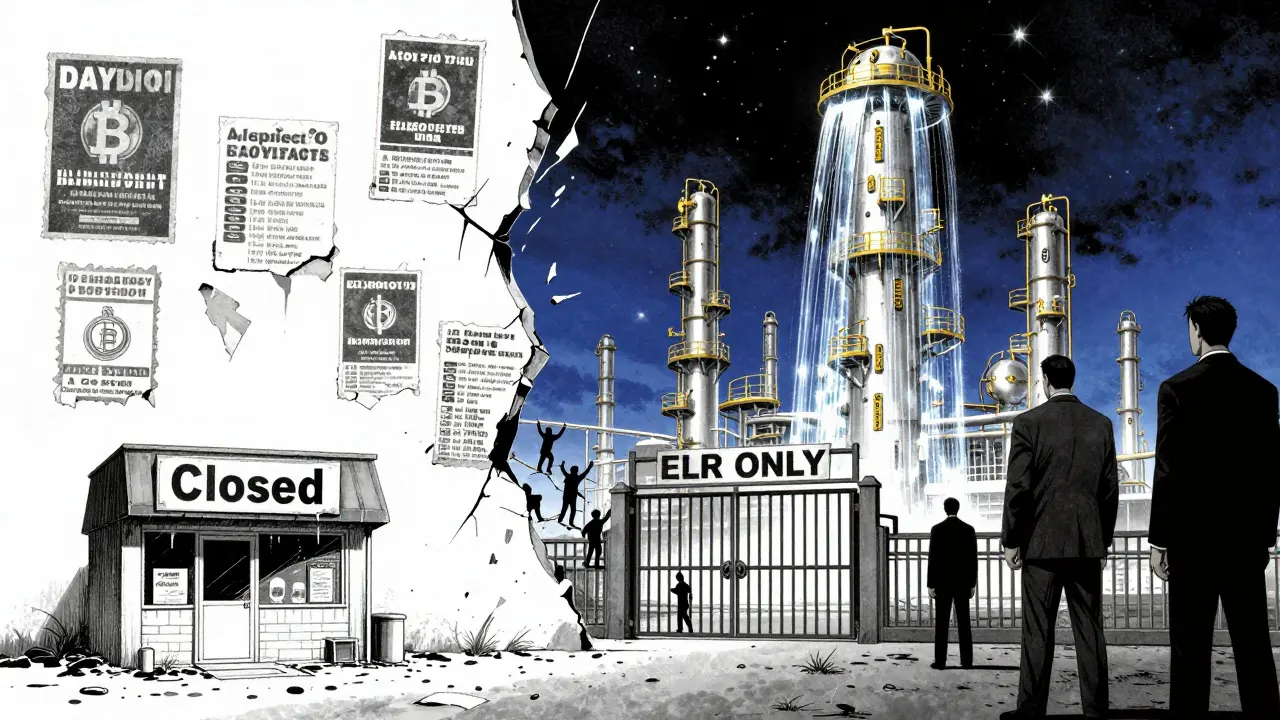
What’s Next? Signs of Change
There are signals that the rules might loosen - but not for small businesses. In November 2025, Deputy Finance Minister Ivan Chebeskov said the “superqual” investor threshold (₽100 million) is likely to be abandoned. A tiered system with lower entry points is under discussion. The Central Bank is also considering adding more blockchain networks beyond Bitcoin, Ethereum, and Ripple. But don’t expect domestic payments to become legal anytime soon. Deputy Governor Chistyukhin still says crypto should be available only to “a very, very limited class of investors.” The Ministry of Finance projects crypto could make up 15-20% of Russia’s sanctioned trade by 2027. That’s huge - but it’s still limited to exports. For the average shop owner, restaurant, or service provider? Nothing changes.Bottom Line: What This Means for Russian Businesses
If you’re a large company in oil, gas, or metals with deep pockets and government connections - crypto can be a powerful tool for international trade. The ELR works. It’s complex, expensive, and tightly controlled - but it works. If you’re anyone else - a retailer, a freelancer, a startup, a local service provider - accepting cryptocurrency in Russia is not just risky. It’s illegal. And the penalties are not theoretical. They’re real, immediate, and devastating. The system isn’t designed to help you. It’s designed to help the state survive sanctions - and keep control. Until that changes, the only legal crypto payments in Russia happen across borders. Not in your local market. Not in your store. Not in your app. Only in the boardrooms of a few dozen giants.For now, the message is clear: Don’t try it. The cost of failure is far higher than the benefit of convenience.








Madison Agado
December 5, 2025 AT 07:09This isn't just about crypto-it's about who gets to survive under sanctions. The state isn't banning crypto because it's dangerous. It's banning it because it doesn't control the narrative around it. The ELR? It's not a loophole. It's a velvet cage for the politically connected. Everyone else? They're left with cash under the mattress or bartering for potatoes.
And yet, the world keeps moving. India's using crypto for remittances. Turkey's bypassing forex controls. Even China's digital yuan has more flexibility than this. Russia's playing chess while the rest of the world plays poker-and losing the game by refusing to change the rules.
It's not about the ruble. It's about power. And power doesn't like decentralized systems. Not because they're dangerous. But because they can't be owned.
I wonder what happens when the next generation of Russian entrepreneurs, raised on Telegram and Telegram bots, start asking why they can't pay for coffee with Bitcoin. Will the Central Bank arrest them for using an app? Or will they just... let it go?
History doesn't remember the people who enforced the rules. It remembers the ones who broke them.
And right now, Russia is building a monument to control. But monuments crumble. Especially when no one believes in them anymore.
Tisha Berg
December 6, 2025 AT 19:27It’s heartbreaking to see how a system meant to protect people ends up crushing them instead. Small business owners just want to get paid. They’re not trying to overthrow the government. They’re trying to feed their families.
Imagine being a coffee shop owner in Kazan and having your bank account frozen because you accepted a payment in crypto from a customer who didn’t have cash. That’s not regulation. That’s cruelty wrapped in bureaucracy.
And yet, the big companies? They get a golden ticket. It’s not fair. It’s not even close. But it’s real. And real things hurt.
I hope someone finds a way to change this. Not for the rich. For the people who just want to work.
Billye Nipper
December 8, 2025 AT 12:19Okay, so let me get this straight: You can’t accept Bitcoin to buy a laptop… but you CAN accept it to sell oil to China??
That’s not a policy. That’s a joke. A dark, bureaucratic, soul-crushing joke.
And the cost to even TRY to be legal? 7 million rubles?? That’s more than most Russian families make in a DECADE.
Who’s the real criminal here? The guy who takes crypto to pay his rent… or the system that makes him choose between starvation and prison?
I’m so angry right now. I just… I just don’t know what to say. This is wrong. So wrong.
Someone needs to speak up. Please. Someone.
…I’m crying. I’m not even Russian. But this breaks my heart.
Thomas Downey
December 9, 2025 AT 07:02One cannot help but observe the profound intellectual bankruptcy of a state that equates financial innovation with subversion. The Central Bank of Russia, in its myopic zeal to preserve the ruble's artificial dominance, has engineered a regulatory regime that is not merely inefficient-it is morally indefensible.
The ELR, far from being a pragmatic response to sanctions, is a grotesque caricature of state capitalism: a closed aristocracy of oligarchs, cloaked in compliance jargon, permitted to transact in digital assets while the proletariat is denied even the dignity of choice.
It is no surprise that Transparency International labels this system as politically biased. One need not be a crypto-anarchist to recognize that when the state reserves technological freedom for its cronies, it ceases to govern-and begins to plunder.
The World Bank's assessment is not merely accurate; it is charitable. This is not a financial framework. It is a prison with a balance sheet.
And yet, the real tragedy is not the fines, nor the frozen accounts. It is the quiet erasure of agency. The death of the small entrepreneur. The silence of the marketplace. The extinguishing of possibility.
History will not remember this as innovation. It will remember it as decay.
Noriko Robinson
December 10, 2025 AT 19:14I’ve read this whole thing twice. I’m not Russian. I don’t even live in Europe. But I feel like I understand what’s happening here better than most people who do.
This isn’t about crypto. It’s about trust. The government doesn’t trust its own people to make financial decisions. So they take the choice away. Not because it’s dangerous. Because they’re scared.
And the worst part? The people who are hurt the most? They’re the ones who didn’t even ask for this. They just wanted to sell their art, fix phones, run a bakery.
I hope someone finds a way to fix this. Not with more laws. With more humanity.
Josh Rivera
December 11, 2025 AT 05:17Oh wow. So the Russian government is fine with billionaires using crypto to evade sanctions… but if you’re a guy in Yekaterinburg trying to pay his electric bill with Bitcoin, you get arrested?
That’s not a policy. That’s a punchline written by a corrupt bureaucrat with a thesaurus and zero shame.
Let me get this straight: You can’t pay for a pizza with crypto… but you can pay for a warship with it? Brilliant. Truly. The only thing more absurd is the fact that anyone still thinks this system has legitimacy.
Next up: The Ministry of Finance announces that only state-approved cats can use the internet.
At least the cats will have better odds than the small business owners.
Chris Jenny
December 12, 2025 AT 04:46THIS IS A COORDINATED ATTACK. YOU THINK THIS IS ABOUT CRYPTO? NO. IT’S ABOUT THE NEW WORLD ORDER. THE FEDERAL RESERVE, THE IMF, THE WORLD BANK-THEY ALL WORK TOGETHER TO CRUSH ANYTHING THAT CHALLENGES THEIR CONTROL.
THEY LET RUSSIA USE CRYPTO FOR EXPORTS BECAUSE THEY WANT TO TRACK EVERY TRANSACTION. THEY WANT TO KNOW WHO YOU PAY. WHERE YOU LIVE. WHAT YOU BUY.
THEY’RE BUILDING A DIGITAL SURVEILLANCE STATE. AND THE CRYPTO YOU CAN’T USE? IT’S THE ONE THAT’S SAFE.
THEY’RE HIDING THE TRUTH. THEY WANT YOU TO THINK IT’S ABOUT RUBLE STABILITY. BUT IT’S NOT. IT’S ABOUT CONTROL.
WHEN THE SYSTEM FALLS… THEY’LL SAY THEY TRIED TO PROTECT YOU.
THEY’RE LYING.
THEY’RE LYING.
THEY’RE LYING.
Annette LeRoux
December 14, 2025 AT 01:09I just… I don’t know what to feel anymore.
It’s like watching someone lock the door to their own house… then sell the keys to three people who already have spare copies.
And the worst part? The people who need the door open the most? They’re the ones getting blamed for trying to kick it down.
I wish I could hug every small business owner in Russia right now.
And I wish the people making these rules could spend a week running a café with no bank access.
Maybe then they’d understand.
❤️
Vincent Cameron
December 15, 2025 AT 11:50There is a philosophical paradox here, one that transcends economics: the state, in its attempt to preserve monetary sovereignty, has created a condition of economic alienation. The individual is rendered powerless not by force, but by the architecture of compliance.
One cannot be free when freedom is only granted conditionally, and only to those who have already been deemed worthy.
This is not capitalism. This is not socialism. This is something darker: a technocratic feudalism, where the serfs are not bound by land, but by API endpoints and compliance audits.
The ELR is not a solution. It is a symptom. And the disease? The belief that control equals stability.
But control is an illusion. And illusions, like rubles, eventually lose their value.
Neal Schechter
December 16, 2025 AT 19:35Look, if you’re a small business in Russia and you’re thinking about accepting crypto-don’t. I mean it.
It’s not worth it. Your bank will freeze you. Your suppliers will vanish. You’ll spend months in paperwork hell.
But if you’re just curious? Look into how the ELR works. It’s wild. The compliance costs are insane. The approved wallets? Only 17. The crypto? Only BTC, ETH, XRP.
It’s like a VIP club where the bouncer only lets in people who own a yacht and have a senator’s phone number.
And yeah, it’s rigged. But at least now you know the rules.
Don’t fight the system. Just don’t play it.
Yzak victor
December 17, 2025 AT 00:25My cousin runs a repair shop in Samara. He got his account frozen last year because a customer paid him in USDT for fixing a laptop. He didn’t even know it was illegal. He just accepted it because the guy didn’t have cash.
Three months of begging banks to unfreeze it. Lost two employees. Had to sell his van.
He’s back now. Still fixing phones. Still takes cash. Still doesn’t talk about crypto.
He’s not angry. He’s just… tired.
That’s the real story here. Not the laws. Not the fines. The exhaustion.
Holly Cute
December 17, 2025 AT 03:04Let’s be real: this whole system is a masterpiece of performative control. The Central Bank doesn’t hate crypto. They hate losing control. The fact that they allow crypto for exports proves they’re not ideologically opposed-they’re power-obsessed.
And yet, the 92% failure rate among small businesses? That’s not a bug. That’s a feature. The system is designed to eliminate competition. To funnel all value upward. To turn financial access into a privilege, not a right.
Meanwhile, the people who benefit? They’re too busy counting their crypto-denominated profits to care that their entire economy is now a gated community.
And the irony? The very people who built this system are the ones who’ll be the first to flee to Dubai when it collapses.
So yes. It’s rigged. And yes. It’s working exactly as intended.
Just don’t expect anyone to admit it.
🙂
Glenn Jones
December 18, 2025 AT 09:52Okay so here’s the thing nobody’s talking about: the 17 approved wallet providers? 14 of them are owned by people who used to work for Rosneft or Gazprom. The blockchain analytics software? Made by a company whose CEO is married to a deputy in the Ministry of Finance. The GOST R standards? Written by a guy who got promoted after writing a paper called ‘Why Decentralization Is a Threat to National Security’.
This isn’t regulation. This is a cartel.
And the fact that they’re considering expanding the list of approved coins? That’s not progress. That’s a PR stunt to make it look like they’re listening. They’re not. They’re just trying to keep the game alive longer so they can extract more value.
Also, 78% of ELR participants have political ties? That’s not a coincidence. That’s the entire design.
They didn’t build a system to regulate crypto.
They built a system to reward loyalty.
And punish curiosity.
And if you’re still wondering why small businesses keep failing? Look at the boardrooms. Not the banks.
…I’m not even mad. I’m just… disappointed.
in humanity.
in systems.
in the idea that ‘rules’ can ever be fair when the rulemakers are the ones who benefit most.
Krista Hewes
December 19, 2025 AT 21:59I work with a Russian freelancer who does graphic design. She got her account frozen last year because a client paid her in ETH for a logo. She didn’t even know it was illegal. She thought it was normal.
She had to borrow money from her sister to pay rent. She still hasn’t gotten her account back.
She doesn’t talk about it anymore.
She just works in cash now.
And she’s the luckiest one I know.
Roseline Stephen
December 19, 2025 AT 23:12I don’t know much about crypto. But I know what it’s like to be stuck. To be told you can’t do something because someone else has more money or more connections.
This isn’t about money. It’s about dignity.
And right now, a lot of people in Russia are losing theirs.
Jon Visotzky
December 21, 2025 AT 00:17So… the only way to legally use crypto in Russia is to be rich, connected, and willing to spend 7 million rubles on compliance?
And if you’re not? You’re basically illegal.
That’s not a financial system.
That’s a class system with a firewall.
Also, I just checked-Ripple is still on the approved list. Huh.
Guess some things never change.
Vincent Cameron
December 22, 2025 AT 01:57It’s funny. The same people who scream about ‘financial freedom’ when it’s a Western bank account? They’re the first to look away when it’s a Russian shopkeeper getting punished for accepting Bitcoin.
Freedom isn’t a slogan. It’s a practice.
And right now, in Russia, it’s being erased one frozen account at a time.