
When you hear the word token in blockchain, most people think of crypto prices. But that’s not the real story. The true power of a platform token isn’t in how high its price goes-it’s in how well it holds the whole system together. Token economics isn’t just a buzzword. It’s the invisible engine that decides whether a blockchain platform grows, crashes, or lasts.
What Exactly Is Platform Token Economics?
Platform token economics is the system that links money, incentives, and behavior on a blockchain. It answers one simple question: Why should people use, build for, or invest in this platform? The answer isn’t just ‘because it’s decentralized.’ It’s because the token makes it worth their while.
Think of it like a game where everyone gets paid in tokens. Developers get tokens for building tools. Users get tokens for using the platform. Investors get tokens for locking up their money. The whole thing only works if the token has real value-and that value comes from how it’s designed, not how much hype surrounds it.
Dr. Ye Li’s 2019 model, published by the Federal Reserve Bank of Cleveland, showed that tokens don’t get value from speculation alone. They get value from transactional utility. If people need tokens to pay for services on the platform, the token becomes essential. And when it’s essential, demand rises. That’s the core idea: tokens are valuable because they’re necessary.
Single-Token vs. Dual-Token Systems
There are two main ways platforms design their token systems: single-token and dual-token.
Single-token systems use one token for everything. Bitcoin is the classic example. You hold it, you trade it, you use it to pay fees. Simple. But simple has limits. In 2017, Bitcoin’s transaction fees spiked to $55 during peak demand. Why? Because one token was trying to do two jobs: store value and pay for transactions. When usage surged, the price of using the network went through the roof.
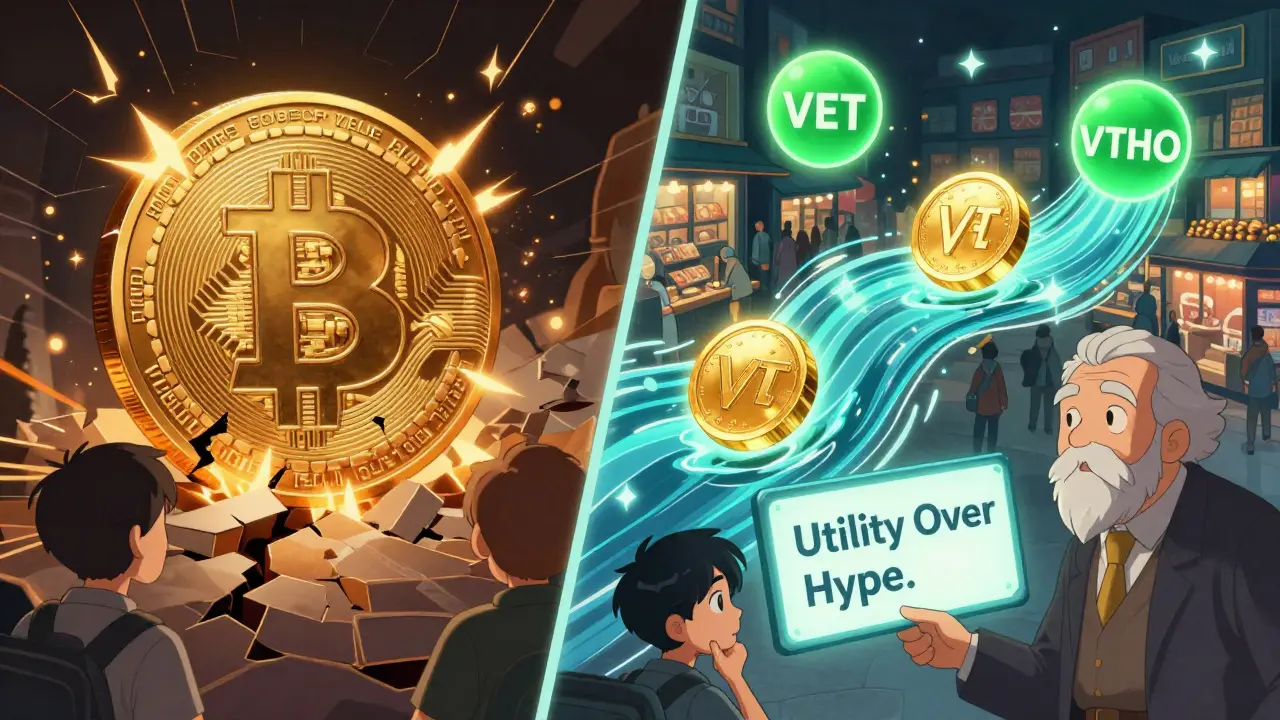
Dual-token systems split those jobs. One token holds value. The other pays for use. VeChain is a great example. VET is the store-of-value token. VTHO is the utility token you spend to run transactions. This separation prevents price spikes during heavy usage. VeChain reported 40% higher user engagement in 2023 than single-token competitors, according to their own transparency report.
But dual-token isn’t perfect. It adds complexity. Ontology found that 22% more new users failed to onboard compared to single-token platforms in 2022. If people don’t understand why there are two tokens, they get confused-and leave.
How Tokens Create Value: Three Mechanisms
Not all tokens are created equal. The best ones capture value in three ways:
- Transactional utility - You need the token to do something on the platform. Like paying for gas on Ethereum or using UNI to trade on Uniswap.
- Governance rights - You get to vote on changes. Tokens become votes. MakerDAO’s MKR and Aave’s AAVE let holders decide fees, upgrades, and risk parameters.
- Speculative appreciation - People buy because they think the price will rise. This is risky. If it’s the only reason people hold the token, the system collapses when hype fades.
Dr. Garrick Hileman of the Blockchain Research Lab put it best: sustainable value comes from the first two. Speculation is the cherry on top-not the foundation.
Look at Ethereum. After the London hard fork in 2021, EIP-1559 started burning transaction fees. During busy periods, more ETH was burned than created. That made ETH scarcer. And guess what? Staker participation jumped 37% from 2022 to 2023. People didn’t just stake because of yield. They staked because they believed ETH was becoming more valuable over time.
Token Supply and Incentives: The Hidden Levers
Token supply isn’t just a number. It’s a control knob. Too much supply? The price drops. Too little? People can’t use the platform. The smartest platforms manage this like a central bank.
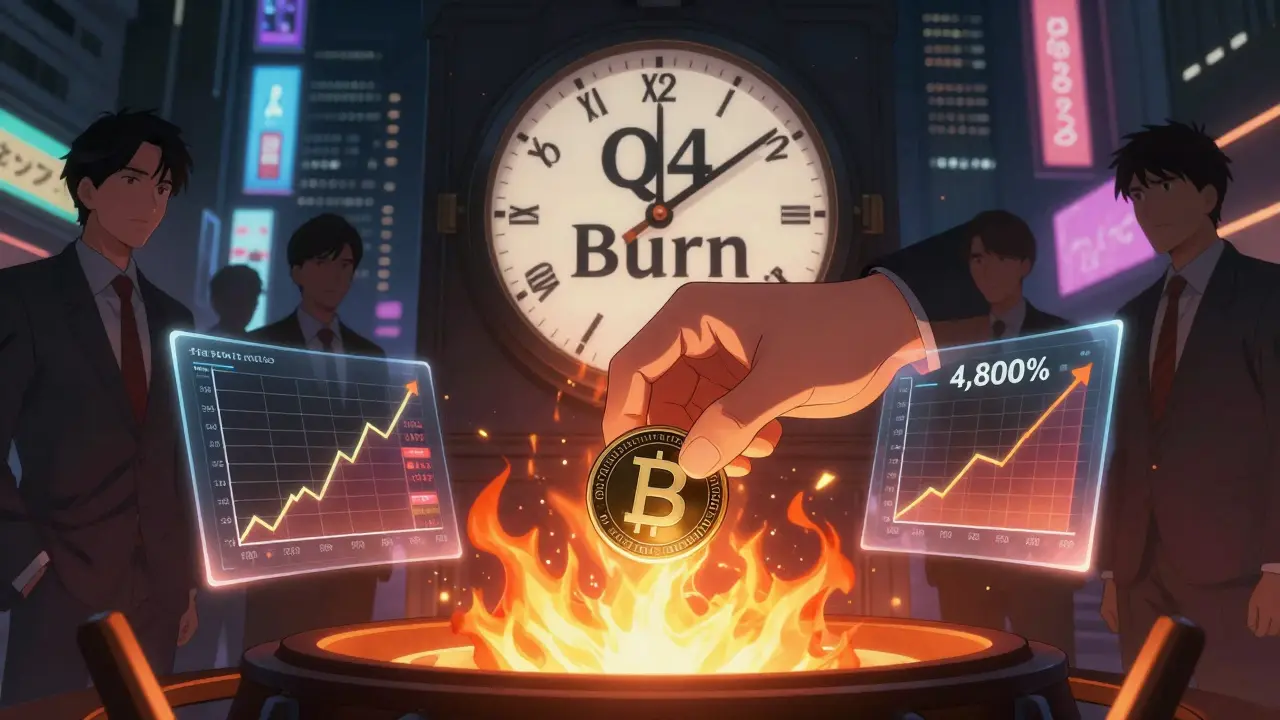
Binance’s BNB is a masterclass. Every quarter, they burn a portion of BNB based on trading volume. From 2017 to 2023, they reduced total supply by 16.5%. Market cap? Up 4,800%. Why? Because users saw the burns as a promise: we’re not printing money. We’re making this scarce.
On the flip side, failed projects like Iron Finance in 2022 had no supply control. Their TITAN token dropped from $60 to near zero in 24 hours. Why? Because the algorithm kept printing tokens when demand fell. No burns. No limits. No trust.
Even Ethereum’s shift to Proof-of-Stake in 2022 cut annual issuance from 4.3% to 0.43%. That’s a 90% drop in new supply. It didn’t just save energy. It made ETH more valuable over time.
Real-World Failures and Successes
Tokenomics doesn’t live in theory. It lives in user behavior.
On Reddit’s r/CryptoCurrency, a 2023 thread analyzing VeChain’s dual-token system got 1,247 comments. 68% said the separation made sense. 32% said it was too confusing. That split tells you everything: good design helps, but complexity kills adoption.
Trustpilot reviews of Binance show users calling the quarterly burn a ‘trust signal.’ One user wrote: ‘Quarterly burns give me confidence Binance isn’t just printing tokens.’ That’s not marketing. That’s real behavioral proof.
And then there’s the collapse of TerraUSD. $40 billion lost. Why? Because its algorithmic stablecoin had no real-world backing. No utility. No supply control. Just promises. Professor Gary Gensler called such models ‘Ponzi-like schemes without fundamental value.’ He wasn’t wrong.
But the success stories? They’re built on transparency. Reddit’s r/TokenEconomy found that platforms with clear token supply schedules had 43% higher user retention. People stay when they know what’s coming.
Why Enterprise Adoption Is Still Slow
Fortune 500 companies are watching. 57% are experimenting with token-based incentives. But only 12% have launched anything live. Why?
Deloitte’s 2023 survey found that 68% struggle to integrate tokens into HR, payroll, and compliance systems. Tokens aren’t like stock options. They’re volatile. They’re global. They’re unregulated in many places.
Plus, most enterprise leaders don’t understand token economics. They see ‘crypto’ and think ‘speculation.’ They don’t see the underlying incentive alignment. Until they do, adoption will stay stuck in pilot mode.
The Future: What’s Changing in 2026
Token economics is evolving fast.
Ethereum’s Prague upgrade (late 2024) will let validators stake up to 2 million ETH instead of 32 ETH. That could reduce issuance by another 0.15% annually. More scarcity. More value.
Solana’s 2024 update introduced dynamic fee burning-tokens are destroyed based on network congestion. Early data shows 18% less price volatility during peak traffic. That’s huge for users who hate unpredictable fees.
And then there’s real-world asset (RWA) tokenization. JPMorgan’s Onyx platform now has $50 billion in tokenized assets. Bonds, real estate, invoices-all on blockchain. That’s not crypto speculation. That’s finance, rebuilt with token economics.
But risks remain. 78% of token projects now have separate economic models for different countries. Why? Because regulators are cracking down. The SEC filed 27 enforcement actions in 2023-up from 3 in 2018. If you don’t design your token with compliance in mind, you’re building on sand.
Key Takeaways
- Token value comes from utility, not hype.
- Dual-token systems reduce price volatility but add complexity.
- Burn mechanisms and supply caps build trust.
- Transparency in token supply = higher user retention.
- Enterprise adoption is slow because tokens don’t fit traditional systems.
- The future belongs to platforms that merge real-world utility with smart token design.
What makes a token valuable?
A token is valuable when it’s necessary to use the platform. If you need it to pay for services, vote on changes, or earn rewards, it has utility. Speculation can boost price, but without utility, the value disappears when hype fades.
Do all blockchain platforms need tokens?
No. Some private blockchains, like those used by banks or supply chains, don’t need tokens at all. But public, decentralized platforms do. Tokens align incentives between users, developers, and investors. Without them, there’s no reason for people to contribute or stay engaged.
How do token burns increase value?
Token burns reduce total supply. If demand stays the same or grows while supply shrinks, scarcity increases. That pushes prices up. Binance’s BNB burns have reduced supply by 16.5% since 2017 while increasing market cap by over 4,800%. It’s a simple supply-and-demand play.
Why did TerraUSD collapse?
TerraUSD was an algorithmic stablecoin that tried to stay pegged to $1 using another token, LUNA. When confidence dropped, the system couldn’t maintain the peg. It had no real assets backing it, no clear supply controls, and no utility beyond speculation. It was a classic case of tokenomics built on trust alone-without substance.
Can token economics work for traditional businesses?
Yes-but only if redesigned. JPMorgan’s Onyx and other enterprise projects are tokenizing bonds and invoices. The key is separating the token’s economic function from its speculative role. Use tokens to track ownership or automate payments, not to create a crypto asset. That’s how traditional systems can adopt blockchain without chaos.
What’s the biggest mistake in token design?
The biggest mistake is ignoring token velocity. If tokens move too fast (users spend them immediately), demand drops. If they’re locked up too long, the platform feels stagnant. Successful platforms like Solana and Ethereum balance incentives to keep tokens flowing-just enough to fuel activity without destabilizing price.





Jesse Pasichnyk
February 9, 2026 AT 03:38Jordan Axtell
February 10, 2026 AT 08:55James Harris
February 11, 2026 AT 23:57Alex Garnett
February 13, 2026 AT 08:01aryan danial
February 14, 2026 AT 09:30Ryan Chandler
February 14, 2026 AT 21:33Ajay Singh
February 16, 2026 AT 05:20Oliver James Scarth
February 17, 2026 AT 22:52Danica Cheney
February 19, 2026 AT 09:22Matthew Ryan
February 21, 2026 AT 09:09Nathaniel Okubule
February 21, 2026 AT 16:38Shruti Sharma
February 22, 2026 AT 12:43Robin Ødis
February 23, 2026 AT 10:06Brittany Novak
February 24, 2026 AT 18:54Joshua Herder
February 25, 2026 AT 01:52Brittany Coleman
February 26, 2026 AT 00:25