

Helix Markets isn’t another crypto exchange you stumble on while scrolling. It’s a niche player built for one thing: fast, fee-free trading on the Injective blockchain. But here’s the catch - while it promises lightning speed and zero gas fees, it also flies under the radar of every major financial regulator. If you’re considering trading on Helix, you need to know what you’re signing up for - not just the tech, but the risks.
What Is Helix Markets, Really?
Helix Markets is a decentralized exchange (DEX) running on the Injective Protocol. It used to be called Injective Pro, but the rebrand stuck. Unlike Binance or Coinbase, Helix doesn’t hold your crypto. You connect your wallet - like MetaMask or Keplr - and trade directly from there. That’s the whole point of decentralized exchanges: you control your keys, so no exchange hack can steal your funds. Sounds safe, right? But control comes with responsibility. Lose your seed phrase, and your money is gone. No customer support can fix that.
Helix doesn’t just trade Bitcoin and Ethereum. It’s built for cross-chain trading. You can swap assets from Cosmos, Solana, or Ethereum without bridges or wrapped tokens. That’s because Injective’s blockchain is designed to talk to other chains natively. This makes it attractive for traders who want to move between ecosystems without delays or high fees.
The Tech Behind the Speed
What sets Helix apart isn’t the number of coins - it’s the speed. The Injective blockchain processes blocks in under one second. Compare that to Ethereum-based DEXs like Uniswap, where a single trade can take 15 seconds or more just to confirm. On Helix, orders execute near-instantly. That’s huge for day traders or those using automated strategies. Slippage? It’s minimized because trades settle faster than the market can move.
And there are no gas fees. Ever. That’s not a promotion. It’s baked into the protocol. You don’t pay ETH or INJ to confirm trades. The platform covers transaction costs through its incentive system. Traders who use the platform regularly get rewarded in INJ tokens. It’s a clever way to keep users active without charging them. But here’s the flip side: if you’re not trading often, you won’t earn anything. And if the token price drops, your rewards lose value.
What Can You Trade?
Helix supports 37 cryptocurrencies across 48 trading pairs. That includes the big names: BTC, ETH, SOL, ATOM, and of course, INJ. But it’s not just spot trading. You can also trade perpetual futures - leveraged contracts that let you go long or short without owning the underlying asset. This is where serious traders play. Leverage goes up to 100x on some pairs, which means tiny price moves can blow up your account. High reward? Yes. High risk? Absolutely.
There’s no stablecoin pair like USDT or USDC on Helix. That’s unusual. Most DEXs list them because they’re used as a safe haven during volatility. If you want to hedge your position, you’ll need to swap into a stablecoin on another exchange first. That adds steps - and potential fees - to your workflow.
Trading Volume vs. Real Traffic
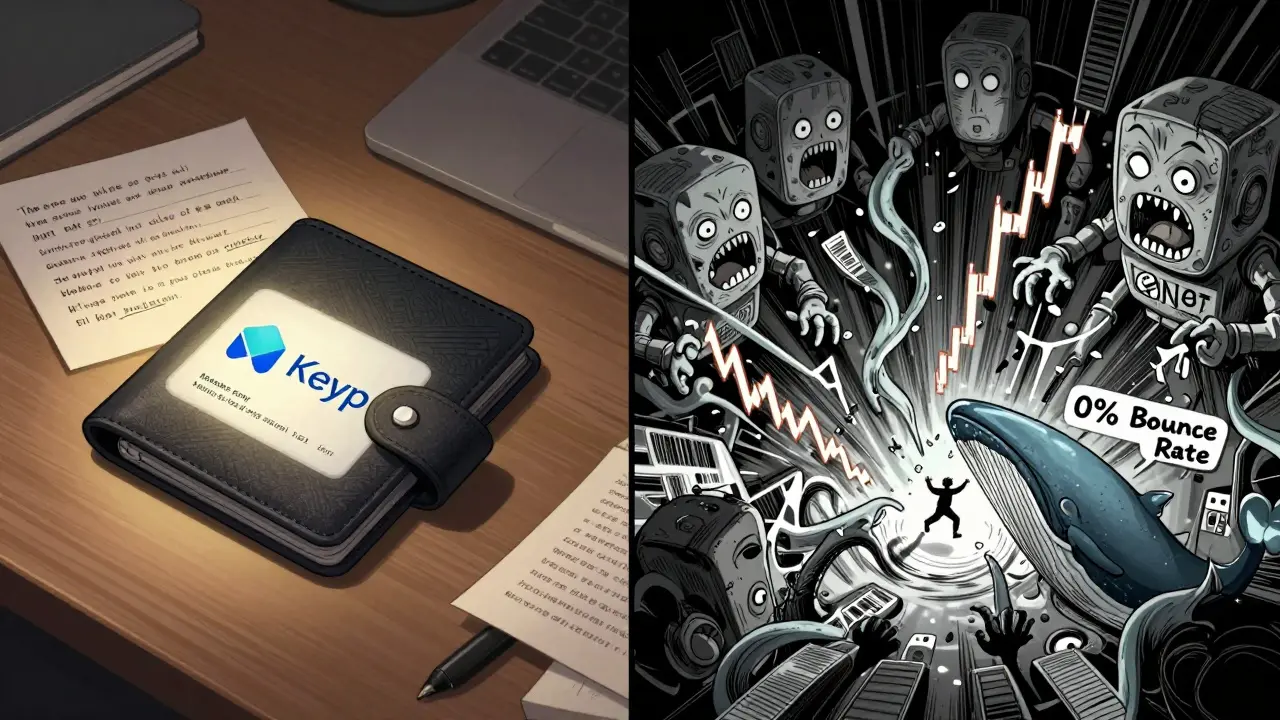
Helix claims over $13 billion in cumulative trading volume since launch. That sounds impressive. But look closer. Monthly web traffic is under 450 visits. That’s less than a small Shopify store. How can a platform process billions in volume with fewer than 500 visitors a month? The math doesn’t add up. Either the traffic data is wrong, or most of that volume comes from bots, market makers, or whale accounts moving large sums quietly.
The bounce rate is listed as 0%, and users view an average of 25 pages per visit. That’s not normal. Real users don’t click through 25 pages on a trading platform unless they’re testing every feature. This could mean the data is inflated, scraped, or misreported. Or worse - it’s being manipulated to look more active than it is. Always question metrics that seem too perfect.
Regulatory Red Flags
This is the part most people skip. Helix Markets is not regulated by any financial authority - not the SEC, not the FCA, not ASIC. BrokerChooser, a trusted review site for brokers, explicitly warns: “We wouldn’t trust HELIX with our own money.” That’s not a mild concern. That’s a red alarm.
Without regulation, there’s no investor protection. No insurance if funds go missing. No legal recourse if the platform disappears. No audit trail for suspicious activity. If Helix shuts down tomorrow, you have zero rights. And unlike regulated exchanges that keep user funds in segregated accounts, Helix operates entirely on-chain. Your money is only as safe as your wallet and your internet connection.
Helix ranks 485 out of 612 crypto exchanges in organic traffic. That puts it in the bottom 20%. It’s not on CoinGecko’s top 50. It doesn’t appear in most beginner guides. You won’t find it listed on Reddit’s r/CryptoCurrency as a recommended platform. That’s not because it’s hidden - it’s because it’s not trusted by the mainstream.

Who Is This For?
Helix isn’t for beginners. It’s not for people who want to buy Bitcoin and hold it. It’s not for those who value security through regulation.
This platform is for one type of trader: someone who already understands DeFi, owns a self-custody wallet, and is comfortable navigating complex systems. If you’re already trading on Injective or want deep exposure to its ecosystem, Helix gives you the fastest, cheapest access. If you’re looking for a simple, safe way to trade crypto, look elsewhere.
Compare it to dYdX or Uniswap. dYdX is regulated in some jurisdictions and has higher liquidity. Uniswap has thousands of tokens and millions in daily volume. Helix doesn’t compete on scale. It competes on speed and integration. If you’re deep in the Injective ecosystem, it’s the best tool. If you’re not, you’re adding unnecessary complexity.
The Bottom Line
Helix Markets is a technically impressive exchange. The speed, the zero fees, the cross-chain trading - all of it works. But technology alone doesn’t make a safe platform. Regulation, transparency, and user trust do.
If you’re an experienced DeFi user who understands the risks of non-custodial trading and wants to maximize efficiency within the Injective network, Helix delivers. But if you’re looking for a reliable, regulated exchange to store or trade your crypto, this isn’t it. The lack of oversight isn’t a feature - it’s a dealbreaker for most.
Don’t let the hype of “zero gas fees” or “100x leverage” blind you. The real question isn’t what Helix can do - it’s whether you’re ready to accept the consequences if something goes wrong.








Abdulahi Oluwasegun Fagbayi
January 27, 2026 AT 22:53It's like building a Ferrari with no seatbelts. Fast? Yes. Smart? Not unless you're racing on a closed track with a safety crew waiting.
Ashok Sharma
January 28, 2026 AT 23:18Margaret Roberts
January 30, 2026 AT 14:06Tselane Sebatane
January 31, 2026 AT 14:00And don’t even get me started on 100x leverage. That’s not trading. That’s gambling with your life savings. You think you’re a genius until you wake up with $0 and a broken phone.
But hey - if you want to play Russian roulette with your crypto, go ahead. I’ll be here watching the fireworks from the sidelines.
Linda Prehn
January 31, 2026 AT 23:59Arielle Hernandez
February 2, 2026 AT 04:43One must distinguish between innovation and institutional recklessness. The former is celebrated; the latter, memorialized.
HARSHA NAVALKAR
February 2, 2026 AT 12:39Ryan Depew
February 3, 2026 AT 06:07Mathew Finch
February 4, 2026 AT 01:42Tammy Goodwin
February 4, 2026 AT 18:06Andy Simms
February 5, 2026 AT 20:59Shamari Harrison
February 6, 2026 AT 06:53Nadia Silva
February 7, 2026 AT 05:40Roshmi Chatterjee
February 9, 2026 AT 00:13Deepu Verma
February 9, 2026 AT 10:15Julene Soria Marqués
February 10, 2026 AT 03:05Bonnie Sands
February 10, 2026 AT 17:43MOHAN KUMAR
February 12, 2026 AT 00:13Jennifer Duke
February 12, 2026 AT 17:49Andy Marsland
February 14, 2026 AT 01:02And honestly? That’s kind of beautiful.
Anna Topping
February 15, 2026 AT 01:58Jeffrey Dufoe
February 16, 2026 AT 10:19katie gibson
February 18, 2026 AT 06:23Jonny Lindva
February 19, 2026 AT 04:15