

By the end of 2024, over $15.8 billion in cryptocurrency flowed into wallets tied to sanctioned entities and jurisdictions. That’s not a typo. It’s more than the GDP of some small countries-and it all happened in one year. This number, reported by Chainalysis, didn’t come from a single hack or ransomware attack. It was the sum of thousands of transactions, quietly moving across blockchains, hidden in plain sight. And it’s not just about Russia or Iran. It’s about how crypto is changing the rules of global power, one transaction at a time.
Why This Number Matters
Most people think of crypto as a tool for speculators or tech enthusiasts. But in 2024, it became a lifeline for nations under sanctions. When traditional banks cut off access, crypto stepped in. No paperwork. No borders. No waiting. The $15.8 billion wasn’t just money-it was a signal. Sanctioned actors weren’t trying to disappear. They were building a new financial system, and they were winning.The biggest chunk? Bitcoin. It made up 68% of all sanctioned transactions. Why? Because it’s the most liquid, the most recognizable, and the easiest to move across chains. Ethereum followed at 20%, mostly because of stablecoins like USDT that let users bypass price swings. And here’s the kicker: nearly 20% of these transactions used cross-chain bridges to jump between networks. That’s not accidental. It’s a deliberate tactic to evade detection.
Who’s Really Behind the Money?
Iran led the charge. Its centralized exchanges-like Nobitex and Garantex-became the main gateways for sanctioned crypto inflows. Why Iran? Because its economy is squeezed. Sanctions on oil, banking, and imports forced ordinary citizens and businesses to turn to crypto just to survive. But this wasn’t just about survival. It was about capital flight. Wealthy Iranians moved billions out of the country, using crypto to buy property overseas, pay for education, or stash value away from government control.Russia wasn’t far behind. Ransomware gangs tied to Russian state actors pumped $800 million into sanctioned wallets in 2024-a 22% jump from 2023. Conti, Black Basta, LockBit-they all used crypto to collect payments. And they didn’t just cash out. They layered the money. One wallet received the ransom. Then, through a series of mixers and bridges, it split into dozens of smaller transfers. By the time it hit an exchange, it was nearly impossible to trace.
Darknet markets, especially those based in Russia, handled $1.1 billion in transactions linked to sanctioned parties. These weren’t just drug deals. They were arms, malware, stolen data, and hacking tools-all paid for in crypto. And the buyers? Often from countries under their own sanctions. It’s a global underground economy, built on blockchain.
The Exchanges That Made It Possible
Garantex and Nobitex didn’t just process transactions. They became the backbone of sanctioned crypto flows. Together, they handled over 85% of all inflows to sanctioned entities. And they weren’t operating in shadows. They were registered, had websites, customer service, and even KYC forms-just not ones that worked.OFAC didn’t sit still. In 2024, it sanctioned Garantex outright. The Treasury Department named it as a key facilitator of ransomware payments. They pointed to specific transactions: $2 million in Bitcoin turned into USDT by a known money launderer, Ekaterina Zhdanova. They also flagged 150 DeFi liquidity pools that were being used to move money without a central exchange. These weren’t scams. They were smart contracts designed to blur ownership lines.
DeFi platforms became the new wild west. In 2024, 33% of all illicit crypto funds passed through decentralized protocols. No CEO. No headquarters. No one to call. Just code. And that’s the real problem for regulators. You can shut down an exchange. You can freeze a bank account. But you can’t shut down a smart contract running on a thousand nodes around the world.
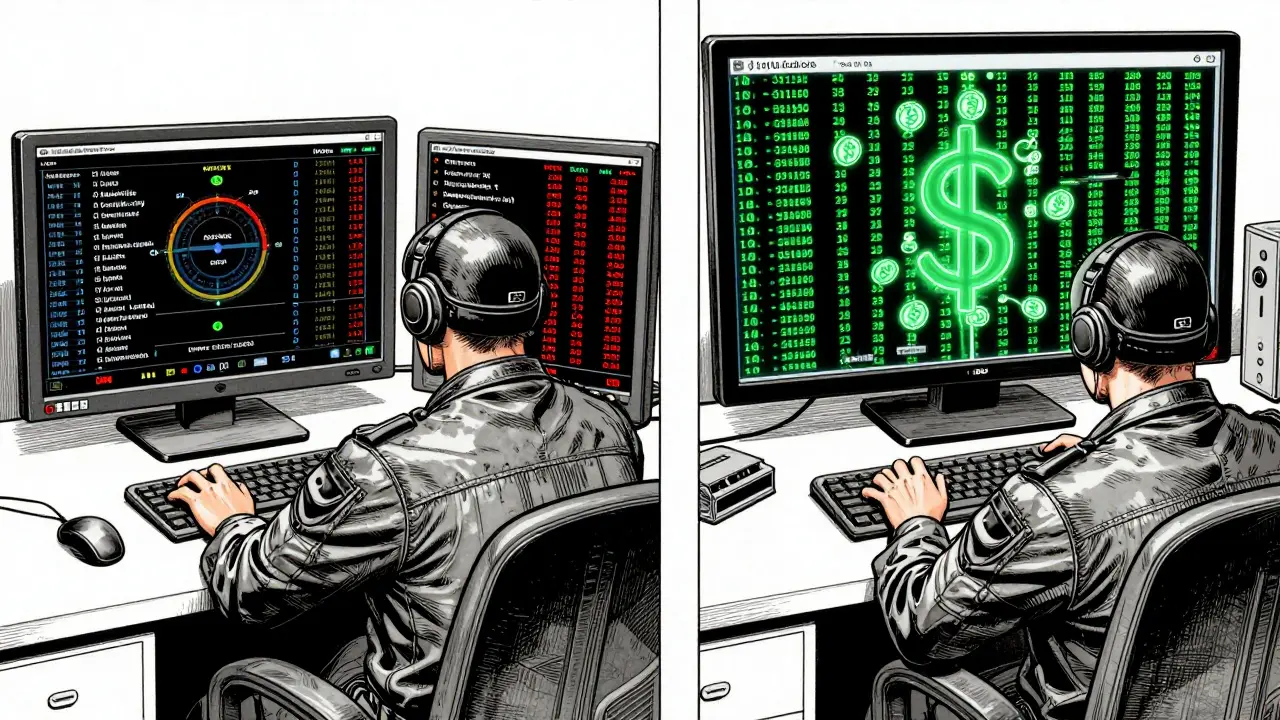
Why the Numbers Don’t Add Up
You might’ve seen different numbers. TRM Labs said $14.8 billion. CoinLaw.io said $2.7 billion. Why such a gap? Because there’s no single truth in crypto tracking.Chainalysis counts any wallet that’s ever been linked to a sanctioned address-even if it’s just one transaction. TRM Labs filters for direct transfers and uses machine learning to predict behavior. CoinLaw.io only tracks wallets that were explicitly named by OFAC. Each method is valid. But each tells a different story.
Here’s the real takeaway: the numbers don’t matter as much as the trend. In 2023, sanctioned crypto inflows were $21.9 billion. In 2024, they dropped-but only slightly. That’s not a win for enforcement. That’s a sign that the system adapted. The total volume of illicit crypto activity fell 24% across all firms, but sanctions-related activity stayed stubbornly high. It’s the largest single source of illicit crypto money, by far.
What’s Changing in Enforcement
OFAC didn’t just issue sanctions in 2024. It changed how it issues them. For the first time, it started tagging entire DeFi pools, not just wallets. It started working with blockchain analytics firms to build real-time monitoring tools. It began sharing data with Europol, the UK’s National Crime Agency, and even private exchanges in Asia.AI is now scanning every transaction on Bitcoin and Ethereum, looking for patterns. A wallet that receives funds from a known ransomware address, then sends 80% of it to a stablecoin pool, then splits the rest across five different chains? That’s not a coincidence. That’s a red flag. And the AI spots it in seconds.
But here’s the catch: the total volume of crypto transactions in 2024 hit $10.6 trillion. That’s up 56% from 2023. Even the best AI can’t watch everything. And as privacy coins like Monero and Zcash improve, the game gets harder. Some analysts say we’re in a new arms race-where every enforcement tool is met with a new evasion technique.

The Bigger Picture: Crypto as a Geopolitical Tool
This isn’t just about crime. It’s about power. When the U.S. sanctions a country, it expects that country to be cut off. But crypto changes that. Now, a nation under sanctions can still trade, pay its soldiers, buy fuel, and fund its tech sector-all through blockchain.And it’s working. In 2024, sanctioned jurisdictions accounted for nearly 60% of all crypto sanctions-related value. That’s up from 42% in 2023. The shift from individual actors to state-backed systems is clear. This isn’t a few hackers. This is national infrastructure being rebuilt on Ethereum and Bitcoin.
Meanwhile, fraud and scams dropped sharply. Pig-butchering schemes fell 58%. Crypto thefts dropped too. Why? Because the real money isn’t in stealing from individuals anymore. It’s in moving state-level funds. The criminals who used to run phishing sites are now working for state-backed crypto operations.
What Comes Next?
By 2025, we’ll likely see new tools: blockchain-based sanctions registries, mandatory reporting for DeFi protocols, and international treaties on crypto compliance. But enforcement will always lag behind innovation. The next wave? Privacy-focused smart contracts, anonymous cross-chain bridges, and crypto-based CBDCs (central bank digital currencies) used by sanctioned nations to bypass Western systems.The $15.8 billion figure isn’t a statistic. It’s a warning. Crypto didn’t break sanctions. It rewrote them. And unless regulators adapt faster than the tech evolves, this number will only grow.
How did $15.8 billion end up in sanctioned crypto wallets in 2024?
The money came from a mix of ransomware payments, capital flight from sanctioned countries like Iran and Russia, and funds from darknet markets. Centralized exchanges like Garantex and Nobitex handled most of it, while cross-chain bridges and DeFi platforms helped obscure the trail. Bitcoin made up 68% of these transactions because it’s the most widely accepted and easiest to move across networks.
Why is Bitcoin the dominant cryptocurrency in sanctioned transactions?
Bitcoin is the most liquid, widely recognized, and easiest to convert into other assets. Unlike altcoins, it has deep liquidity on both centralized and decentralized exchanges. It’s also the most trusted by users in sanctioned regions because it’s been around the longest. Most importantly, Bitcoin transactions are irreversible and pseudonymous, making them ideal for moving large sums without interference.
What role did DeFi play in sanctions evasion in 2024?
DeFi platforms handled 33% of all illicit crypto funds in 2024. Because they operate without central control, they allowed sanctioned actors to move money without going through exchanges that could freeze accounts. Liquidity pools, automated market makers, and token swaps became tools for laundering funds. OFAC flagged 150 DeFi pools that were being used to facilitate these transactions, but shutting them down is nearly impossible.
Why do different reports show different numbers for sanctioned crypto activity?
Different firms use different methods. Chainalysis counts any wallet that’s ever interacted with a sanctioned address, even once. TRM Labs uses behavioral analysis to filter out noise. CoinLaw.io only tracks wallets explicitly named by OFAC. These aren’t contradictions-they’re different lenses. Chainalysis gives the broadest view. TRM gives the most accurate estimate of direct transfers. CoinLaw.io gives the most conservative, legally defensible number.
Can regulators ever win this arms race?
They can’t win by shutting things down. The answer is adaptation. Better AI, global data sharing, and mandatory reporting from crypto service providers are key. But the real shift will come when governments start using blockchain themselves-like creating their own digital currencies with built-in compliance. Until then, enforcement will always be one step behind. The goal isn’t to stop all illicit activity-it’s to make it too costly and risky to continue at scale.






William Montgomery
March 13, 2026 AT 06:45Allison Davis
March 13, 2026 AT 09:23Tom Jewell
March 14, 2026 AT 04:37Sherry Kirkham
March 15, 2026 AT 02:36Sharon Tuck
March 16, 2026 AT 20:42ann neumann
March 18, 2026 AT 07:59Mara Alves Mariano
March 18, 2026 AT 17:47Adam Ashworth
March 19, 2026 AT 16:10karan narware
March 20, 2026 AT 06:15Jenni James
March 20, 2026 AT 15:56Chelsea Boonstra
March 21, 2026 AT 14:23Howard Headlee
March 23, 2026 AT 05:01Julie Tomek
March 25, 2026 AT 02:14Craig Gregory
March 25, 2026 AT 03:50vishnu mr
March 26, 2026 AT 03:02Zephora Zonum
March 27, 2026 AT 16:22Anthony Marshall
March 27, 2026 AT 22:59Lindsay Girvan
March 28, 2026 AT 12:24Douglas Anderson
March 29, 2026 AT 00:11Tina Keller
March 29, 2026 AT 16:29vasantharaj Rajagopal
March 30, 2026 AT 15:36Jennifer Pilot
March 31, 2026 AT 06:48Michael Suttle
April 1, 2026 AT 08:28Alex Thorn
April 2, 2026 AT 20:36Brandon Kaufman
April 3, 2026 AT 22:21