

On June 28, 2025, Thailand shut down five major foreign peer-to-peer (P2P) cryptocurrency platforms overnight. If you were trading on Bybit, OKX, CoinEx, 1000X, or XT.COM and didn’t move your assets before that date, you lost access. No warning. No appeals. Just a black screen. This wasn’t a glitch. It was policy.
Why Thailand Banned Foreign Crypto Platforms
Thailand didn’t ban crypto. It banned unlicensed foreign crypto platforms that were operating inside its borders without permission. The Thai Securities and Exchange Commission (SEC) made it clear: if you want to serve Thai users, you need a license. No exceptions. The move came after years of rising fraud. Scammers used P2P platforms to trick people into sending money for fake investments. Some victims lost life savings. Others were lured by ads on TikTok and Facebook promising 20% monthly returns. The SEC saw a pattern: foreign platforms, no local office, no accountability, no way to trace funds. So they acted. The legal basis? Two Royal Decrees signed on April 13, 2025. The first required all digital asset businesses targeting Thai users to get licensed by the SEC. The second gave the Ministry of Digital Economy and Society (MDES) the power to block websites without a court order. That’s how fast it happened. No trial. No hearing. Just a government notice and a network block.The Five Blocked Platforms
The SEC publicly named five platforms that lost access to Thai users:- Bybit - One of the top 10 crypto exchanges globally, with over 20 million users.
- OKX - A major player in Asia, offering futures, spot trading, and staking.
- CoinEx - Known for low fees and aggressive marketing in Southeast Asia.
- 1000X - A lesser-known but rapidly growing P2P platform popular among Thai retail traders.
- XT.COM - Offered high-yield staking products that drew in many new users.
What Happened to Users’ Money?
The SEC gave users one month to withdraw their funds. The announcement came on May 29, 2025. Shutdown was June 28. That’s it. No extensions. No grace period. Many users couldn’t move their assets in time. Some had large holdings locked in staking contracts. Others couldn’t verify their identities fast enough to process withdrawals. A few platforms paused withdrawals during the transition, citing "system upgrades." That’s when panic set in. Local exchanges like Bitkub and Satang Pro saw a 400% surge in new sign-ups during that month. People rushed to move their crypto. But not everyone made it. Reports from Thai Reddit and Telegram groups showed hundreds of users with thousands of dollars stuck. Some still haven’t recovered their funds.
How Thailand Enforced the Ban
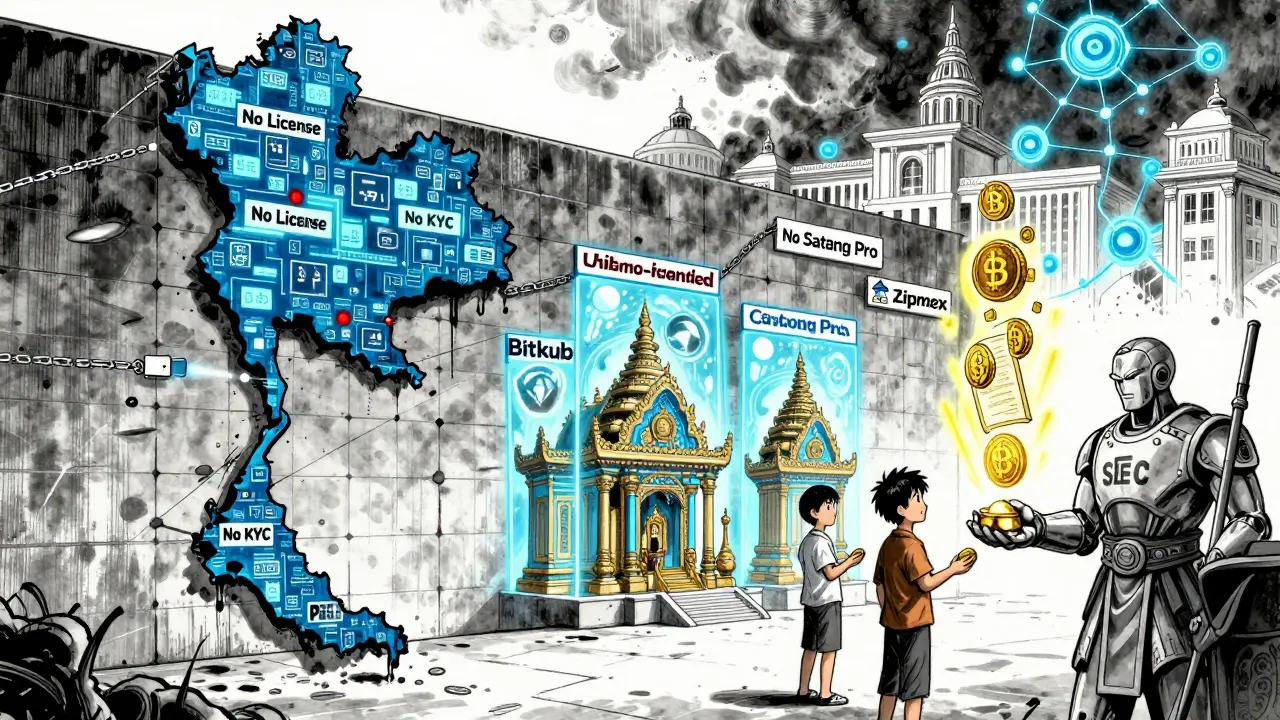
The MDES didn’t just block websites. It cut off every possible path to access. - Internet service providers (ISPs) were ordered to block domain names and IP addresses. - Mobile carriers stopped users from accessing these platforms through apps. - Payment processors like PromptPay and TrueMoney were told to freeze any transfers linked to the banned platforms. - Even social media ads promoting these services were taken down. Banks and telecom companies were also held legally responsible. If a bank’s system was used to launder money from a banned crypto platform and they didn’t stop it, they could be fined. This forced banks to monitor crypto-linked transactions more closely than ever. The result? A near-total digital wall around Thailand’s crypto market.What’s Still Legal in Thailand?
Thailand didn’t ban crypto. It banned unregulated crypto. You can still buy, sell, and trade Bitcoin and Ethereum - but only through Thai-licensed exchanges. Bitkub, Satang Pro, and Zipmex are the three main ones. They’re required to:- Verify every user’s identity (KYC)
- Report suspicious transactions to authorities
- Keep funds in cold storage with third-party audits
- Pay taxes on gains
How This Affects Businesses and Cross-Border Payments
The ban isn’t just about individual traders. It’s reshaping how Thai businesses operate. Before the ban, Thai startups could receive crypto payments from international clients via Bybit or OKX. Now? They can’t. All payments must go through a licensed Thai exchange. That means:- Slower transactions - often 2-3 days instead of minutes
- Higher fees - licensed exchanges charge 1-2% per trade
- More paperwork - every transaction must be documented for tax and AML purposes
Public Reaction and Long-Term Impact
The ban split public opinion. On one side, victims of crypto scams applauded. "I lost $12,000 to a fake platform," said a woman from Chiang Mai. "I’m glad they shut them down. No more false promises." On the other side, traders and investors complained about lost freedom. "I used Bybit because it had better liquidity and lower fees," said a 28-year-old trader from Bangkok. "Now I’m stuck with Bitkub, which has no margin trading and terrible customer service." Legal experts also raised concerns. Blocking websites without court approval? That’s a power rarely seen outside authoritarian states. Thailand’s move could set a dangerous precedent. But here’s the twist: Thailand’s crackdown worked. In the six months after the ban, reports of crypto fraud dropped by 68%. Scam reports dropped from 1,200 per month to under 400. That’s a win for regulators.What’s Next for Thailand?
Thailand is now testing its model. The government is rolling out a blockchain-based securities trading platform for local companies. It’s exploring a digital baht - not as a replacement for cash, but as a settlement layer between banks. The message is clear: innovation is welcome. But only if it’s under Thai control. Other Southeast Asian countries are watching closely. Indonesia and Vietnam are considering similar bans. The Philippines is debating whether to follow Thailand’s lead. This isn’t just a local policy. It’s becoming a regional blueprint. For now, if you’re in Thailand and want to trade crypto, you have three options:- Use a licensed Thai exchange (Bitkub, Satang Pro, Zipmex)
- Wait for foreign platforms to apply for a license (none have yet)
- Try to use a VPN - but know that’s now against Thai law and carries penalties
Are foreign crypto platforms completely banned in Thailand?
Yes. Any foreign crypto platform that doesn’t hold a Thai license from the SEC is blocked from serving Thai users. This includes major exchanges like Bybit, OKX, and CoinEx. Access is cut off at the network level by ISPs and telecom providers. The ban applies to both websites and mobile apps.
Can I still trade cryptocurrency in Thailand?
Yes, but only through Thai-licensed exchanges like Bitkub, Satang Pro, and Zipmex. These platforms are required to follow strict KYC, AML, and tax rules. You can deposit Thai baht directly, trade crypto, and withdraw funds legally. Unlicensed platforms are blocked, and using them can result in legal penalties.
What happens if I still use a banned platform like Bybit or OKX?
You won’t be able to access the platform from within Thailand - the websites and apps are blocked. If you try to bypass the block using a VPN, you’re violating Thai law. While individual users aren’t being arrested, using unlicensed platforms exposes you to fraud risks, frozen funds, and no legal recourse. The government is focused on blocking operators, not users - but the risk is still high.
Did Thailand ban all cryptocurrency?
No. Cryptocurrency is legal in Thailand as a digital asset, not as legal tender. The ban targets only unlicensed foreign platforms. Licensed local exchanges continue operating. The government is even launching its own blockchain-based digital bonds called "G Tokens" to raise public debt. Thailand is restricting access, not eliminating crypto.
Why did Thailand target these specific five platforms?
The SEC identified these five as the most widely used by Thai users and the most likely to be exploited for fraud and money laundering. They had no Thai licenses, didn’t report suspicious activity, and didn’t comply with local AML rules. The SEC didn’t ban them because they were bad - they banned them because they were unregulated. The move was about enforcement, not targeting specific companies.
Can foreign crypto companies get a Thai license now?
Yes, but the bar is high. A foreign platform must establish a legal entity in Thailand, hire local compliance officers, submit to audits, implement full KYC/AML, and pay licensing fees. As of March 2026, no foreign exchange has successfully applied. The process takes 6-12 months and requires ongoing reporting. It’s designed to be difficult - and it’s working.







Lauren J. Walter
March 21, 2026 AT 02:05That’s not regulation. That’s digital authoritarianism with a side of Thai tea.
S F
March 23, 2026 AT 02:00Angelica Stovall
March 23, 2026 AT 04:32Bryan Roth
March 23, 2026 AT 18:47sai nikhil
March 24, 2026 AT 20:06Sahithi Reddy
March 26, 2026 AT 17:50George Hutchings
March 28, 2026 AT 08:27Henrique Lyma
March 29, 2026 AT 10:00Derek Lynch
March 30, 2026 AT 10:16Shreya Baid
March 31, 2026 AT 09:54Christopher Hoar
April 1, 2026 AT 12:41Sarah Zakareckis
April 2, 2026 AT 05:19Heather James
April 3, 2026 AT 05:28Graham Smith
April 4, 2026 AT 07:02Jerry Panson
April 4, 2026 AT 12:08rajan gupta
April 5, 2026 AT 01:35When the system tries to control the flow of value… it’s because it’s afraid of what happens when people are truly free.
They block platforms… but they can’t block the mind.
They can’t stop the truth: money is energy. And energy… cannot be caged.
Billy Karna
April 6, 2026 AT 04:25Cheri Farnsworth
April 8, 2026 AT 00:05Gene Inoue
April 8, 2026 AT 20:25Ricky Fairlamb
April 9, 2026 AT 23:31Arlene Miles
April 10, 2026 AT 17:39Tony Weaver
April 12, 2026 AT 12:27Patty Atima
April 14, 2026 AT 01:32