Have you heard the toilet song echoing through social media feeds and wondered if there is money to be made from it? You are not alone. The Skibidi Toilet is a viral internet phenomenon that has spawned multiple cryptocurrency tokens, creating a confusing landscape for anyone looking to invest or just understand the hype.
The short answer is: yes, there is a crypto coin called Skibidi Toilet, but you need to be very careful because there are at least two different tokens using similar names. One trades under the ticker SKIBIDI, and another uses SKBDI. Both live on the Solana blockchain, which means they rely on Solana’s fast transaction speeds and low fees. However, neither of these coins offers any real-world utility like lending, borrowing, or governance rights. They are pure memecoins, meaning their value comes entirely from community hype and speculation rather than underlying technology or revenue.
Two Tokens, One Meme: Understanding the Confusion
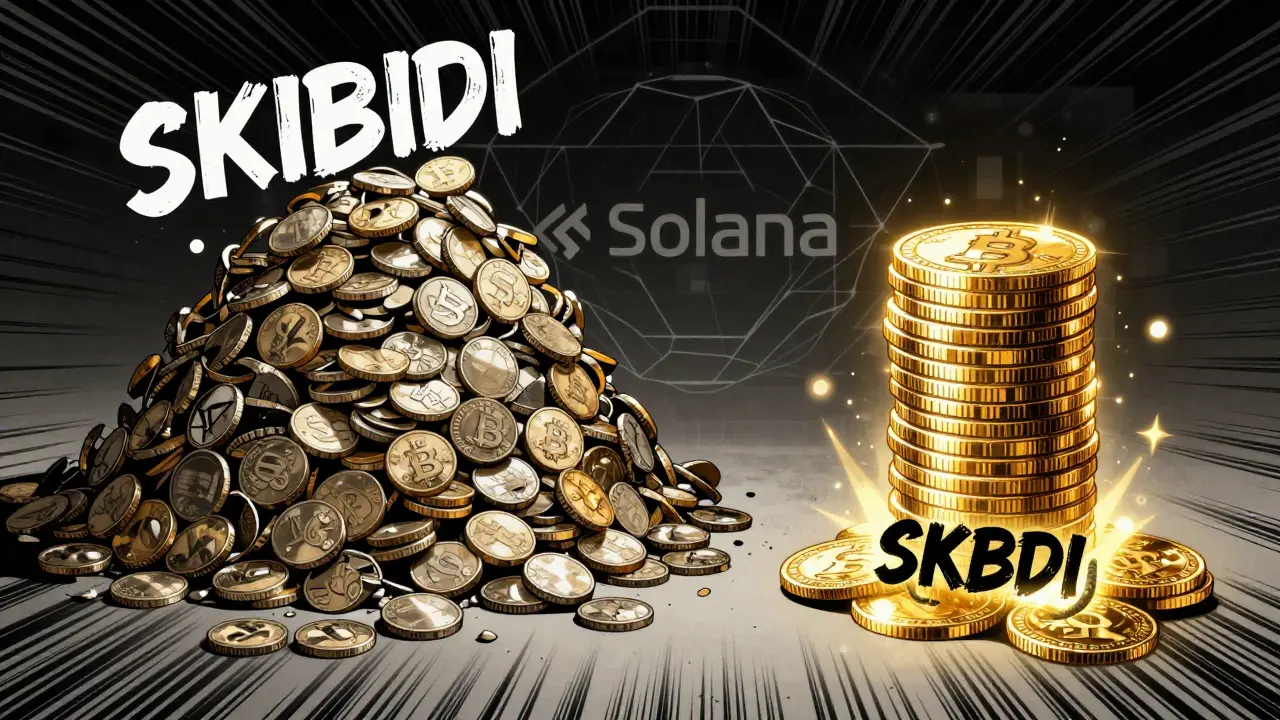
If you search for "Skibidi Toilet coin," you will likely run into a major headache: distinguishing between the two main tokens. This confusion is one of the biggest risks for new investors. Let’s break down exactly what you are looking at so you do not buy the wrong asset.
First, there is the token with the ticker SKIBIDI. Data from aggregators like Crypto.com shows this token has a massive maximum supply of 100 billion tokens. Because the supply is so high, the price per token is incredibly low-often hovering around $0.0000001357 USD. At first glance, a price that low might seem like a bargain, but in the world of memecoins, the number of zeros matters less than the total market cap and liquidity. Currently, trading volume for SKIBIDI is often reported as negligible or unavailable, suggesting it is extremely illiquid. If you buy it, selling it later without crashing the price could be difficult.
Then there is the second token, tracked as SKBDI on platforms like CoinGecko and CoinMarketCap. This token has a circulating supply of 75 million, which is significantly smaller than the SKIBIDI variant. Its price history is more volatile but also more active. It hit an all-time high of $1.03 back in November 2024 before dropping sharply. As of recent data, it trades closer to $0.003, with a market capitalization of roughly $232,000. While still tiny compared to major cryptocurrencies, SKBDI has seen more consistent trading activity, with daily volumes sometimes exceeding its entire market cap-a sign of intense speculative turnover.
| Feature | SKIBIDI Token | SKBDI Token |
|---|---|---|
| Ticker Symbol | SKIBIDI | SKBDI |
| Blockchain | Solana | Solana |
| Max/Circulating Supply | 100 Billion (Max) | 75 Million (Circulating) |
| Approximate Price | $0.00000013 | $0.003 - $0.06 (Highly Volatile) |
| Liquidity | Very Low / Illiquid | Moderate (Speculative) |
| Primary Driver | Meme Hype | Meme Hype & Trading Volume |
Why Solana? The Technical Backbone
You might wonder why both these tokens chose the Solana blockchain instead of Ethereum or Bitcoin. The answer lies in cost and speed. Solana is designed to handle thousands of transactions per second with fees that are often fractions of a cent. For memecoin traders who might want to buy and sell small amounts quickly, Ethereum’s higher gas fees can eat up profits instantly. Solana makes it cheap to experiment, which attracts both developers launching new meme projects and retail investors chasing quick gains.
However, being on Solana does not make a token safe or valuable. It simply means the infrastructure is efficient. Neither SKIBIDI nor SKBDI adds any unique technical features to the network. They are standard SPL tokens (Solana Program Library), which are essentially digital IOUs with no inherent function beyond being traded. There is no staking mechanism, no yield farming, and no governance voting attached to these specific coins based on current public data.
The Origin Story: From YouTube Series to Crypto
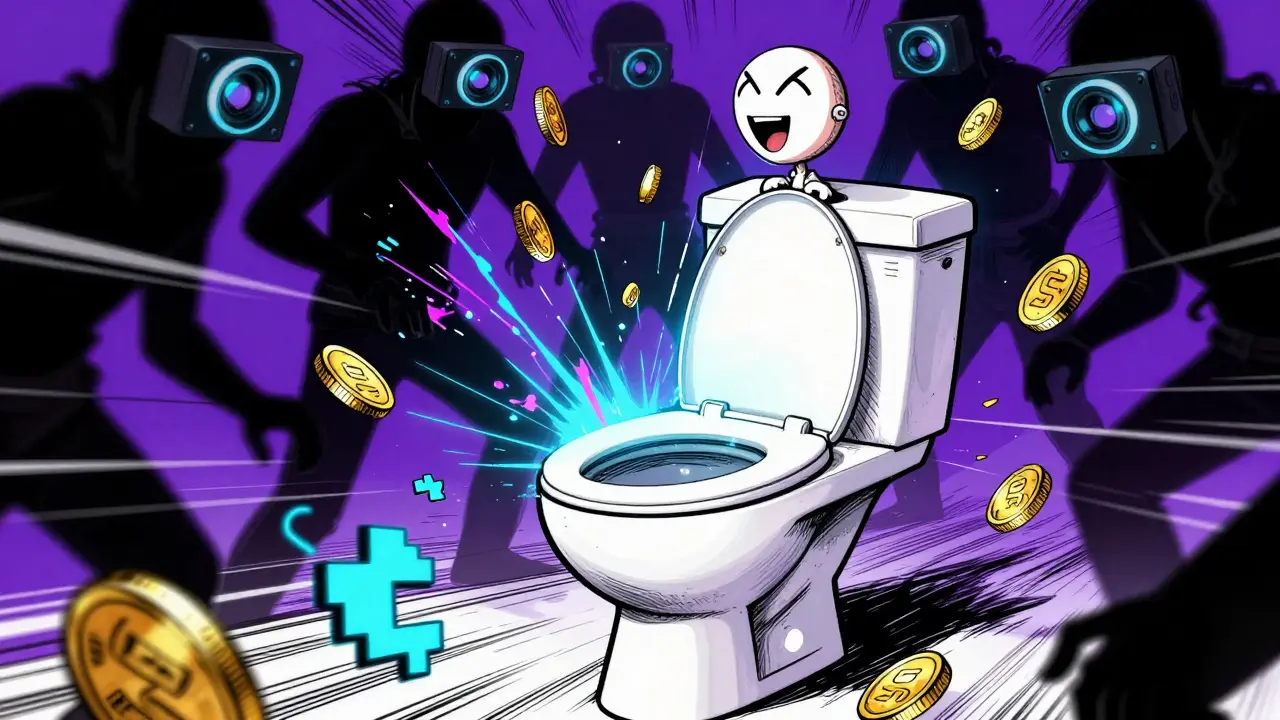
To understand the value proposition-or lack thereof-you have to look at the source material. Skibidi Toilet started as a series of animated videos on YouTube created by DaFuq!?Boom!. The videos feature a bizarre war between characters with human heads inside toilets and characters with cameras, speakers, or TVs for heads. The series became a global sensation, racking up over 65 billion views across various platforms.
This cultural explosion created a perfect storm for cryptocurrency opportunists. In the crypto world, attention equals potential liquidity. Developers saw a massive, engaged audience primarily consisting of younger demographics who were already familiar with internet culture and potentially open to Web3 concepts. By branding a token with the name "Skibidi Toilet," creators hoped to capture a fraction of that attention and convert it into trading volume.
It is important to note that there is no evidence linking the original creator of the Skibidi Toilet video series to these cryptocurrency tokens. These are fan-made or third-party projects capitalizing on the trademark-free nature of early meme culture. This distinction is crucial because it means the token has no official endorsement from the content creator, adding another layer of risk regarding intellectual property disputes or sudden loss of interest.
Risks You Cannot Ignore
Investing in SKIBIDI or SKBDI is not investing in a company; it is betting on a trend. Here are the specific dangers you face:
- No Fundamental Value: Unlike stocks that represent ownership in a business or bonds that pay interest, these tokens generate no cash flow. Their price moves only when someone else is willing to pay more for them. When the hype dies, the price usually goes to zero.
- Extreme Volatility: Look at the history of SKBDI. It dropped 94.5% from its all-time high. Such swings are common in micro-cap memecoins. You could see your investment halve in value within hours based on a single tweet or social media post.
- Lack of Documentation: There are no whitepapers, no named founding teams, and no audited smart contracts publicly linked to these tokens in mainstream aggregators. Without audits, you cannot verify if the code contains "rug pull" mechanisms that allow developers to steal liquidity or freeze your funds.
- Liquidity Traps: Especially with the SKIBIDI token, the low trading volume means you might not be able to sell your tokens easily. If everyone tries to sell at once, the price collapses, and you are left holding worthless digital assets.
How to Check If a Token Is Safe
If you are determined to explore this space despite the risks, you must do your own due diligence. Do not rely solely on the name. Here is a practical checklist:
- Verify the Contract Address: Never buy a token just by searching its name on an exchange. Copy the exact contract address from a trusted aggregator like CoinGecko or CoinMarketCap and paste it into your wallet. Scammers often create fake tokens with the same name to trick buyers.
- Check Liquidity Pools: Use tools like DexScreener or Birdeye to see how much money is locked in the trading pool. If the liquidity is very low compared to the market cap, the token is highly susceptible to manipulation.
- Look for Renounced Ownership: On Solana, check if the mint authority has been revoked. If the developer can still mint new tokens, they can inflate the supply and crash the price at any time.
- Analyze Holder Distribution: If a small number of wallets hold a large percentage of the supply, those holders can dump their tokens on the market, causing a flash crash. Tools like Solscan can help you view holder distribution.
Is It Worth Your Money?
Let’s be direct. For the vast majority of people, the answer is no. The Skibidi Toilet crypto coin ecosystem is built on fleeting internet fame. While some early traders have made significant profits, for every winner, there are many more who lose money chasing the tail end of the hype cycle.
If you choose to participate, treat it like buying a lottery ticket, not an investment. Only use money you are fully prepared to lose completely. Never borrow money to buy memecoins, and never put in funds needed for rent, bills, or savings. The goal of these tokens is entertainment and speculation, not wealth preservation.
Remember that the crypto market evolves rapidly. A token that is trending today can be forgotten next month. Stay informed, stay skeptical, and always prioritize security over FOMO (Fear Of Missing Out).
What is the difference between SKIBIDI and SKBDI?
They are two separate cryptocurrency tokens on the Solana blockchain. SKIBIDI has a max supply of 100 billion tokens and is generally more illiquid with a lower price per unit. SKBDI has a circulating supply of 75 million tokens, higher trading volume, and has experienced more significant price volatility, including an all-time high of $1.03. Always check the ticker symbol carefully before buying.
Is the Skibidi Toilet crypto coin officially endorsed by the video creator?
There is no public evidence that the original creator of the Skibidi Toilet YouTube series, DaFuq!?Boom!, owns or endorses these cryptocurrency tokens. They appear to be third-party projects leveraging the popularity of the meme for speculative trading purposes.
Which blockchain is the Skibidi Toilet coin built on?
Both the SKIBIDI and SKBDI tokens are built on the Solana blockchain. This allows for fast transactions and low fees, which is typical for memecoins that require high-frequency trading.
Does Skibidi Toilet coin have any utility or real-world use case?
No. Current data indicates that these tokens are purely speculative memecoins. They do not offer staking rewards, governance rights, or integration with decentralized finance (DeFi) protocols. Their value is driven entirely by community sentiment and viral trends.
How risky is it to invest in Skibidi Toilet crypto?
It is extremely high-risk. These tokens are micro-cap assets with no fundamental backing, no audit trails, and extreme price volatility. Prices can drop by 90% or more in a short period. You should only invest money you can afford to lose entirely.