
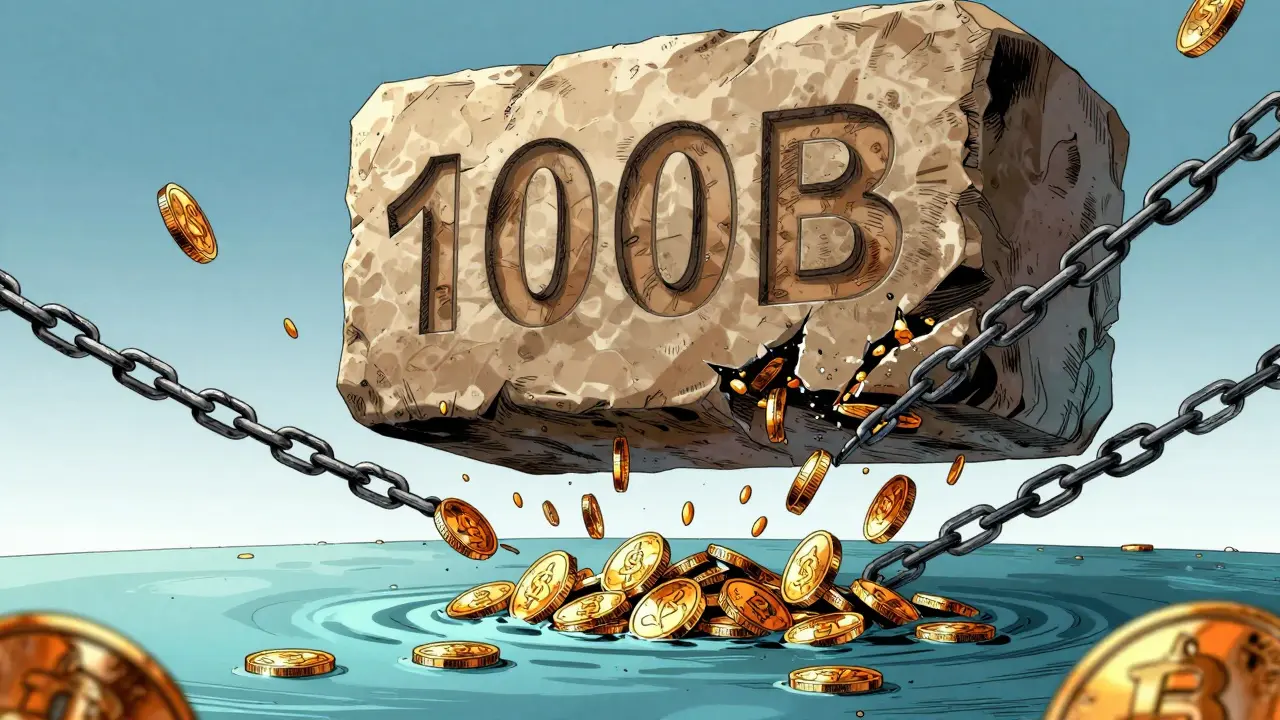
You’ve probably seen the ticker BLAST popping up on trading charts or heard whispers about it in crypto communities. But what exactly is this coin, and why does it matter? If you are looking for a quick answer: Blast is an Ethereum Layer 2 solution designed to make transactions faster and cheaper, with a specific focus on mobile applications. However, the story behind the token is more complicated than just "fast blockchain." It involves a fixed supply of 100 billion tokens, significant price volatility, and a market that is currently divided between cautious skepticism and hopeful speculation.
Understanding Blast isn't just about knowing its price; it's about understanding where it fits in the crowded world of scaling solutions. Is it the next big thing for decentralized finance (DeFi), or is it another project struggling to find its footing? Let’s break down the technology, the economics, and the real-world data so you can decide if BLAST deserves a spot in your research portfolio.
The Core Concept: What Makes Blast Different?
To understand Blast, you first need to understand the problem it tries to solve. The Ethereum network is secure but slow and expensive during peak times. This is where Layer 2 solutions come in. They sit on top of Ethereum, processing transactions quickly and cheaply before settling them on the main chain.
Blast distinguishes itself by focusing heavily on mobile dApps. While many competitors like Arbitrum or Optimism target desktop users and complex DeFi protocols, Blast aims to bring crypto into the pockets of everyday smartphone users through its Blast App ecosystem. This "mobile-first" approach is a bold bet. If successful, it could onboard millions of users who never want to deal with browser extensions or seed phrases. If it fails, it remains just another L2 with no unique advantage.
However, there is a catch. Detailed technical documentation for Blast’s architecture is surprisingly sparse compared to its rivals. You won’t find deep-dive whitepapers explaining every line of code as easily as you might for other major projects. This lack of transparency often raises eyebrows among experienced developers. When a project relies more on marketing hype than open-source technical specs, investors need to pay extra attention to the tokenomics.
Tokenomics: The Supply and Demand Game
In crypto, the token is the engine of the economy. For BLAST, the numbers tell a specific story. The total supply is fixed at 100,000,000,000 (100 billion) tokens. This number will never change. But how many are actually circulating right now? That’s where things get messy.
Data from different platforms shows discrepancies. CoinLore reports a circulating supply of roughly 2.87 billion BLAST, which is less than 3% of the total. In contrast, CoinMarketCap lists a much higher figure of around 48.56 billion BLAST in circulation. Why the difference? It often comes down to how platforms define "circulating." Some count locked tokens or staked assets differently. Regardless of the exact number, one fact remains clear: a massive amount of BLAST tokens are yet to be released.
This leads to the concept of token unlocks. These are scheduled events where previously locked tokens become available for trading. According to analysis from late 2025, there were upcoming unlocks, such as 2.29 million BLAST scheduled for August 2025. While 2.29 million might sound small against 100 billion, these events signal potential selling pressure. When early investors or team members unlock their tokens, they often sell to cash out, which can drive the price down. Always check the unlock schedule before buying any new crypto asset.
| Metric | Value / Detail | Source Context |
|---|---|---|
| Total Supply | 100,000,000,000 BLAST | Fixed cap, confirmed by multiple trackers |
| Circulating Supply | ~2.87B - 48.56B BLAST | Discrepancy exists between CoinLore and CoinMarketCap |
| All-Time High (ATH) | $0.0260 | Historical peak price |
| Recent Price Range | $0.0014 - $0.0016 | 24-hour trading range (Mid-2025 data) |
| Market Cap Rank | #373 | Indicates mid-to-lower tier market presence |
Price Performance and Market Reality
Let’s talk about the elephant in the room: the price. As of mid-2025, BLAST was trading significantly below its all-time high. The ATH of $0.0260 feels like a distant memory when current prices hover around $0.0015. That represents a depreciation of over 94% from its peak. For anyone who bought near the top, this has been a painful experience.
The broader trend has been bearish. Over a one-year period, the token saw an 81% decline. Monthly drops of 25% are not uncommon in volatile crypto markets, but consistent downward pressure suggests weak demand or strong selling interest. The market capitalization sits at approximately $4.4 million, ranking it #373 globally. In the vast ocean of cryptocurrencies, this places BLAST in the lower tiers. It is not a blue-chip asset like Bitcoin or Ethereum, nor is it a dominant Layer 2 leader like Arbitrum.
Why is the price struggling? Several factors contribute:
- Lack of Differentiation: With dozens of Layer 2s competing for attention, Blast needs a killer app. So far, its mobile focus hasn’t generated enough volume to support a higher valuation.
- Supply Pressure: The anticipation of future token unlocks keeps large holders cautious.
- Market Sentiment: Broader crypto trends affect altcoins disproportionately. When Bitcoin dips, smaller coins like BLAST often fall harder.
Conflicting Predictions: Bull vs. Bear
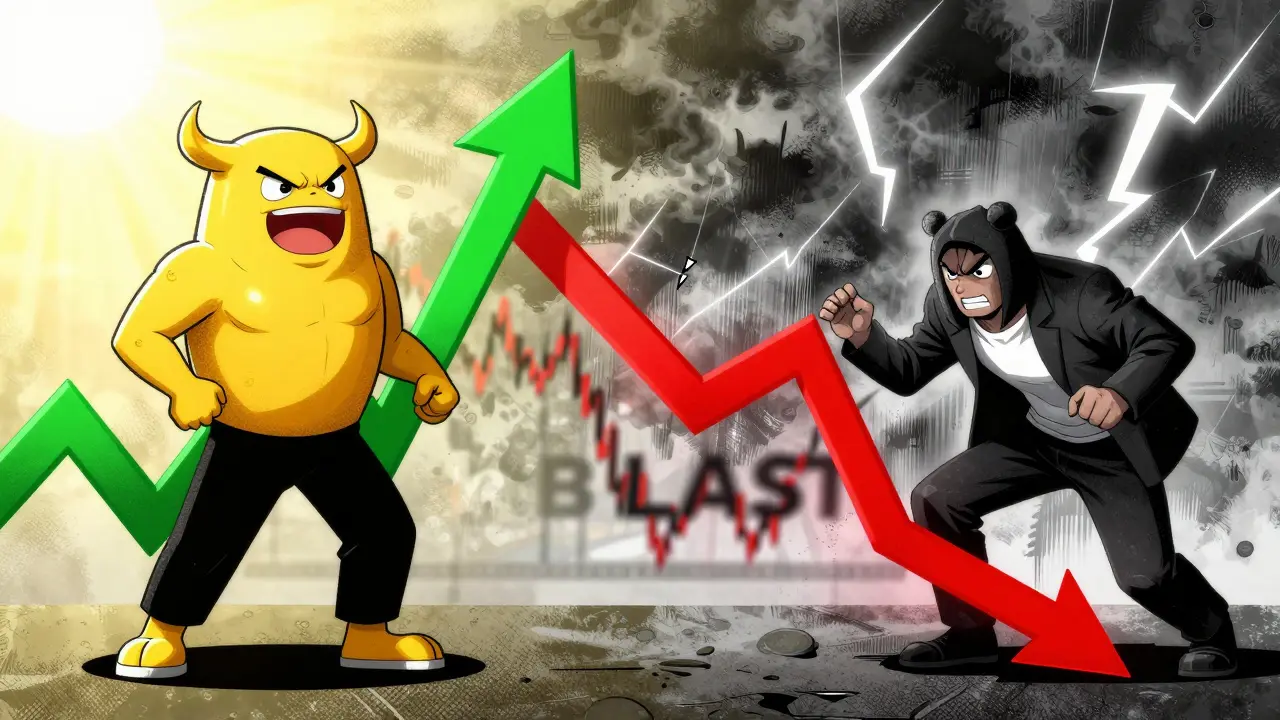
If you search for price predictions online, you will find wildly contradictory advice. This is common in crypto, but the divergence here is extreme. On one side, you have optimistic analysts. Gate.io, for instance, projected a potential recovery in 2025, suggesting prices could reach between $0.0035 and $0.050. Their bullish case rests on Blast’s unique value proposition in mobile integration and user incentives.
On the other side, algorithms and conservative models paint a grim picture. Platforms like TradingBeasts, WalletInvestor, and LiteFinance converged on much lower averages, predicting prices staying flat or declining further to around $0.0014. Even more pessimistic long-term forecasts from Swapspace.co suggested bottoms near $0.0007 by 2030. Meanwhile, CoinCodex explicitly labeled Blast as a "bad buy" based on technical indicators.
Who should you trust? Neither blindly. Predictions are guesses, not guarantees. Instead of looking for a magic number, look at the catalysts. Will Blast launch a popular mobile game? Will a major exchange list it? Without fundamental adoption growth, price targets are just noise. The wide gap between the highest and lowest predictions highlights the uncertainty surrounding the project’s viability.
Risks and Considerations for Investors
Before you consider adding BLAST to your wallet, you need to weigh the risks. Here is what you should keep in mind:
- Volatility: A 94% drop from ATH means this asset can lose value rapidly. Only invest what you can afford to lose entirely.
- Liquidity Issues: With a relatively low market cap, large trades can move the price significantly. Exiting a large position might be difficult without slippage.
- Competition: The Layer 2 space is saturated. Polygon, Optimism, Arbitrum, and Base are established players. Blast needs to steal significant market share to succeed, which is an uphill battle.
- Transparency Gaps: The limited public technical documentation makes it hard for independent experts to audit the security and efficiency of the network thoroughly.
Furthermore, consider the opportunity cost. Money tied up in a struggling altcoin could potentially yield better returns in more established assets or even traditional savings instruments, depending on your risk tolerance. Crypto investing is not just about picking winners; it’s about avoiding losers.
How to Research Further
If you are still interested in Blast, do your own homework. Don’t rely solely on news headlines or influencer tweets. Check the official Blast website for updates on their mobile app development. Look at GitHub repositories to see if developers are actively coding. Join community forums like Discord or Telegram to gauge real user sentiment-are people excited about the tech, or just hoping for a pump?
Also, monitor the token unlock calendar. Websites like TokenUnlocks.app provide detailed schedules. Knowing when large batches of tokens hit the market helps you time your entry or exit strategies. Finally, compare Blast’s metrics with its peers. Does it have higher transaction volumes? Lower fees? More active daily users? If the answers are no, ask yourself why you would choose it over the competition.
Final Thoughts on Blast (BLAST)
Blast represents a high-risk, high-reward experiment in the crypto space. Its ambition to conquer the mobile dApp market is commendable, but execution is everything. Currently, the data shows a project under pressure, with falling prices and mixed analyst opinions. It is not a "set it and forget it" investment. It requires active monitoring and a stomach for volatility. Whether it becomes a cornerstone of mobile crypto or fades into obscurity depends on its ability to deliver real utility beyond its token price.
Is Blast (BLAST) a good investment in 2026?
There is no simple yes or no. BLAST has shown significant price depreciation (over 90% from its all-time high) and faces stiff competition in the Layer 2 sector. While some analysts predict a recovery due to its mobile focus, others warn of continued decline. It is considered a high-risk asset suitable only for investors who understand the technology and can tolerate substantial losses.
What is the total supply of BLAST tokens?
The total supply of BLAST is fixed at 100,000,000,000 (100 billion) tokens. However, the circulating supply varies by platform, ranging from approximately 2.87 billion to nearly 48 billion, depending on how locked and staked tokens are counted.
How does Blast differ from other Ethereum Layer 2s?
Blast primarily differentiates itself through a "mobile-first" strategy, aiming to integrate seamlessly with smartphones via the Blast App ecosystem. Most other Layer 2 solutions like Arbitrum or Optimism focus on desktop-based DeFi and general-purpose smart contracts.
What are the risks associated with holding BLAST?
Key risks include high price volatility, potential dilution from future token unlocks, intense competition from established Layer 2 networks, and limited public technical documentation regarding its security architecture. Additionally, its low market cap makes it susceptible to large price swings from minor trading volumes.
Where can I track BLAST price predictions?
You can find price predictions on various financial data aggregators such as CoinMarketCap, CoinGecko, CoinLore, and specialized prediction sites like Gate.io and CoinCodex. Note that these predictions vary widely and should not be taken as financial advice.