There’s a meme in crypto that won’t die: the $1.50 Costco hot dog. And yes, someone turned it into a cryptocurrency called COST. It’s not a joke. It’s real. But here’s the truth - buying COST isn’t investing. It’s gambling with a side of nostalgia.
What Exactly Is COST?
COST is a memecoin built on the Solana blockchain. It launched in September 2023 with one goal: to celebrate Costco’s legendary $1.50 hot dog and soda combo - a deal that hasn’t changed in nearly 40 years. The token’s creators didn’t build a platform, a product, or even a roadmap. They just made a digital token named after a food item people love.
The token’s total supply is fixed at 949,390,000 coins. All of them are already in circulation. That means no more tokens will ever be created. Sounds fair, right? But here’s the catch: the entire market value of all COST coins combined is around $500,000. That’s less than the cost of a single Tesla Model Y. For comparison, Dogecoin’s market cap is over $24 billion. COST isn’t just small - it’s microscopic.
Why Does COST Even Exist?
COST isn’t trying to change finance. It’s not aiming to be the next Bitcoin. It exists because of culture. Costco’s hot dog is an American icon. It’s the kind of thing people tweet about, post memes of, and joke about on Reddit. When crypto traders saw how much emotional value people placed on that $1.50 combo, they saw an opportunity. Not to build something useful - but to build something viral.
Some say the name COST is a nod to Sol Price, the founder of Price Club, Costco’s predecessor. Others think it’s just a clever abbreviation. Either way, the meme stuck. Social media exploded with posts like “Buy COST before they raise the price of the hot dog!” - even though Costco has no connection to the token. No one from Costco has ever mentioned it. Not once.
How Does COST Work?
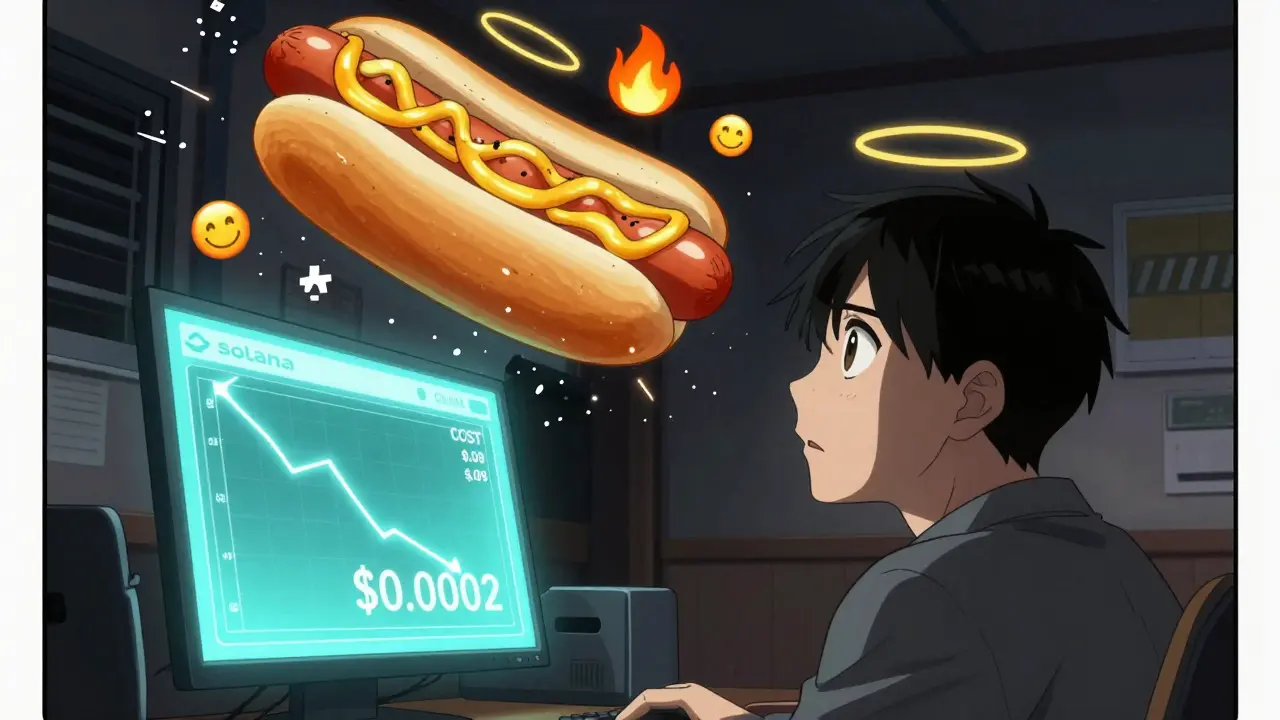
COST runs on Solana as an SPL token - the same standard used by other Solana-based coins. That means transactions are fast and cheap. A single trade costs about $0.00025. That’s cheaper than sending a text message. You can buy COST on decentralized exchanges like Raydium and Jupiter using USDC or SOL.
But here’s the problem: liquidity is razor-thin. On most days, the total trading volume for COST is under $1,500. That means if you try to sell a large amount, you’ll crash the price. One user on Reddit turned $50 into $3,200 in three days - then watched it all vanish when they tried to cash out. The price dropped 90% in hours. That’s not a market crash. That’s a liquidity trap.
And the numbers don’t lie. As of January 2024, only 88,594 wallets hold COST. That’s less than 0.003% of Solana’s active wallets. Most holders own less than $10 worth. These aren’t believers. They’re speculators chasing a quick flip.
Price History: A Rollercoaster With No Safety Rails
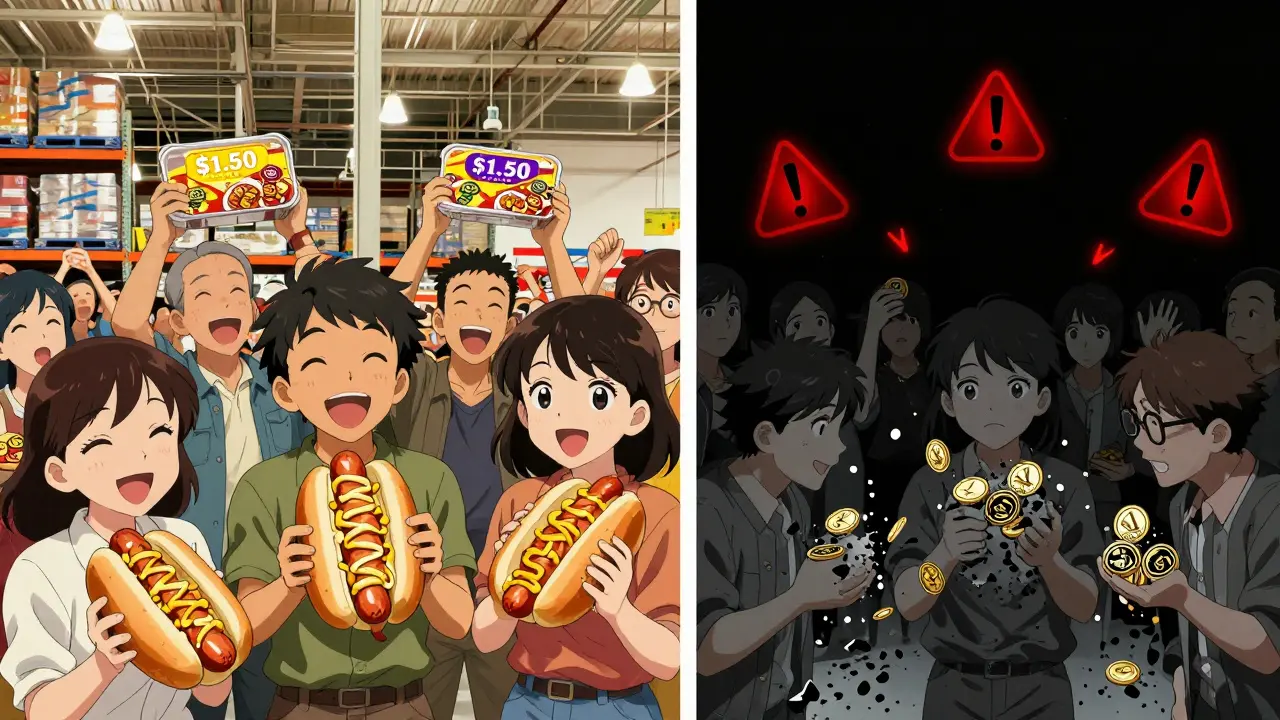
COST’s price history reads like a horror story.
- All-time high: $0.089794 (November 2023)
- All-time low: $0.000446 (January 2024)
- Current price (January 2026): ~$0.0002077
That’s a 99.77% drop from its peak. In less than a year, the coin lost nearly all its value. And it’s not because the hot dog got more expensive. It’s because the hype died.
Every time Costco announces the hot dog price won’t rise, COST spikes 20-30%. Then it crashes again. It’s not a reaction to fundamentals. It’s a reaction to Twitter trends. One viral post can pump the price. The next one can kill it.
Why COST Is Riskier Than Most Memecoins
Not all memecoins are the same. Dogecoin has merchants that accept it. Shiba Inu has a whole ecosystem of apps. Even PEPE has community-funded projects.
COST has none of that.
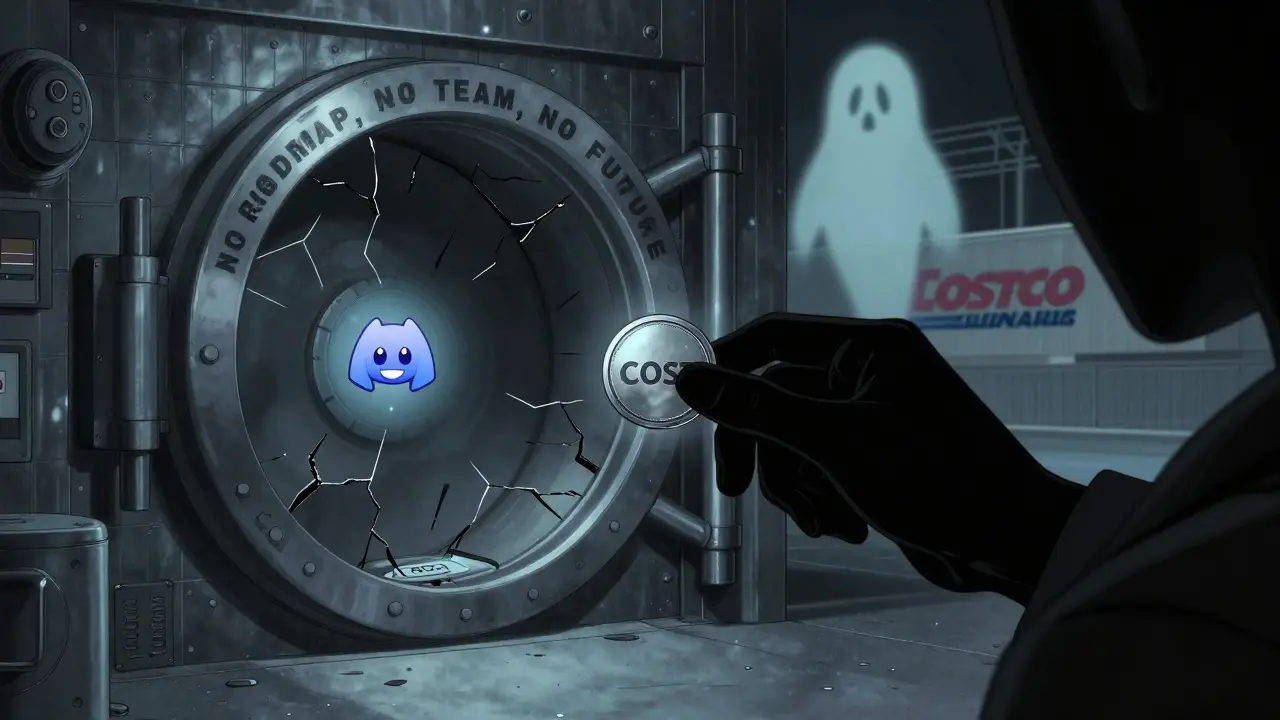
No whitepaper. No team. No roadmap. No utility. No official website. Just a token contract on Solana and a Discord server with fewer than 1,300 members - down from over 10,000 at launch. The Discord now gets about 8 messages per day. On launch day, it got 287.
According to crypto analysts, memecoins under $1 million in market cap have a 92% failure rate within six months. COST is at $500,000. It’s already in the danger zone. Experts at VanEck and Delphi Digital say it has a “near-zero” chance of surviving past 2024.
And here’s the kicker: the SEC has flagged tokens like COST as “high-risk securities.” That doesn’t mean they’ll shut it down tomorrow. But it does mean if you lose money, you have zero legal recourse.
Can You Actually Buy COST Today?
Yes. But you shouldn’t.
If you’re still curious, here’s how it works:
- Get a Solana wallet (Phantom or Solflare).
- Buy SOL or USDC on a centralized exchange like Coinbase or Kraken.
- Transfer it to your wallet.
- Connect to Raydium or Jupiter.
- Swap SOL or USDC for COST.
But here’s what no one tells you: because the price is so low, you’re buying tens of millions of tokens just to spend $10. That confuses new users. And because liquidity is so low, you’ll likely get stuck. You won’t be able to sell when you want to.
One user on Trustpilot wrote: “Lost my entire $200 in 12 hours. No way to exit. No one answered my support ticket.”
Who’s Buying COST Now?
Not investors. Not long-term holders. Not even serious crypto traders.
It’s mostly people who saw a meme, thought “this is funny,” and threw in $20 hoping for a quick win. That’s it. There’s no community. No vision. No future. Just a bunch of people chasing a ghost.
The token’s biggest “feature” is its cultural reference. But cultural references fade. The hot dog combo is iconic - but not enough to sustain a cryptocurrency.
What Happens If Costco Raises the Price?
That’s the million-dollar question. If Costco ever raises the price of the hot dog combo - even to $1.75 - COST could collapse entirely. Why? Because the entire premise of the coin is that the price never changes. That’s the meme. That’s the story.
So if the hot dog goes up, the coin loses its reason to exist. And with no utility, no team, and no backup plan, there’s nothing to hold it up.
It’s not just risky. It’s fundamentally broken.
Final Verdict: Don’t Buy COST
Costco Hot Dog (COST) is not an investment. It’s not a project. It’s not even a serious meme coin. It’s a fleeting internet joke turned into a digital asset with no substance.
It’s the crypto equivalent of betting on a viral TikTok dance. Sure, someone made money off it. But 99% of people who jumped in lost everything.
If you’re looking to get into crypto, there are thousands of better options. Even Dogecoin has a community, a history, and real-world use cases. COST has a hot dog and a Discord channel.
Save your money. Eat the hot dog. Enjoy the deal. Don’t turn it into a gamble.
Is COST coin backed by Costco?
No, Costco has no connection to COST coin. The company doesn’t endorse it, fund it, or even acknowledge it. The token is entirely created and run by anonymous developers using the Costco hot dog as a meme. Any claim that Costco supports COST is false.
Can I make money with COST coin?
A few people made quick profits during its early hype, but those were rare exceptions. Most who bought COST lost money. The coin has extremely low liquidity, meaning you can’t easily sell without crashing the price. It’s not a reliable way to make money - it’s a high-risk gamble with almost no chance of long-term returns.
Is COST coin safe to invest in?
No. COST is classified as a high-risk, speculative asset by major crypto analysts and regulators. It has no team, no roadmap, no utility, and almost no trading volume. The SEC has warned that tokens like COST may be considered unregistered securities. Investing in COST is not safe - it’s like buying a lottery ticket with no chance of winning.
Where can I buy COST coin?
You can buy COST on decentralized exchanges like Raydium and Jupiter using SOL or USDC. But you’ll need a Solana wallet like Phantom. Be warned: trading COST is risky due to low liquidity. Many users report being unable to sell their tokens when prices drop.
Why is COST’s price so volatile?
COST’s price swings because of its tiny market cap and low trading volume. A single large buyer or seller can move the price by 50% in minutes. It’s also driven by social media trends - not real demand. When a meme goes viral, the price spikes. When the trend dies, the price crashes.
Will COST coin survive beyond 2024?
Most experts say no. With no development, no community growth, and declining trading volume, COST is on track to become completely illiquid. Crypto analysts estimate a 95% chance it will vanish within 12 months. It lacks even the basic features that keep other memecoins alive.
What’s the difference between COST and Dogecoin?
Dogecoin has a massive community, merchant acceptance, and years of history. It’s traded on major exchanges and has real-world use cases. COST has none of that. It’s a niche meme with no utility, a tiny market cap, and almost no adoption. Dogecoin is a cultural phenomenon with staying power. COST is a one-time joke.
Don’t let a funny meme fool you. Crypto isn’t about jokes. It’s about value. And COST has none.