
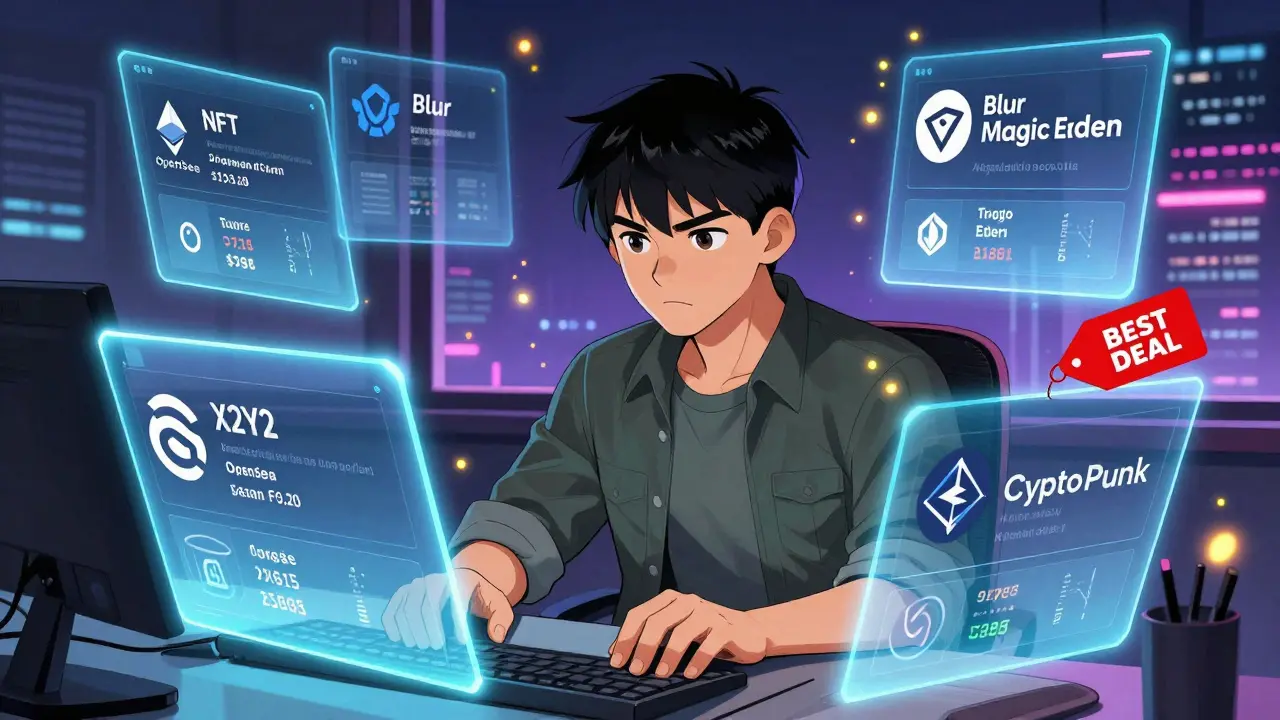
Buying an NFT used to mean hopping between half a dozen websites - OpenSea, LooksRare, Blur, Magic Eden, X2Y2 - just to find one decent piece. You’d check the floor price on one, then rush over to another to see if it was cheaper, then switch wallets, pay gas twice, and hope the item didn’t sell before you finished loading the page. It was exhausting. That’s where NFT marketplace aggregators come in. They cut through the noise. Instead of jumping from site to site, you now see every active NFT listing across dozens of marketplaces in one clean, searchable interface.
What Exactly Is an NFT Marketplace Aggregator?
An NFT marketplace aggregator is a tool that pulls live data from multiple NFT trading platforms and shows you everything in one place. Think of it like Google Shopping, but for digital art, collectibles, and game items. It doesn’t sell NFTs itself. It shows you where they’re listed, at what price, on which blockchain, and who’s selling them. You click through to the original marketplace to complete the purchase - but only after you’ve confirmed it’s the best deal available.
Before aggregators, traders wasted hours just comparing prices. Now, you can search for a Bored Ape, see its current floor price on OpenSea, check if it’s cheaper on Blur, verify the royalty structure on X2Y2, and spot a rare variant listed on Magic Eden - all before you even open your wallet. The time saved isn’t just convenient. It’s profitable.
How Do These Aggregators Work?
Behind the scenes, aggregators use a mix of APIs, blockchain crawlers, and smart scraping tools to pull data in real time. They don’t just grab prices. They collect:
- Current listing price for each NFT
- Gas fees required to complete the transaction
- Creator royalties (often hidden on individual marketplaces)
- Collection rarity scores and attribute breakdowns
- Recent sales history and trend lines
- Supported blockchains (Ethereum, Solana, Polygon, etc.)
This data is then filtered, sorted, and displayed using intelligent algorithms. You can search by collection name, token ID, or even specific traits - like "laser eyes" or "gold fur" - and instantly see which marketplace has the lowest price for that exact NFT.
Key Features That Actually Matter
Not all aggregators are built the same. Here are the features that separate useful tools from clutter:
1. Cross-Marketplace Search
The core function. You type in "CryptoPunks" or paste a token ID, and the aggregator shows you every active listing across all supported platforms. No more guessing which site has the cheapest one.
2. Real-Time Price Updates
NFT prices can swing in minutes. A floor price of 2.1 ETH at 9:03 AM might be 1.8 ETH by 9:07 AM after a big sale. Good aggregators refresh data every 15-30 seconds. Slow ones? They’re useless.
3. Gas Fee Optimization
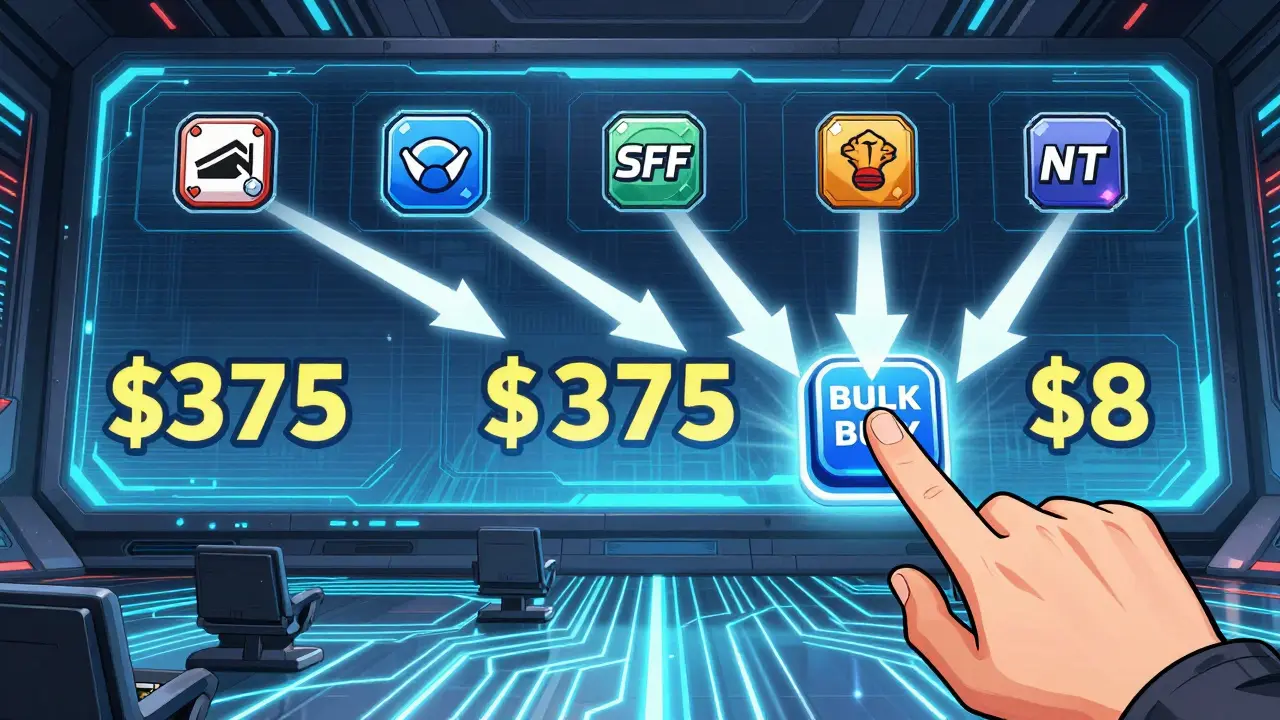
This is where aggregators save you real money. Buying 10 NFTs on OpenSea? That’s 10 separate transactions. 10 gas fees. At 20 gwei, that’s $150+ in fees. Aggregators with bulk purchase let you buy all 10 in one transaction - one gas fee. Some even route transactions through cheaper chains like Polygon or Arbitrum to slash costs further.
4. Multi-Wallet Support
Whether you use MetaMask, Coinbase Wallet, Phantom, or a Ledger hardware wallet, the best aggregators connect seamlessly. No forced wallet lock-ins. You keep control.
5. Portfolio Tracking
Most aggregators let you connect your wallet to view your entire NFT collection in one dashboard. You see current value, historical value, profit/loss per item, and even tax-ready export logs. No more spreadsheet chaos.
6. AI-Powered Recommendations
Some platforms use machine learning to suggest NFTs based on your past buys, browsing habits, and even market trends. If you keep buying CryptoKitties with "rare hat" traits, the aggregator might alert you when a similar one drops on Blur - before it hits OpenSea.
Aggregator vs. Traditional Marketplace: The Real Difference
It’s easy to confuse aggregators with marketplaces. Here’s the clear breakdown:
| Feature | NFT Aggregator | Traditional Marketplace |
|---|---|---|
| Primary Function | Compare prices across platforms | List and sell NFTs on one platform |
| Buy Multiple NFTs | Yes - bulk purchase in one transaction | No - one NFT per transaction |
| Price Comparison | Yes - shows listings from 10+ marketplaces | No - only shows its own listings |
| Wallet Integration | Supports all major wallets | Often pushes its own wallet |
| Creation Tools | No - doesn’t let you mint NFTs | Yes - includes lazy minting, royalties, etc. |
| Analytics | Advanced - trend charts, rarity scores, volume history | Basic - sales history only |
The takeaway? Marketplaces are where you sell. Aggregators are where you shop smart.
Why Bulk Purchase Changes Everything
Let’s say you want to buy 25 NFTs from a new collection. On OpenSea? That’s 25 separate transactions. At $15 average gas per tx, you’re paying $375 just in fees. Even if each NFT costs $10, you’re out $625 total.
On an aggregator with bulk purchase? You select all 25, confirm in one click, and pay one gas fee - say, $8. Total cost: $258. That’s a $367 savings. That’s not a convenience. It’s a game-changer for collectors, floor hunters, and traders.
Some aggregators even let you set price alerts. "Notify me when any CryptoPunk drops below 5 ETH." Or "Buy 5 NFTs from this collection if floor price dips 10% in 10 minutes." Automation like this turns passive browsing into active strategy.
What to Look for When Choosing an Aggregator
Not all tools are trustworthy. Here’s what to prioritize:
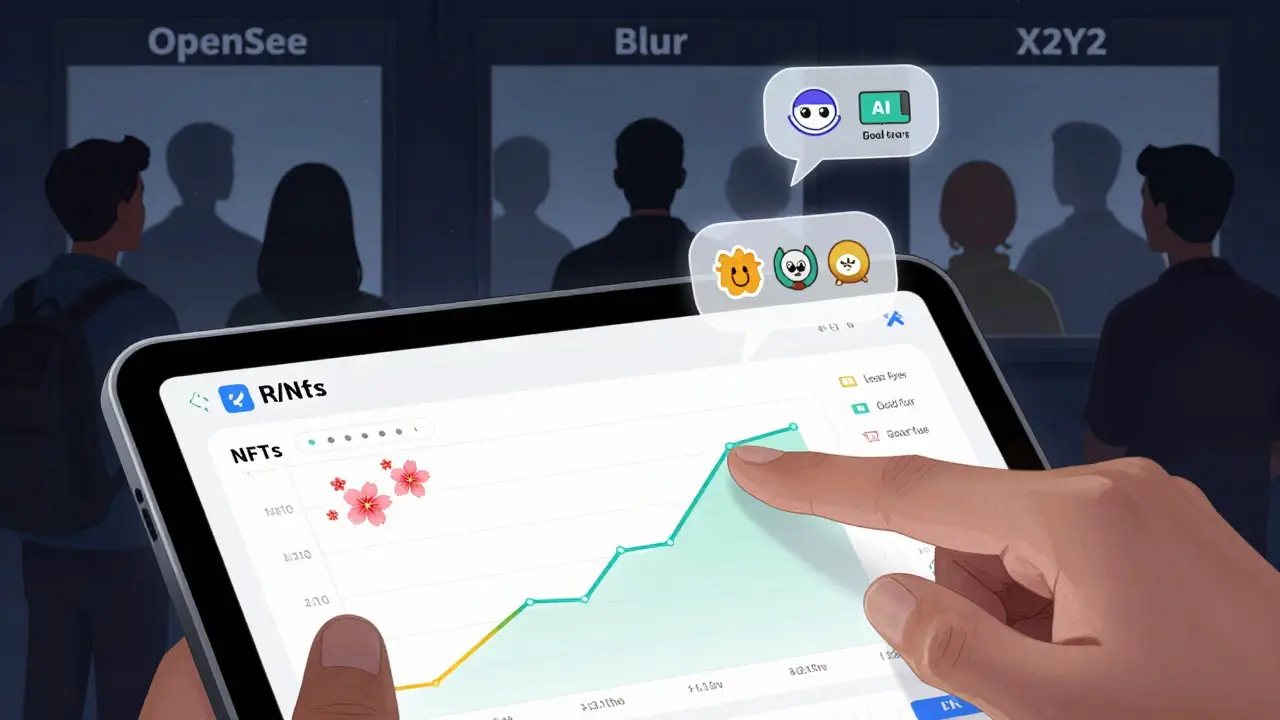
- Number of supported marketplaces - Aim for at least 10+. If it only covers OpenSea and Blur, you’re missing half the market.
- Blockchain coverage - Ethereum, Solana, Polygon, Base, and Sei are must-haves. If it doesn’t support your chain, skip it.
- Update speed - Test it. Refresh the page. Does the price change live? Or is it stuck from 2 hours ago?
- Mobile experience - Can you use it on your phone? Most aggregators are desktop-first. The best ones have clean mobile UIs.
- No hidden fees - Some take a cut on sales. Avoid them. Legit aggregators are free to use.
- Transparency - Do they show exactly which marketplace each listing comes from? Or do they hide it behind "Buy Now" buttons? Always pick transparency.
Who Benefits Most?
Aggregators aren’t just for whales. They help everyone:
- Collectors - Find rare items faster, avoid overpaying.
- Traders - Spot arbitrage opportunities across chains and platforms.
- Newcomers - No need to learn 10 different interfaces. Start with one.
- Sellers - See where your NFTs are listed, adjust prices to stay competitive.
Even creators use aggregators to monitor how their work is being traded - and if royalties are being honored.
The Future of NFT Trading
Aggregators are becoming infrastructure - like Google for NFTs. As more marketplaces pop up, and more chains launch, the need for unified discovery will only grow. Some are already adding:
- Automated bidding bots
- Sniper tools for mint drops
- On-chain analytics dashboards
- Integration with DeFi lending for NFT-backed loans
The next step? Aggregators that don’t just show you where to buy - but help you buy smarter. Think AI-driven buy/sell signals, portfolio rebalancing alerts, and real-time risk scoring based on market volatility.
One thing’s clear: if you’re serious about NFTs, you’re not browsing one marketplace anymore. You’re using an aggregator - or you’re leaving money on the table.
Are NFT marketplace aggregators safe to use?
Yes - if you use reputable ones. Legit aggregators don’t hold your funds or private keys. They’re read-only tools that connect directly to your wallet. Always check if the platform has a public audit, open-source code, and clear privacy policy. Avoid any aggregator that asks you to sign a transaction just to "view listings." That’s a red flag.
Do I have to pay to use an NFT aggregator?
Most top aggregators are free. They make money through optional premium features - like advanced analytics, AI alerts, or bulk purchase automation. The core search and price comparison features are always free. If a platform charges just to browse listings, walk away.
Can I buy NFTs directly through an aggregator?
Not exactly. Aggregators redirect you to the original marketplace to complete the purchase. But with bulk purchase, you can select multiple NFTs from different platforms and approve them all in one transaction - making it feel like you’re buying directly. The final swap still happens on-chain via the original marketplace’s smart contract.
Which blockchains do aggregators support?
Top aggregators support Ethereum, Solana, Polygon, Base, Arbitrum, and Sei. If you’re active on a less common chain like Flow or Aptos, check if your chosen aggregator covers it. Most still focus on Ethereum and Solana since they hold 85% of NFT volume.
Do aggregators affect NFT prices?
They don’t set prices, but they do influence them. When buyers can instantly compare prices across markets, sellers are forced to stay competitive. This reduces price manipulation and creates more transparent markets. In some cases, it’s led to floor prices dropping faster - which benefits buyers.





Dominica Anderson
February 15, 2026 AT 22:39Tarun Krishnakumar
February 17, 2026 AT 12:00jennifer jean
February 18, 2026 AT 07:19Charrie VanVleet
February 18, 2026 AT 07:57Geet Kulkarni
February 19, 2026 AT 00:34Paul David Rillorta
February 19, 2026 AT 06:53andy donnachie
February 20, 2026 AT 04:37Lauren Brookes
February 20, 2026 AT 23:11Chris Thomas
February 21, 2026 AT 04:49Andrew Edmark
February 22, 2026 AT 07:08kieron reid
February 22, 2026 AT 21:57Avantika Mann
February 23, 2026 AT 12:16Nikki Howard
February 24, 2026 AT 13:20Sasha Wynnters
February 25, 2026 AT 11:53AJITH AERO
February 26, 2026 AT 06:26Angela Henderson
February 27, 2026 AT 11:07