
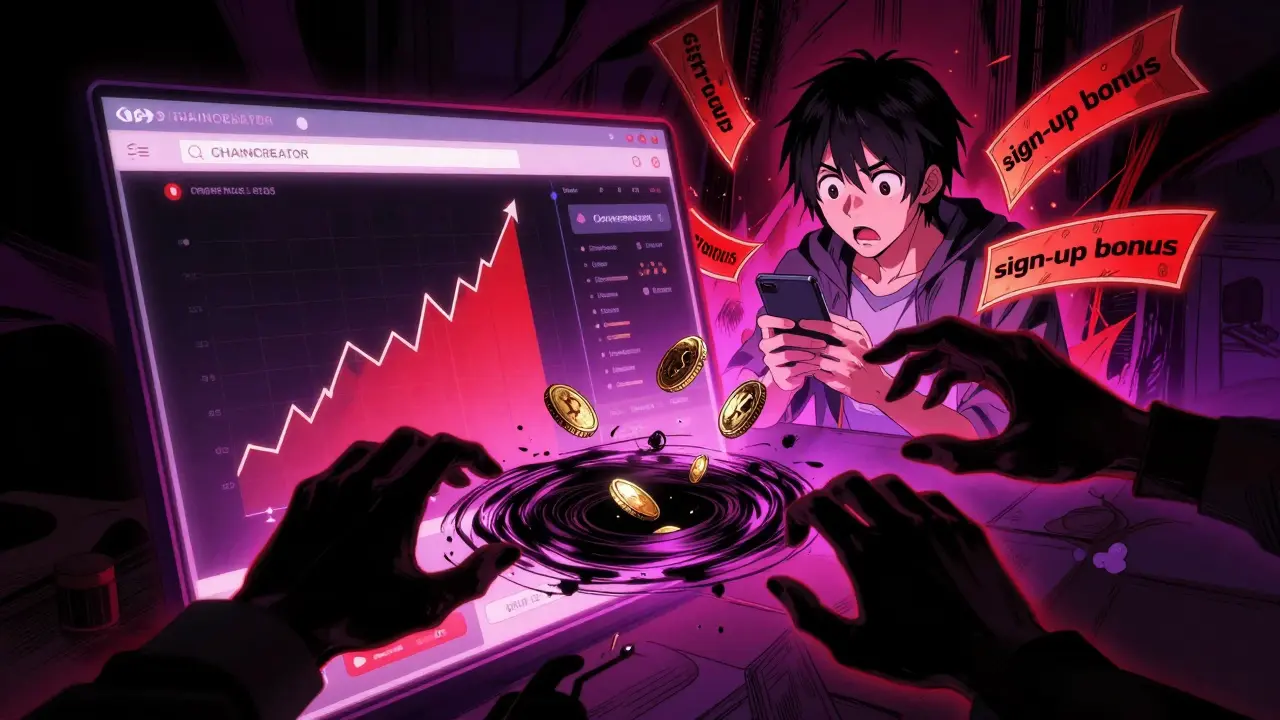
There’s no such thing as CHAINCREATOR as a legitimate cryptocurrency exchange - not in 2025, not in 2026, and likely never will be. If you’ve seen ads, YouTube videos, or Telegram groups pushing CHAINCREATOR as the next big thing in crypto trading, you’re being targeted by a scam. No reputable source, no major review site, and no verified user base supports it. Not Coin Bureau. Not Money.com. Not YouTube’s top crypto reviewers. Not even Crypto Legal’s fraud database, which tracks thousands of shady platforms, lists it as a known risk.
Why You Won’t Find CHAINCREATOR Anywhere
Look at any top crypto exchange review from late 2025. Coin Bureau tested over a dozen platforms - Binance, Coinbase, Kraken, Bybit, MEXC, Crypto.com, WhiteBIT - and gave detailed breakdowns on fees, security, liquidity, and user experience. Money.com ranked the six best exchanges based on real-world testing. YouTube creators like ZG ran side-by-side comparisons with live trading demos and bonus code validations. None mentioned CHAINCREATOR. Not once.This isn’t an oversight. It’s a red flag. Legitimate exchanges don’t disappear from reviews. They’re analyzed, ranked, criticized, and praised. They get audited. They publish Proof of Reserves. They’re listed on CoinMarketCap and CoinGecko. CHAINCREATOR isn’t on any of those. No trading pairs. No API documentation. No customer support emails that work. No mobile app in the App Store or Google Play. No registered company address. No regulatory license from any jurisdiction - not the U.S., not the EU, not even the Cayman Islands.
How These Scams Work
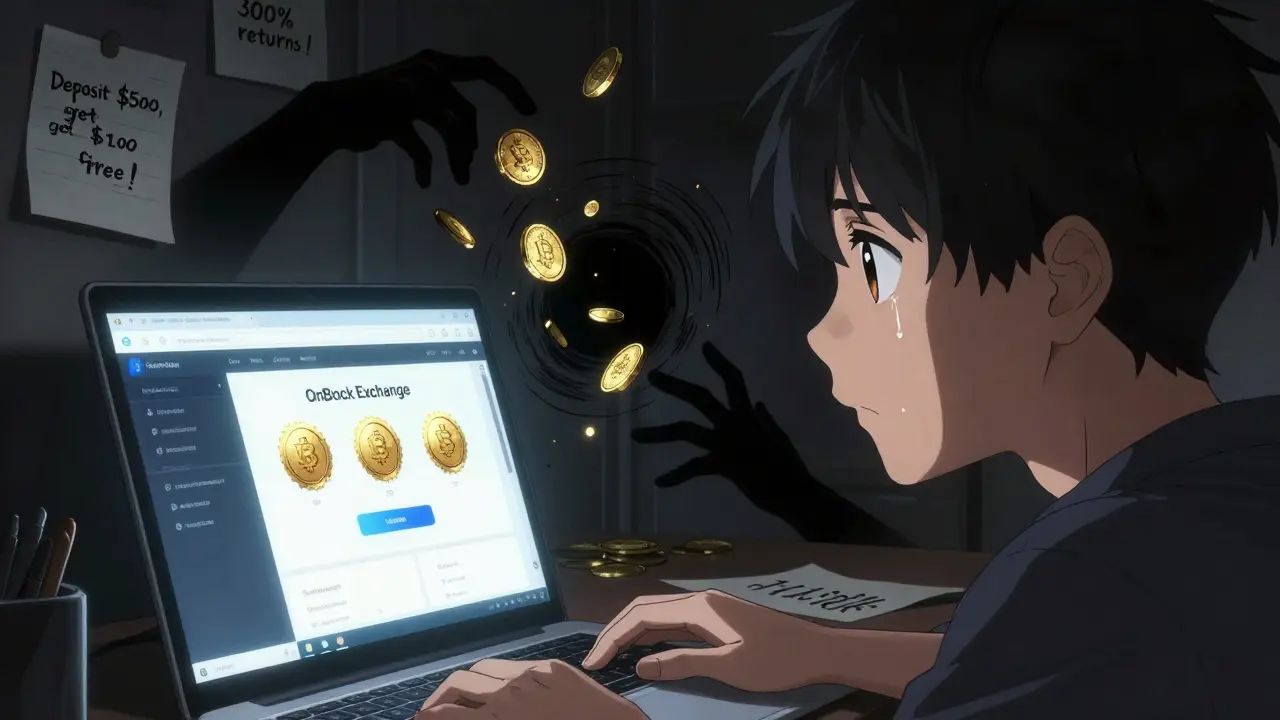
Scammers don’t build fake exchanges to make money from trading fees. They build them to steal deposits. Here’s how it plays out:- You click an ad promising ‘0.1% fees’ and ‘$500 sign-up bonus’.
- You create an account with your email and phone number - both of which get sold to spam networks within hours.
- You deposit $500 in BTC or USDT to ‘start trading’.
- The platform shows fake profits. Your balance goes from $500 to $1,200 in minutes.
- You try to withdraw. They ask for a ‘verification fee’ of $150 in crypto to ‘unlock your funds’.
- You pay. Nothing changes. They ask for another fee. Then another.
- Eventually, the site goes dark. Your account vanishes. Your crypto is gone.
This isn’t theory. It’s standard operating procedure. In 2024, over $1.2 billion was lost to fake crypto platforms, according to Chainalysis. Most of them had names that sounded real - ‘CryptoPro’, ‘BitFusion’, ‘ChainVault’. CHAINCREATOR fits the pattern perfectly: it uses ‘chain’ to trick you into thinking it’s connected to blockchain tech, and ‘creator’ to imply innovation. It’s designed to look like a real platform before you even click.
What Real Exchanges Look Like
Compare CHAINCREATOR to Kraken. Kraken has been audited by third parties since 2015. They publish monthly Proof of Reserves reports showing they hold more crypto than they owe users. Their fees are transparent: 0.16% maker, 0.26% taker for standard accounts. They’re licensed in the U.S., Canada, the EU, and Australia. Their mobile app has a 4.8-star rating with over 2 million downloads.Coinbase? They’re regulated by the SEC. They offer FDIC insurance on USD balances up to $250,000. Their customer support answers emails within 24 hours. Their app loads in under two seconds. They have a dedicated educational hub with free courses on staking, DeFi, and tax reporting.
Bybit? They offer $30,000 in bonus rewards for new users - but only after you complete a verified KYC process and deposit real crypto. Their derivatives platform handles over $1 billion in daily volume. Their API is open-source. Their team has public LinkedIn profiles.
CHAINCREATOR has none of that. No transparency. No accountability. No history. No future.

Why People Fall for This
It’s not because users are dumb. It’s because scammers are good at manipulation. They use:- False testimonials - photoshopped screenshots of ‘users’ with huge profits.
- Influencer fraud - paid actors pretending to be crypto YouTubers.
- Urgency tactics - ‘Limited-time bonus ends in 2 hours!’
- FOMO language - ‘This is the next Binance!’
They even copy the design of real sites. CHAINCREATOR’s landing page might look almost identical to Binance’s - same color scheme, same button placement. But look closer. The URL is wrong. The SSL certificate is expired. The contact page has a Gmail address. The ‘About Us’ section is filled with buzzwords like ‘decentralized innovation’ and ‘next-gen blockchain infrastructure’ - but no names, no team photos, no LinkedIn links.
What to Do If You’ve Already Deposited
If you’ve sent crypto to CHAINCREATOR:- Stop sending more. No amount of ‘verification fees’ will get your money back.
- Document everything. Save screenshots, transaction IDs, emails, chat logs.
- Report it. File a complaint with your local financial regulator (like NZ’s Financial Markets Authority) and report it to Crypto Scam Report.
- Warn others. Post on Reddit’s r/CryptoCurrency and r/Scams. Share your experience.
- Don’t expect recovery. Over 95% of stolen crypto from fake exchanges is unrecoverable. But reporting helps shut them down before they hit more people.
How to Spot a Fake Exchange
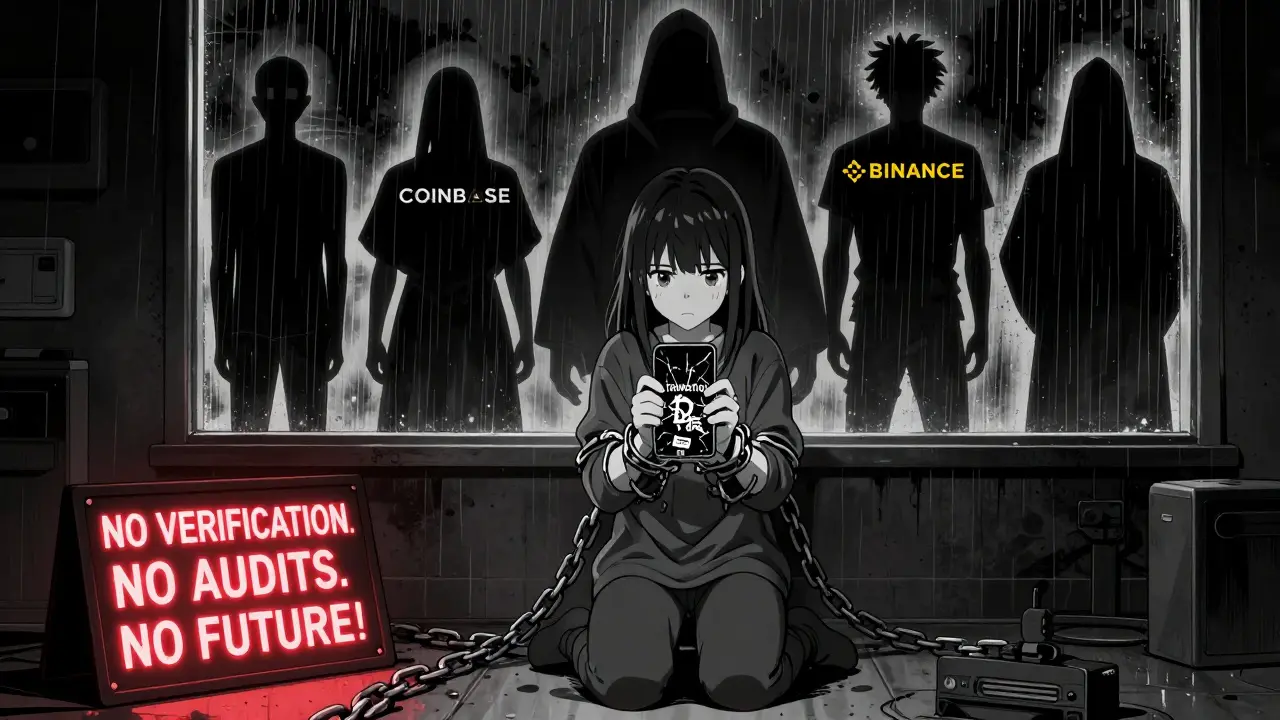
Use this quick checklist before depositing any crypto:- Is it on CoinMarketCap or CoinGecko? If not, walk away.
- Do they publish Proof of Reserves? Real exchanges do - monthly, publicly, with third-party audits.
- Can you find their company registration? Search their legal name in government business registries (like NZ’s Companies Office or the U.S. SEC).
- Is their website secure? Check the URL. Does it start with https://? Is the certificate valid? Is the domain registered to a real company?
- Do they have real customer support? Try emailing them. Call their support number. If you get no reply in 48 hours, it’s a scam.
- Are their bonuses too good to be true? ‘$1,000 bonus for $50 deposit’? That’s not a bonus. That’s a trap.
Where to Trade Crypto Instead
Stick to platforms that have been tested, reviewed, and trusted for years:- For beginners: Coinbase - simple, regulated, educational.
- For low fees and high liquidity: Binance - but only if you’re outside the U.S.
- For security and transparency: Kraken - top-rated for audits and compliance.
- For derivatives and trading tools: Bybit - fast, reliable, with deep order books.
- For altcoins and staking: Crypto.com - wide asset selection and rewards program.
These platforms don’t need flashy ads or fake influencers. They’ve earned their place through years of consistent performance. They don’t vanish overnight. They don’t ask you to pay to withdraw. They don’t disappear when you try to cash out.
Final Warning
CHAINCREATOR is not a crypto exchange. It’s a digital con. The name is designed to sound technical, trustworthy, and cutting-edge - but it’s built on nothing. No infrastructure. No team. No future. Just a website and a wallet address waiting for your money.If you’re looking to trade crypto, don’t gamble on unknown names. Stick to the platforms that have proven themselves over time. Your crypto is your responsibility. Don’t hand it over to a ghost.
Is CHAINCREATOR a real crypto exchange?
No, CHAINCREATOR is not a real crypto exchange. It does not appear on any reputable review site, trading platform directory, or regulatory database. There is no verifiable evidence it exists as a functioning platform. All signs point to it being a scam designed to steal crypto deposits.
Why can’t I find CHAINCREATOR on CoinMarketCap or CoinGecko?
Legitimate exchanges are listed on CoinMarketCap and CoinGecko within weeks of launch. CHAINCREATOR isn’t there because it doesn’t meet basic requirements: no trading volume, no verified team, no API, no compliance. If it were real, it would be listed - and reviewed - within days.
Are there any legitimate exchanges with similar names?
Yes, but they’re not exchanges. Chainlink (LINK) is a blockchain oracle network. Chainalysis is a blockchain analytics company. ChainGuardian is a Web3 security firm. CHAINCREATOR is not related to any of them. The similarity in names is intentional - scammers use these associations to trick users into thinking they’re connected to trusted projects.
Can I get my money back if I sent crypto to CHAINCREATOR?
Almost certainly not. Once crypto is sent to a scam platform, it’s typically moved through mixers or exchanged for anonymous coins within minutes. Recovery is extremely rare. Your best action is to report the scam to authorities and warn others to prevent more victims.
How do I know if a crypto exchange is safe?
Check for these: 1) Listing on CoinMarketCap or CoinGecko, 2) Published Proof of Reserves audits, 3) Regulatory licenses in major jurisdictions, 4) Transparent team and contact info, 5) Real customer support with response times under 48 hours. If it’s missing any of these, avoid it.







Harshal Parmar
January 20, 2026 AT 21:12Paru Somashekar
January 22, 2026 AT 05:42tim ang
January 22, 2026 AT 17:46Catherine Hays
January 23, 2026 AT 15:26Anna Topping
January 24, 2026 AT 18:53Margaret Roberts
January 26, 2026 AT 10:50Darrell Cole
January 27, 2026 AT 03:20Jen Allanson
January 27, 2026 AT 18:02Kevin Pivko
January 29, 2026 AT 11:56Heather Crane
January 29, 2026 AT 14:57Andy Simms
January 30, 2026 AT 23:58Arielle Hernandez
January 31, 2026 AT 01:24Andy Marsland
January 31, 2026 AT 21:55Bonnie Sands
February 2, 2026 AT 14:10Steve Fennell
February 3, 2026 AT 17:10Jeffrey Dufoe
February 5, 2026 AT 10:55Jennifer Duke
February 7, 2026 AT 09:44Jonny Lindva
February 8, 2026 AT 12:48HARSHA NAVALKAR
February 10, 2026 AT 04:57Julene Soria Marqués
February 10, 2026 AT 05:13Mathew Finch
February 11, 2026 AT 00:59Sara Delgado Rivero
February 12, 2026 AT 18:24MOHAN KUMAR
February 13, 2026 AT 03:43george haris
February 13, 2026 AT 05:08Andy Marsland
February 13, 2026 AT 19:31