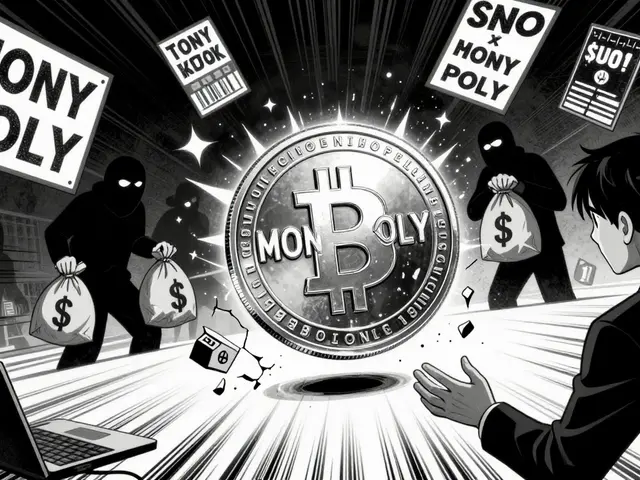
Imagine watching your investment vanish in seconds. Not a slow decline, not a market correction, but an instant wipeout where the money simply disappears into thin air. This is the reality of a rug pull, the most aggressive form of fraud in the cryptocurrency world. While headlines often focus on massive exchange failures like FTX or Celsius, the sheer volume and total harm caused by rug pulls are staggering. According to research by Solidus Labs, over 300,000 scam tokens have been created, defrauding approximately 2 million investors. In terms of pure investor harm, these coordinated exits surpass many of the high-profile centralized exchange collapses.
Understanding how these schemes work-and looking at the famous examples that shook the industry-is crucial for anyone holding digital assets. A rug pull occurs when developers create a new cryptocurrency or NFT project, hype it up to attract liquidity, and then abruptly liquidate their holdings, leaving investors with worthless tokens. These scams generally fall into two categories: DeFi scams involving malicious smart contracts, and exit scams involving aggressive marketing followed by sudden abandonment.
The Anatomy of a Crypto Rug Pull
To spot a rug pull before it happens, you need to understand the mechanics behind the curtain. Scammers don't just rely on luck; they use specific technical exploits and psychological triggers.
In the world of Decentralized Finance (DeFi), the primary weapon is the smart contract. Developers can write code that looks legitimate but contains hidden backdoors. For instance, they might program the contract to prevent selling, allow unlimited minting of new tokens, or charge exorbitant trading fees that only benefit the creator. When investors try to cash out, they find themselves locked in-a scenario known as a "honeypot."
On the promotional side, scammers use "exit scam" tactics. They build fraudulent websites, announce fake partnerships with major brands, and use bots to simulate trading activity (wash trading) to make the project appear popular. The goal is to create a sense of urgency and FOMO (Fear Of Missing Out). Once enough liquidity is pooled-meaning real money from investors is backing the token-the developers drain the pool and disappear. The most damaging scams combine both malicious programming and aggressive promotion, creating a perfect storm for financial loss.
Thodex: The Largest Centralized Exchange Exit Scam
When we talk about the biggest losses, one name stands above the rest: Thodex. Unlike typical DeFi projects that operate anonymously, Thodex was a major centralized exchange in Turkey, boasting millions of users. It represented the scale at which centralized platforms can fail.
In April 2021, Thodex suddenly halted all user withdrawals. Shortly after, its CEO, Faruk Fatih Özer, fled the country. Investigations revealed that he had misappropriated billions of dollars worth of customer funds. Investors lost over $2 billion, which accounted for nearly 90% of all value stolen in rug pulls during that year. This incident highlighted a critical vulnerability: even large, seemingly regulated exchanges are not immune to catastrophic exit scams if governance fails.
AnubisDAO: The 20-Hour Disaster
If Thodex showed the danger of centralized exchanges, AnubisDAO demonstrated the speed at which decentralized projects can collapse. Launched on October 28, 2021, AnubisDAO claimed to be a decentralized, free-floating currency backed by a basket of assets. It sounded sophisticated, yet the project had no website, no white paper, and all developers used pseudonyms. The only branding was a DOGE-inspired logo.
Despite the lack of substance, the hype machine worked. Investors poured nearly $60 million into the project overnight, receiving ANKH tokens in exchange for funding the liquidity pool. However, within just 20 hours, the funds-primarily held in wrapped Ethereum (wETH)-vanished from the liquidity pool. The developers executed a classic liquidity drain, stealing over $58 million. This case serves as a stark warning: if a project lacks transparency and moves too fast, it is likely a trap.
Squid Game Token: The Honeypot Trap
Cultural phenomena often become targets for scammers, and the Netflix hit Squid Game was no exception. The Squid Game token launched as a play-to-earn game, starting at $0.01 and soaring to an astronomical $2,861 in less than a week. Investors were ecstatic, chasing life-changing gains.
Then, they tried to sell. Nobody could. Investigation revealed that the founders had programmed the smart contract as a honeypot, making it impossible to sell the token. Meanwhile, the founders sold their own supply, causing the price to plummet 99% in a single week. The developers reportedly made over $3.38 million. They blocked users who raised concerns on Twitter and shut down their Telegram and Discord groups. This example illustrates the danger of meme coins tied to pop culture trends without underlying utility or verified teams.
Bored Bunny NFTs: Fake Celebrity Endorsements
Rug pulls aren't limited to tokens; the Non-Fungible Token (NFT) space has seen its share of disasters. The Bored Bunny NFT project, announced in December 2021, promised branded merchandise, a private metaverse, and 10x returns within days. To boost credibility, the project claimed endorsements from celebrities like Floyd Mayweather, Jake Paul, and David Dobrik.
The collection sold out within hours, generating approximately 2,000 ETH. However, blockchain forensics later revealed that the NFTs supposedly owned by these celebrities were actually purchased by wallets linked to the project's developers. It was a coordinated insider trading scheme designed to fake social proof. Since the launch, the floor price of Bored Bunny NFTs has crashed to negligible levels. This case teaches us to verify celebrity claims independently, as deepfakes and wallet manipulation are common tools in NFT fraud.
Recent Trends: Froggy and Hawk Tuah
The evolution of rug pulls continues into 2024 and beyond, adapting to new social media trends. The Froggy (FROGGY) coin, marketed as a meme token for social media users, attracted investors through humorous branding on X and Reddit. After building initial legitimacy through early investor financing, the developers drained the liquidity pool. The token’s value dropped 99.95%, currently trading at fractions of a cent.
Similarly, the Hawk Tuah (HAWK) meme coin, introduced by social media personality Hailey Welch in December 2024, saw its value plummet from $500 million to $60 million within 20 minutes of debut. This rapid crash led to significant backlash and legal action, with U.S. law firm Burwick Law filing a federal lawsuit against Welch and others involved. These recent cases show that scammers are increasingly leveraging viral internet moments and influencer marketing to execute faster, more devastating drains.
| Project Name | Year | Type | Estimated Loss | Key Mechanism |
|---|---|---|---|---|
| Thodex | 2021 | Centralized Exchange | $2 Billion+ | CEO flight & fund misappropriation |
| AnubisDAO | 2021 | DeFi Protocol | $58 Million | Liquidity pool drain (20 hours) |
| Squid Game Token | 2021 | Meme Coin | $3.38 Million+ (dev profits) | Honeypot smart contract |
| Bored Bunny NFTs | 2021 | NFT Collection | ~2,000 ETH | Fake celebrity endorsements |
| Hawk Tuah (HAWK) | 2024 | Meme Coin | $440 Million drop | Influencer-driven pump & dump |
How to Protect Yourself from Rug Pulls
Given the prevalence of these scams, due diligence is not optional-it is survival. Here is a practical checklist to evaluate any new crypto project:
- Audit the Smart Contract: Never invest in a project without a verified audit from a reputable firm. Look for flags like unlimited minting functions or disabled selling mechanisms.
- Verify the Team: Anonymous teams are high-risk. Check LinkedIn profiles and past involvement in other projects. If the team cannot be identified, assume the worst.
- Analyze Liquidity: Use tools to check if liquidity is locked. If developers can unlock liquidity at will, they can drain the pool anytime.
- Scrutinize Marketing Claims: Be skeptical of guaranteed returns, fake celebrity endorsements, and overly aggressive promotion. Real projects focus on utility, not hype.
- Check Community Engagement: Active, genuine communities ask hard questions. If all comments are positive and bot-like, it is a red flag.
Regulatory bodies are increasing scrutiny, as seen in the lawsuits against Hawk Tuah creators, but the pseudonymous nature of crypto makes prosecution difficult. Your best defense is skepticism and thorough research.
The Future of Crypto Fraud
As technology advances, so do the methods of scammers. We are seeing more sophisticated AI-generated content for fake whitepapers and deeper integration of social media algorithms to amplify scams. The concentration of losses in few major incidents, like Thodex, shows that individual rug pulls can affect thousands simultaneously. However, the frequency of smaller DeFi rug pulls remains high, driven by the ease of deploying scam tokens.
Investors must adapt. The era of "get rich quick" meme coins is increasingly dangerous. Focus on projects with transparent governance, audited code, and clear utility. Remember, if it sounds too good to be true, it almost certainly is a rug pull waiting to happen.
What is a rug pull in cryptocurrency?
A rug pull is a type of fraud where developers abandon a cryptocurrency project and run away with investors' funds. This is typically done by draining the liquidity pool or exploiting vulnerabilities in the smart contract, leaving investors with worthless tokens.
What was the largest rug pull in history?
The largest documented rug pull was the collapse of Thodex, a Turkish centralized exchange, in 2021. Over $2 billion in user funds disappeared when the CEO fled the country, representing nearly 90% of all rug pull losses that year.
How can I tell if a token is a honeypot?
A honeypot token allows you to buy but not sell. You can detect this by checking the smart contract code for restrictions on selling or by using online tools that simulate transactions. If the simulation fails for selling but succeeds for buying, it is likely a honeypot.
Are NFTs susceptible to rug pulls?
Yes, NFT rug pulls are common. Scammers may create fake collections, use deepfaked celebrity endorsements, or fail to transfer proper ownership rights. Projects like Bored Bunny NFTs demonstrated how fake social proof can drive sales before the value crashes.
Can I recover funds lost in a rug pull?
Recovering funds is extremely difficult, especially in DeFi rug pulls where transactions are irreversible and developers are anonymous. In centralized cases like Thodex, legal action may lead to partial recovery, but this process takes years and is not guaranteed.