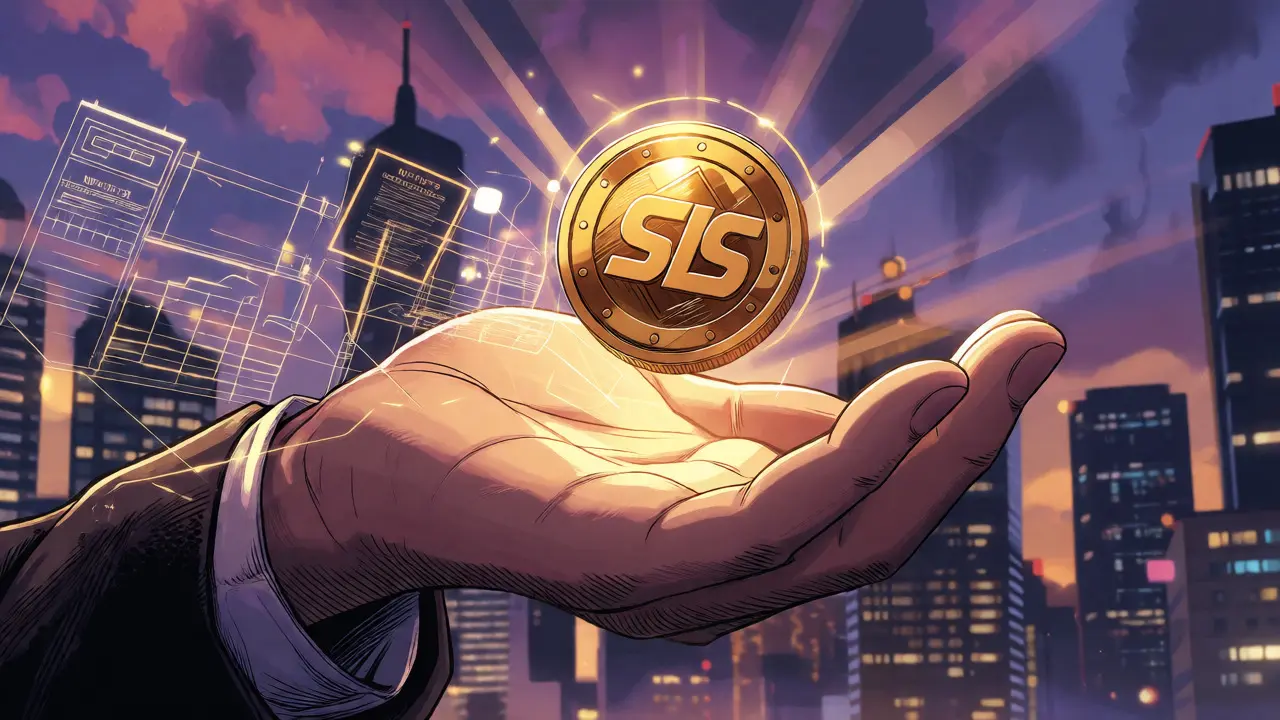
Imagine walking through a virtual gallery where every building you see isn't just a pretty picture, but a registered piece of intellectual property owned by an architect. That’s the core promise of STELSI, a Web3-based lifestyle platform that uses blockchain, NFTs, and AI to help architects protect and monetize their work in a digital metaverse. If you’ve stumbled upon the ticker STLS and wondered what it actually does beyond the hype, you’re in the right place. It’s not another meme coin chasing a trend; it’s a niche attempt to solve a very real problem in the design industry: how do creators get paid for their ideas when those ideas can be copied instantly?
The Core Concept: An Architectural Metaverse
Most metaverse projects focus on gaming or social interaction. STELSI takes a different route. It positions itself as a specialized environment for architecture and real estate. The idea is simple yet ambitious: create a space where architects can upload their designs, mint them as Non-Fungible Tokens (NFTs), and sell access or ownership rights to these digital assets. This isn’t just about showing off renders; it’s about creating a verifiable chain of custody for architectural IP.
By leveraging Ethereum’s smart contract capabilities, STELSI aims to bring transparency to a sector that has historically been opaque regarding royalty payments and credit attribution. When an architect registers a project on the STELSI platform, that registration becomes an immutable record on the blockchain. This allows for real-world asset (RWA) utilities, meaning the digital token might represent actual rights or royalties tied to the physical construction or licensing of the design.
Tokenomics: Understanding the STLS Supply
At the heart of this ecosystem is the STLS token, an ERC-20 utility token on the Ethereum network with a fixed total supply of 200 million units. Unlike tokens with infinite inflationary models, STELSI capped its supply at launch, which theoretically creates scarcity if demand rises. However, the distribution mechanics are crucial for any investor to understand.
The initial public offering, known as an IDO (Initial DEX Offering), took place in December 2024. During this phase, the team raised approximately $150,000 by selling tokens at a price of $0.115 each. At that specific moment, only about 1.81 million tokens were in circulation, representing less than 1% of the total supply. This low circulating supply at launch often leads to high volatility, as small buy or sell orders can significantly move the price. As we look at data from early 2026, reports vary on the exact circulating amount, with some aggregators suggesting most tokens have unlocked while others show discrepancies. Always check live on-chain data before making decisions.
| Metric | Value / Detail |
|---|---|
| Total Supply | 200,000,000 STLS |
| Blockchain | Ethereum (ERC-20) |
| Launch Year | 2024 |
| IDO Price | $0.115 |
| All-Time High | $0.08096 (May 2025) |
| All-Time Low | $0.002049 (Jan 2026) |
Market Performance and Volatility Risks
If you bought STLS at its IDO price, you might be feeling the pinch. The token hit an all-time high of roughly $0.08 in May 2025, which was still below the initial sale price of $0.115. Since then, the market has seen significant drawdowns. By January 2026, the price had dropped to around $0.002, marking a decline of over 80% from its peak. Current quotes in mid-2026 hover in the millidollar range, depending on which exchange you check.
This volatility isn’t unusual for micro-cap crypto projects, but it highlights a critical risk factor: liquidity. On major trackers like CoinMarketCap, daily trading volumes have occasionally dipped below $100. When volume is this thin, exiting a position can be difficult without impacting the price yourself. You might find yourself holding a bag because there simply aren’t enough buyers on the other side of the trade.
The Ticker Trap: Beware of Duplicate Symbols
Here is a practical warning that saves beginners from costly mistakes. The symbol "STLS" is not unique to the STELSI project. There is another token on the Binance Smart Chain (BSC) also using the ticker STLS. This BSC version is a micro-cap asset with a market cap under $100 and virtually zero trading volume. It is completely unrelated to the architecture metaverse.
Because many wallets and exchanges allow you to search by symbol rather than contract address, it is easy to accidentally swap into the wrong token. Always verify the contract address. For the legitimate STELSI project, ensure you are interacting with the Ethereum-based ERC-20 contract. If you see a price of $0.00000005, you are likely looking at the BSC decoy, not the main project.
Institutional Backing and Project Credibility
One factor that lends some credibility to STELSI is its early institutional interest. In August 2023, NGC Ventures, a notable investment firm, announced a strategic investment into STELSI through its $100 million themed fund. They described the project as a revolutionary approach to architecture and real estate via Web3. While this endorsement happened before the token launch, it signaled that venture capitalists saw potential in the intersection of design and blockchain.
However, backing doesn’t guarantee success. The project remains highly speculative. There are no widely cited user reviews from platforms like G2 or Trustpilot specifically detailing the user experience for architects using the platform. The community size, estimated at around 5,400 holders based on on-chain data, suggests a niche audience. It hasn’t achieved mainstream adoption among global architectural firms yet, and detailed case studies of successful IP sales remain scarce in public domains.

How to Buy and Store STLS
Since STELSI is an ERC-20 token, you’ll need an Ethereum-compatible wallet like MetaMask or Trust Wallet. You cannot currently buy STLS directly on Coinbase with spot trading support, although they track the price. Your best bets for acquisition are centralized exchanges like LBank, which lists active trading pairs, or decentralized exchanges (DEXs) on Ethereum if liquidity permits.
When buying, remember that gas fees on Ethereum can be high. If you are investing a small amount, these fees might eat up a significant portion of your capital. For storage, keeping your tokens in a self-custody wallet gives you full control, but it requires you to manage your private keys securely. Losing your seed phrase means losing your investment permanently.
Is STELSI Right for You?
Deciding whether to invest in STELSI depends on your risk tolerance and belief in the convergence of architecture and Web3. It offers a unique value proposition compared to generic metaverse coins like Decentraland or The Sandbox, which focus more on entertainment. STELSI targets a professional industry with tangible assets.
But here’s the reality check: the project is young, the liquidity is low, and the price action has been bearish since its inception. It’s a play on long-term adoption of digital IP registries in the design world. If you believe that architects will eventually embrace blockchain for royalty tracking and marketing, STELSI is one of the few tokens attempting to capture that narrative. If you prefer established assets with deep liquidity and proven use cases, this might be too risky for your portfolio.
What is the primary use case of the STLS token?
The STLS token serves as the native utility currency for the STELSI ecosystem. It is used to facilitate transactions within the platform, such as paying for NFT minting services, accessing premium features in the architectural metaverse, and potentially staking for governance or rewards. It acts as the economic backbone connecting architects, buyers, and investors.
Is STELSI the same as the STLS token on Binance Smart Chain?
No, they are different assets. The main STELSI project operates on the Ethereum network as an ERC-20 token. There is a separate, unrelated micro-cap token with the same ticker (STLS) on the Binance Smart Chain. Always verify the contract address to ensure you are purchasing the correct Ethereum-based asset.
Where can I buy STLS cryptocurrency?
STLS is available on select centralized exchanges such as LBank. It may also be accessible through decentralized exchanges on the Ethereum network, though liquidity can vary. Major US-based exchanges like Coinbase currently offer price tracking but do not support direct spot trading for this specific asset.
What is the total supply of STLS?
The total supply of STLS is fixed at 200,000,000 tokens. This hard cap distinguishes it from inflationary models where new tokens are continuously minted. The distribution includes allocations for the public IDO, team reserves, and strategic investors, with vesting schedules affecting the circulating supply over time.
Did STELSI receive any institutional investment?
Yes, STELSI received a strategic investment from NGC Ventures in August 2023. NGC backed the project through its $100 million themed fund, citing its potential to revolutionize the architecture and real estate sectors through Web3 technology. This endorsement helped validate the project's concept prior to its token launch.