

Imagine buying a slice of a luxury apartment in Miami or a commercial building in London for the price of a nice dinner. For decades, real estate was the ultimate barrier to entry for most investors. You needed a massive down payment, a good credit score, and months of paperwork just to get your foot in the door. Today, that wall is crumbling. Thanks to real estate token trading is the process of converting property rights into digital tokens on a blockchain, allowing for fractional ownership and easier trading., you can now own a piece of physical property using digital assets.
This isn't science fiction anymore. It's happening right now. Platforms are turning buildings into thousands of digital tokens, each representing a share of the property. This shift is democratizing access to one of the world's largest asset classes. But before you rush to buy your first token, you need to understand how these marketplaces work, which ones are legitimate, and what risks you're actually taking. Let's break it down without the jargon.
How Real Estate Tokenization Actually Works
To understand the marketplace, you first have to understand the mechanism. Traditional real estate deals involve lawyers, title companies, banks, and notaries. Each step adds time and cost. Tokenization removes many of these middlemen by using smart contracts on a blockchain.
Here is the simple flow:
- Property Acquisition: A company buys a physical property (like an apartment complex).
- Legal Structuring: They create a legal entity (often an LLC) that owns the property. This ensures compliance with local laws.
- Token Creation: The ownership of that LLC is split into digital tokens. If a building is worth $1 million, they might create 1 million tokens worth $1 each.
- Distribution: These tokens are sold to investors via a platform. When you buy a token, you legally own a fraction of the underlying asset.
- Rent Distribution: When tenants pay rent, the smart contract automatically distributes your share to your wallet.
The magic happens in the speed and accessibility. Traditional settlement takes 30 to 60 days. On a blockchain, it takes minutes. According to data from Rapid Innovation, rent distribution can happen within 24 hours of collection, automating what used to be a monthly accounting headache.
Top Marketplaces and Platforms Compared
Not all platforms are created equal. Some focus on retail investors like you and me, while others cater to wealthy institutions. Choosing the right one depends on your budget, location, and goals. Here is a look at the major players as of 2025-2026.
| Platform | Focus Area | Min. Investment | Liquidity/Trading | Best For |
|---|---|---|---|---|
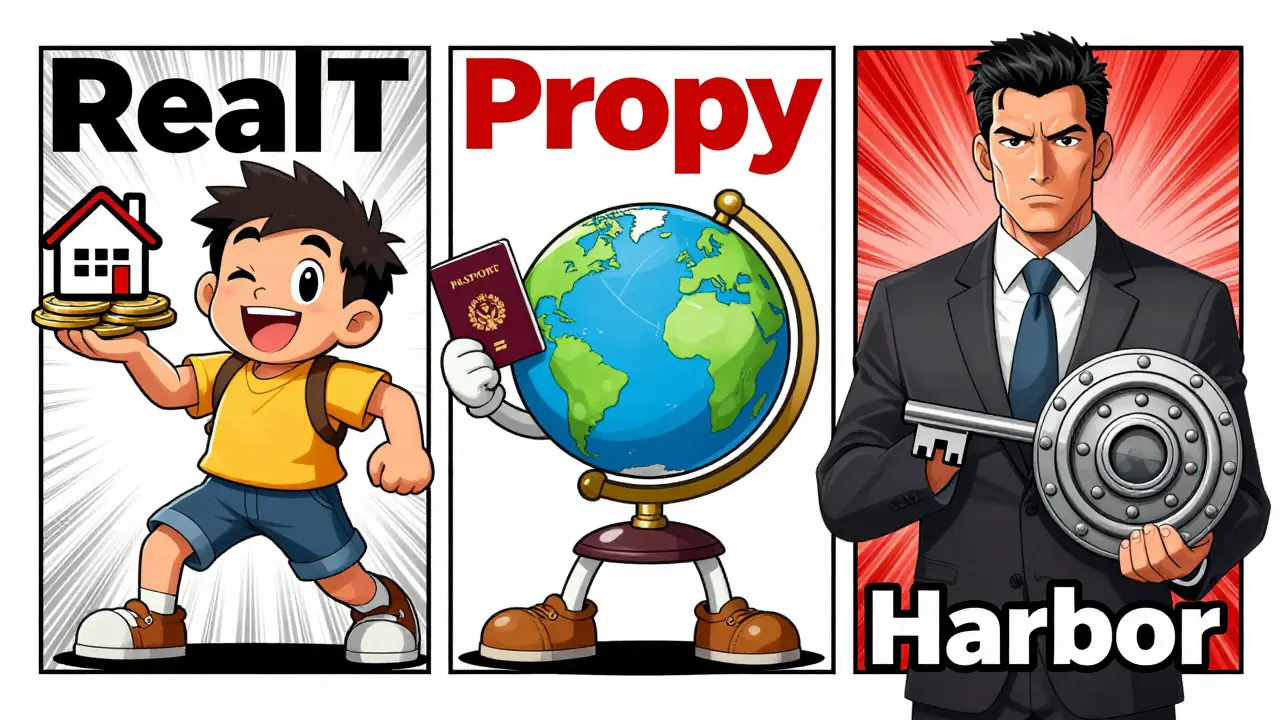
| RealT | Residential (US) | $50 | High (Secondary Market) | Retail Investors |
| Propy | Hybrid (Global) | ~$5,000 | Medium | Cross-Border Buyers |
| Harbor | Institutional/Accredited | $25,000+ | Low (Restricted) | High-Net-Worth Individuals |
| SolidBlock | Commercial Real Estate | $10,000 | Medium (Liquidity Pools) | Commercial Investors |
RealT is currently the leader for everyday investors. As of Q3 2024, they had over 970 US properties tokenized. What makes them stand out is their secondary market. You aren't stuck holding the token forever; you can sell it to another user if you need cash out. In fact, they processed $2.3 million in monthly trades in mid-2024. However, they primarily focus on residential rentals in specific US states like Michigan and Florida.
Propy takes a different approach. They act more like a traditional real estate agent but use blockchain for the transaction layer. They handle both residential and commercial properties globally. If you want to buy a whole house in Ukraine or a condo in Dubai using crypto, Propy is often the go-to. Their minimums are higher because they facilitate full purchases as well as fractional ones.
Harbor is built for the big leagues. They focus heavily on regulatory compliance, making them attractive to institutional investors and those who meet "accredited investor" standards. While this means stricter rules and less liquidity for quick flipping, it offers a high level of legal security for large capital deployments.
The Benefits: Why Move Your Money Here?
You might be wondering, "Why should I bother with this when I can just buy a REIT (Real Estate Investment Trust)?" That's a fair question. REITs are great, but tokenization offers distinct advantages that traditional finance hasn't matched yet.
- Lower Barrier to Entry: You don't need $50,000 to start. With platforms like RealT, you can start with $50. This allows for true diversification. Instead of putting all your money into one local rental, you can own pieces of ten different properties across five cities.
- Passive Income Automation: Rent checks arrive in your digital wallet automatically. No chasing landlords for late payments. Smart contracts ensure that once the rent hits the account, your share is calculated and sent instantly.
- Global Access: Geography no longer limits you. An investor in New Zealand can easily own a fraction of a warehouse in Texas or a shop in Turkey, provided the platform supports their jurisdiction.
- Transparency: Every transaction is recorded on the blockchain. You can verify ownership history and rental income flows publicly (though personally identifiable information remains private). There are no hidden fees buried in fine print that only a lawyer can find.
Deloitte predicts that this sector will generate $1.4 trillion in new market liquidity by 2030. That’s a huge number, driven by people like you unlocking capital that was previously trapped in illiquid assets.
The Risks and Challenges You Must Know
It wouldn't be responsible to talk about this space without discussing the downsides. Blockchain technology is robust, but the regulatory environment around it is still messy. Here is what could go wrong.
Regulatory Fragmentation
This is the biggest hurdle. Real estate is governed by local laws, while blockchains are global. A token issued in Delaware might not be recognized in France or Japan. Currently, 43% of potential investors face jurisdictional restrictions. For example, EU-based investors have struggled to participate in some US-focused platforms due to conflicts with MiCA (Markets in Crypto-Assets) regulations. Always check if your country allows you to hold security tokens.
Liquidity Illusion
While platforms promise easy trading, the reality is thinner than the stock market. ScienceSoft reports that only 18% of tokenized properties have active trading volumes. If you try to sell your tokens during a market crash, you might not find a buyer immediately. Unlike Bitcoin, which trades 24/7 globally, real estate tokens depend on finding a counterparty willing to take your specific risk profile.
Tax Complexity
Don't let the automation fool you. Tax reporting is still manual for most investors. If you own tokens in three different countries, you may need to file taxes in three different jurisdictions. Users report spending significant time (and money on accountants) to figure out how to report rental income from digital tokens. In 2023, 67% of users cited tax reporting as a major pain point.
Smart Contract Risk
While rare, bugs in code can happen. If there is a flaw in the smart contract distributing rent, funds could be locked or misallocated. Most top platforms use multi-signature wallets and undergo quarterly third-party audits to mitigate this, but it's a risk inherent to any decentralized system.
Getting Started: A Step-by-Step Guide
If you've decided to take the plunge, here is how to do it safely. The average learning curve for crypto-novice investors is about two weeks. Take your time.
- Choose a Reputable Platform: Stick to established names like RealT, Propy, or Harbor. Avoid unknown platforms promising guaranteed high returns. Check their audit reports and legal structure.
- Set Up a Compatible Wallet: Most platforms integrate with MetaMask, which accounts for 73% of integrations. Download the browser extension or mobile app. Secure your seed phrase offline. Never share it.
- Complete KYC/AML Verification: This is mandatory. You will need to upload ID and proof of address. Expect this to take 24 to 72 hours. Don't skip this; it protects you and the platform from fraud.
- Fund Your Account: Deposit fiat currency (USD, EUR) or stablecoins (USDC, USDT). Only 31% of platforms offer direct bank transfers, so you might need to bridge crypto from an exchange like Coinbase or Binance first.
- Select Properties Carefully: Look at the historical rental yield, vacancy rates, and location. Just because it's on the blockchain doesn't mean the underlying building is a good investment. Do your due diligence on the physical asset.
- Start Small: Buy a small amount of tokens first. Test the withdrawal process. Ensure you receive your rental dividends correctly before committing larger sums.
The Future of Property Investment
We are only at the beginning. By 2030, experts predict that 88% of commercial real estate transactions will incorporate some form of tokenization. We are seeing early signs of integration with DeFi (Decentralized Finance), where you can use your real estate tokens as collateral for loans without selling the underlying asset. This unlocks even more liquidity.
Regulatory clarity is slowly improving. States like New Jersey have passed specific acts to support tokenization, and Dubai has launched its own framework. If the SEC approves real estate token exchanges as Alternative Trading Systems (ATS), we could see billions in additional liquidity unlock. Keep an eye on these developments. They will shape whether this becomes a niche hobby or a mainstream investment pillar.
For now, treat real estate token trading as a complementary part of your portfolio. It offers diversification and access you didn't have before, but it requires more vigilance than buying a standard ETF. Stay informed, verify your sources, and invest only what you can afford to hold long-term.
Is real estate tokenization legal?
Yes, but it depends on your jurisdiction. In the US, tokens are often classified as securities and must comply with SEC regulations. Platforms like Harbor and RealT structure their offerings to meet these legal requirements. However, laws vary significantly by country, so you must check local regulations before investing.
What happens if the property goes up in value?
If the underlying property increases in value, the value of your tokens should theoretically increase as well. However, realizing this gain usually requires selling your tokens on a secondary market. If there is no active buyer, you may not be able to capture the appreciation until the property is sold or refinanced by the issuing company.
Can I lose my money in real estate tokens?
Absolutely. Like any real estate investment, properties can decrease in value, tenants may stop paying rent, or vacancies can rise. Additionally, there are platform-specific risks such as smart contract hacks or regulatory shutdowns. Diversification is key to mitigating these risks.
Do I need to be a crypto expert to use these platforms?
You don't need to be a developer, but basic familiarity helps. You will need to manage a digital wallet (like MetaMask) and understand how to send/receive tokens. Most platforms provide guides, but the learning curve averages 14-21 days for beginners. Customer support varies, so choose a platform with good documentation.
How are taxes handled on rental income from tokens?
Tax treatment varies by country. In many jurisdictions, rental income from tokens is taxed similarly to traditional rental income. You may receive tax documents from the platform, but you are ultimately responsible for reporting this income. Consult a tax professional familiar with cryptocurrency and real estate to ensure compliance.







stalin brian
May 27, 2026 AT 18:27thats pretty cool how u can just buy a slice of a building for the price of dinner. i always thought real estate was only for rich people with huge down payments. makes me wonder if this is actually safe tho or if its just another crypto scam waiting to happen. but hey, diversification sounds nice even if its digital.
kamal ifrani
May 29, 2026 AT 05:59you people are so naive thinking blockchain fixes everything. its just a pyramid scheme wrapped in fancy tech jargon. the regulatory fragmentation section barely scratches the surface of the disaster waiting to happen. you think delaware laws apply globally? laughable. most of these platforms will be shut down by regulators within two years and youll be left holding worthless tokens while the founders cash out their early equity. stop dreaming about passive income and look at the actual legal structure which is usually a shell company designed to evade taxes not protect investors.
Crystal Davis
May 29, 2026 AT 06:42actually kamal is right about the risks but wrong about the timeline. harbor has been working with sec for years to ensure compliance. the issue isnt that its illegal its that retail investors dont understand security token offerings. realt is different because they operate under specific state exemptions. also propy isnt really fractional ownership in the same way it handles full transactions too. you need to read the fine print on each platform before putting money in.
Christina Pearce
May 29, 2026 AT 18:49i appreciate the detailed breakdown here. i was worried about the tax complexity part though. does anyone know if there are tools that automatically generate k-1s for these tokenized properties? my accountant charges an arm and a leg for traditional rentals and i cant imagine doing this manually for ten different properties across five cities.
Diana Morris
May 30, 2026 AT 23:57stop worrying about taxes and start investing! the yield on some of these michigan properties is insane like 12% annually. sure there might be some paperwork but think about the compounding interest over ten years. you cant keep sitting on cash when inflation is eating your savings. get into metamsk connect your wallet and buy something today!
trisya hazriyana
May 31, 2026 AT 11:42diana is ignoring the liquidity trap entirely. yes yields are high but can you exit? science soft says only 18% have active trading. if you need cash you are stuck. its not investing its parking money in a black box. also the smart contract risk is real bugs happen funds get locked. i see so many people rushing in without understanding the underlying asset quality. just because its on blockchain doesnt mean the building isnt falling apart.
Debbie Lewis
June 1, 2026 AT 13:22i guess we all have different risk tolerances. i prefer to watch from the sidelines until the regulations settle down a bit more. seems like a lot of moving parts right now between the sec the eu mica rules and local property laws. maybe in five years it will be smoother.
Eric Grosso
June 2, 2026 AT 18:33does anyone else feel like the minimum investment on harbor is way too high for regular folks? 25k is no joke. i like the idea of realt starting at 50 bucks but im scared of losing it all if the platform goes under. any thoughts on which one feels safer?
Edith Mair
June 4, 2026 AT 16:46safety is relative in crypto. realt has been around longer and has more volume so theres more data to analyze. harbor is for accredited investors who can afford to lose the money. if you cant afford to lose 50 dollars then dont do it period. simple as that. do your due diligence on the physical property location vacancy rates etc.
Sam Dashti
June 6, 2026 AT 15:44look man i got into this because i wanted to own a piece of a warehouse in texas without dealing with tenants calling me at 3am with burst pipes. the automation is sweet. rent hits my wallet every month. yeah its risky but so is buying a house in a flood zone. i diversified across three states and im sleeping better than i did when i had all my eggs in one stock basket.
Joe Clements
June 6, 2026 AT 16:40that sounds awesome sam. i wish i had the confidence to try it yet. im still learning how to use metamsk properly. afraid i might send my coins to the wrong address. has anyone had good luck with customer support on these platforms if things go wrong?
Rosie Morris
June 8, 2026 AT 02:06oh gosh joe i totally get that fear. i almost sent my seed phrase to a scammer last year lol. be super careful. i started with like 20 dollars on realt just to test the waters. took me a week to figure out the kyc verification but once it went through it was smooth. take your time dont rush it.
lorna erni
June 8, 2026 AT 21:19everyone needs to wake up and realize this is the future of finance! why let banks control wealth accumulation? tokenize everything! houses cars art whatever. lets democratize ownership right now! i bought tokens in three buildings yesterday and i feel empowered. join the revolution people!
Joshua Alcover
June 10, 2026 AT 20:56the notion of democratizing ownership through decentralized ledgers is fundamentally flawed when considering the geopolitical implications of cross-border capital flows. nations must retain sovereignty over their real estate markets to prevent foreign manipulation of housing prices. furthermore the lack of standardized global regulatory frameworks creates an environment ripe for illicit financial activities. one must question whether the efficiency gains of smart contracts outweigh the erosion of national economic security.
Dianne Wright
June 12, 2026 AT 01:23joshua is being dramatic as usual. nobody is manipulating housing prices with a few thousand dollars in tokens. its mostly small investors trying to build wealth. also who cares about national sovereignty when you can make passive income from anywhere. i just want my rent checks to arrive on time and they do. stop overthinking it.
saradee dee
June 13, 2026 AT 22:43this article changed my perspective completely! i never knew you could own a fraction of a commercial building. it seems so exciting and new. i am going to read more about propy because i have friends in dubai and maybe i can invest there someday. thank you for sharing this information it is very helpful for beginners like me.
Craig Swanson
June 14, 2026 AT 03:05great enthusiasm saradee! just remember to start small and verify every step. dont trust promises of guaranteed returns. check the audit reports of the platform you choose. i recommend reading up on meta mask security best practices first. protecting your private keys is the most important thing you can do. happy investing!
Bill Gunn
June 15, 2026 AT 20:49hey guys 👋 just wanted to add that i use a hardware ledger for my tokens. its extra secure compared to just keeping them in metamsk browser extension. also check out the secondary market volumes before buying. if no one is selling or buying your specific token type you might be stuck for months. do your homework! 🏠💰
Dana Rapoport
June 17, 2026 AT 02:13bill is right about the hardware wallets. its a good habit to get into regardless of the amount. the philosophical shift from owning physical deeds to digital entries is profound. we are redefining what property means. it takes time to adjust mentally but the benefits of liquidity and accessibility are undeniable.
Hadleigh Edwards
June 18, 2026 AT 10:35i have been following this space for three years now and i think we are finally seeing the maturation of the technology. the integration with defi is particularly exciting because it allows you to use your real estate tokens as collateral for loans without selling the underlying asset. this unlocks liquidity in ways traditional banking never could. i believe that within the next decade most institutional real estate transactions will involve some form of tokenization and those who ignore this trend will miss out on significant opportunities for growth and diversification in their portfolios.
mark valmart
June 19, 2026 AT 00:27hadleigh makes a good point about the long term view. i am still on the fence but watching closely. the fact that deloitte predicts 1.4 trillion in new liquidity by 2030 is hard to ignore. might dip my toes in with fifty bucks on realt next month.