
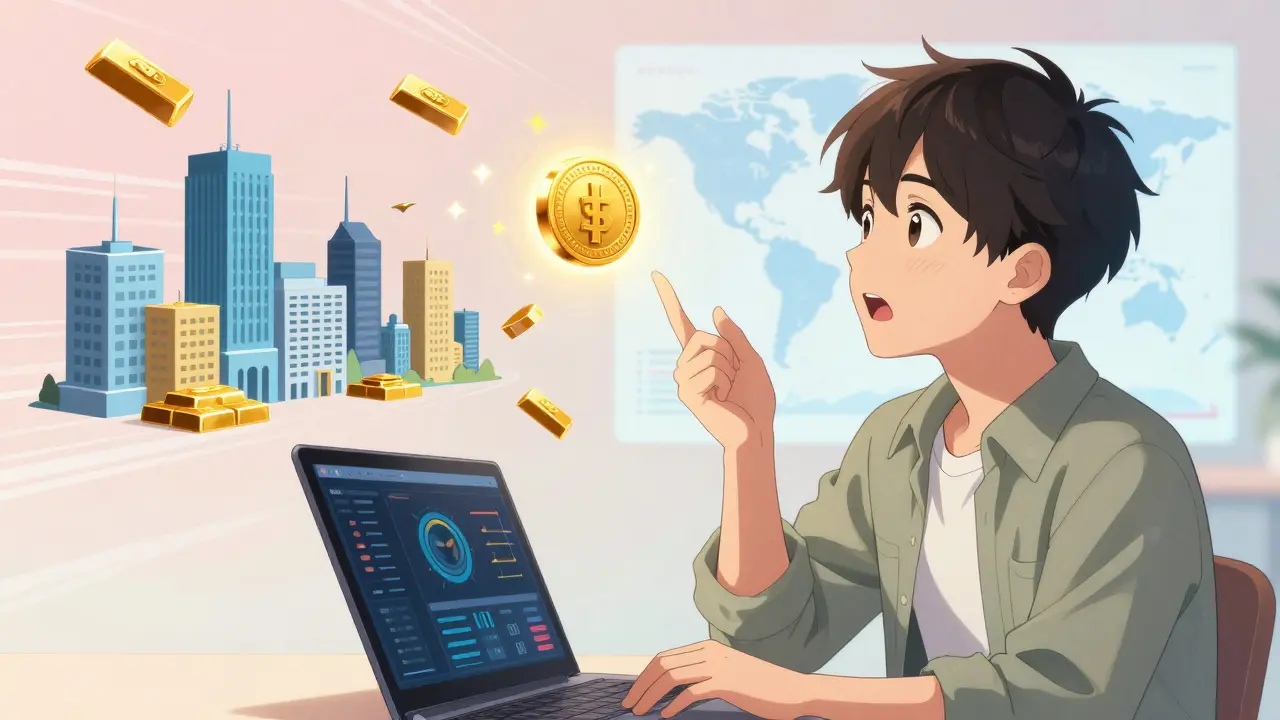
Investing in security tokens isn’t about buying another cryptocurrency like Bitcoin or Dogecoin. It’s about owning a piece of something real - a building in Tokyo, a share in a startup in Berlin, or even a fraction of a rare painting in Paris - all recorded on a blockchain. Unlike speculative tokens, security tokens are legally recognized financial instruments. They’re regulated, traceable, and tied to real-world value. By 2026, this market has moved past hype. It’s now a functional part of global finance, with institutions, regulators, and everyday investors actively participating. If you’re looking to diversify beyond stocks and ETFs, security tokens offer a path that’s transparent, fractional, and accessible - even if you don’t have $1 million to start.
What Exactly Are Security Tokens?
Security tokens are digital representations of traditional assets like stocks, bonds, real estate, or commodities. Think of them as shares of a company, but instead of paper certificates or brokerage records, ownership is recorded on a blockchain. Each token is tied to a specific asset and comes with legal rights - dividends, profit-sharing, voting rights, or equity ownership. They’re not utility tokens that give you access to a service. They’re not meme coins. They’re securities, plain and simple.
The key difference from regular stocks? Security tokens use smart contracts to automate compliance. Need to verify you’re an accredited investor? That’s built into the token. Can’t transfer shares until a 1-year lock-up period ends? The blockchain enforces it. Dividends? They auto-pay to your wallet. No paperwork. No delays. No intermediaries.
These tokens run mostly on Ethereum, thanks to its mature compliance tools and integration with regulated platforms. But other chains like Polygon and Stellar are gaining ground for faster, cheaper transactions. The underlying asset - whether it’s a 10-story office building or 5% of a tech startup - is what gives the token its value.
How Do Security Tokens Work?
Security tokens follow a clear lifecycle:
- Issuance: A company or asset owner decides to tokenize an asset - say, a $10 million apartment complex. They divide it into 10 million tokens, each worth $1. This is called a Security Token Offering (STO).
- Compliance: The platform behind the STO builds in legal rules. Only verified investors can buy. Transfers are blocked if the buyer isn’t approved. Geographic restrictions apply. All of this is coded into the token.
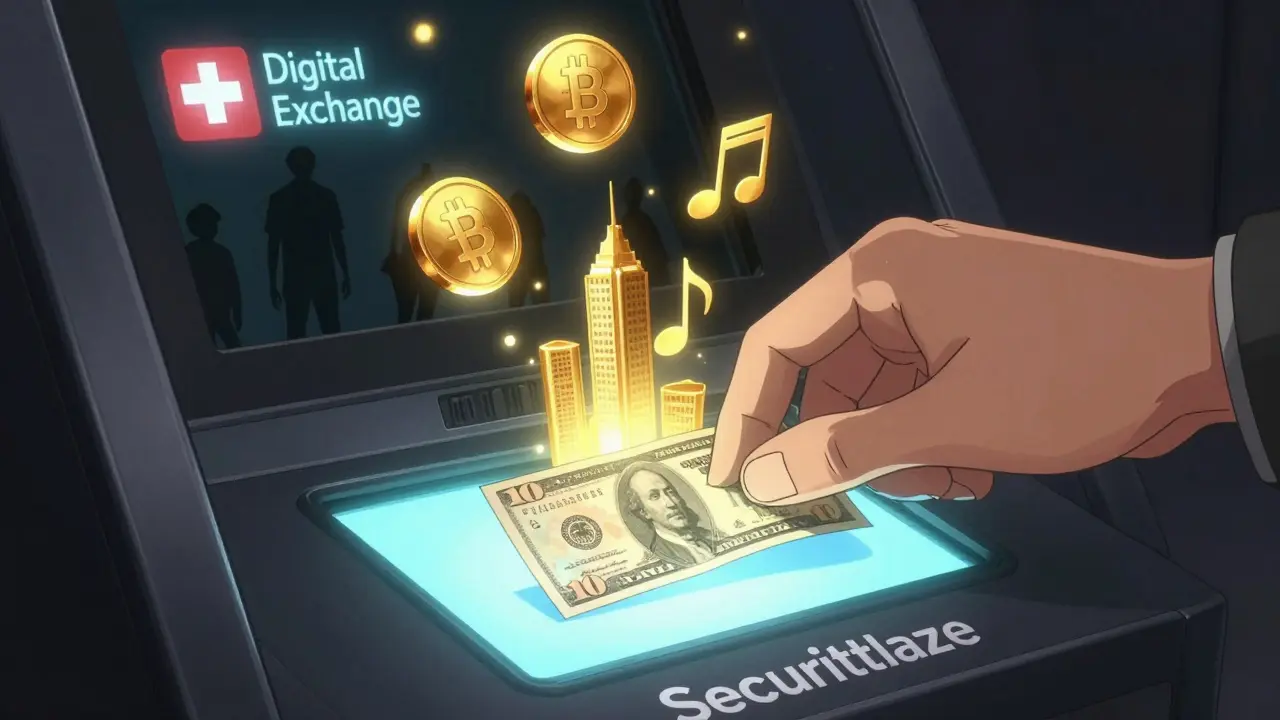
- Trading: Once issued, tokens trade on regulated exchanges like tZERO, Securitize, or the Swiss Digital Exchange. Unlike stock markets, these operate 24/7. Settlement happens in minutes, not days.
- Management: Owners receive dividends automatically. Voting rights are cast on-chain. Ownership history is permanently recorded.
This system removes friction. No more waiting weeks for a stock transfer. No more brokers taking 1% fees. No more opaque ownership records. Everything is transparent, verifiable, and automated.
Step-by-Step: How to Start Investing
Here’s how to actually get started in 2026:
- Choose a regulated platform. Not all crypto exchanges allow security tokens. Stick to platforms that are licensed and audited - like Polymarket, Securitize, or Blockchain Capital’s regulated marketplace. These platforms handle KYC/AML for you. Don’t try to buy from unregulated DeFi protocols - you’ll lose legal protection.
- Complete KYC/AML verification. You’ll need to upload ID, proof of address, and sometimes tax documents. This isn’t optional. It’s required by law. The process takes 1-3 business days. Once done, you’re verified for life across all compliant platforms.
- Fund your account. You can deposit fiat (USD, EUR, NZD) via bank transfer or use approved cryptocurrencies like USDC or ETH. Some platforms allow direct wire transfers from New Zealand banks.
- Browse available assets. Platforms list tokenized real estate, private equity, commodities, and even music royalties. Look for assets with clear legal documentation, audited valuations, and reputable issuers. Avoid anything that sounds like “get rich quick.”
- Buy your tokens. You can buy as little as $10 worth. Fractional ownership means you can own 0.05% of a Manhattan penthouse or 0.1% of a startup’s equity. No minimums. No gatekeepers.
- Track and manage. Use the platform’s dashboard to see holdings, dividends, and trading history. Some platforms even offer tax reporting tools.
Where Are Security Tokens Being Used?
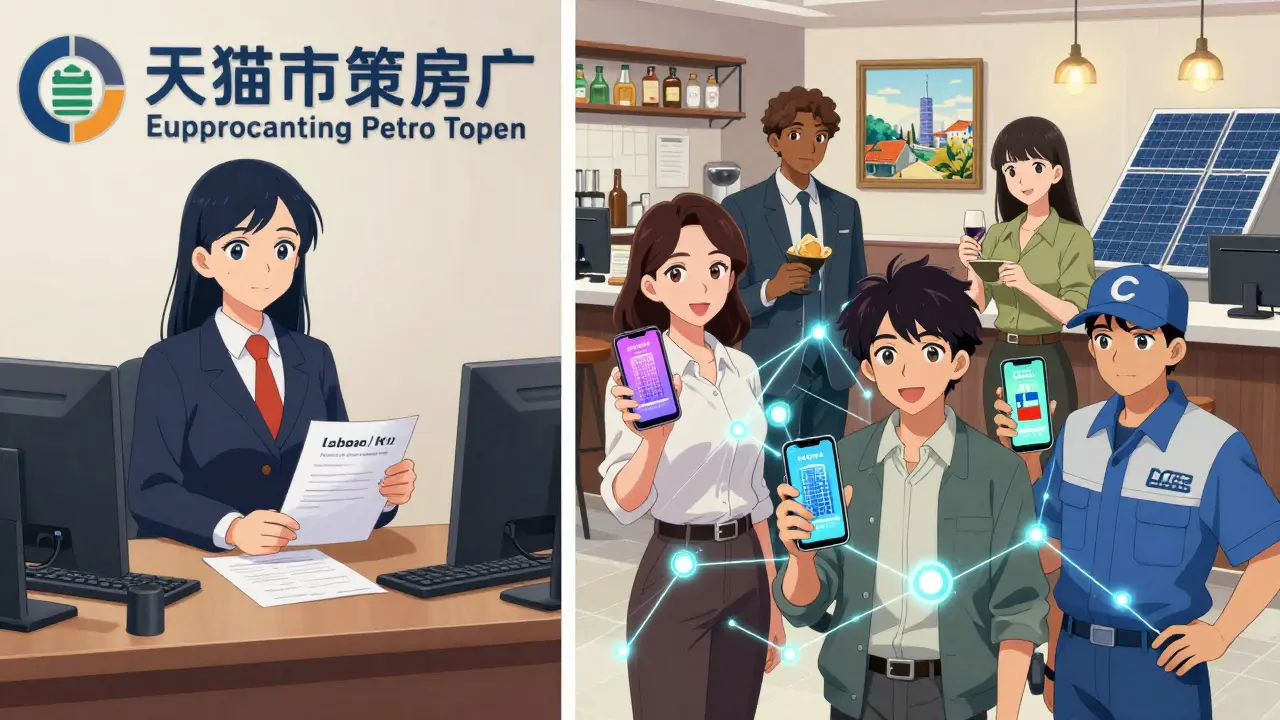
Real estate is the biggest use case. In 2025, over $12 billion in property was tokenized globally. A single apartment complex in Singapore sold 25,000 tokens to investors from 37 countries. Now, investors in Wellington can own a piece of a solar farm in Chile or a warehouse in Rotterdam.
Equity tokenization is growing fast too. Startups that used to need venture capital to raise $5 million now issue tokens directly to retail investors. One New Zealand tech firm raised $1.8 million in 72 hours through a regulated STO - no bankers, no pitch decks to Wall Street.
Other asset classes are following:
- Commodities: Gold bars, silver ingots, and even carbon credits are now tokenized. Each token represents a specific amount stored in a vault.
- Art and collectibles: A Picasso sketch was tokenized and sold in 100 fractional shares. Owners get a share of future auction proceeds.
- Revenue streams: A coffee chain in Auckland tokenized its future sales. Investors get 5% of monthly revenue until 2030.
The common thread? Liquidity. Before tokenization, these assets were locked up for years. Now, you can sell your share in minutes.
Who Can Invest?
This is where it gets tricky - and why you can’t just sign up and buy.
In the U.S., most STOs are limited to accredited investors - those with $1 million in net worth (excluding primary home) or $200,000+ annual income. But not everywhere works that way.
In the EU, Singapore, Switzerland, and UAE, retail investors can participate if the offering is structured under specific exemptions. For example, an EU-regulated STO with a cap of €5 million can be open to non-accredited investors. New Zealand doesn’t have its own STO rules yet, but local investors can legally access offerings from regulated foreign platforms - as long as they comply with local tax reporting.
Bottom line: Check the offering’s jurisdiction. If it’s EU-based, you’re more likely to qualify. If it’s U.S.-based and labeled “Accredited Investors Only,” you’ll need to meet those thresholds. Don’t try to fake it. Platforms verify everything - and penalties for fraud are severe.
What Platforms Should You Use?
Not all tokenization platforms are equal. Here’s what to look for:
| Platform | Regulation | Asset Types | Minimum Investment | Trading Hours | Supported Regions |
|---|---|---|---|---|---|
| Securitize | SEC-regulated (U.S.) | Equity, Real Estate | $100 | 24/7 | Global (U.S. restricted) |
| tZERO | SEC-regulated (U.S.) | Equity, Funds | $500 | 24/7 | Global |
| Swiss Digital Exchange | FINMA-regulated (Switzerland) | Real Estate, Bonds, Commodities | $10 | 24/7 | EU, UK, NZ, AU |
| Polymarket | EU MiCA-compliant | Revenue Shares, Commodities | $25 | 24/7 | Global (excl. U.S.) |
| Tokeny | EU-compliant | Private Equity, Real Estate | $100 | 24/7 | EU, Canada, Australia |
For New Zealand investors, Swiss Digital Exchange and Polymarket are often the most accessible. They accept international bank transfers and have clear compliance for non-U.S. residents.
What Are the Risks?
Security tokens are safer than unregulated crypto - but they’re not risk-free.
- Illiquidity: Just because you can trade doesn’t mean you’ll find a buyer. Some tokens have low volume. Don’t expect to cash out instantly.
- Regulatory shifts: A new law in the U.S. or EU could freeze trading. Stay updated.
- Platform risk: If the exchange or custodian fails, your tokens could be locked. Use only platforms with insured custody and audits.
- Asset performance: A tokenized apartment doesn’t magically increase in value. If the building’s occupancy drops, so does your return.
Never invest more than you can afford to lose. Treat this like any other alternative investment - not a lottery ticket.
Why This Matters Now
In 2026, security tokens aren’t a niche experiment. They’re a bridge between old finance and new tech. The New York Stock Exchange’s parent company now offers tokenized bond trading. BlackRock has launched a tokenized fund. Even central banks are testing tokenized bonds.
For everyday investors, this means access. A teacher in Dunedin can now own a piece of a commercial property in Singapore. A small business owner in Christchurch can invest in a startup in Lisbon without needing a broker. The playing field is leveling.
And it’s only getting started. By 2030, analysts predict over $10 trillion in assets will be tokenized globally. That’s not speculation - it’s infrastructure being built right now.
Are security tokens the same as cryptocurrencies?
No. Cryptocurrencies like Bitcoin or Ethereum are digital currencies designed to function as money or store value. Security tokens represent ownership in real-world assets - like shares of a company or a piece of real estate - and are regulated as securities under financial laws. They’re not meant to be speculative currencies; they’re investment contracts with legal rights.
Can I invest in security tokens from New Zealand?
Yes. New Zealand doesn’t have its own security token regulations yet, but its residents can legally invest in offerings from regulated platforms in the EU, Switzerland, or Singapore - as long as the platform accepts international investors. You’ll still need to complete KYC and report earnings to Inland Revenue for tax purposes.
Do I need to be an accredited investor?
It depends on the offering. U.S.-based STOs usually require you to be accredited (net worth over $1 million or income over $200,000). But EU, Swiss, and Singaporean platforms often allow retail investors with lower thresholds - sometimes as little as $25. Always check the offering’s jurisdiction and rules before investing.
How are dividends paid out?
Dividends are automatically distributed via smart contracts. If you own tokens in a tokenized apartment building, your share of rental income is sent directly to your wallet on a set schedule - monthly or quarterly. No paperwork. No delays. You can choose to hold, sell, or reinvest.
Can I sell my security tokens anytime?
You can sell on secondary markets - but not always immediately. Some tokens have lock-up periods (e.g., 6-12 months) where transfers are blocked. Others require the buyer to pass KYC too. Liquidity varies by asset. Real estate tokens often have lower trading volume than equity tokens.
What happens if the platform shuts down?
Your tokens are stored on the blockchain - not on the platform’s servers. Even if the exchange closes, you still own the tokens. You can transfer them to another compliant wallet or platform. However, if the platform was also your custodian and you lost access to your private keys, you could lose control. Always use a personal wallet you control.



Colin Lethem
February 28, 2026 AT 06:57lori sims
February 28, 2026 AT 20:04Ryan Burk
March 1, 2026 AT 14:45kati simpson
March 2, 2026 AT 18:41Michelle Xu
March 3, 2026 AT 03:59Michael Teague
March 3, 2026 AT 06:19Tabitha Davis
March 4, 2026 AT 05:24Vishakha Singh
March 5, 2026 AT 21:33christopher luke
March 7, 2026 AT 14:56Cathy Sunshine
March 7, 2026 AT 17:55Michelle Mitchell
March 8, 2026 AT 10:55Cory Derby
March 8, 2026 AT 21:11Sriharsha Majety
March 10, 2026 AT 19:50Andrew Hadder
March 11, 2026 AT 05:21Shannon Holliday
March 13, 2026 AT 03:55Shannon Black
March 14, 2026 AT 01:05Kristi Emens
March 14, 2026 AT 02:09Leslie Cox
March 15, 2026 AT 16:27Mary Scott
March 17, 2026 AT 04:17