

Living in Russia and wanting to use cryptocurrency is like trying to drink water while standing next to a fire hose. The Central Bank of Russia (CBRT) is blasting you with regulations designed to stop capital flight and maintain control over the ruble. If you are looking for a simple loophole to bypass these rules, stop right there. There isn't one. In 2026, the landscape has shifted from a gray area to a high-wire act with no net.
The core problem isn't just that banks block transactions; it's that the government actively monitors your behavior to freeze assets if they suspect you are moving money into decentralized currencies like Bitcoin or Ethereum. This article breaks down exactly how the current regulatory framework works, what is legally permissible under the "Experimental Legal Regime," and why attempting to evade these controls can lead to frozen accounts, heavy fines, or worse.
The Reality of the Ban: What You Can and Cannot Do
To navigate this, you first need to understand what is actually illegal. Under the Digital Financial Assets Law, enacted in 2020 and tightened significantly since, using cryptocurrencies as a means of payment within Russia is strictly prohibited. You cannot buy coffee with Bitcoin. You cannot pay rent in Tether. If you try, the transaction will likely fail, and your bank account may be flagged.
However, owning cryptocurrency is not explicitly criminalized for individuals. The restriction lies in the usage and the method of acquisition. The Central Bank views peer-to-peer (P2P) trading platforms as primary vectors for capital flight. When you sell fiat currency (rubles) for crypto on a P2P platform, the bank sees an outflow of rubles without a clear commercial purpose. This triggers their anti-money laundering (AML) protocols.
Here is the hard truth: Most centralized exchanges available to Russians are foreign entities. While you can technically register on them, linking a Russian bank card directly to deposit funds is increasingly difficult. Banks have been instructed to monitor specific behaviors. If you withdraw large amounts of cash shortly after receiving a transfer, or if you use QR codes for payments instead of standard cards, the system flags you. As of September 2025, banks must limit cash withdrawals to ₽50,000 per day for 48 hours if suspicious activity is detected. This makes funding crypto accounts via traditional banking channels risky and often impossible.
The Only Legal Path: The Experimental Legal Regime (ELR)
If you are a business owner or a "highly qualified investor," there is a narrow door open. It is called the Experimental Legal Regime (ELR). This is the only state-sanctioned pathway for interacting with cryptocurrencies in Russia today. However, it is not for the average retail trader.
The ELR allows specific companies to use cryptocurrencies for cross-border settlements. This was largely created to help Russian businesses circumvent Western sanctions imposed after the invasion of Ukraine. Companies can use sanctioned stablecoins or other digital assets to pay for imports and exports. For example, in July 2025, the ruble-backed stablecoin A7A5 recorded $41.2 billion in transaction volume. This shows the state is happy with crypto when it serves national economic interests.
For individuals, the ELR offers limited access to crypto derivatives and certain digital assets, but only if you meet strict "qualified investor" criteria. This usually requires significant income or asset thresholds that most people do not meet. If you are not a qualified investor, you are effectively locked out of any legal domestic exchange infrastructure. There are no licensed local exchanges for retail trading yet, despite lawmakers urging the Central Bank to create them in August 2025.
| Method | Legality Status | Risk Level | Target Audience |
|---|---|---|---|
| Domestic P2P Trading | Illegal/Restricted | High (Account Freeze) | Retail Users |
| Foreign Exchanges | Gray Area | Medium-High (Sanctions Risk) | Retail Users |
| Experimental Legal Regime (ELR) | Legal | Low (Regulatory) | Qualified Investors/Businesses |
| Crypto Mining | Legal (with permits) | Medium (Fines for violations) | Industrial Operators |
How Banks Detect Crypto Activity: The Warning Signs
You might think you can hide your crypto activities by being careful, but the Central Bank’s monitoring systems are sophisticated. They don't just look for direct transfers to known exchanges. They look for behavioral patterns associated with cashing out or funding crypto trades. Understanding these triggers is crucial for avoiding accidental flagging.
The CBRT has identified specific red flags that trigger automatic alerts and potential 48-hour freezes on your account. These include:
- Unusual Withdrawal Times: Withdrawing cash late at night or early in the morning when you typically don’t.
- ATM Hopping: Using ATMs you rarely visit, especially those located far from your home or workplace.
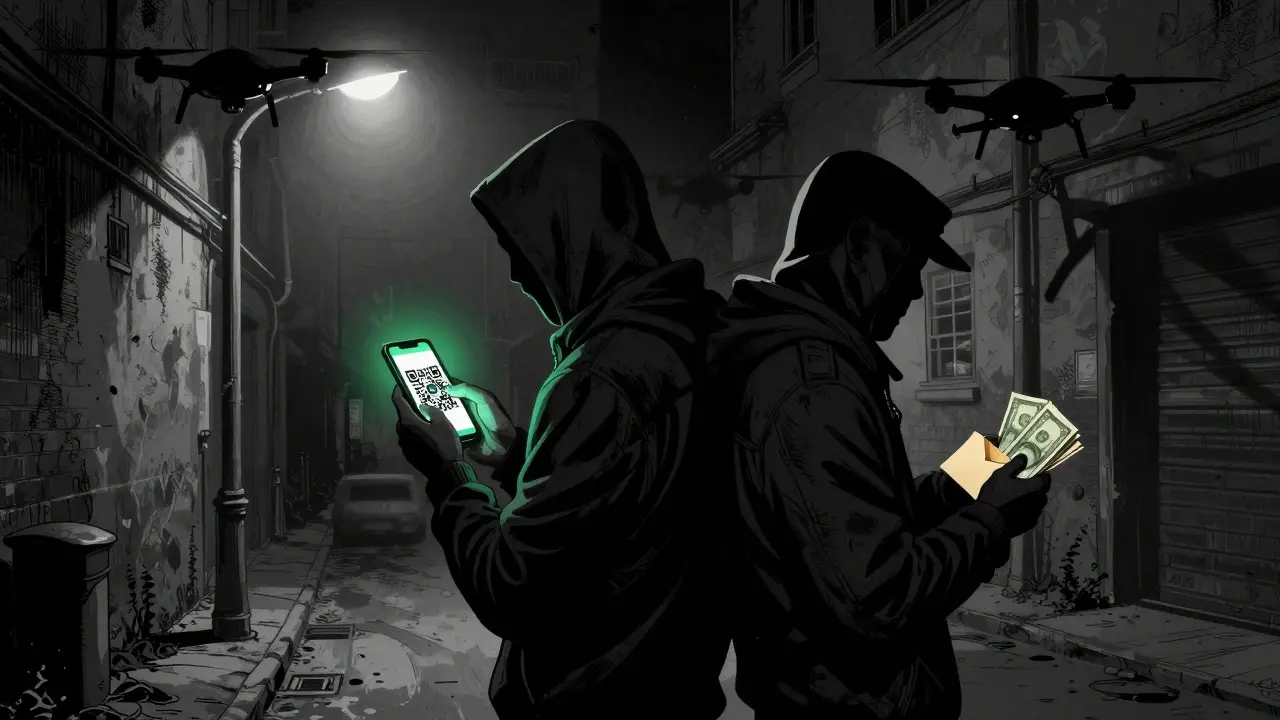
- QR Code Payments: Increasing use of QR codes for payments instead of physical cards, which can obscure transaction trails.
- Sudden Phone Activity Changes: Changes in your mobile device usage patterns within six hours before a withdrawal.
- Loan Follow-ups: Withdrawing cash shortly after approving a new loan.
- Large Transfers: Sending more than ₽200,000 via the Faster Payments System (SPFS) without a clear commercial reason.
- Early Deposit Closures: Closing fixed-term deposits prematurely to move funds.
If your account hits these triggers, the bank will contact you immediately. They will ask for proof of the transaction's purpose. If you cannot provide a legitimate invoice or explanation, they will limit your cash withdrawals to ₽50,000 per day for 48 hours. Repeated offenses can lead to permanent account closure and reporting to financial intelligence units.
The Risks of Foreign Platforms and Sanctions
Many Russians turn to foreign exchanges because local options are non-existent for retail users. But this comes with its own set of dangers. The U.S. Treasury and other international bodies are aggressively targeting platforms that facilitate sanctions evasion or ransomware payments.
In March 2025, the U.S. Secret Service, along with German and Finnish law enforcement, seized the domain of Garantex, a major exchange used by many in Russia. Over $26 million in cryptocurrency was frozen. Its successor, Grinex, faced similar pressure. Executives were indicted, and bounties were placed on their heads. This sends a clear message: platforms operating in the gray zone are vulnerable to sudden shutdowns.
If you hold assets on such platforms, you risk losing everything overnight. Furthermore, using these platforms can link your identity to sanctioned entities. Even if you are just trading Bitcoin for personal investment, your IP address and transaction history could be scrutinized. The Department of Justice is offering up to $5 million for information leading to the arrest of key figures in these networks. Being associated with them, even indirectly, is a significant legal risk.
Mining: The Only Clearly Regulated Activity
While trading is fraught with peril, mining is the only aspect of the crypto industry with a relatively clear legal framework in Russia. However, "clear" does not mean "easy." Mining operations require registration and compliance with energy regulations. Illegal mining operations face fines of up to 200,000 rubles. Additionally, miners must adhere to strict electricity consumption limits. During peak winter months, authorities have shut down unregistered farms to protect the power grid. If you are considering mining, ensure you have all necessary permits and are connected to the industrial grid legally. Home mining is generally impractical due to cost and detection risks.

The Future: Digital Ruble and Total Control
Looking ahead to 2026, the introduction of the Digital Ruble marks a pivotal shift. This central bank digital currency (CBDC) is designed to give the government complete visibility into every transaction. Unlike Bitcoin, which offers pseudonymity, the digital ruble will allow the state to program spending conditions, track fund flows in real-time, and potentially restrict how and where money is spent.
Finance Minister Anton Siluanov and Deputy Treasury Head Ivan Chebeskov have hinted at easing some restrictions to boost economic development, but the Central Bank remains staunchly opposed to domestic crypto circulation. The tension between these agencies creates uncertainty, but the trend is clear: greater state control. The digital ruble aims to replace the need for foreign crypto in trade settlements, further marginalizing decentralized assets.
For the average citizen, this means the window for informal crypto adoption is closing. The combination of the digital ruble, stricter bank monitoring, and international sanctions enforcement creates an environment where avoiding restrictions is less about finding loopholes and more about strict adherence to the narrow legal paths provided by the state.
Practical Steps for Compliance
If you must engage with cryptocurrency in Russia, here is how to minimize risk:
- Verify Your Investor Status: Check if you qualify as a "qualified investor." If so, explore the Experimental Legal Regime for legal access to derivatives and select assets.
- Avoid P2P Cash-Outs: Do not use P2P platforms to convert rubles to crypto if you plan to withdraw cash. The behavioral triggers are too sensitive.
- Use Offshore Banking Carefully: If you have access to foreign bank accounts outside of SWIFT sanctions, use them for funding exchanges. Never route large sums through Russian domestic banks for crypto-related purposes.
- Keep Records: Maintain detailed records of all transactions. If your account is frozen, having proof of legitimate intent (e.g., investment portfolios rather than speculative trading) may help, though success is not guaranteed.
- Stay Informed on Legislation: Regulations change frequently. Monitor updates from the Central Bank and the Ministry of Finance. The push for domestic exchanges in 2025 suggests future changes, but nothing is confirmed yet.
Remember, the goal is not to outsmart the system but to operate within its boundaries. The penalties for non-compliance are severe, ranging from financial losses to legal prosecution. As the digital ruble rolls out, expect even tighter controls. Plan accordingly.
Is it illegal to own Bitcoin in Russia?
No, owning cryptocurrency is not explicitly illegal for individuals in Russia. However, using it as a means of payment for goods and services is prohibited. The main risks come from how you acquire and dispose of these assets, particularly through peer-to-peer trading which can trigger bank account freezes.
What is the Experimental Legal Regime (ELR)?
The ELR is a state-sanctioned framework that allows certain companies and qualified investors to use cryptocurrencies for cross-border settlements and specific financial instruments. It is the only legal way for most entities to interact with crypto in Russia, primarily aimed at bypassing international sanctions.
Why did my bank freeze my account?
Banks in Russia are required to monitor for suspicious activities linked to crypto trading. Common triggers include unusual cash withdrawals, using unfamiliar ATMs, transferring large sums via SPFS, or sudden changes in phone activity before transactions. If flagged, your account may be frozen for 48 hours with withdrawal limits applied.
Can I use foreign crypto exchanges in Russia?
Technically yes, but it carries significant risk. Many foreign exchanges are subject to international sanctions and enforcement actions. Platforms like Garantex have been shut down by US and EU authorities. Using these services can expose your funds to seizure and your identity to scrutiny.
Will the Digital Ruble replace Bitcoin?
The Digital Ruble is not a replacement for Bitcoin but a tool for state control. It aims to centralize digital transactions under the Central Bank, providing full transparency and programmable features. This reduces the utility of decentralized cryptocurrencies for everyday transactions and cross-border trade within Russia.
What are the fines for illegal crypto mining?
Illegal mining operations in Russia can result in fines of up to 200,000 rubles. Additionally, operators may face equipment confiscation and forced disconnection from the power grid. Legal mining requires proper registration and compliance with energy consumption regulations.
Are there any licensed crypto exchanges in Russia?
As of 2026, there are no fully licensed retail crypto exchanges in Russia. Lawmakers have proposed creating a network of domestic exchanges, but no concrete implementation timeline exists. Retail users currently rely on foreign platforms or the restricted Experimental Legal Regime.






Hadleigh Edwards
June 3, 2026 AT 00:57I have been following the regulatory shifts in Eastern Europe for quite some time now and it is fascinating to see how the landscape has evolved from a wild west scenario into this highly controlled environment that we are seeing today. The article makes a very compelling point about the distinction between ownership and usage which is a nuance that many people seem to miss when they start diving into cryptocurrency without doing their due diligence first. It is really interesting to note how the Central Bank of Russia has managed to implement such sophisticated monitoring systems that can detect behavioral patterns associated with cashing out or funding crypto trades which is something that was not even possible a few years ago. The mention of the Experimental Legal Regime being the only legal path for most entities is particularly striking because it highlights just how exclusive access to these financial instruments has become for the average citizen who does not meet the strict qualified investor criteria. I think it is crucial for anyone reading this to understand that the risks involved are not just theoretical but very real and tangible consequences that can lead to frozen accounts and heavy fines if one is not careful. The part about the digital ruble giving the government complete visibility into every transaction is somewhat chilling when you think about the implications for personal privacy and financial autonomy in the long run. Overall this is a very thorough breakdown of a complex topic and it serves as an important reminder that navigating these waters requires patience and a deep understanding of the local laws.
Crystal Davis
June 4, 2026 AT 19:01You are missing the bigger picture here entirely because the issue isn't just about compliance it is about the fundamental incompatibility of decentralized assets with a state-controlled economy that relies on capital controls to survive. The so-called loopholes mentioned in other comments are not loopholes at all but rather temporary blind spots in a surveillance apparatus that is becoming more efficient by the day. People who think they can outsmart the Central Bank's AI-driven monitoring systems are living in a fantasy world where technology works differently than it actually does. The fact that banks are instructed to monitor specific behaviors like ATM hopping or QR code payments shows that the net is closing in faster than most retail traders realize. This is not a gray area anymore it is a black and white situation where deviation from the state-approved path results in immediate punishment. Stop pretending there is any safe way to do this outside of the ELR because there simply isn't one unless you want to risk losing everything you own.
Rosie Morris
June 6, 2026 AT 17:46omg this is soo scary i cant believe they watch ur phone activity before u withdraw cash thats like big brother level stuff lol. i guess if u live there u just gotta be super careful or maybe just stick to traditional banking cause this sounds too risky for me personally. poor people trying to buy coffee with bitcoin haha imagine getting flagged for that
kamal ifrani
June 6, 2026 AT 22:29This entire situation is a testament to the moral decay of a society that prioritizes speculative gambling over legitimate economic productivity. The fact that individuals are willing to risk severe legal penalties and financial ruin just to participate in what is essentially a Ponzi scheme disguised as innovation is deeply troubling. These people are not victims of regulation they are perpetrators of financial instability who deserve every consequence that comes their way. The state is right to clamp down on this nonsense because it undermines the very foundation of the national currency and allows for unchecked capital flight that harms the broader economy. Anyone complaining about these restrictions is clearly ignorant of the macroeconomic realities at play and should focus on contributing to society in a meaningful way instead of chasing digital phantoms.
saradee dee
June 8, 2026 AT 02:29Wow this is such a dramatic turn of events! I never thought owning Bitcoin could be so complicated and dangerous especially with all these new rules popping up everywhere. It feels like the whole system is designed to make regular people feel helpless and confused about their own money. But hey at least mining is still legal right? Although even that seems super tricky with all the permits needed. I hope everyone stays safe and doesn't get their accounts frozen accidentally!
Bill Gunn
June 9, 2026 AT 09:31Great read 📚 It’s wild to see how fast things changed. The part about ATM hopping triggering alerts is crazy 😱 Who would’ve thought? Just remember folks, stay compliant and don’t try to be too clever with the system 🤐💸
Debbie Lewis
June 9, 2026 AT 11:43I find it interesting how the narrative around crypto has shifted from freedom to restriction so quickly in certain regions. It’s a good reminder that context matters immensely when discussing financial tools. For those outside Russia, it’s easy to overlook these nuances, but for those inside, it’s a daily reality check. Stay informed and cautious.
Joe Clements
June 11, 2026 AT 02:12I can totally relate to the stress of dealing with strict banking regulations. It must be incredibly frustrating to have your account frozen over something as simple as buying coffee with crypto. I hope people can find ways to navigate this safely without losing their minds or their money. Hang in there everyone!
lorna erni
June 12, 2026 AT 20:10Listen up folks this is not a drill! The government is watching EVERYTHING and if you think you can slip through the cracks you are dead wrong. Stop making excuses and follow the rules or face the music. It’s that simple. No amount of technical know-how will save you from the CBRT’s algorithms. Get with the program or get out of the game. Simple as that.
stalin brian
June 13, 2026 AT 03:14hey guys i was wondering if anyone knows if using offshore banks is still a viable option or if thats also getting cracked down on? i heard rumors but dont wanna take chances with my savings. any insights would be great thx!
Craig Swanson
June 13, 2026 AT 16:46Let me tell you something buddy, if you are thinking about testing the waters here you better think twice. The risks are real and the penalties are harsh. Don't let anyone fool you into thinking there is a safe middle ground. Either you comply fully with the ELR or you stay away completely. There is no in-between. Protect yourself and your family by staying within the lines. It’s not worth the hassle.
Dana Rapoport
June 15, 2026 AT 11:15The philosophical implications of the Digital Ruble are profound. We are moving towards a world where money is not just a medium of exchange but a tool of social control. This raises serious questions about the nature of privacy and individual liberty in the digital age. It is essential that we reflect on these changes and consider what kind of society we want to build. Technology should serve humanity, not enslave it.
mark valmart
June 16, 2026 AT 19:06Man this is tough stuff. I guess if you're in Russia you just gotta play it safe. Don't use P2P if you can help it. Keep your records straight. It's annoying but better than losing your cash. Hope things loosen up soon.
Christina Pearce
June 17, 2026 AT 20:42I appreciate the detailed breakdown of the warning signs. It’s helpful to know exactly what triggers the alarms so we can avoid them. I’m curious though, how effective are these measures really? Do they catch everyone or just the careless ones? I’d love to hear from someone who has experienced this firsthand.
Barclay Chantel
June 17, 2026 AT 22:03How utterly tedious. One would assume that by 2026, humanity would have progressed beyond such petty restrictions on personal finance. Instead, we are treated to a droning lecture on compliance and fear. It is beneath us to discuss such trivialities. The elite will always find a way; the rest of you can fret over your frozen accounts. How quaint.
Miss Masquer
June 19, 2026 AT 15:41As someone who has lived in multiple countries with varying degrees of financial freedom, I find this situation in Russia particularly intriguing yet concerning. The cultural shift towards total transparency and state oversight is starkly different from the libertarian ideals often associated with cryptocurrency adoption in other parts of the world. It highlights the tension between technological innovation and governmental control in a way that is both fascinating and alarming. We must remain vigilant about the erosion of privacy rights globally.
Joshua Alcover
June 19, 2026 AT 18:09The geopolitical ramifications of these regulatory frameworks are immense and cannot be overstated. The implementation of the Digital Ruble represents a strategic move to consolidate sovereign power in the digital domain thereby neutralizing the subversive potential of decentralized currencies. It is imperative that stakeholders recognize the necessity of such measures in maintaining national security and economic stability amidst the chaotic global financial landscape. Compliance is not merely a legal obligation but a patriotic duty.
Diana Morris
June 21, 2026 AT 03:12stop whining and just follow the rules its not that hard. if you cant handle a little regulation then maybe crypto isnt for you. get over it. life goes on. deal with it.
Dianne Wright
June 23, 2026 AT 02:20i am so tired of hearing about crypto it gives me headaches. why can't people just use normal money like everyone else. it's exhausting trying to keep up with all these scams and bans. please just stop talking about it already. i need a break from this nonsense.
trisya hazriyana
June 23, 2026 AT 12:27oh look another bunch of scaredy cats crying about regulations. laughable. the system is rigged anyway so why bother trying to play fair? just do what you want and hope for the best. typical bureaucratic nonsense. whatever.