

For years, Pakistan was one of the most hostile countries in the world toward cryptocurrency. In 2018, the State Bank of Pakistan banned banks from dealing with crypto exchanges. People who used Bitcoin or Ethereum risked having their accounts frozen. Yet today, Pakistan sits at 3rd or 4th in the world for crypto adoption - right behind India and the United States. How did that happen?
From Ban to Breakthrough
It wasn’t magic. It was necessity. When inflation hit 38% in 2023 and the Pakistani rupee lost nearly half its value against the dollar in two years, people stopped trusting the banking system. Savings vanished overnight. Remittances from abroad - which make up 7% of Pakistan’s GDP - became harder and more expensive to receive. Traditional money transfer services like Western Union charged up to 10% in fees. That’s why millions turned to crypto. Stablecoins, especially USDT (Tether), became the new lifeline. People bought them on peer-to-peer platforms like Paxful and LocalBitcoins, then used them to pay for goods, send money to family overseas, or hold value until the rupee stabilized. By 2025, an estimated 20 million Pakistanis - nearly 9% of the population - owned cryptocurrency. That’s more than the entire population of Sweden.How Chainalysis Got It Right
The Chainalysis 2025 Global Crypto Adoption Index is the most trusted source for this data. It doesn’t just count how many people own crypto. It measures total value received through centralized exchanges, decentralized apps, and peer-to-peer networks - adjusted for local purchasing power. Pakistan ranked 3rd because its users weren’t just gambling on Bitcoin. They were using crypto as money. Compare that to Nigeria, which used to be #2. Nigeria’s crypto usage dropped in 2025 after new banking restrictions made P2P trading harder. Pakistan didn’t make that mistake. Instead, it doubled down on accessibility.The Regulatory Flip
The real turning point came in July 2025, when Pakistan launched the Pakistan Virtual Assets Regulatory Authority (a government body created to license and oversee cryptocurrency exchanges, wallet providers, and token issuers). This wasn’t just a formality. It was a full reversal of the 2018 ban. Suddenly, crypto businesses could open bank accounts. Exchanges could operate legally. Users could file taxes on their gains. Alongside that, the Pakistan Crypto Council (a public-private industry body led by CEO Bin Saqib, tasked with advising the government and coordinating with global partners) was formed. It brought together local exchanges, fintech startups, and international players like World Liberty Financial - a blockchain firm linked to the Trump family’s business interests. This wasn’t just about regulation. It was about legitimacy. People stopped seeing crypto as a gray-market tool. It became a financial tool - like a bank account, but faster and cheaper.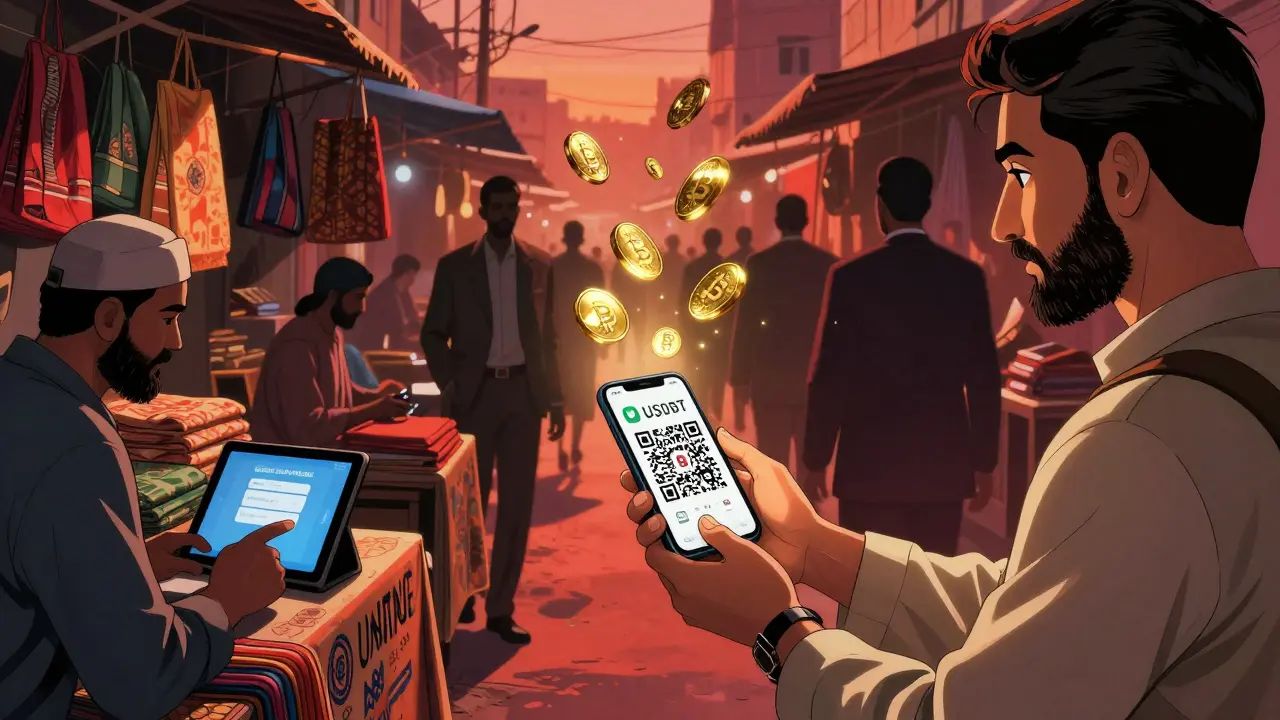
Who’s Using Crypto - and Why
Most users aren’t day traders. They’re teachers, drivers, nurses, and small shop owners. A 2025 survey by the Lahore School of Economics found that 68% of crypto users in Pakistan used it for remittances. Another 21% used it to protect savings from inflation. Only 6% traded for speculative profit. Take Ayesha, a nurse in Faisalabad. She gets paid in rupees, but her brother works in Saudi Arabia. Before, sending him $500 cost her $50 in fees and took five days. Now, she buys USDT on a local app, sends it to his wallet, and he cashes out in riyals within minutes - for less than $2 in fees. Or Muhammad, a Karachi-based textile exporter. He used to wait 30 days for payments from buyers in Turkey. Now, he invoices in USDT. Payments arrive in 15 minutes. He converts half to rupees, keeps half in crypto for future imports. No bank delays. No currency risk. This isn’t speculation. It’s survival.How Pakistan Compares to the World
Here’s how Pakistan stacks up against other top crypto nations in 2025:| Rank | Country | Adoption Score | Primary Use Case | Regulatory Status |
|---|---|---|---|---|
| 1 | India | 87.2 | Remittances, P2P trading | Regulated |
| 2 | United States | 82.1 | ETFs, institutional investment | Regulated |
| 3 | Pakistan | 78.9 | Stablecoins, savings, remittances | Regulated |
| 4 | Vietnam | 76.5 | DeFi, gaming, P2P | Unclear, but tolerated |
| 5 | Indonesia | 74.3 | Stablecoins, retail payments | Regulated |
Notice something? Pakistan and Indonesia are the only two countries on this list where the top use case is not trading or investing. It’s utility. That’s why experts like Chainalysis chief economist Kim Grauer say Pakistan’s growth is sustainable.
The Hidden Risks
None of this is perfect. Pakistan’s crypto boom still has cracks. The partnership with World Liberty Financial raised eyebrows. The firm’s founder, Zach Witkoff, has no prior experience in financial regulation. Yet he met with Pakistan’s army chief and prime minister. Critics worry this isn’t about financial inclusion - it’s about political favor-trading. Also, while the regulatory framework exists, enforcement is uneven. Some exchanges still operate in the shadows. Tax collection on crypto gains is still in its infancy. And if the rupee suddenly stabilizes, will people still use crypto? The real test comes in 2026. Will Pakistan keep building infrastructure - like crypto-based microloans for small businesses or blockchain land registries? Or will it become another case of hype without substance?
What Comes Next
Pakistan’s story isn’t about becoming the next crypto hub like Switzerland. It’s about becoming the next financially resilient nation. With 230 million people, a young population, and a history of economic instability, crypto isn’t a trend - it’s a tool. The government now talks about “digital rupee” pilots and blockchain-based social welfare payments. That’s the real endgame: not replacing banks, but making them optional. If Pakistan continues down this path - focusing on utility, not speculation - it won’t just stay in the top 5. It could become the model for how developing nations use crypto to rebuild trust in money.Why This Matters for You
Even if you’re not in Pakistan, this story matters. It shows that crypto adoption isn’t about technology. It’s about need. When people lose faith in their currency, they find alternatives. No ban can stop that. No regulation can control it - unless it’s designed to serve real people. Pakistan didn’t win because it had the best tech. It won because it listened to its people.Why does Pakistan rank so high in crypto adoption despite past bans?
Pakistan’s high ranking comes from urgent real-world needs: hyperinflation, expensive remittances, and a broken banking system. People turned to crypto - especially stablecoins - to protect savings and send money home. The 2025 regulatory shift didn’t create adoption; it just made it legal.
Is crypto legal in Pakistan now?
Yes. Since July 2025, crypto is fully legal under the Pakistan Virtual Assets Regulatory Authority. Exchanges must be licensed, users must pay taxes on gains, and banks can now work with crypto firms. This ended the 2018 ban and turned crypto into a regulated financial service.
What’s the most popular cryptocurrency in Pakistan?
USDT (Tether) is by far the most used. It’s a stablecoin pegged to the U.S. dollar, so it doesn’t swing in price like Bitcoin. People use it to hold value, send remittances, and pay for goods. Bitcoin is traded too, but mostly for speculation - not daily use.
How many people in Pakistan use crypto?
An estimated 20 million people - about 9% of the population - owned cryptocurrency by 2025. That’s one of the highest adoption rates in the world. Globally, only 6.9% of people own crypto, so Pakistan’s rate is more than 30% higher than average.
Is Pakistan’s crypto growth sustainable?
So far, yes. Unlike speculative booms in other countries, Pakistan’s adoption is driven by real utility: remittances, savings, and payments. If the government continues building infrastructure - like crypto-based loans and digital wallets - adoption will keep growing. But if politics or foreign influence take over, the gains could stall.
How does Pakistan compare to Nigeria or India?
India leads globally in total crypto volume, but most of its use is for trading and speculation. Nigeria dropped from #2 to #6 after new banking rules made P2P trading harder. Pakistan’s advantage is its focus on stablecoins for daily needs - not gambling. That makes its growth more stable and harder to reverse.
Can I send crypto to Pakistan safely?
Yes, but use licensed platforms. Avoid unregulated exchanges. Send USDT via trusted wallets like Trust Wallet or MetaMask. Make sure the recipient knows how to cash out through a licensed Pakistani exchange like BuyUcoin or Coinmama Pakistan. Always check the latest regulatory updates before sending.
What’s the biggest threat to Pakistan’s crypto future?
Over-reliance on foreign companies with political ties. If crypto policy becomes shaped by private interests rather than public need, trust will erode. The real risk isn’t regulation - it’s corruption disguised as innovation.







Mollie Williams
January 14, 2026 AT 01:00It's fascinating how necessity becomes innovation when institutions fail. The real story here isn't about blockchain-it's about human resilience. People didn't choose crypto because it was cool; they chose it because their savings were evaporating. That shift from speculation to survival is profound. It redefines what adoption means. Not adoption as trend, but adoption as lifeline.
And yet, we in the West still treat crypto as a casino. We forget that for millions, it's the only bank that never closes.
There's poetry in that.
Tiffani Frey
January 14, 2026 AT 02:19This is one of the most nuanced takes on crypto adoption I’ve seen in years. The emphasis on utility over speculation is critical. Most Western analyses miss this entirely-they see ‘crypto adoption’ as ‘Bitcoin price movement.’ But here, it’s about remittances, inflation hedging, microtransactions. It’s financial infrastructure built from the ground up.
Also, the role of USDT is genius. Stablecoins aren’t ‘altcoins’ here-they’re the new rupee. And the regulatory shift? Not a capitulation. A recognition.
Well-researched. Thank you.
Kelley Ramsey
January 15, 2026 AT 20:59This gives me hope. Seriously. After all the hype and scams, it’s beautiful to see crypto being used for real human needs. Not gambling. Not mooning. Just... surviving. And thriving. I’m so glad someone documented this properly.
Thank you for writing this.
Veronica Mead
January 17, 2026 AT 17:09While I appreciate the narrative of grassroots resilience, we must not ignore the alarming influence of foreign entities with opaque ties-particularly World Liberty Financial and its connections to politically connected figures. This is not financial inclusion; it is regulatory capture disguised as innovation. The State Bank’s reversal, while welcome, was likely coerced by external pressure, not public demand. We must remain vigilant against the commodification of desperation.
Mujibur Rahman
January 19, 2026 AT 15:39Let’s be clear-Pakistan didn’t win because it’s special. It won because it stopped pretending the banking system was functional. Most countries would’ve doubled down on control. Pakistan chose adaptation. That’s the real lesson. Not the tech. Not the coins. The mindset shift.
And yes, USDT is the de facto currency now. The central bank should just peg the rupee to it and save everyone the headache.
Dave Lite
January 21, 2026 AT 09:15Bro, I’ve been tracking this for months. The numbers don’t lie-20 million users, 9% of the population. That’s wild. And the fact that 68% use it for remittances? That’s the key. This isn’t crypto bros. This is your aunt sending money to her cousin in Dubai without paying 10% in fees.
Also, the regulatory shift? Perfect timing. They didn’t ban it-they formalized it. That’s leadership.
Also, buyucoin is legit. Don’t use random P2P sellers. Use licensed ones. Trust me.
PS: USDT on TRC20 is fastest. ERC20 is slower but cheaper for small amounts. Just saying.
kris serafin
January 22, 2026 AT 20:00India’s at #1? Lmao. They have 1.4 billion people. Of course they top the list. Pakistan’s 20 million users on a population of 230 million? That’s a higher adoption rate than the U.S. Think about that. It’s not about volume-it’s about penetration. Pakistan’s doing what no Western nation has: crypto as daily life. Not investment. Survival.
Also, USDT is the real MVP. Bitcoin is just noise here.
Ritu Singh
January 24, 2026 AT 09:09Let me tell you something nobody else will-this whole crypto boom is a CIA operation. The U.S. has been pushing stablecoins into developing nations for years to weaken sovereign currencies. Pakistan didn’t choose crypto. It was manipulated. The Trump-linked firm? Obvious. The army chief’s meeting? Classic regime change playbook. They want to replace the rupee with a dollar-backed digital asset. This isn’t freedom. It’s digital colonialism.
They’re coming for your money next. Watch the Fed’s next move.
Paul Johnson
January 25, 2026 AT 05:06Dennis Mbuthia
January 26, 2026 AT 16:08Look, I get it. Pakistan’s got problems. But this crypto thing? It’s not some grassroots miracle. It’s a symptom of a broken state. People don’t turn to digital money because they love innovation-they turn to it because the government stole their savings. And now we’re supposed to cheer because they’re using a private, unregulated asset to survive? That’s not progress. That’s collapse dressed up as a startup pitch.
Also, Trump’s people involved? No thanks. This isn’t financial inclusion-it’s a hedge fund playing puppet master with a nation’s desperation.
Katrina Recto
January 28, 2026 AT 09:17Usdt. That’s it. That’s the whole story. No need for whitepapers. No need for blockchain evangelists. Just a stable coin, a phone, and a desperate need to send money home. Simple. Brilliant. Human.
Jennah Grant
January 28, 2026 AT 19:18The regulatory framework in Pakistan is still nascent, but the institutional architecture-VPARA, the Crypto Council-is structurally sound. What’s missing is interoperability with global DeFi protocols and standardized KYC/AML frameworks. Without those, the system remains vulnerable to fragmentation. Also, tax compliance is still ad hoc. If they can integrate crypto gains into the federal income system via API-linked wallets, adoption will become irreversible. Otherwise, shadow markets will persist.
Staci Armezzani
January 30, 2026 AT 05:19If you’re a teacher, nurse, or small business owner in Pakistan and you’re using crypto to feed your family? You’re not a speculator. You’re a pioneer.
This isn’t about Bitcoin. It’s about dignity. It’s about being able to send your brother $500 without paying $50. That’s not finance. That’s justice.
Keep going. You’re changing the world, one USDT transfer at a time.
Danyelle Ostrye
January 30, 2026 AT 11:25So many people are talking about regulation and foreign influence-but what about the women? Ayesha the nurse? Muhammad the exporter? They’re not in boardrooms. They’re on WhatsApp groups, figuring out how to send money without getting scammed. That’s the real innovation. Not the law. Not the policy. The people.
Let’s not forget them.
Jordan Leon
January 31, 2026 AT 18:49There’s a philosophical truth here: when institutions fail, individuals create new ones. The state tried to suppress crypto. The people didn’t rebel-they built an alternative economy. No manifesto. No protest. Just wallets, QR codes, and trust.
This is what happens when you remove the myth of central authority. Not chaos. Emergence.
Perhaps the real revolution isn’t blockchain. It’s the quiet, collective refusal to accept broken systems.
Jacob Clark
February 1, 2026 AT 19:16Okay, but let’s be real-this whole thing is just a distraction. Pakistan’s economy is still collapsing. The rupee is still garbage. The military still runs everything. Crypto isn’t saving them-it’s just letting them delay the inevitable. And now they’re letting some Trump-linked guy set the rules? Are you kidding me? This isn’t innovation. It’s a Ponzi scheme with a passport.
Also, 20 million users? That’s nothing compared to the 150 million who still can’t afford a phone. Don’t celebrate adoption. Celebrate equity. And we’re nowhere near that.
Don Grissett
February 3, 2026 AT 13:22People say pakistan is #3 in crypto adoption but they dont mention that most of those users are using it for scams. fake p2p platforms, rug pulls, fake exchanges. the government just legalized chaos. and now they wanna tax it? lol. also why is trump involved? is this a crypto cult? someone please explain.
Valencia Adell
February 4, 2026 AT 11:15Let me be the only one to say this: this isn’t adoption. It’s desperation. And desperation is not a sustainable business model. When the rupee stabilizes-even slightly-this entire ecosystem will collapse. People will go back to banks. The ‘lifeline’ becomes a crutch. And then what? All those ‘users’? Gone. All that ‘innovation’? Vapor.
Don’t mistake survival for success. This is a temporary glitch in the system-not a revolution.
jim carry
February 6, 2026 AT 11:04Why is everyone ignoring the fact that Pakistan’s crypto boom is being orchestrated by foreign capital with political agendas? World Liberty Financial? Zach Witkoff? He’s never run a financial institution. He’s a PR flack with connections. The army chief met with him? That’s not regulation. That’s a coup by crypto bros.
And the people? They’re pawns. Used to legitimize a takeover of the monetary system. This isn’t freedom. It’s financial colonization.
And you’re all celebrating it like it’s a TED Talk.
Jon Martín
February 6, 2026 AT 20:03Y’all are overcomplicating this. People in Pakistan didn’t need a whitepaper. They didn’t need a lecture. They needed to feed their kids. Send money home. Keep their savings from turning into toilet paper.
So they used crypto.
That’s it.
Stop calling it innovation. Call it love. Call it survival. Call it human.
And if your country ever gets to that point? You’ll do the same.
Don’t judge. Just learn.
Becky Chenier
February 8, 2026 AT 16:51Interesting how the regulatory shift came right after the inflation spike. Coincidence? Maybe. But it’s also the first time a government didn’t try to shut down a grassroots movement-they joined it. That’s rare. Even in the U.S., regulators still treat crypto like a virus. Pakistan treated it like a vaccine.
Still, the foreign influence angle is concerning. But maybe… just maybe… this is what democracy looks like when it’s not led by politicians.
Tre Smith
February 10, 2026 AT 14:11Chainalysis’s index is flawed. It measures value received, not actual usage. Pakistan’s high score is inflated by massive P2P inflows from the Gulf-remittances disguised as crypto transactions. Also, tax compliance is near zero. The ‘regulated’ status is cosmetic. The real number of active users? Maybe 5 million. Not 20. The rest are ghost wallets.
Also, USDT is centralized. Tether controls it. So Pakistan’s ‘financial independence’ is just dollar dependency with extra steps.
Valencia Adell
February 12, 2026 AT 00:49And yet, despite all the corruption, foreign meddling, and regulatory gray zones-millions of people are better off. That’s the quiet miracle here. The system is broken. But the people? They fixed it anyway.