
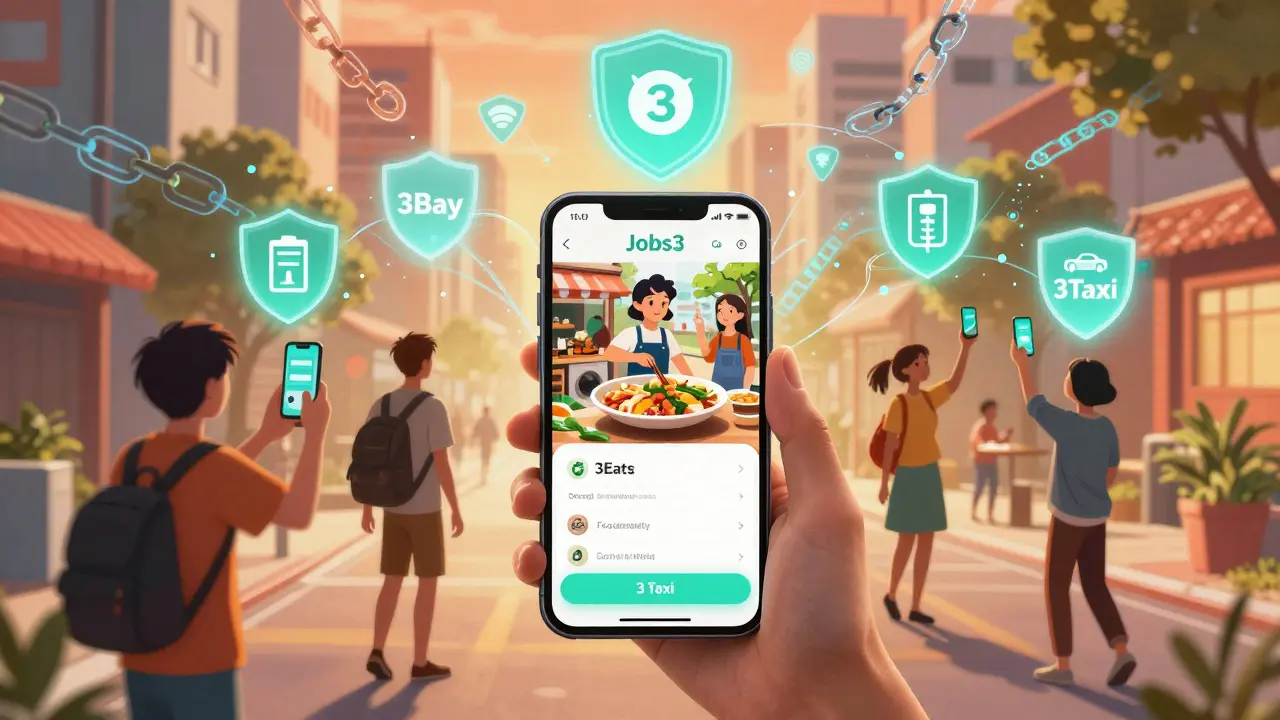
Most people think crypto coins are just speculative bets - something you buy hoping the price goes up. But Three Protocol Token (THREE) isn’t built for that. It’s a utility token designed to power a real, working ecosystem of decentralized marketplaces that replace Amazon, Upwork, eBay, and even ride-hailing apps - all without needing your ID, bank account, or government approval.
What exactly is THREE?
THREE is the native token of the Three Protocol, a decentralized marketplace platform built on the Tectum blockchain. Unlike tokens that exist just to trade, THREE is used to buy, sell, and interact with real services inside the ecosystem. Think of it like digital cash that works across Jobs3 (a freelance platform), 3Bay (a marketplace for goods), 3Eats (food delivery), and 3Taxi (ride service). You don’t need to sign up with an email, upload a passport, or link a bank account. You just need a wallet and some THREE tokens.
The project’s goal is simple: make online commerce accessible to anyone, anywhere - especially people who are unbanked, debanked, or tired of being tracked by corporations. If you’ve ever been banned from a platform for no reason, or had your payments frozen because of KYC rules, THREE was made for you.
How does it actually work?
Three Protocol doesn’t just add blockchain to an existing app. It rebuilds the entire transaction system from the ground up using three core technologies:
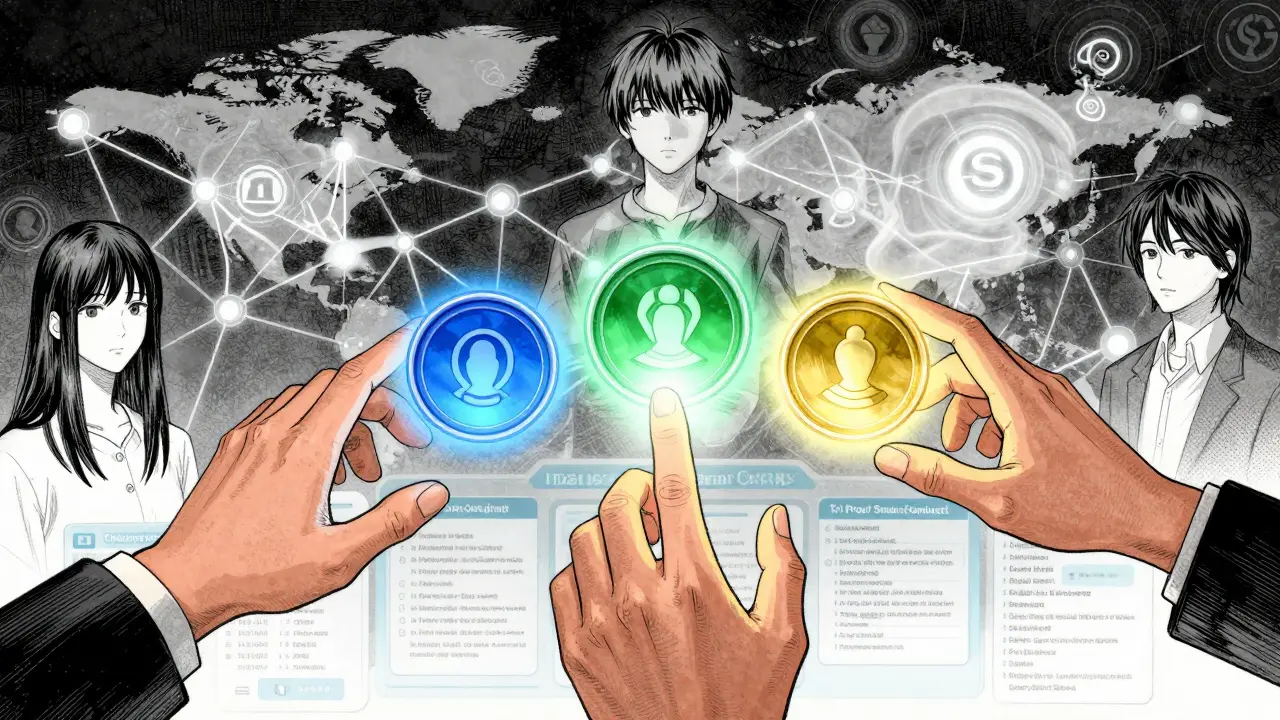
- Tri-Proof Smart Contracts: Every transaction involves three parties - buyer, seller, and a Decentralized Autonomous Organization (DAO). All three must approve the deal. If there’s a dispute, the DAO steps in as a neutral judge. No single entity controls the process.
- ZK-STARKs (Zero-Knowledge Scalable Transparent ARguments): This isn’t just marketing buzz. ZK-STARKs let users prove they’re eligible to transact - without revealing who they are. You can prove you have enough funds, or that you’ve completed a job, without showing your name, location, or transaction history.
- Neural Network AI: The platform uses AI to match buyers and sellers intelligently. Need a graphic designer who speaks Portuguese and works in GMT-5? The AI finds them. Want to sell handmade furniture? The AI suggests pricing based on demand, materials, and buyer behavior - all without a human manager.
These three systems work together. The AI finds the right match. The ZK-STARKs verify identity and payment privately. The Tri-Signature DAO handles disputes and escrow. No central server. No middleman. No data leaks.
Real marketplaces powered by THREE
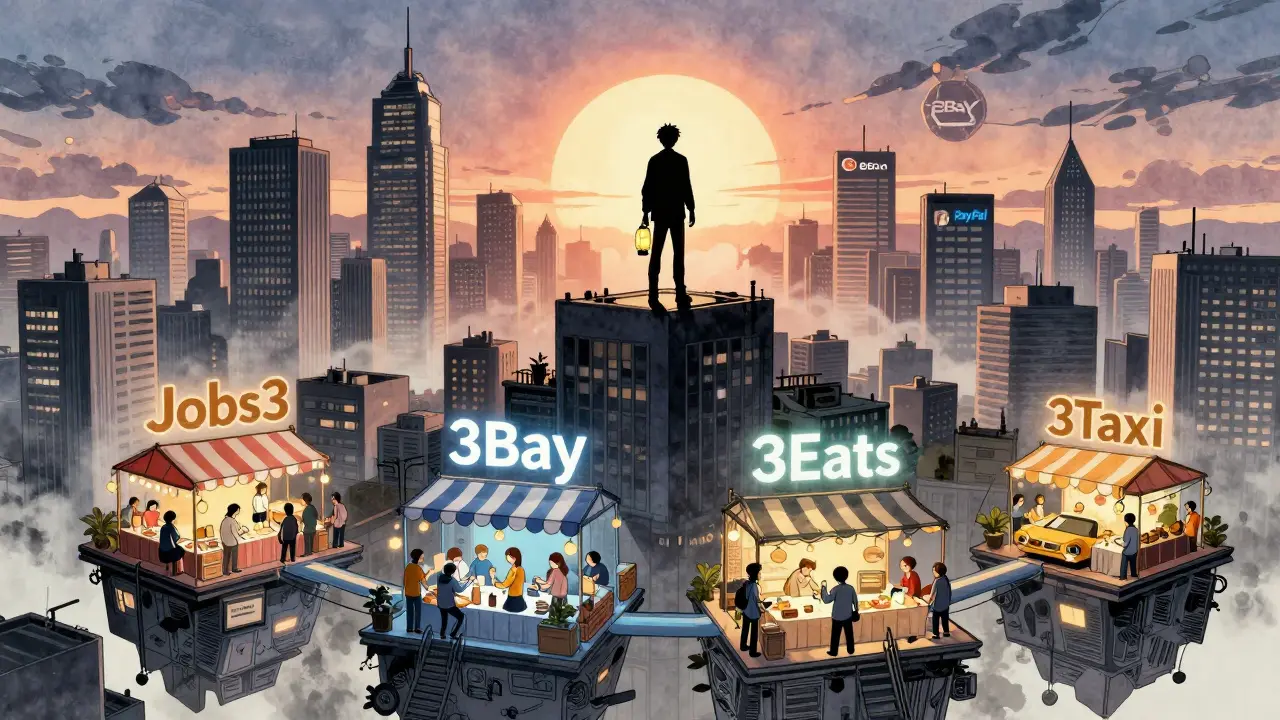
THREE isn’t just a theory. Four live marketplaces already operate on the protocol:
- Jobs3: A decentralized version of Upwork and Fiverr. Freelancers get paid instantly in THREE or other crypto. Clients can hire globally without worrying about currency conversion or PayPal holds.
- 3Bay: A peer-to-peer marketplace for goods. No listing fees. No account suspension. No ads. Just direct trades using THREE tokens.
- 3Eats: Order food from local vendors. Drivers are paid in crypto. No corporate takeaways - vendors keep 100% of the revenue.
- 3Taxi: Hail a ride. Pay in THREE. No surge pricing. No driver rating manipulation. No corporate dashboard controlling who gets rides.
These aren’t prototypes. They’re live. Users are already transacting on them. The mobile app - which will combine all four services into one interface - is in development. That means one day, you could order food, hire a freelancer, sell your old laptop, and book a ride - all from the same app, all paid in THREE, all without giving up your privacy.
Why is THREE different from other crypto tokens?
Most crypto projects either:
- Try to be a better Bitcoin (store of value),
- Try to be a faster Ethereum (smart contracts), or
- Try to be a meme coin (doge, shiba, etc.).
THREE does none of those. Instead, it solves a real problem: how do you build a fair, private, global economy when banks and big tech are shutting people out?
Here’s what makes it unique:
- No KYC: You don’t need to prove who you are. Your identity is encrypted and verified on-chain.
- No single point of failure: If the company behind THREE vanishes tomorrow, the marketplaces keep running. They’re governed by the community.
- Real utility: You can’t just hold THREE and wait for it to spike. You use it. It’s like owning a coupon book that works across multiple services.
- Staking rewards: Holders can stake THREE to help secure the network and earn passive income - not from speculation, but from real transaction fees.
Compare that to a token that only exists on one exchange with no real use case. THREE is designed to be spent, not hoarded.
Where can you buy THREE?
As of early 2026, THREE is available on several exchanges:
- Centralized: MEXC, Bitget Wallet
- Decentralized: Uniswap (on Ethereum-compatible chains)
The token supply is locked at 15% for 18 months to ensure liquidity. That’s a good sign - it means the team isn’t dumping coins on the market right away. The total market cap as of February 2026 is around $135,644 USD. That’s tiny compared to Bitcoin or Ethereum, but it’s also why early adopters might see bigger upside.
Who is THREE for?
THREE isn’t for everyone. If you want to get rich quick, look elsewhere. If you care about privacy, financial freedom, or just hate corporate platforms - this is for you.
- Unbanked users: If you can’t open a bank account, you can still use THREE.
- Privacy seekers: If you don’t want Amazon or Google tracking your purchases, THREE gives you anonymity.
- Freelancers and creators: No more waiting 14 days for PayPal to release your funds.
- Blockchain believers: If you think decentralized systems should replace big tech - this is a working example.
What are the risks?
Nothing’s perfect. Here’s what could go wrong:
- Regulation: Governments may try to shut down no-KYC platforms. The protocol is designed to be censorship-resistant, but exchanges might get pressured.
- Adoption: Most people still use Amazon and Upwork because they’re easy. Convincing them to switch takes time.
- Scalability: ZK-STARKs are fast, but can they handle millions of users? Real-world stress tests are still ongoing.
- Competition: Other projects are trying to build similar marketplaces. THREE has a head start, but it’s not untouchable.
Still, the fact that four marketplaces are already live and functioning - with real users transacting daily - shows momentum. This isn’t vaporware.
What’s next for THREE?
The roadmap is clear:
- Launch the unified mobile app (combining Jobs3, 3Bay, 3Eats, 3Taxi)
- Expand to new verticals - 3School (online education), 3Health (telemedicine)
- Integrate with Hela Labs’ Layer 1 blockchain for faster, cheaper transactions
- Enable cross-chain support so THREE can be used on Solana, Polygon, and others
There’s no whitepaper full of buzzwords. Just a working product, a clear mission, and a token that does something useful.
Final thought
THREE isn’t trying to be the next Bitcoin. It’s trying to be the next eBay - but without the fees, the bans, or the surveillance. If you’ve ever felt like the system is rigged against you - whether because you’re in a country with no banking access, or because you’re tired of being tracked - THREE gives you a real alternative. It’s not hype. It’s hardware. It’s code. It’s live. And it’s working.







bella gonzales
February 28, 2026 AT 16:00Paul Reinhart
March 1, 2026 AT 01:48Samantha Stultz
March 2, 2026 AT 04:26Robert Conmy
March 3, 2026 AT 20:20Amita Pandey
March 5, 2026 AT 09:38Jan Czuchaj
March 6, 2026 AT 04:19Tracy Peterson
March 6, 2026 AT 14:03George Suggs
March 6, 2026 AT 16:07Dianna Bethea
March 8, 2026 AT 14:33KingDesigners &Co
March 8, 2026 AT 21:27Felicia Eriksson
March 10, 2026 AT 08:36aaron marp
March 11, 2026 AT 18:18Patrick Streeb
March 12, 2026 AT 05:21Kenneth Genodiala
March 12, 2026 AT 09:01