
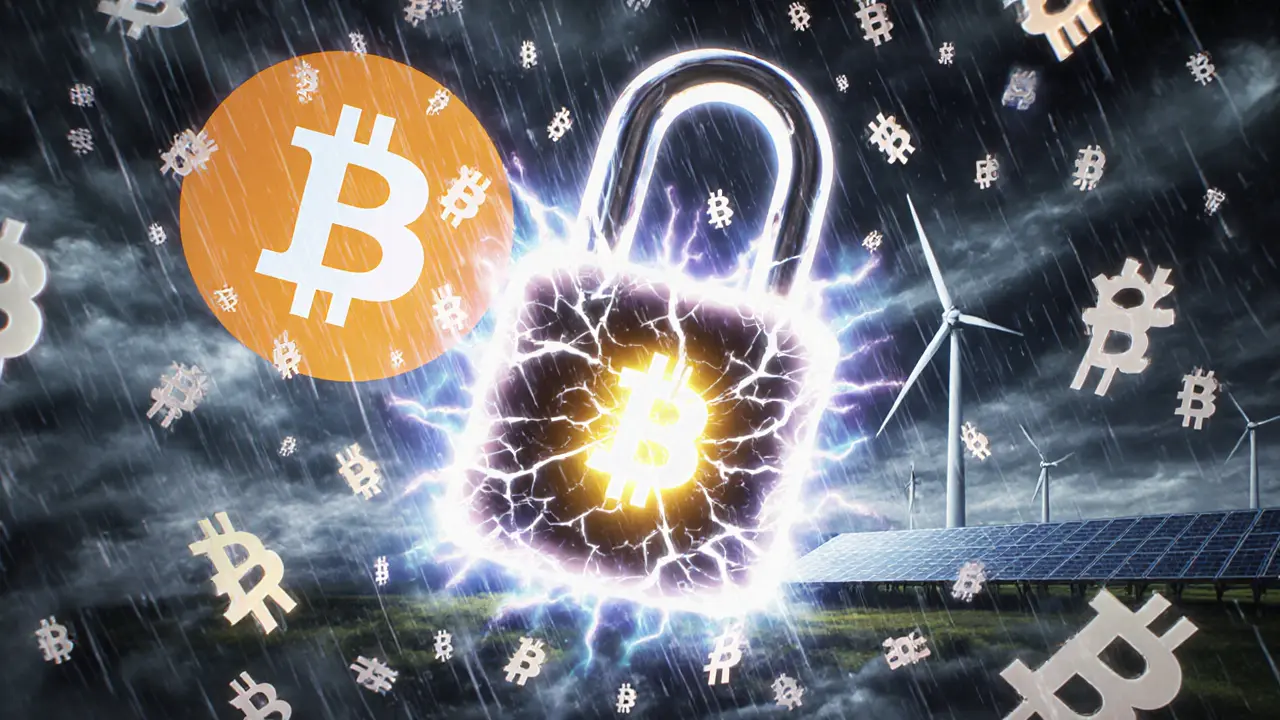
Blockchain Energy Consumption Calculator
How Blockchain Energy Works
This calculator estimates energy consumption for blockchain networks using Proof-of-Work (PoW) consensus. Compare with alternative consensus mechanisms like Proof-of-Stake (PoS) which use dramatically less energy.
Enter values and click Calculate to see results
Every time a new block gets added to Bitcoin, a computer somewhere is racing against millions of other machines-not to win a race, but to guess a number. That number is the nonce. It’s not glamorous. It doesn’t make headlines. But without it, blockchain as we know it wouldn’t work. The nonce is the tiny, critical piece of math that keeps Bitcoin secure. But with the world moving away from energy-hungry mining, what happens to the nonce? Is it fading out, or is it just changing shape?
What Exactly Is a Nonce?
A nonce stands for "number used once." It’s a random number miners tweak over and over until they find one that, when combined with the block’s data, produces a hash that meets the network’s difficulty target. Think of it like trying to unlock a padlock by turning a dial with 10 million positions. You don’t know which one works. You just keep trying until one clicks.
In Bitcoin’s block header, the nonce sits alongside other data: the timestamp, the previous block’s hash, the Merkle root of all transactions, and the current difficulty level. Miners change the nonce, run the whole thing through SHA-256, and check the output. If the hash doesn’t start with enough zeros (as required by the difficulty), they try again. And again. And again. On average, Bitcoin miners try over 10^21 different nonces before finding a valid one.
This isn’t just busywork. It’s security. The massive computational effort makes it economically impossible for anyone to rewrite old blocks. To alter a single transaction, you’d need to redo not just that block, but every block after it-using more computing power than the entire Bitcoin network combined. That’s the magic of the nonce: it turns security into a math problem that’s easy to verify but nearly impossible to fake.
Why the Nonce Matters for Security
The nonce is the reason double-spending doesn’t happen. Without it, someone could send the same Bitcoin to two different people at once. The network would have no way to know which transaction came first. But because each block requires a valid nonce, and because changing any transaction forces a new nonce to be found, tampering becomes instantly obvious-and prohibitively expensive.
Security researchers at Nadcab Labs call the nonce "the linchpin of blockchain consensus." It’s not just a number. It’s a proof that real work was done. That’s why, even as other consensus models rise, the nonce remains the gold standard for trustless security. Ethereum used it for years. Bitcoin still does. And until someone proves a better way to enforce immutability without central authority, the nonce stays relevant.
But here’s the catch: that security comes at a cost. A massive cost.
The Energy Problem
Every nonce solution requires electricity. Lots of it. Bitcoin mining now uses more power annually than some countries-like Argentina or the Netherlands. In 2023, Bitcoin’s annual energy consumption was estimated at over 120 terawatt-hours. That’s not because miners are wasteful. It’s because the system is designed that way. The harder the puzzle, the more secure the network. And the more secure it is, the more miners compete.
That’s why the world is moving on. Ethereum switched to proof-of-stake in 2022. Cardano, Solana, and Polkadot never used nonce-based mining. Even new Bitcoin sidechains and Layer 2 solutions avoid it. Why? Because energy use is no longer just an environmental issue-it’s a regulatory one. The EU has proposed bans on PoW crypto mining. The U.S. is scrutinizing mining operations in states like Texas. Investors are pulling out of PoW projects over ESG concerns.
Nonce-based mining isn’t dying because it’s broken. It’s dying because society won’t pay the price anymore.
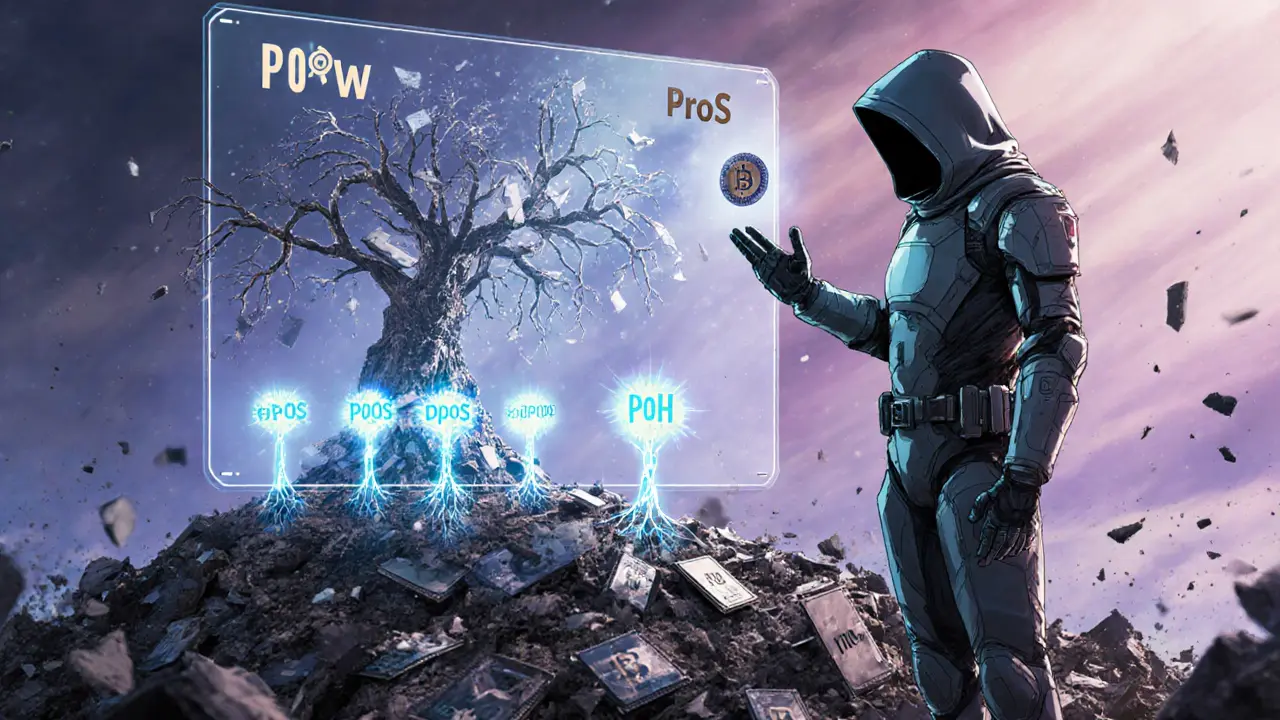
What’s Replacing It?
Proof-of-stake (PoS) is the main replacement. Instead of miners solving nonce puzzles, validators are chosen based on how much cryptocurrency they "stake" as collateral. No computing power needed. No energy waste. Transactions get confirmed in seconds, not minutes. Ethereum cut its energy use by over 99.95% after switching.
Other models are gaining ground too:
- Delegated Proof-of-Stake (DPoS): Token holders vote for a small group of validators. Faster, but more centralized.
- Proof-of-History (PoH): Used by Solana, it timestamps transactions using a verifiable delay function-no nonce needed.
- Proof-of-Space-Time: Uses unused hard drive space instead of computing power. Less efficient than PoS, but still greener than PoW.
These systems don’t need nonces. They don’t need miners. They just need participants with skin in the game. And that’s a big shift.
Is the Nonce Dead?
Not yet. But its role is shrinking.
Bitcoin still runs on nonce-based mining. And Bitcoin isn’t going anywhere. It’s still the largest blockchain by market cap, with over $1.2 trillion in value as of 2025. Its security model is proven. Its community resists change. So for now, the nonce lives on there.
But outside of Bitcoin, nonce usage is declining fast. New blockchains almost never choose PoW. Even mining hardware companies like Bitmain and MicroBT are shifting focus to AI chips and energy-efficient ASICs that can run multiple algorithms-not just SHA-256.
The future of the nonce isn’t about becoming smarter or faster. It’s about becoming rare. It’s becoming a legacy system, like dial-up internet or floppy disks. Used by a few, understood by fewer, and largely ignored by the rest.

Could the Nonce Evolve?
Some researchers are asking: Can we keep the security of the nonce without the energy waste?
There are a few experimental ideas:
- Proof-of-Useful-Work: Instead of hashing random data, miners solve real-world problems-like protein folding or climate modeling. The nonce still exists, but the work has value beyond blockchain.
- Hybrid Nonce-Stake Systems: A block might require a valid nonce AND a stake-based validator signature. This reduces mining load while keeping the security layer.
- Nonce Compression: Using advanced cryptography to reduce the number of trials needed to find a valid nonce, lowering energy use without sacrificing security.
None of these are mainstream yet. But in academic papers from MIT, Stanford, and ETH Zurich, they’re being tested. The goal isn’t to save Bitcoin mining. It’s to answer a deeper question: Can we have decentralized, tamper-proof ledgers without burning the planet?
What This Means for You
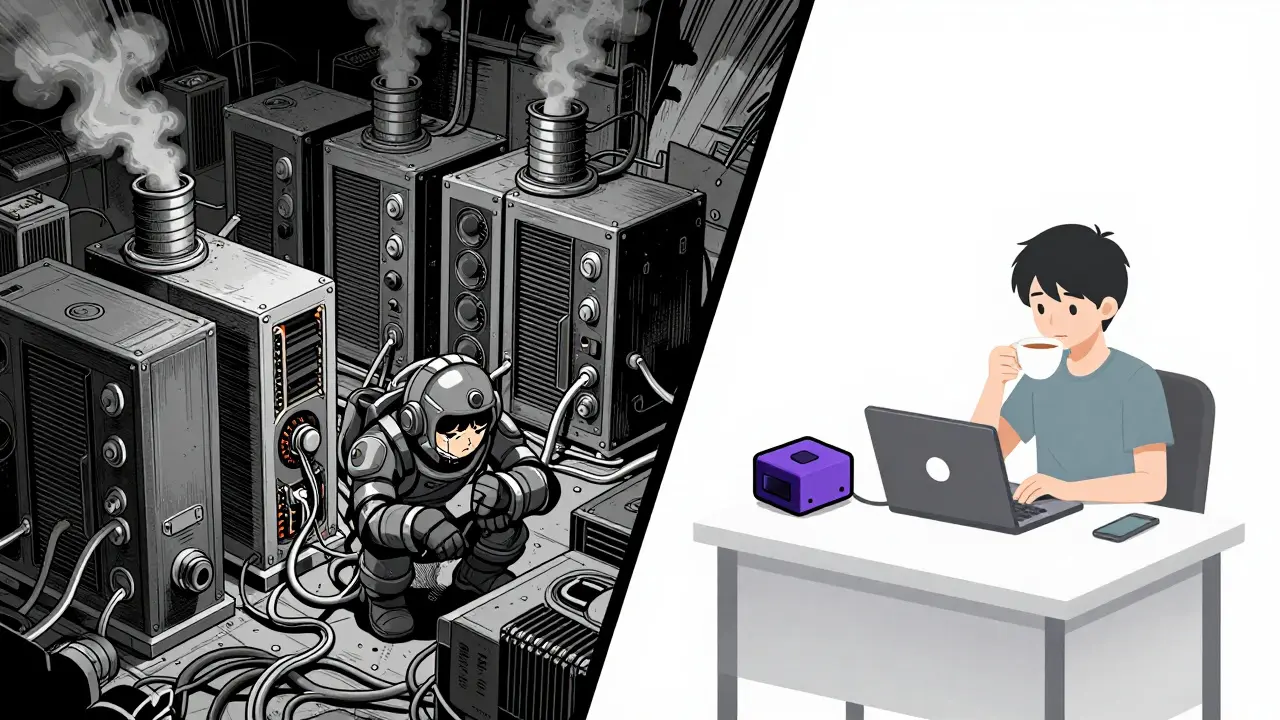
If you’re a miner: The era of solo mining with a home rig is over. Profitability now requires industrial-scale operations, cheap power, and access to recycled heat systems. If you’re still mining Bitcoin with a GPU in 2025, you’re likely losing money.
If you’re a developer: Don’t build new chains on PoW. The market has spoken. Use PoS, DPoS, or other low-energy consensus. Your users will thank you.
If you’re an investor: Be wary of new PoW coins. They’re either niche projects with tiny communities, or scams pretending to be "the next Bitcoin." The real value is in chains that don’t need nonces.
If you’re just curious: Understand that the nonce isn’t the future of blockchain. It was the foundation. And like any foundation, it’s meant to be built upon-not preserved forever.
The Long-Term Outlook
The nonce will likely survive only in Bitcoin and a handful of legacy chains. By 2030, over 80% of blockchain activity will run on non-nonce consensus models, according to industry forecasts from Deloitte and Gartner.
That doesn’t mean blockchain is less secure. It means security is evolving. The nonce was a brilliant hack for 2009. But in 2025, we have better tools. We have staking, zero-knowledge proofs, and verifiable computation. We don’t need to burn electricity to prove honesty anymore.
The future of the nonce isn’t about innovation. It’s about legacy. It’s about holding the line for a system that worked-until the world decided it could do better.







Mohamed Haybe
December 1, 2025 AT 06:08Marsha Enright
December 3, 2025 AT 03:32Andrew Brady
December 3, 2025 AT 21:12Sharmishtha Sohoni
December 5, 2025 AT 17:26Althea Gwen
December 6, 2025 AT 13:43Durgesh Mehta
December 6, 2025 AT 22:43Sarah Roberge
December 8, 2025 AT 04:56Jess Bothun-Berg
December 9, 2025 AT 00:04Steve Savage
December 9, 2025 AT 18:05Joe B.
December 10, 2025 AT 10:07Rod Filoteo
December 11, 2025 AT 09:09Layla Hu
December 12, 2025 AT 00:48Nora Colombie
December 13, 2025 AT 12:23Christy Whitaker
December 14, 2025 AT 19:48Nancy Sunshine
December 15, 2025 AT 19:56Alan Brandon Rivera León
December 17, 2025 AT 03:14