

The BitOrbit (BITORB) airdrop and IDO launched in November 2021 promised early access to a new blockchain project on Binance Smart Chain. But today, the token trades at a fraction of its initial value-under $0.0001-with a market cap under $3,000. What went wrong? And what can you learn from it if you’re considering future airdrops or IDOs?
How the BitOrbit Airdrop and IDO Worked
BitOrbit raised $290,000 across six fundraising rounds before its official token generation event (TGE) on November 4, 2021. The project used BSCPad is a Binance Smart Chain-based IDO launchpad that has ranked among the top 10 for 2025 and supports projects with structured token distribution models. To participate, users had to complete steps like whitelisting, KYC verification, and locking BNB or other tokens to qualify for token allocations.The tokenomics were designed with a conservative approach: only 10% of the total supply was released at launch. The remaining 90% was locked and released linearly over four months after a one-month cliff period. This structure was meant to prevent sudden sell-offs and give the team time to build real product value before flooding the market with tokens.
There was also an airdrop component. Early community members who joined BitOrbit’s Telegram, Twitter, or Discord channels received small free token allocations. These weren’t huge amounts-often under 100 BITORB-but they were meant to incentivize growth and engagement. The idea was simple: build hype, reward early supporters, and create a loyal base before the public sale.
Why BitOrbit’s Token Price Crashed
Despite the careful vesting schedule, BITORB’s price collapsed within weeks. The project’s market cap dropped from an estimated peak of over $1 million to just $2,830-a 99.7% decline. Why?First, there was no clear product. BitOrbit never launched a working platform, app, or game. It claimed to be a decentralized gaming or social platform, but no code, no demo, no roadmap updates followed the IDO. Investors bought into a concept, not a product.
Second, the team vanished. After the token launch, social media activity stopped. The website went offline. No updates. No AMAs. No developer commits on GitHub. In crypto, silence equals death. Projects that survive post-IDO are those that keep talking, keep shipping, and keep engaging their community. BitOrbit did none of that.
Third, the market shifted. In 2021, anyone with a whitepaper and a Telegram group could launch an IDO. By 2025, that’s impossible. Launchpads like DAO Maker, Polkastarter, and GameFi now require audits, team verifications, and even proof of product development before allowing a project to list. BitOrbit launched before these standards existed. It was a product of the Wild West era of crypto fundraising.
What BitOrbit Got Right
Even though it failed, BitOrbit did a few things well. It used a reputable launchpad-BSCPad-which still operates today with better vetting. It structured its token distribution with vesting, which showed some understanding of tokenomics. It built a multi-round fundraising model, which helped it raise the full $290,000 without relying on a single investor group.It also didn’t pump the token on social media with fake hype. There were no influencers pushing it with paid promotions. The community was small but real. The failure wasn’t in marketing-it was in execution.

How BitOrbit Compares to Today’s Top IDOs
Compare BitOrbit to a 2025 IDO on a top launchpad like DAO Maker is a leading IDO platform that requires projects to have audited smart contracts, verified teams, and functional prototypes before listing. Today’s successful projects don’t just raise money-they show working demos, publish technical documentation, and have active developer communities. They also offer staking rewards, governance rights, and clear utility for their tokens.
Modern IDOs often have:
- Minimum $100,000 in audited code from firms like CertiK or Hacken
- Team members with LinkedIn profiles and past crypto experience
- Live testnets or beta versions available to participants
- Token utility tied to real features-like staking, voting, or in-game purchases
BitOrbit had none of that. It was a snapshot of what crypto fundraising looked like before the market matured.
What You Should Do If You See a Similar Airdrop Today
If you’re considering joining an airdrop or IDO in 2025, don’t fall for the same traps BitOrbit’s investors did. Here’s how to avoid another disaster:- Check the team. Look for real names, LinkedIn profiles, and past projects. Anonymous teams are red flags.
- Verify the code. Does the project have an audit report from a known firm? Is the contract on Etherscan or BscScan? If not, walk away.
- Look for progress. Has the team released a demo? Published updates? Answered questions in Discord? No activity = no future.
- Understand the token. What’s it used for? Can you stake it? Use it in a game? Pay for services? If the answer is “it’s for speculation,” avoid it.
- Watch the launchpad. Only participate in IDOs on platforms with strong reputations-BSCPad, DAO Maker, Polkastarter, or GameFi. Avoid random sites with no history.
Also, never invest more than you’re willing to lose. Most IDOs fail. Even the ones with audits and teams. The crypto space is still risky. BitOrbit’s $290,000 raise turned into $2,830. That’s not an anomaly-it’s the norm.
What Happened to BitOrbit After the Airdrop?
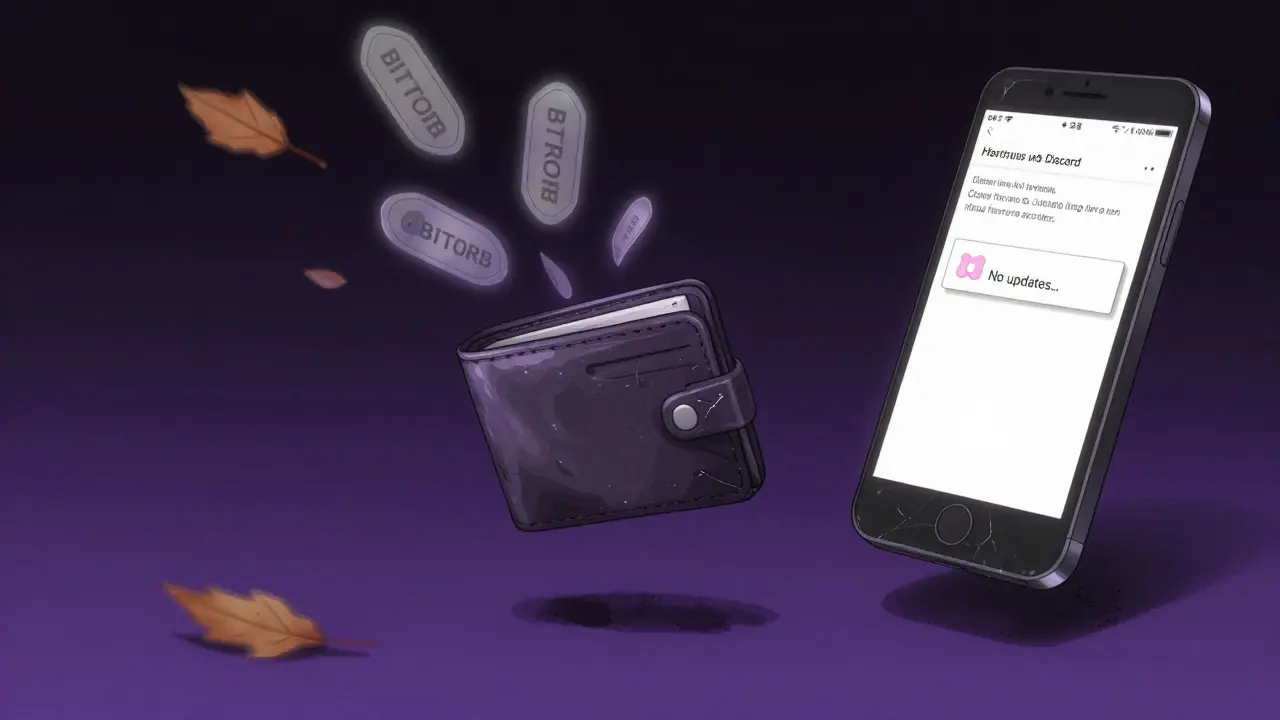
After the token launch, BitOrbit’s social media accounts went silent. The official website disappeared. No new GitHub commits. No announcements. The token was delisted from most exchanges within six months. Today, it’s only visible on a few obscure decentralized exchanges, with zero trading volume.There are no recovery plans. No rebranding. No team comeback. BitOrbit is dead. The airdrop tokens you might still hold are worthless. The only people who made money were those who sold during the short pump right after launch-likely insiders or early investors who got the largest allocations.
Why This Matters for Crypto Investors
BitOrbit isn’t just a story about one failed project. It’s a lesson in how the crypto market evolved. In 2021, you could launch a token with a logo and a Discord server and raise hundreds of thousands. In 2025, you need a working product, a verified team, and a clear path to utility.Today’s successful projects don’t just rely on hype. They build ecosystems. They reward long-term holders. They solve real problems. BitOrbit didn’t. And that’s why it vanished.
If you’re chasing the next big airdrop, don’t look for the one with the biggest giveaway. Look for the one with the most progress. The most transparency. The most proof that the team is actually building something.
BitOrbit’s airdrop was a ghost. Don’t let your next investment be one too.
Is BitOrbit (BITORB) still active in 2025?
No, BitOrbit is not active. The project vanished after its November 2021 IDO. The website is offline, social media accounts are abandoned, and there have been no updates, code commits, or team announcements since early 2022. The token is essentially dead.
Can I still claim my BitOrbit airdrop tokens?
Technically, yes-if you still have access to the wallet you used during the 2021 airdrop or IDO, you may still hold the tokens. But they’re worthless. No exchanges list BITORB, no tools track its price, and there’s no way to use or sell them meaningfully. Claiming them now serves no practical purpose.
Was BitOrbit a scam?
It’s not officially classified as a scam, but it fits the pattern of a rug pull by neglect. The team raised $290,000, delivered no product, and disappeared. There was no fraud in the smart contract, but there was zero transparency or follow-through. In crypto, this is often worse than an outright scam-because it tricks people into thinking they’re investing in something real.
How did BitOrbit raise $290,000 without a product?
In 2021, the crypto market was flooded with speculative capital. Investors were chasing quick gains, not long-term value. Many didn’t check the team, didn’t read the whitepaper, and didn’t care if there was a working product. BitOrbit used the hype of BSCPad’s reputation and the FOMO of early IDOs to raise funds. It was a product of a less mature market.
What should I look for in a safe IDO today?
Look for: a verified team with real profiles, a published audit from CertiK or Hacken, a working demo or testnet, clear token utility (like staking or in-app use), and a launchpad with a strong track record like DAO Maker or Polkastarter. Avoid anything that promises high returns with no product.
Are BSCPad airdrops still worth joining?
Yes-but only for the right projects. BSCPad still operates and has launched successful tokens in 2025. But you must do your own research. Don’t join every airdrop. Only participate in projects that meet the safety criteria: team verification, code audit, and active development. BSCPad is a good platform, but it doesn’t guarantee success.





Patricia Amarante
December 18, 2025 AT 03:38Been there, lost that. BitOrbit was the definition of ghost project. I got the airdrop, held for a month, then realized no one was even talking about it anymore. Just... gone.
Jesse Messiah
December 20, 2025 AT 00:09man i still remember when bscpad was the place to be. now? every other project is just a sketchy token with a discord and a fake roadmap. bitorbit was a warning sign i ignored. lesson learned the hard way.
Dionne Wilkinson
December 21, 2025 AT 10:18it makes me sad how many people put hope into these things. not because they’re greedy, but because they believe in the dream. bitorbit didn’t fail because it was dishonest-it failed because it stopped believing in itself.
SeTSUnA Kevin
December 23, 2025 AT 03:11The entire episode is a textbook case of pre-2022 crypto naivety. No audit, no team, no utility. The fact that $290k was raised speaks less to investor acumen and more to systemic market inefficiency.
Timothy Slazyk
December 24, 2025 AT 03:48Let’s be real: if you didn’t check the GitHub before investing, you deserved to lose. BitOrbit didn’t just fail-it was a walking red flag with a whitepaper. Audits aren’t optional. Team verifications aren’t suggestions. And if your ‘product’ is a Discord emoji, you’re not building-you’re gambling.
Madhavi Shyam
December 24, 2025 AT 14:49Tokenomics were structured but misaligned with real-world utility. The 10% unlock was a tactical error-insufficient liquidity to sustain momentum, and the 90% cliff created zero incentive for team accountability. Classic misstep.
Samantha West
December 25, 2025 AT 00:51It's not about the money... it's about the trust. When you invest, you're not buying a token-you're buying into a story. BitOrbit stopped telling the story. And stories without endings? They're just silence.
Rebecca Kotnik
December 25, 2025 AT 03:43What’s profoundly concerning is not that BitOrbit failed, but that it was emblematic of an entire ecosystem that prioritized fundraising mechanics over fundamental value creation. The launchpad model, when unmoored from accountability, becomes a vessel for speculative extraction rather than innovation. The market has since corrected-but the scars remain for those who lost everything based on a logo and a promise.
Tom Joyner
December 26, 2025 AT 07:30BitOrbit? Never heard of it. Probably just another rug pull. I only invest in projects with institutional backing and legal counsel. If it’s not on CoinGecko Pro, it’s not real.
Abby Daguindal
December 27, 2025 AT 08:44If you didn’t know this was a scam, you shouldn’t be in crypto. That’s not a critique-it’s a survival rule. You can’t outsmart greed with ignorance.
Sean Kerr
December 28, 2025 AT 11:50bro i still have my bitorbit tokens in my wallet 😭 i thought they'd come back... but yeah... they're just digital dust now. lesson learned. never trust a team that doesn't post for 2 weeks. 🤦♂️
Heather Turnbow
December 29, 2025 AT 05:32There is a quiet dignity in projects that disappear quietly. At least they didn’t scream for attention with fake airdrops or paid influencers. BitOrbit’s silence wasn’t malice-it was absence. And in crypto, absence is the most lethal form of betrayal.
Terrance Alan
December 31, 2025 AT 00:09People act like this was some rare tragedy but it’s the norm. Every week another team raises six figures with a Figma mockup and vanishes. You think you’re investing in innovation? You’re funding fantasy. And when the fantasy collapses, you cry about it like it’s personal. It’s not. It’s arithmetic. Risk multiplied by ignorance equals loss. You didn’t lose money-you lost your naivety. And that’s the only thing worth losing.