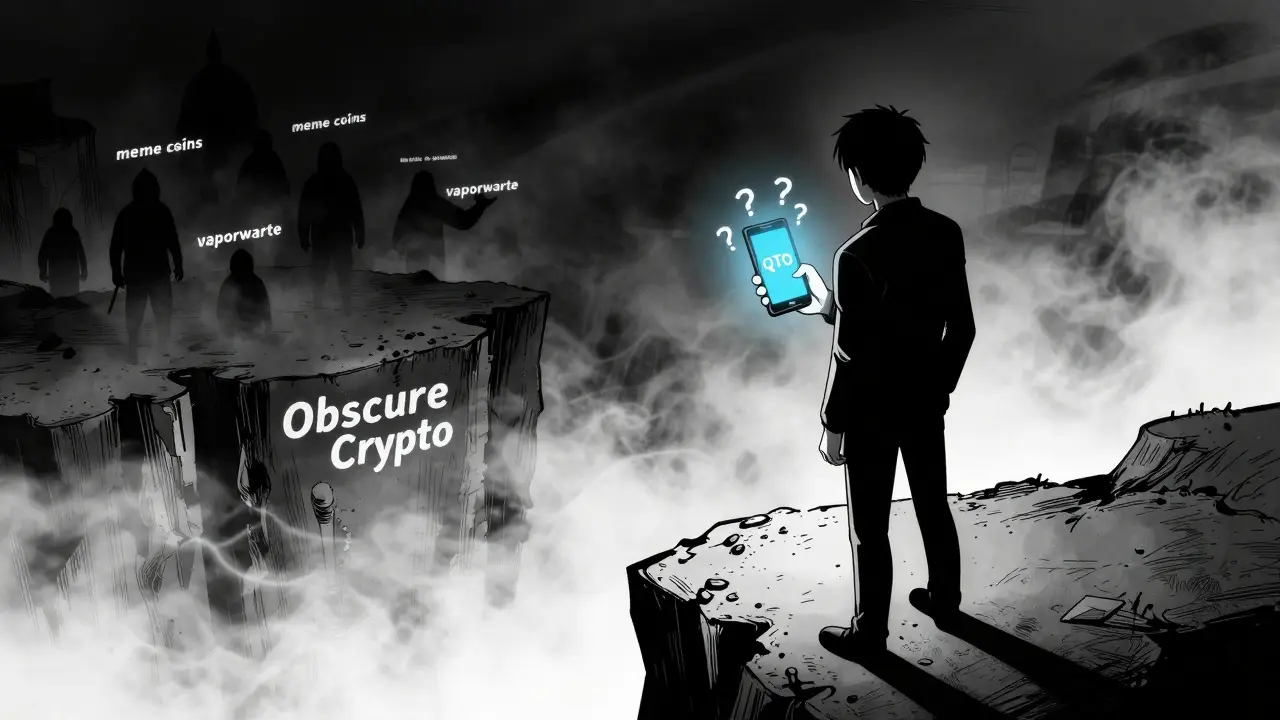
You’ve likely stumbled upon QToken while scrolling through a list of trending coins on Telegram, Twitter, or a niche exchange. The ticker symbol is QTO, and it promises high returns. But here is the uncomfortable truth: if you cannot find a Wikipedia page for it, or if major data aggregators like CoinGecko have no verified listing, you are walking into uncharted territory. This article isn’t just about defining what QToken is; it is about helping you survive the minefield of low-cap, often obscure cryptocurrencies that flood the market daily.
In the world of digital assets, there is a massive difference between a token built by a team with a roadmap and a "meme coin" launched in an afternoon. Understanding this distinction is your first line of defense against losing your hard-earned money.
The Anatomy of an Obscure Token
To understand QToken (QTO), we first need to define what a cryptocurrency token actually is. Unlike Bitcoin, which runs on its own blockchain, most tokens sit on top of existing networks like Ethereum, Binance Smart Chain, or Solana. They use smart contracts-self-executing code-to manage ownership and transfers.
When a project like QToken appears without significant media coverage, it usually falls into one of two categories:
- The Early-Stage Utility Project: A genuine startup trying to solve a specific problem (like decentralized storage or gaming rewards) before they have the budget for marketing.
- The Speculative Meme/Vaporware: A token created solely to pump prices quickly, often lacking any real-world use case or development team.
Without official documentation from the creators of QTO, we must look at the broader ecosystem. In mid-2026, the market is saturated with thousands of new tokens weekly. The majority fail within months. Your job as an investor is not to guess which one will succeed, but to identify which ones are structurally sound enough to last.
How to Verify QToken (QTO) Legitimacy
If you are considering buying QTO, stop looking at price charts for a moment. Start by auditing the project’s foundation. Here is a checklist used by professional analysts to vet unknown tokens:
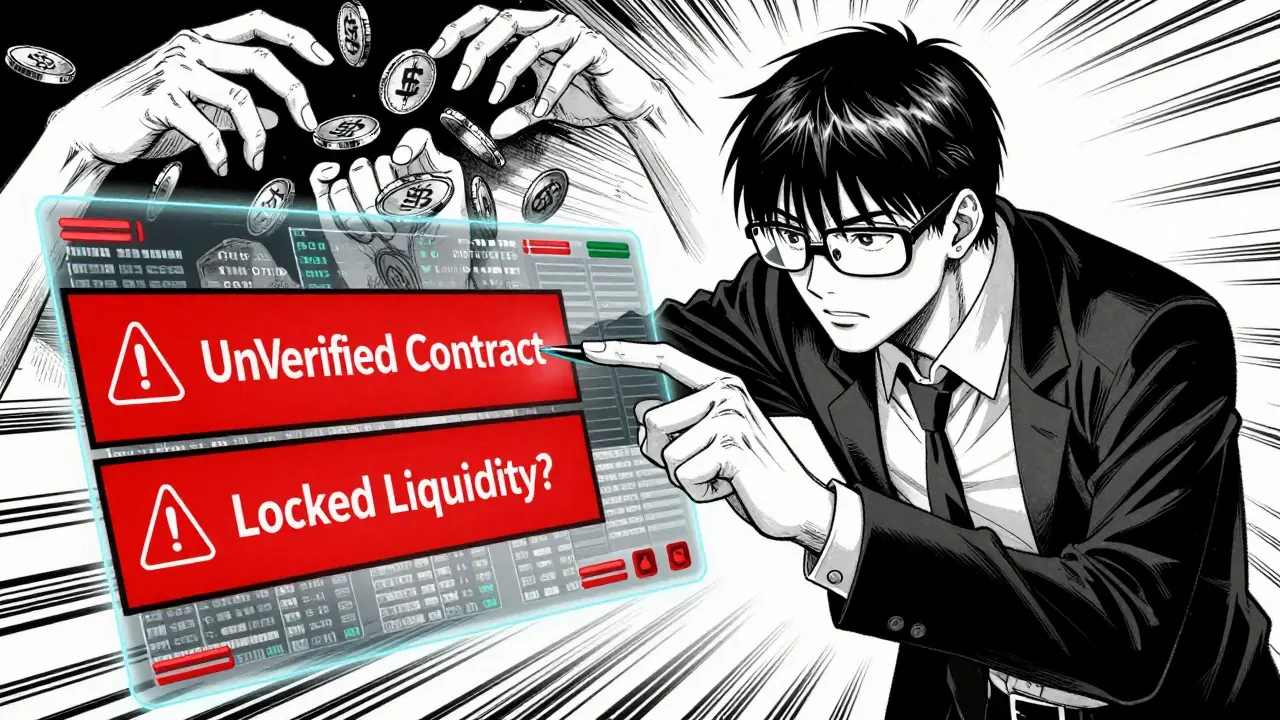
- Check the Contract Address: Every token has a unique address on the blockchain. Copy this address and paste it into a block explorer like Etherscan (for Ethereum) or BscScan (for Binance Smart Chain). Does the contract show up? Is it verified? If the code is hidden, you cannot trust it.
- Analyze Liquidity: Go to DEXScreener or DexTools. Look at the liquidity pool. Is it locked? If the developers can pull the liquidity out at any time, they can execute a "rug pull," leaving you with worthless tokens. Locked liquidity is non-negotiable for safety.
- Holder Distribution: Who owns the tokens? If the top 10 wallets hold more than 30-40% of the supply, the risk of manipulation is extremely high. One large holder selling could crash the price by 50% instantly.
- Social Presence: Do they have an active Discord or Telegram? Are real people answering technical questions, or is it just bots spamming "To the moon!"?
For QToken specifically, if these basic checks yield no results, assume the worst-case scenario until proven otherwise. In crypto, silence from a project team is rarely a good sign.
Comparison: Established vs. Obscure Tokens
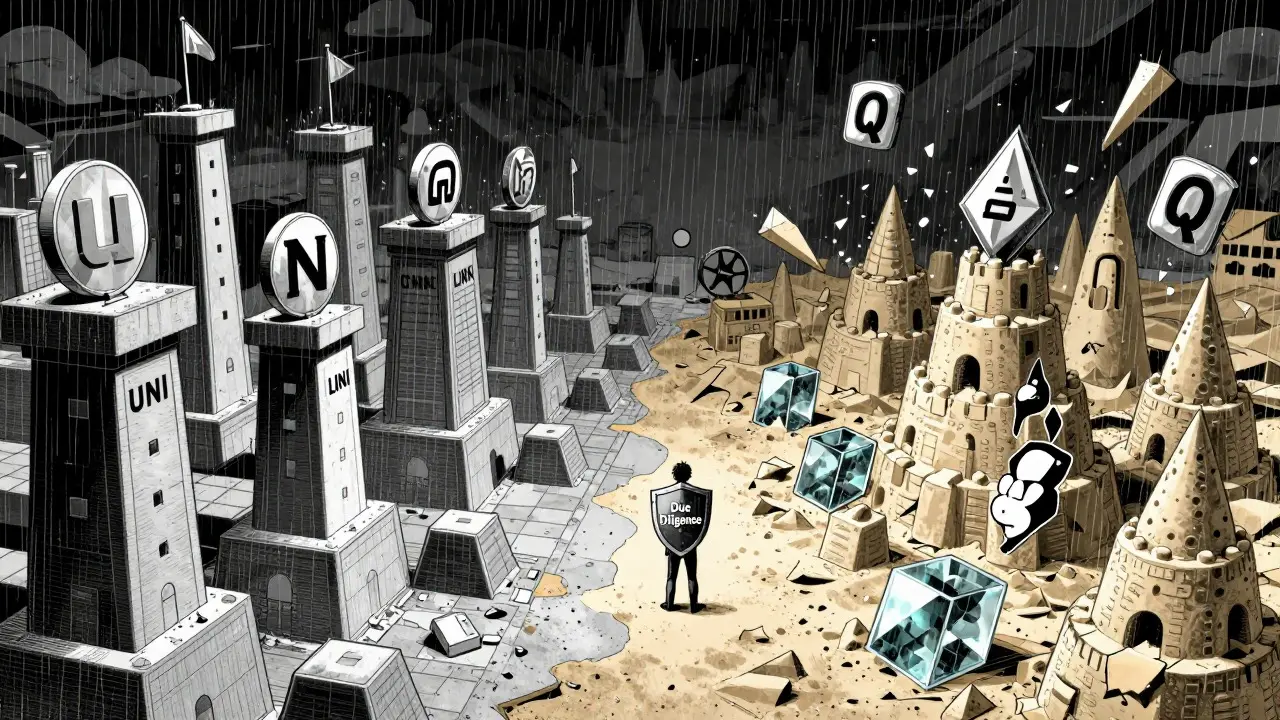
To put the risk level into perspective, let’s compare a hypothetical project like QToken with established standards in the industry. This table highlights why due diligence matters.
| Feature | Established Token (e.g., UNI, LINK) | Obscure Token (e.g., Unverified QTO) |
|---|---|---|
| Audits | Multiple third-party security audits (CertiK, Hacken) | Often none, or self-audited reports |
| Liquidity | High volume, deep pools on major exchanges | Low volume, shallow pools, easy to manipulate |
| Team Identity | Publicly known founders with LinkedIn profiles | Anonymous or pseudonymous teams |
| Use Case | Clear utility in DeFi, Gaming, or Infrastructure | Vague promises or pure speculation |
| Regulatory Risk | Generally lower, often compliant with KYC/AML | High risk of being flagged as securities or scams |
Notice the gap in transparency. When you buy a well-known asset, you are paying for reliability. When you buy an unknown token like QTO, you are paying for potential upside-but also taking on extreme risk.
The Danger of "Rug Pulls" and Scams
In 2024 and 2025, regulators worldwide tightened their grip on cryptocurrency fraud. However, new schemes emerge constantly. A common tactic involving tokens like QTO is the "honeypot." This is a malicious smart contract that allows you to buy the token but prevents you from selling it. You see the price going up on your screen, feeling rich, but when you try to cash out, the transaction fails.
Another threat is the "slow rug." Developers gradually sell their large holdings over weeks, slowly draining the liquidity and lowering the price, making it impossible for retail investors to exit at a profit. Without verified contract code, you have no way to know if these functions exist in the background.
Always ask yourself: What stops the developer from stealing my funds? If the answer is "nothing," do not invest.
Market Context in 2026
By July 2026, the cryptocurrency market has matured significantly. Institutional adoption has led to stricter standards. Major exchanges like Coinbase and Kraken require extensive legal reviews before listing a token. If QToken is only available on decentralized exchanges (DEXs) or small, unregulated platforms, it means it hasn't passed these rigorous checks.
This doesn't automatically mean it's a scam, but it does mean it lacks institutional backing. In the current regulatory climate, projects without clear legal structures face higher risks of delisting or shutdown. Investors are increasingly favoring tokens with clear governance models and transparent treasury management.
Practical Steps Before Buying
If you still believe QToken has potential after reading this, proceed with caution. Here is how to protect your capital:
- Use a Burner Wallet: Never connect your main wallet holding your life savings to a new, unverified dApp. Use a separate wallet with only the amount you are willing to lose completely.
- Set Stop-Losses: On decentralized platforms, manual stop-losses are hard to set. Consider using tools like DCA (Dollar Cost Averaging) bots that can auto-sell if the price drops by a certain percentage.
- Verify the Source: Ensure you are interacting with the correct contract address. Phishing attacks often mimic legitimate sites. Double-check URLs and bookmark official pages directly from trusted sources.
- Start Small: Invest an amount equivalent to the cost of a coffee. If it goes to zero, it shouldn't hurt. If it goes ten times up, you'll be glad you tried.
Remember, in crypto, preserving your capital is more important than making quick gains. Many experienced traders lose money chasing "the next big thing" only to realize too late that the project was empty.
Conclusion: Proceed with Extreme Caution
QToken (QTO) represents the wild west side of cryptocurrency. It may offer high rewards, but the lack of verifiable information makes it a high-risk asset. Until the project provides audited smart contracts, locks its liquidity, and reveals its team, treat it as speculative gambling rather than investing. Always prioritize transparency and security over hype.
Is QToken (QTO) listed on major exchanges like Binance or Coinbase?
As of mid-2026, there is no public record of QToken (QTO) being listed on tier-1 centralized exchanges such as Binance, Coinbase, or Kraken. It is likely traded only on decentralized exchanges (DEXs) like Uniswap or PancakeSwap, which carry higher risks of slippage and scams.
How do I check if a crypto token is a scam?
You can check for scams by verifying the smart contract on a block explorer (like Etherscan), checking if liquidity is locked via services like Unicrypt, analyzing holder distribution for whale concentration, and ensuring the project has an active, responsive community and transparent team.
What is the difference between a coin and a token?
A coin (like Bitcoin or Ethereum) operates on its own native blockchain. A token (like QTO or USDT) is built on top of an existing blockchain network using smart contracts. Tokens rely on the security and infrastructure of the underlying chain.
What is a "rug pull" in cryptocurrency?
A rug pull occurs when developers abandon a project and withdraw all the liquidity from the trading pool, causing the token's value to drop to near zero. Investors are left unable to sell their tokens for any meaningful value.
Should I invest my entire savings in obscure tokens like QTO?
Absolutely not. Obscure tokens are highly volatile and risky. Financial experts recommend allocating only a small percentage (1-5%) of your portfolio to high-risk speculative assets, keeping the rest in more stable investments.