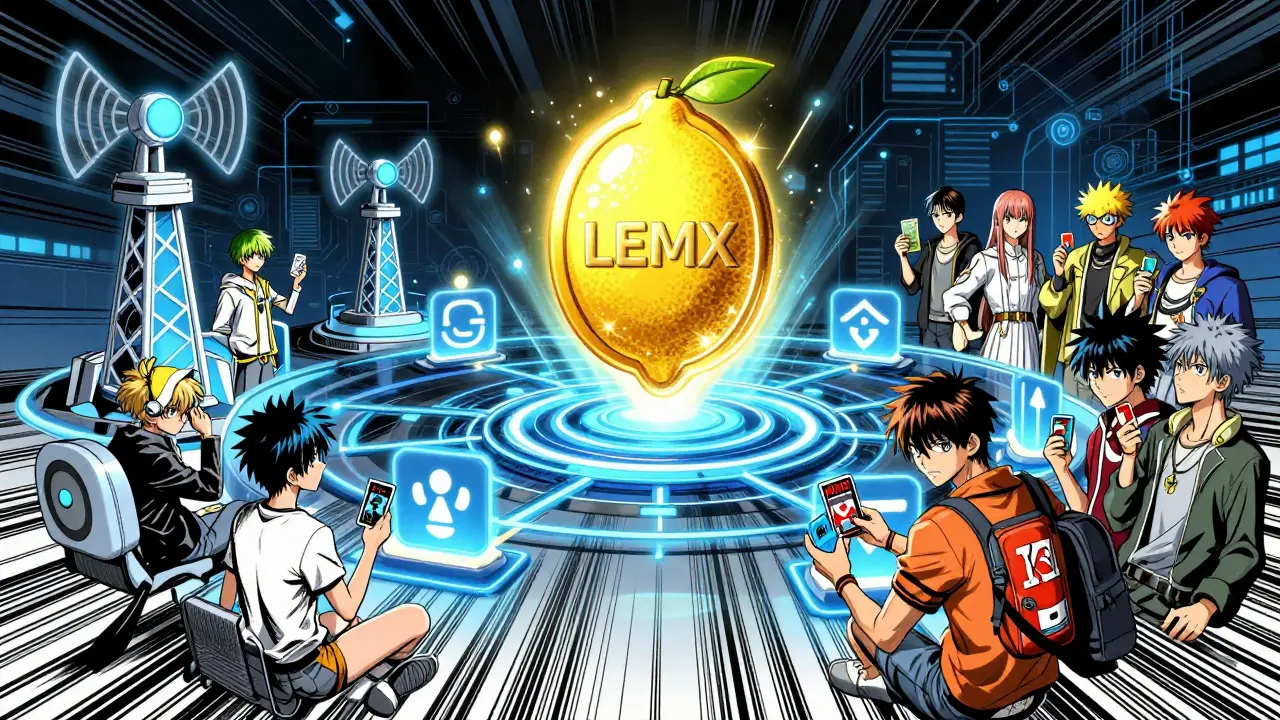
Imagine launching a new blockchain project and instantly having access to millions of potential users and top-tier media partners. That is the promise behind LEMON, a cryptocurrency token operating under the ticker symbol LEMX. It positions itself not just as another speculative asset, but as a utility token within an ecosystem designed to bridge the gap between emerging blockchain projects, Real World Assets (RWAs), and an engaged community.
But does the hype match the reality? As of mid-2026, LEMX sits in a complex position. It offers a unique value proposition for project launches, yet it faces significant market headwinds. This guide breaks down exactly what LEMON is, how its ecosystem works, where you can trade it, and what the current data says about its future performance. We will look past the marketing jargon to understand if this token is worth your attention or if it’s better left on the sidelines.
The Core Concept: Marketing Meets Community
To understand LEMON (a utility token facilitating marketing and community support for blockchain projects), you have to look at the problem it tries to solve. In the crowded crypto space, visibility is everything. New projects often struggle to find their initial user base. LEMON aims to fix this by acting as a comprehensive deployment platform.
The ecosystem connects three main groups:
- Blockchain Projects: These are the clients. They pay or use LEMX to gain immediate visibility through premier media partners.
- Media Partners: Established outlets that promote these new projects to a wider audience.
- FREE NFT Holders: A community of users who hold specific Non-Fungible Tokens. These holders support new projects and receive rewards for their engagement.
The idea is simple: projects get instant traction from day one, and the community gets rewarded for helping them grow. This creates a feedback loop where successful projects bring more value to the ecosystem, which should theoretically increase the demand for the LEMX token. However, the success of this model depends entirely on the quality of the projects launched and the genuine engagement of the NFT holders.
Price Performance and Market Reality
Let’s talk numbers, because that’s usually why people click on articles like this. The price of LEMX has been volatile, reflecting the broader uncertainty in the mid-cap crypto sector. Throughout late 2025 and into 2026, the token has traded in a range that suggests cautious investor sentiment.
| Metric | Value / Status | Context |
|---|---|---|
| Average Price (Late 2025) | $37.42 - $37.60 | Varies by exchange; shows typical fragmentation |
| Market Cap Rank | #1753 - #3888 | Mid-tier presence; not a top-tier asset |
| 24-Hour Volume | ~$415K - $485K | Low liquidity compared to major coins |
| Fear & Greed Index | 28 (Fear) | Bearish market psychology |
| RSI (14-day) | 32.04 | Oversold conditions |
The data tells a story of underperformance. While the global cryptocurrency market saw gains of over 9% in some recent weeks, LEMON remained flat or declined slightly. This relative weakness raises questions about investor confidence. When a token lags behind the broader market trend, it often indicates that traders are waiting for more concrete proof of adoption before committing capital.
Technical indicators add another layer of caution. The Relative Strength Index (RSI) hovering around 32 suggests the asset is oversold. In technical analysis terms, this *can* mean a bounce is coming, but it can also signal sustained downward pressure. The Simple Moving Average (SMA) sits above the current price, acting as resistance. Until LEMX can break above its 50-day SMA of approximately $48.79, the short-term outlook remains bearish.

Where and How to Trade LEMX
If you decide to buy or sell LEMON, you won’t find it on every major exchange like Binance or Coinbase. Instead, it relies on a mix of decentralized and smaller centralized platforms. This distribution affects liquidity and ease of access.
The primary trading venue is PancakeSwap (a decentralized exchange on the BNB Chain), specifically version 2. Here, you trade the LEMX/BSC-USD pair. Decentralized exchanges offer direct peer-to-peer trading but require you to manage your own wallet and gas fees. PancakeSwap accounted for roughly $137,000 in daily volume, making it the most active hub for LEMX.
For those who prefer centralized exchanges (CEXs), several options exist, though volumes are modest:
- LBank: Holds the largest share among CEXs with about 27% of the market volume (~$111K).
- Coinstore: Offers decent liquidity with ~$93K in daily volume.
- BitMart & Bitrue: Provide additional access points with volumes around $50K-$53K each.
- AscendEX (BitMax) & ProBit: Smaller players in the LEMX ecosystem.
This fragmentation means you might see slight price differences across platforms. Always check multiple sources like CoinGecko, CoinMarketCap, or CoinCodex before executing a large trade. The spread between buying and selling prices can be wider on lower-volume exchanges, eating into your profits.

Risks and Challenges to Consider
No investment is without risk, and LEMON carries several specific challenges that you need to weigh carefully.
1. Low Liquidity: With daily trading volumes under half a million dollars, moving large amounts of LEMX can be difficult. If you try to sell a significant position, you might slip the price against yourself, meaning you get less than expected. This is a common issue for mid-tier tokens.
2. Lack of Transparency: While the platform promises connections to "premier media partners," specific details about these partners are scarce. There is limited public documentation on which projects have successfully launched through LEMON or what the actual ROI was for those projects. Without case studies or verifiable success metrics, it’s hard to assess the true value of the service.
3. Competitive Landscape: The blockchain marketing and launchpad space is incredibly crowded. Competitors like Binance Launchpad or Polkastarter have established massive brand recognition and trust. LEMON must prove why a project would choose its ecosystem over these giants. Currently, the answer isn’t clear from public data.
4. Volatility Predictions: Forecast models for 2026 show a wide range, from a low of $26.29 to a high of $105.20. This massive variance indicates high uncertainty. Some analysts predict a drop to $28, while others see potential for growth. This divergence suggests that LEMX is highly sensitive to external market factors rather than driven by strong internal fundamentals.
Future Outlook: Is LEMON Worth It?
So, where does this leave us? LEMON (LEMX) is an interesting experiment in combining marketing services with community incentives. The concept of rewarding NFT holders for supporting new projects is innovative. If the ecosystem can attract high-quality projects and deliver measurable results, the token could see significant upside.
However, the current data paints a picture of a project still searching for its footing. The bearish sentiment, low trading volume, and lack of transparent success stories are red flags for conservative investors. For speculative traders, the oversold technical indicators might present a short-term opportunity, but the risks are substantial.
Before investing, ask yourself: Do I believe in the long-term vision of LEMON’s marketing model? Am I comfortable with the liquidity constraints? If the answers are yes, then LEMX might fit into a diversified portfolio. If you’re looking for stability or proven track records, there are likely safer bets in the crypto space right now.
What is the current price of LEMON (LEMX)?
As of late 2025 and early 2026, LEMX has traded in the range of $37.00 to $38.00. Prices vary slightly depending on the exchange due to liquidity differences. Always check real-time data on aggregators like CoinGecko or CoinMarketCap before trading.
Is LEMON a good investment for beginners?
Probably not. LEMON is a mid-tier token with lower liquidity and higher volatility than major cryptocurrencies like Bitcoin or Ethereum. Beginners typically benefit from sticking to assets with deeper markets and more established track records until they understand the risks of smaller caps.
How do I buy LEMX tokens?
You can buy LEMX on decentralized exchanges like PancakeSwap (using BNB for gas fees) or on centralized exchanges such as LBank, Coinstore, and BitMart. You will need to create an account on the CEX or set up a compatible wallet like MetaMask for DEX trading.
What is the role of FREE NFTs in the LEMON ecosystem?
FREE NFT holders form the community backbone of the LEMON ecosystem. They support new blockchain projects by engaging with them and promoting them. In return, they receive rewards, creating an incentive structure that aligns community interests with project success.
What are the biggest risks associated with LEMX?
The main risks include low trading volume (liquidity risk), lack of transparent success metrics for its marketing services, intense competition from larger launchpads, and general market volatility. The token has also shown underperformance compared to the broader crypto market recently.