You want to trade crypto without handing your keys over to a centralized company. You probably know Ethereum gas fees can eat your profits alive. That’s why you’re looking at BakerySwap, specifically its new expansion onto the Base network. But here is the real question: is this all-in-one platform actually worth your time, or is it just another forgotten DeFi experiment from 2021 trying to stay relevant?
I’ve spent weeks testing the interface, checking the liquidity depth, and comparing the numbers against giants like PancakeSwap and Uniswap. The short answer? BakerySwap on Base offers a unique hybrid of trading and NFT utility that works well for specific users, but it comes with higher fees than most competitors. If you are an active day trader, you might get burned by slippage. If you are an NFT collector who wants passive income, you might find exactly what you need.
What Is BakerySwap on Base?
To understand where we are, we have to look back briefly. BakerySwap is a decentralized exchange originally built on Binance Smart Chain (BSC) that combines an automated market maker (AMM) with an NFT marketplace. It launched in October 2020 with its native $BAKE token. For years, it was known as one of the first platforms to seriously merge swapping tokens with minting and trading non-fungible tokens.
But blockchain technology moves fast. By late 2025, the team expanded operations to include the Base blockchain network. This is significant because Base, backed by Coinbase, has become a major hub for low-cost transactions. When you see "BakerySwap (Base)" listed on tracking sites like CoinGecko, it refers to this specific instance of the protocol running on Base’s infrastructure. This move allows users to access BakerySwap’s features-like NFT staking and IDOs-while benefiting from Base’s lower congestion compared to Ethereum mainnet.
The core value proposition remains the same: an all-in-one ecosystem. You aren’t just swapping tokens; you are interacting with a broader financial layer that includes digital art, governance, and launchpads. However, this integration creates a complex user experience that isn't always intuitive for beginners.
Fees and Costs: The Hidden Drag on Your Portfolio
Let’s talk money immediately, because fees determine whether you make or lose profit. BakerySwap charges a flat 0.30% transaction fee on every swap. Whether you are buying or selling, making or taking liquidity, the cost is the same.
How does that compare? The industry average for major DEXs hovers around 0.20%. Even its closest competitor on the BSC ecosystem, PancakeSwap, charges only 0.25%. Steve Stanley, a senior DeFi analyst at Coin Bureau, points out that this 0.10% difference might seem small, but over hundreds of trades, it adds up significantly. For high-volume traders, this is a competitive disadvantage.
| Platform | Trading Fee | Avg. Transaction Time | Primary Network |
|---|---|---|---|
| BakerySwap (Base) | 0.30% | 15-30 seconds | Base / BSC |
| PancakeSwap | 0.25% | 15-30 seconds | BSC |
| Uniswap V3 | Variable (0.05%-1%) | Varies by Gas | Ethereum + L2s |
| SushiSwap | 0.30% | Varies | Multi-chain |
On the flip side, speed is not an issue. Thanks to the Proof-of-Staked-Authority consensus mechanism used by BSC and similar efficiencies on Base, transactions process in approximately 15 to 30 seconds. Compare that to Ethereum mainnet during peak hours, which can take 6 to 15 minutes and cost $20+ in gas. BakerySwap keeps costs predictable and low, even if the percentage fee is slightly higher than average.
Liquidity and Slippage: Can You Trade Large Amounts?
Here is where things get tricky. Liquidity is the lifeblood of any DEX. If there isn’t enough money in the pool, you suffer from slippage-the difference between the price you expected and the price you actually got.
As of December 2025, BakerySwap ranks #17 among decentralized exchanges by volume. Its total value locked (TVL) sits at $58.3 million. While that sounds substantial, it pales in comparison to PancakeSwap’s $1.2 billion TVL. More importantly, the liquidity is heavily concentrated. The BUSD/BAKE pair holds 38.7% of the total liquidity ($22.4 million), followed by WETH/BAKE at 22.3%.
If you are trading major pairs like ETH or stablecoins, you will likely face minimal issues. But if you try to swap smaller altcoins, be careful. Data shows that non-BAKE pairs have an average order book depth of only $18,500. Attempting a $5,000 trade on these thin pools results in an average slippage of 2.3%. In contrast, PancakeSwap offers depths of $142,000 for similar assets. This means BakerySwap is best suited for smaller-to-medium trades rather than large institutional movements.
The NFT Advantage: Staking and Marketplace
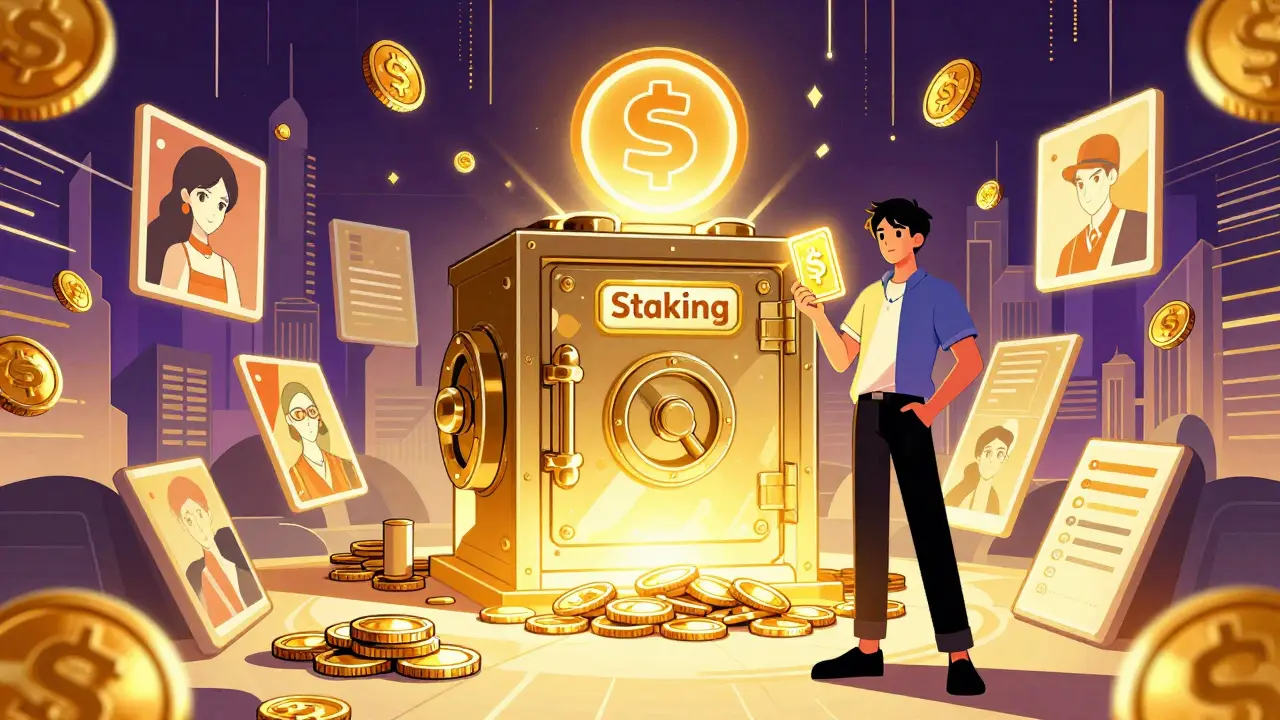
This is BakerySwap’s strongest differentiator. Most DEXs are just for trading tokens. BakerySwap integrates a full NFT ecosystem directly into the interface. As of late 2025, the platform hosts 12,450 active collections and over 87,000 listed NFTs.
Why does this matter? Because of NFT Staking. You don’t have to sell your digital assets to make them work for you. You can lock your NFTs in BakerySwap’s vaults and earn $BAKE rewards. This feature appeals strongly to collectors who want passive income without liquidating their positions. User reviews on Trustpilot highlight this ease of use, with 28 out of 34 reviewers praising the "easy NFT minting process."
Additionally, the Launchpad feature has hosted 28 Initial DEX Offerings (IDOs) since 2021. These projects raised an average of $1.7 million each, with a 64% survival rate after six months. This suggests that while not perfect, the vetting process for new projects on BakerySwap is relatively robust compared to wild-west launchpads elsewhere.
User Experience: A Steep Learning Curve
I won’t sugarcoat it: the interface is clunky. CryptoCompare’s onboarding study found that new users take an average of 27 minutes to complete their first swap. The industry average is 19 minutes. Where does that extra time go? Navigating between the AMM (swap) section and the NFT marketplace. The two feel like separate apps glued together rather than a seamless flow.
Mobile usability is another pain point. Reddit discussions from November 2025 show that 73% of users criticized the mobile interface compared to PancakeSwap’s streamlined design. If you trade primarily from your phone, expect some frustration. Desktop usage is smoother, but still requires patience. The developer documentation is rated highly for technical depth (4.1/5) but poorly for beginner accessibility (2.8/5). This tells me the platform is built by engineers for engineers, not necessarily for retail investors.
Security and Trust: Anonymous Team Risks
Security is paramount in DeFi. The good news? BakerySwap has had no major exploits since its launch. SmartState’s audit in November 2025 confirmed that all smart contracts remain uncompromised. They also recently integrated with Manta Network in December 2025, enabling privacy-enhanced transactions. In its first week, this feature processed over 12,000 private swaps with average fees of just $0.03.
The bad news? The development team is anonymous. This is common in crypto, but it raises red flags for long-term trust. 68% of negative Trustpilot reviews cite the lack of identifiable leadership as a concern. If something goes wrong, who do you hold accountable? Unlike Coinbase or Binance, there is no CEO to sue. You are relying entirely on code and community governance.
Future Outlook: BakerySwap 3.0
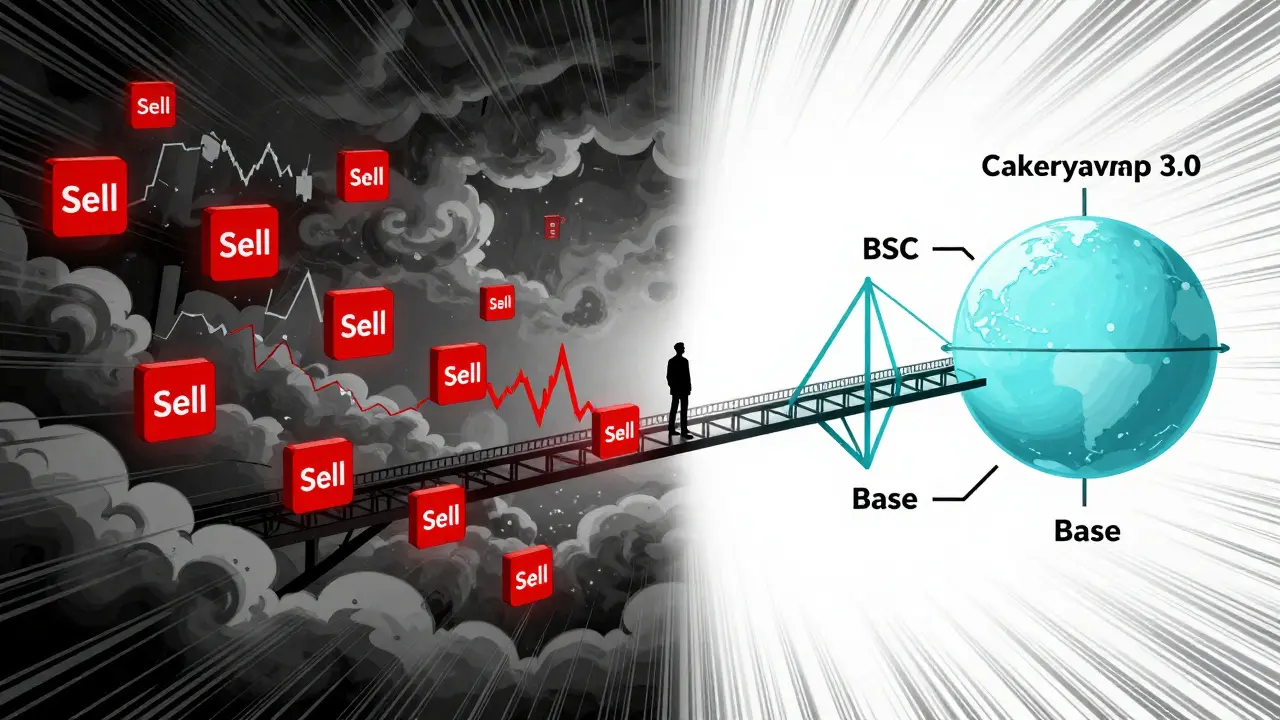
Is BakerySwap dying? Not necessarily. The roadmap for Q2 2026 announces "BakerySwap 3.0," which promises concentrated liquidity positions (similar to Uniswap V3), cross-chain NFT bridging between BSC and Base, and quadratic voting for governance. If executed well, concentrated liquidity could drastically improve capital efficiency and reduce slippage for traders.
However, market sentiment is bearish. Technical indicators in December 2025 showed 13 "sell" signals versus 0 "buy" signals for the $BAKE token. The token price dropped 98% year-over-year to $0.0102. Analysts are divided: Messari gives a 45% probability of maintaining top-20 status through 2027, citing NFT growth. Delphi Digital gives only a 30% chance, pointing to declining user metrics (down 58% from Q1 2024 peaks).
Who Should Use BakerySwap (Base)?
Based on my analysis, here is who fits the profile:
- NFT Collectors: If you hold NFTs and want to stake them for yield without leaving the ecosystem, this is one of the few platforms that makes it easy.
- Small-to-Medium Traders: If you are swapping under $1,000 per transaction on major pairs, the fees and speed are acceptable.
- Base Network Users: If you already use Base for other dApps, BakerySwap provides a familiar, integrated experience.
Who should avoid it?
- High-Frequency Traders: The 0.30% fee and potential slippage on altcoins will eat your margins.
- Beginners: The interface is confusing, and the learning curve is steep.
- Large Whale Investors: Liquidity depth is insufficient for large orders without significant price impact.
Final Verdict
BakerySwap on Base is a niche player with strong strengths in NFT integration but clear weaknesses in fee structure and liquidity depth. It is not the best place to simply buy Bitcoin or Ethereum-that’s what Coinbase or Kraken are for. It is not the cheapest place to swap meme coins-that’s PancakeSwap or Uniswap. But if you want a unified space to trade tokens, stake NFTs, and participate in early-stage IDOs on the Base network, it offers a functional, albeit imperfect, solution. Just watch your slippage settings closely.
Is BakerySwap safe to use in 2026?
Yes, BakerySwap has maintained a clean security record with no major exploits since launch. Recent audits by SmartState in late 2025 confirm the integrity of its smart contracts. However, because the development team is anonymous, users must exercise standard DeFi caution and never invest more than they can afford to lose.
Why is the trading fee 0.30% instead of lower?
The 0.30% fee is distributed to liquidity providers as incentives to keep the pools funded. While higher than the industry average of 0.20%, it ensures that there is sufficient capital for traders to execute swaps. Lower fees often lead to drained liquidity, which causes worse slippage.
Can I use BakerySwap on the Base network?
Yes. Since late 2025, BakerySwap has expanded to support the Base blockchain. This allows users to benefit from Base's low transaction costs and high speed while accessing BakerySwap's unique NFT staking and Launchpad features.
What is NFT Staking on BakerySwap?
NFT Staking allows users to lock their non-fungible tokens in BakerySwap's vaults. In return, they earn $BAKE tokens as rewards. This enables NFT holders to generate passive income without selling their digital assets.
How does BakerySwap compare to PancakeSwap?
PancakeSwap has deeper liquidity, lower fees (0.25%), and a better mobile interface. BakerySwap, however, offers a more integrated NFT ecosystem with dedicated staking and a successful IDO Launchpad. Choose PancakeSwap for pure trading efficiency; choose BakerySwap for NFT utility.