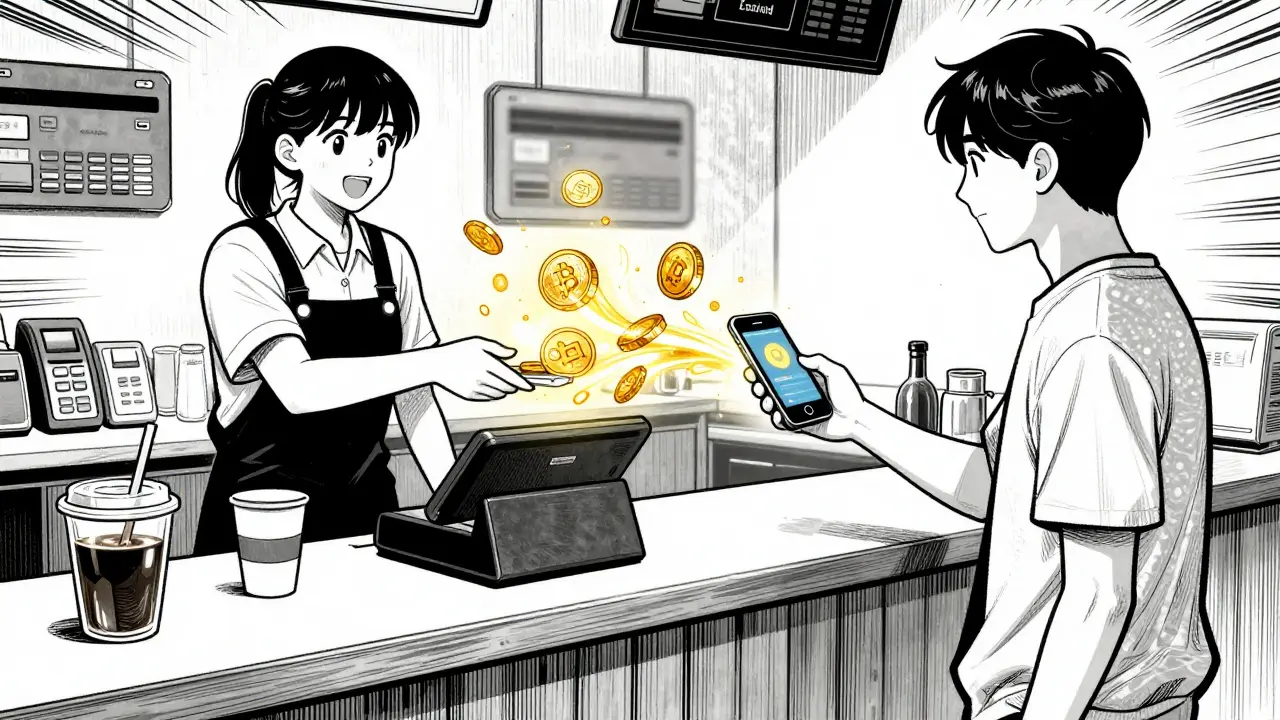
Imagine buying a coffee without pulling out your credit card or tapping your phone. Instead, you send value directly from your device to the merchant’s wallet in seconds, with no bank taking a cut. That is the promise of payment cryptocurrencies. But if you look at how most people actually use crypto today, they are mostly trading it for profit, not paying for groceries. So, what exactly are payment cryptocurrencies, and why haven’t they replaced your debit card yet?
To understand this, we need to strip away the hype. Payment cryptocurrencies are a specific subset of digital assets designed primarily for one job: transferring value. Unlike other tokens that give you access to an app or voting rights, these coins aim to act like money. They let you store wealth and spend it on decentralized networks, bypassing traditional intermediaries like Visa, Mastercard, or central banks.
The Core Definition: What Makes a Crypto a 'Payment' Coin?
Not every cryptocurrency is built to be spent. The ecosystem is divided broadly into utility tokens and payment coins. Utility tokens, like those used in gaming platforms or decentralized finance protocols, often have unlimited supplies and fluctuate wildly because their value is tied to network usage. Payment cryptocurrencies, however, usually mimic the scarcity of physical commodities like gold.
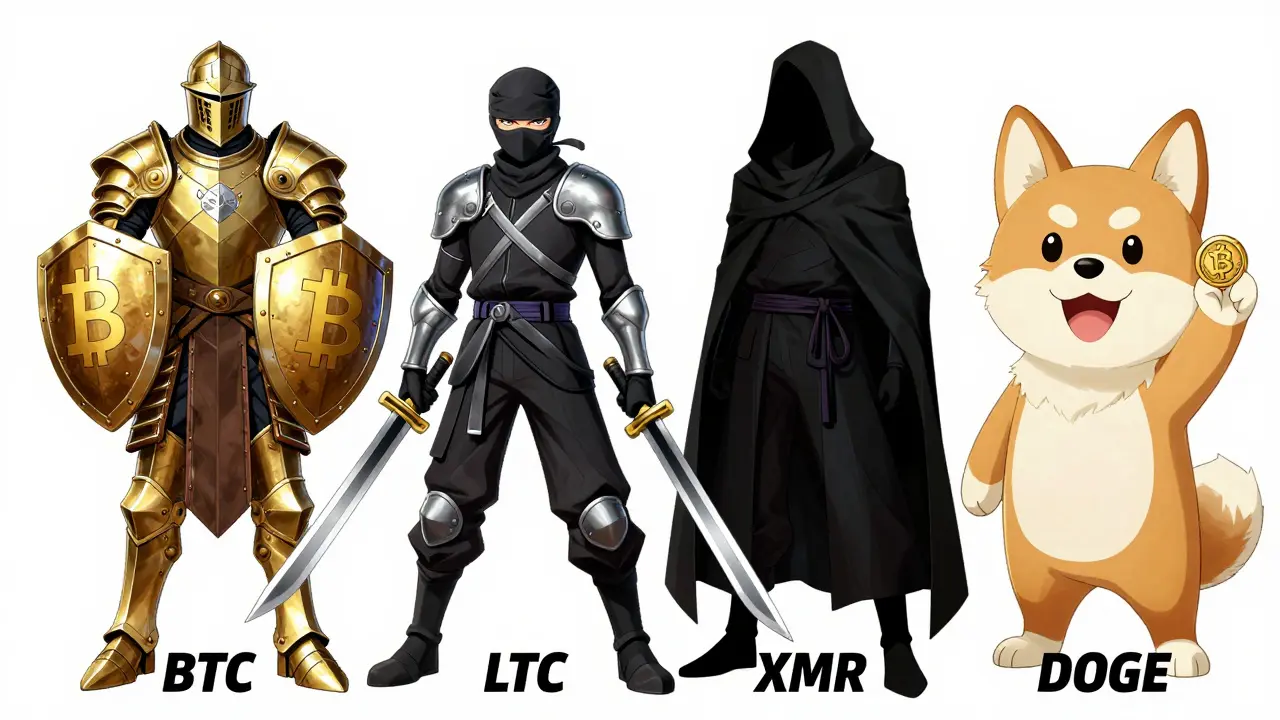
Bitcoin, the original payment cryptocurrency launched in 2009, defines this category through its hard cap of 21 million coins. This fixed supply creates a deflationary pressure, theoretically making it a better store of value over time compared to inflationary fiat currencies. Other examples include Litecoin, Dogecoin, and privacy-focused coins like Monero.
The key differentiator is intent. When developers build a payment coin, they optimize for three things:
- Speed: How fast does the transaction confirm?
- Cost: How much fee do you pay per transaction?
- Security: Is the ledger tamper-proof?
If a coin fails at any of these, it struggles as a medium of exchange. For instance, while Bitcoin is incredibly secure, its base layer can become slow and expensive during peak usage, pushing users toward Layer-2 solutions or alternative coins.
Top Payment Cryptocurrencies Explained
Let’s look at the heavy hitters in this space. Each solves the problem of digital payments differently, offering unique trade-offs between speed, privacy, and decentralization.
| Cryptocurrency | Primary Feature | Transaction Speed (Avg) | Privacy Level | Best Use Case |
|---|---|---|---|---|
| Bitcoin (BTC) | Store of Value / Security | 10 minutes | Pseudonymous | Large transfers, savings |
| Litecoin (LTC) | Speed & Low Fees | 2.5 minutes | Pseudonymous | Everyday retail purchases |
| Monero (XMR) | Anonymity | 2 minutes | Fully Private | Private transactions |
| Dogecoin (DOGE) | Community & Micro-payments | 1 minute | Pseudonymous | Tips, small online buys |
Bitcoin: The Gold Standard
Bitcoin remains the king of payment cryptocurrencies, not necessarily because it is the fastest, but because it is the most trusted. Its blockchain is the most secured by computational power. However, using Bitcoin for a $5 coffee purchase can sometimes cost more in fees than the coffee itself during network congestion. This is why many Bitcoin users rely on the Lightning Network, a second-layer protocol that enables instant, near-zero fee transactions.
Litecoin: The Silver to Bitcoin’s Gold
Created by Charlie Lee in 2011, Litecoin was explicitly designed to be a "cheaper, faster" alternative to Bitcoin. It uses a different hashing algorithm (Scrypt) which allows for quicker block generation times-roughly every 2.5 minutes compared to Bitcoin’s 10. If you want a coin that behaves more like traditional electronic cash for everyday spending, Litecoin is often the go-to choice for merchants who want crypto exposure without the volatility and delay of Bitcoin mainnet transactions.
Monero: The Privacy Shield
In a world where every credit card swipe leaves a trail, Monero offers true anonymity. It uses ring signatures and stealth addresses to obfuscate the sender, receiver, and amount of a transaction. While this makes it ideal for users concerned about financial surveillance, it also attracts regulatory scrutiny. Many centralized exchanges have delisted Monero due to compliance pressures, making it harder for average users to buy and sell legally in some jurisdictions.
How Payment Cryptocurrencies Work Under the Hood
You don’t need to be a computer scientist to use these coins, but understanding the basics helps you avoid costly mistakes. At its core, a payment cryptocurrency relies on a distributed public ledger known as a blockchain.
When you send 0.01 BTC to a friend, you aren’t moving a file from your computer to theirs. Instead, you are broadcasting a message to the entire network saying, "I have authorized a transfer of value from my address to this other address." Nodes (computers running the software) verify this transaction against previous records to ensure you actually own the funds and haven’t spent them already. Once verified, the transaction is grouped into a block and added to the chain.
This process requires energy and computation, often referred to as mining. Miners compete to solve complex mathematical puzzles. The winner gets to add the next block and receives newly minted coins plus transaction fees as a reward. This mechanism secures the network; attacking it would require more computing power than the rest of the world combined, which is practically impossible for major coins like Bitcoin.
The Reality Check: Why Aren’t We All Paying With Crypto?
If payment cryptocurrencies are so efficient, why did I still use my Apple Pay for lunch today? The answer lies in three major hurdles: volatility, acceptance, and usability.
Volatility Kills Spending Habits
Money needs to be stable to function as a unit of account. If you agree to pay $10 for a service, you expect that $10 to mean roughly the same thing tomorrow. Crypto prices can swing 5-10% in a single day. Merchants hesitate to accept crypto because holding it exposes them to risk. To mitigate this, many businesses use third-party processors that instantly convert crypto payments into fiat currency (like USD or NZD). This defeats the purpose of decentralization for the merchant, though it still offers convenience for the buyer.
Limited Merchant Acceptance
While giants like Microsoft, Overstock, and Tesla have experimented with accepting Bitcoin, widespread adoption among local retailers remains low. According to data from the Reserve Bank of Australia, only a tiny fraction of crypto holders use their assets for regular payments. Most people view crypto as an investment asset, similar to stocks or real estate, rather than a medium of exchange.
The Usability Gap
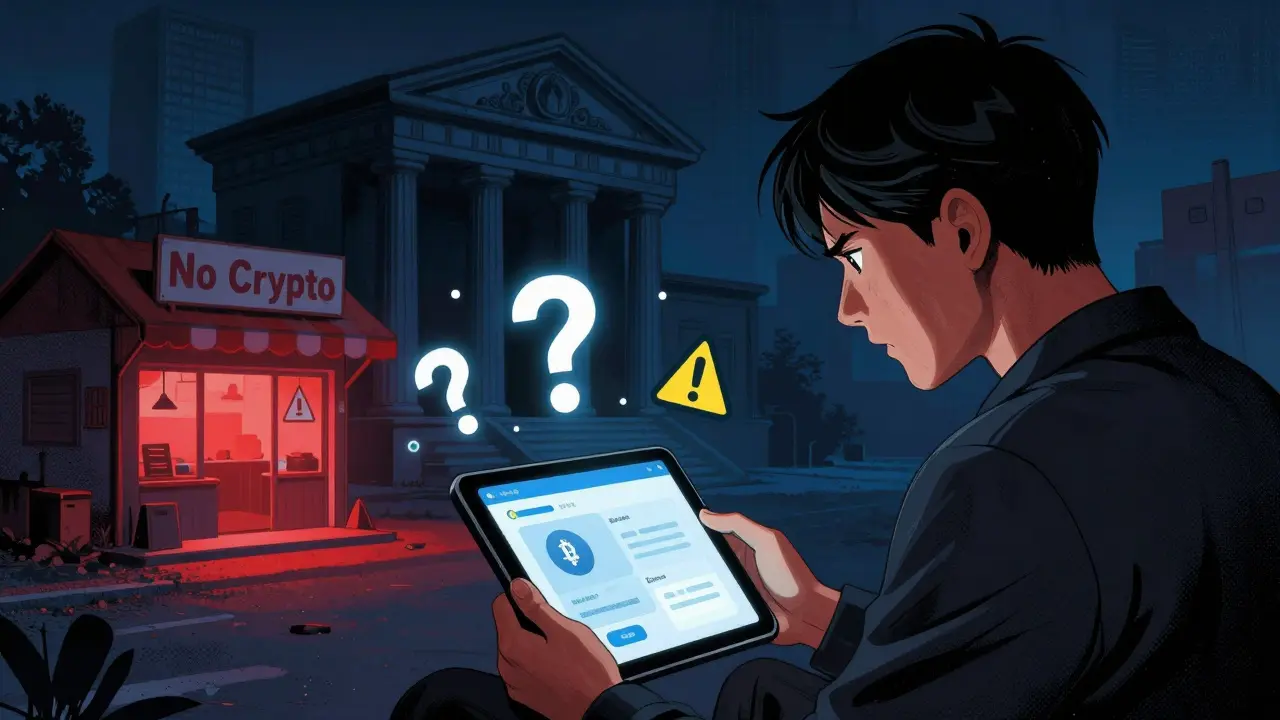
Buying coffee with a credit card takes two seconds. Sending crypto involves opening a wallet app, checking the balance, ensuring you have enough for gas fees, copying a long alphanumeric address, and waiting for confirmations. If you paste the wrong address, your money is gone forever. There is no customer support hotline to call. This friction keeps the average consumer away.
Getting Started: A Practical Guide
If you want to experiment with payment cryptocurrencies, here is how to do it safely and effectively.
- Choose a Wallet: You need a place to store your keys. For beginners, custodial wallets on exchanges like Coinbase or Binance are easiest. For security, self-custody wallets like Trust Wallet or hardware devices like Ledger are better. Remember: if you lose your private key (seed phrase), you lose your money.
- Buy Small Amounts: Start with an amount you are comfortable losing. Volatility is real. Buy Bitcoin or Litecoin via a reputable exchange using your local currency.
- Understand Fees: Check the current network status. Sending Bitcoin during high traffic can cost $10+ in fees. Litecoin and Dogecoin usually stay under $1. Always check the recommended fee before confirming.
- Test First: Before sending a large sum, send a tiny test transaction to the recipient to ensure the address is correct and the network is functioning as expected.
The Future of Digital Cash
The landscape is evolving. Central Bank Digital Currencies (CBDCs) are being explored by nations worldwide, including New Zealand. These are government-backed digital versions of fiat money. They offer the speed of crypto but retain the control of traditional banking. Meanwhile, Layer-2 solutions like the Lightning Network for Bitcoin and various sidechains for Ethereum are solving the scalability issues that currently hinder mass payment adoption.
We may not see a world where everyone pays for milk with Bitcoin soon. However, for cross-border remittances, micropayments for digital content, and users seeking financial sovereignty outside the traditional banking system, payment cryptocurrencies are already delivering on their promise. They are niche, powerful tools that complement, rather than replace, our existing financial infrastructure.
Is Bitcoin considered a payment cryptocurrency?
Yes, Bitcoin is the first and most prominent payment cryptocurrency. While it is often viewed as a store of value ('digital gold'), its primary design is to facilitate peer-to-peer electronic cash. However, due to network congestion, many users prefer Layer-2 solutions like the Lightning Network for actual daily payments.
What is the difference between a payment coin and a utility token?
A payment coin (like Bitcoin or Litecoin) is designed primarily to transfer value and act as money. It usually has a capped supply. A utility token (like Filecoin or Chainlink) grants access to a specific service or network feature and often has an uncapped, inflationary supply to incentivize network participants.
Are payment cryptocurrencies anonymous?
Most are pseudonymous, meaning your identity isn't attached to your name, but your transaction history is public on the blockchain. Coins like Monero (XMR) and Zcash (ZEC) are designed for full anonymity, hiding the sender, receiver, and amount. However, even pseudonymous transactions can sometimes be traced back to identities through IP logs or exchange KYC data.
Why are transaction fees for Bitcoin sometimes so high?
Bitcoin blocks have a limited size. When many people try to transact at once, users bid up the fees to get their transactions included in the next block. This market-driven fee structure prioritizes high-value or urgent transactions during peak times. Alternatives like Litecoin or Layer-2 networks offer lower fees.
Can I use payment cryptocurrencies to buy goods in New Zealand?
Direct merchant acceptance is still rare in New Zealand. Most locals use crypto-to-fiat gateways or prepaid cards linked to crypto exchanges to spend their holdings at regular stores. Some online retailers and tech-savvy local businesses may accept Bitcoin or Litecoin directly.