

You try to send a stablecoin to a friend. You have the balance. You hit send. The transaction fails. Why? Because you forgot to keep $5 worth of ETH in your wallet just to pay for the network fee. This is the single biggest friction point in Web3 today. It turns away millions of potential users who don't understand why they need one token to hold value and another token just to move it.
This problem has a name, and it has a solution. The solution is Account Abstraction. Specifically, the implementation known as ERC-4337. It allows for "gasless" transactions, meaning you can pay fees in USDC, DAI, or even have the app sponsor the cost entirely. It changes how wallets work at a fundamental level, moving us from simple key-based accounts to intelligent smart contracts.
What Is Account Abstraction?
To understand why this matters, we first need to look at how Ethereum was originally built. In the early days, Ethereum had two types of accounts:
- Externally Owned Accounts (EOAs) are controlled by private keys. Think of these as your basic bank login. They are simple but rigid. If you lose your key, you lose everything. There is no reset button.
- Contract Accounts are smart contracts. They can hold logic, like an automated escrow service. However, they cannot initiate transactions on their own. They must be triggered by an EOA.
This separation created a usability nightmare. Users needed an EOA to interact with the blockchain, which meant they always needed native currency (like ETH) for gas. Account Abstraction removes this distinction. It allows your user account itself to be a smart contract. Your wallet becomes programmable. It can enforce security rules, recover lost keys, and most importantly, handle gas payments in ways that make sense for humans, not computers.
The Technical Engine: ERC-4337
You might wonder why this didn't happen sooner. Changing Ethereum's core protocol is incredibly difficult and risky. Instead of upgrading the main chain, developers created a layer on top of it called ERC-4337. Proposed by Vitalik Buterin in 2021, this standard doesn't change how blocks are produced. Instead, it creates a new way for transactions to enter the system.
Here is how the workflow differs from a traditional transaction:
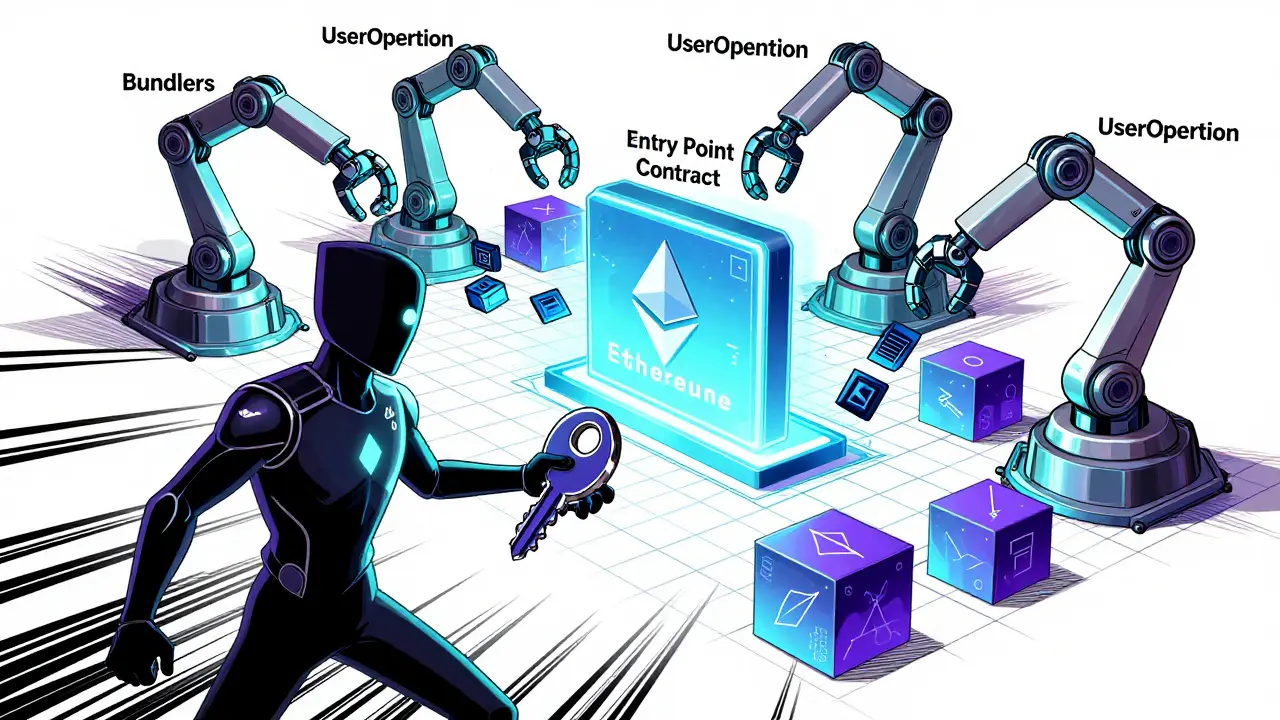
- UserOperation Creation: When you click "send," your wallet creates a UserOperation. This is a bundle of data containing your signature, the transaction details, and gas limits. Crucially, this does not go into the standard Ethereum mempool.
- Bundlers: Specialized nodes called Bundlers watch for these UserOperations. They collect them, prioritize them, and package them together.
- Entry Point Contract: The Bundler submits the batch to a specific smart contract called the Entry Point. This contract verifies the signatures and executes the transactions.
This architecture is clever because it keeps the base Ethereum protocol simple while allowing massive innovation in the user experience layer. It shifts the complexity from the blockchain itself to the application layer, where it is easier to update and improve.
How Gasless Transactions Actually Work
When people say "gasless," they often think magic. In reality, someone is still paying the miner or validator. The difference is who pays and what they pay with. This is handled by a component called the Paymaster.
A Paymaster is a smart contract that agrees to pay the gas fees for a UserOperation on behalf of the user. There are two main models:
| Model | Who Pays? | Currency Used | Use Case |
|---|---|---|---|
| Sponsored | The dApp/Company | Native Token (ETH/MATIC) | Onboarding new users, marketing campaigns |
| Token-Gated | The User | ERC-20 Tokens (USDC, DAI) | Stablecoin transfers, DeFi interactions |
In the sponsored model, a company might want you to use their NFT marketplace. To lower the barrier, they deploy a Paymaster that covers the gas fee for your first few transactions. You feel like the transaction is free. In the token-gated model, if you only have USDC, the Paymaster takes your USDC, swaps it for ETH behind the scenes, and pays the network fee. Services like Sequence.xyz support this with multiple tokens including WETH, MATIC, USDC, and DAI.
Benefits Beyond Just Saving Gas
Removing gas fees is great, but Account Abstraction offers much more. Because your wallet is now a smart contract, you can add features that were impossible with standard EOAs.
- Session Keys: Imagine logging into a game and being able to play without signing every single action. Session keys allow limited, time-bound permissions. You sign once, and the wallet handles minor actions automatically.
- Social Recovery: Lost your phone? With an EOA, your crypto is gone forever. With an abstracted account, you can designate trusted contacts (guardians). If you lose access, they can vote to restore your wallet. No seed phrase required.
- Batching: Want to swap tokens, stake them, and provide liquidity all at once? Traditional wallets require three separate transactions and three separate gas payments. Smart accounts can bundle these into one atomic transaction.
For enterprise users, this is a game-changer. Utila.io reported that institutional clients reduced portfolio rebalancing time from 45 minutes to under 7 minutes using batch calling features enabled by account abstraction.
Security Risks and Trade-offs
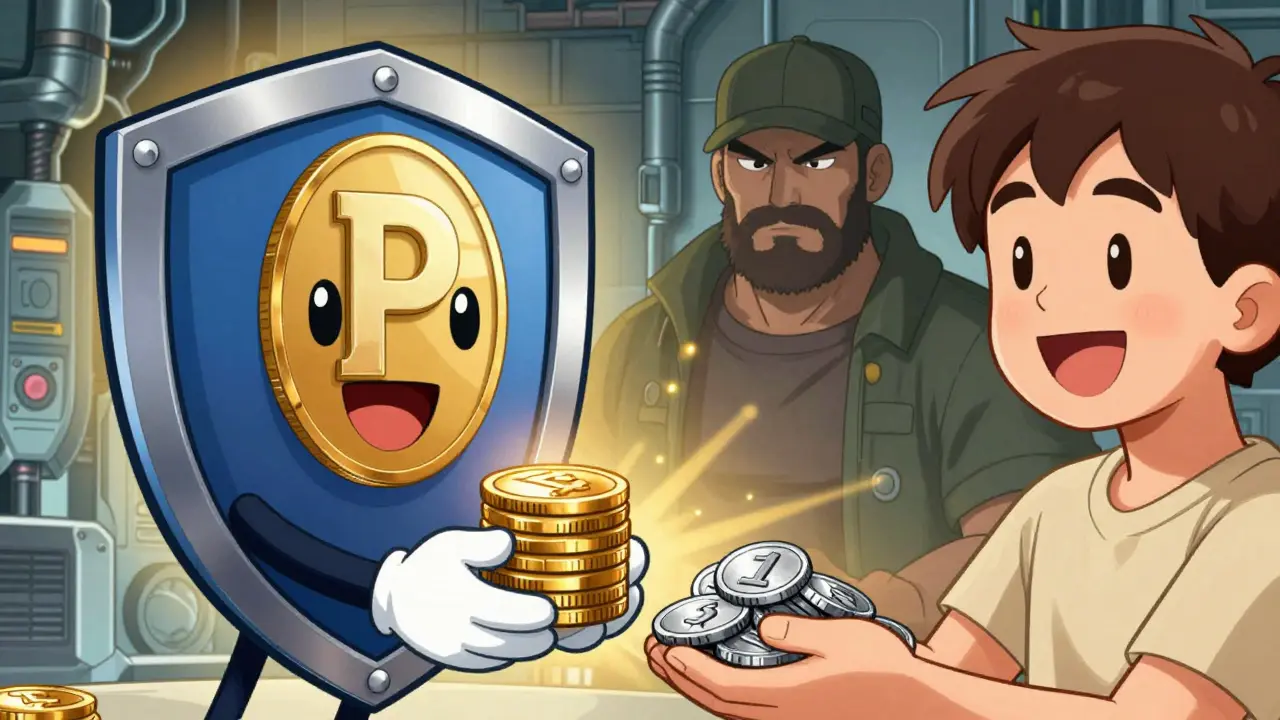
If this sounds too good to be true, there is a reason. Shifting from cryptographic simplicity to smart contract complexity introduces new risks. Security researchers at Trail of Bits noted that the security model shifts from "my key is safe" to "is this smart contract audited?"
The primary risk lies with the Paymaster and the Bundler. If a Paymaster contract has a bug, it could drain funds. If a Bundler is malicious, it could censor transactions or reorder them for profit (MEV). Nonbank.io warned in 2023 that a breach in these infrastructure components could threaten entire platforms. Additionally, relying on third-party relayers creates centralization points. If the only Bundler supporting your favorite dApp goes down, you are stuck.
There is also a slight performance cost. Thirdweb’s metrics suggest that the extra verification steps in the ERC-4337 flow can add 2-4 seconds of latency compared to direct EOA transactions. For high-frequency trading, this matters. For buying an NFT or sending money to a friend, it is negligible.
Adoption and Future Outlook
Adoption is accelerating rapidly. As of mid-2023, 43% of newly launched wallets incorporated some form of account abstraction, up from just 12% the previous year. Enterprise adoption is even higher, with 68% of institutional asset management platforms evaluating or implementing these tools.
However, fragmentation remains a challenge. Coinmetro found that 72% of users expected gasless functionality to work universally, but it is currently siloed within specific wallets and dApps. MetaMask, the dominant wallet provider, has announced plans to integrate account abstraction, but as of late 2023, it did not natively support it. This inconsistency confuses new users.
The long-term vision includes native protocol upgrades like EIP-3074, which would bake account abstraction directly into Ethereum, removing the need for the ERC-4337 workaround. Until then, ERC-4337 serves as the critical bridge between clunky current experiences and the seamless future of Web3.
Are gasless transactions actually free?
No. Someone is always paying the network fee. In a gasless transaction, either the application sponsors the fee as a marketing cost, or you pay the fee using a different token (like USDC) instead of the native blockchain currency (like ETH). The cost is abstracted from you, not eliminated from the network.
Is ERC-4337 secure?
ERC-4337 itself is a robust standard, but security depends on the implementation. The risk shifts from losing your private key to trusting the smart contracts (Paymasters and Bundlers) that process your transactions. Always use wallets and dApps that have undergone rigorous security audits from firms like Trail of Bits or Consensys.
Do I need a new wallet to use account abstraction?
Yes, currently you need a wallet that supports smart accounts. Traditional wallets like older versions of MetaMask rely on EOAs. Newer wallets like those built on Stackup, Safe, or Sequence support ERC-4337. Look for terms like "Smart Wallet" or "Account Abstraction Support" in wallet features.
Why isn't every dApp using gasless transactions?
Implementation requires integrating with Bundlers and Paymasters, which adds development complexity. Additionally, sponsoring gas costs money, so apps must justify the expense through increased user acquisition. Legacy infrastructure also makes integration slower for older projects.
Can I recover my account if I lose my password?
With Account Abstraction, yes. Unlike traditional wallets where loss of the private key means permanent loss of funds, smart accounts can implement social recovery. You can set up guardians (friends or family) who can help restore access to your account if you lose your device or credentials.





Emma Rémond
June 27, 2026 AT 08:36It is frankly exhausting to read this level of basic explanation for what should be obvious to anyone with a modicum of technical literacy. The distinction between EOAs and Contract Accounts is not a 'nightmare,' it is a fundamental architectural necessity for security in the current paradigm. You are conflating user experience friction with protocol-level design flaws. ERC-4337 is merely a band-aid on a wound that requires a complete rethinking of how we perceive value transfer, not just another layer of abstraction to hide the complexity from the uninitiated masses who treat their private keys like disposable passwords.
ELNORA JEFFERSON
June 28, 2026 AT 22:08boring
Carol @minaszilda
June 29, 2026 AT 21:24I think there is a lot of potential here if we look at it through the lens of accessibility. It really helps those who have been left behind by the steep learning curve of traditional crypto wallets. We should encourage more inclusive designs that prioritize human needs over rigid technical standards. It brings us closer to a truly open financial system where everyone can participate without needing a computer science degree.
John Curry
June 30, 2026 AT 01:02One must consider the philosophical implications of removing the direct link between action and cost. When gas becomes invisible, does the user lose a sense of responsibility for network congestion? It is a delicate balance between convenience and awareness. The technology evolves, but our understanding of value and effort must evolve with it, or we risk creating a generation of users completely disconnected from the underlying reality of blockchain mechanics.
Trent Erman1
July 1, 2026 AT 21:29This is huge! 🚀 Imagine being able to onboard your grandma without her worrying about buying ETH first. That is the real killer app for mass adoption. I am super excited to see how dApps integrate this. It makes DeFi actually usable for normal people instead of just degens. Let's go! 💪🔥
Fiona Ellis
July 2, 2026 AT 12:55I find it rather intrusive that you assume everyone wants to give up control to a smart contract. 😒 My privacy is paramount, and trusting a Paymaster feels like handing my wallet to a stranger. I prefer the cold, hard certainty of my own private key. At least then I know exactly who has access to my funds-only me. No middlemen, no hidden logic, just pure cryptographic truth. 🙄
Nicole Woessner
July 4, 2026 AT 12:13In many cultures we are used to complex systems where trust is mediated by institutions so this shift to code-based trust is fascinating yet daunting. It mirrors the transition from barter to fiat currency in some ways. People initially resisted paper money because it lacked intrinsic value just as they now resist abstracted accounts because they lack immediate visibility into costs. Time will tell if this abstraction holds up under pressure.
Jon Milton
July 5, 2026 AT 07:52Look, I get the hype but let's keep it real. This is still US-centric tech trying to solve problems that don't exist for most of the world. Meanwhile, we are dealing with actual infrastructure issues. But hey, if it makes your life easier in Silicon Valley, great. Just don't pretend it's a universal solution for global finance when half the planet doesn't even have reliable internet access.
Sajjad Ghorbani Moghaddam
July 6, 2026 AT 03:48Hey folks, just wanted to chime in. I've been testing out some AA wallets recently and it's pretty cool. The social recovery feature is a lifesaver if you ask me. Lost my phone last month and would have been screwed otherwise. Anyway, just sharing my experience. Hope it helps someone out there.
Rebecca Shoniker
July 8, 2026 AT 00:37You are fundamentally misunderstanding the security model!! The risk isn't just about bugs; it is about the centralization of power in the hands of Bundlers!!! They can censor transactions at will!!! This is not freedom; this is a controlled environment disguised as innovation!!! Wake up!!!
Jay Sharma
July 9, 2026 AT 18:38They want you to use these smart contracts so they can track every single move you make. The 'gasless' part is just bait. Once you are in the ecosystem, they have your data, your behavior patterns, everything. It is all about surveillance capitalism wrapped in blockchain jargon. Don't fall for it.
Scott Miller
July 10, 2026 AT 06:10Stop making excuses for why you haven't adopted this yet! It is the future! If you are still complaining about gas fees in 2024, you are part of the problem! Get with the program or get left behind! There is no room for hesitation here! Move fast and break things!
Abby Martin
July 11, 2026 AT 21:30I honestly cannot believe people are still using EOAs in this day and age. It is morally irresponsible to expose new users to the risk of losing everything because they misplaced a seed phrase. We have a duty to protect the vulnerable. Using account abstraction is not just convenient; it is the ethical choice for anyone who cares about financial inclusion and safety.
Mélanie Boulay
July 12, 2026 AT 10:35While I appreciate the detailed breakdown of the technical mechanisms involved in ERC-4337, one must carefully consider the long-term implications of relying on third-party services for such critical functions as transaction bundling and fee payment, which introduces a layer of dependency that was previously absent in the decentralized ethos of blockchain technology, potentially undermining the very principles of self-sovereignty that attracted many early adopters to the space in the first place, thus creating a paradoxical situation where increased usability leads to decreased autonomy.
Maurice Flynn
July 14, 2026 AT 09:47I just sit back and watch the drama unfold. Some people love it, some hate it. Honestly, it doesn't matter much to me. I will wait until it is stable and widely supported before I touch it. No rush. Life is too short to stress over wallet implementations.
nancy jarecki
July 16, 2026 AT 03:47The sheer audacity of claiming this solves the 'usability nightmare' is laughable. It merely shifts the burden from the user to the developer and the infrastructure provider. Until we have native protocol support, this is all just fragile middleware that will break at the worst possible moment. Typical Web3 over-engineering.
Carl Belgrave
July 17, 2026 AT 22:07This is American innovation at its finest! We lead the way in tech, and we always will. Europe is still stuck on regulations while we are building the future. Keep pushing boundaries, America! 🇺🇸
Carl Hanzel
July 19, 2026 AT 02:12Oh, please. Another 'revolutionary' standard that will likely fail within two years. Vitalik proposes something, everyone cheers, then reality hits. The latency issues alone will kill this for any serious trading application. It is a toy for retail investors who don't understand market dynamics.
Daniel J. Cox
July 19, 2026 AT 18:56:-) Interesting perspective from everyone here. I think it is good to have diverse opinions. Whether you love it or hate it, the tech is moving forward. Just enjoy the ride and stay curious. Peace out.
Robert Hundley
July 21, 2026 AT 17:04Let's get hyped! This is going to change everything! Who else is ready to try out a new smart wallet today? Drop your recommendations below! Let's build this community together! 🙌💯