Digital Assets: What They Are, How They Work, and Where to Find Real Value
When you hear digital assets, tokenized items or currencies that exist on blockchain networks and can be owned, traded, or used for specific functions. Also known as blockchain assets, they range from Bitcoin to NFTs that unlock access to games, events, or even real-world property. This isn’t just hype—it’s a shift in how value is stored and moved. Unlike bank accounts or physical cash, digital assets are controlled by code, not institutions. You own them directly, and they can be transferred across borders in seconds without middlemen.
Not all digital assets are the same. Some, like cryptocurrency, digital money built on decentralized networks like Bitcoin or Ethereum. Also known as crypto tokens, they’re used for payments, trading, or staking. Others, like NFTs, unique digital tokens that prove ownership of one-of-a-kind items like art, music, or virtual land. Also known as non-fungible tokens, they’re not meant to be traded like currency—they’re collectibles with verifiable scarcity. Then there’s tokenized assets, real-world things like real estate, stocks, or fan clubs turned into blockchain-based tokens. Also known as security tokens, they let you buy a piece of something physical or institutional without the paperwork. These aren’t just speculative bets—they’re functional tools. A Trabzonspor fan token lets you vote on jersey designs. An NFT from Lepasa Metaverse gives you access to virtual land. A token on Oasis Pro Markets lets you trade shares in private companies.
But here’s the catch: most digital assets you see online are fake, dead, or scams. TRUST AI? No product. ZeroHybrid Network? Doesn’t exist. HAI token? Crashed after a hack. Oracle AI? Website gone. These aren’t investments—they’re digital ghosts. Real digital assets have working code, active teams, clear use cases, and transparent ownership records. They’re not promoted with flashy ads and fake price charts. They’re built for utility, not pump-and-dump cycles.
What you’ll find below isn’t a list of trending coins. It’s a curated collection of real stories—how India’s 1% crypto tax changed trading habits, why Russia bans businesses from accepting crypto, how Egypt’s total ban left users stranded, and why a crypto exchange in Singapore shut down overnight. You’ll see how DeFi trading evolved with new AMMs, how DePIN turns your home router into a money-maker, and how fan tokens are replacing loyalty cards. Some posts warn you about scams. Others show you how to spot the real ones. No fluff. No promises. Just what’s actually happening with digital assets today.
Dec
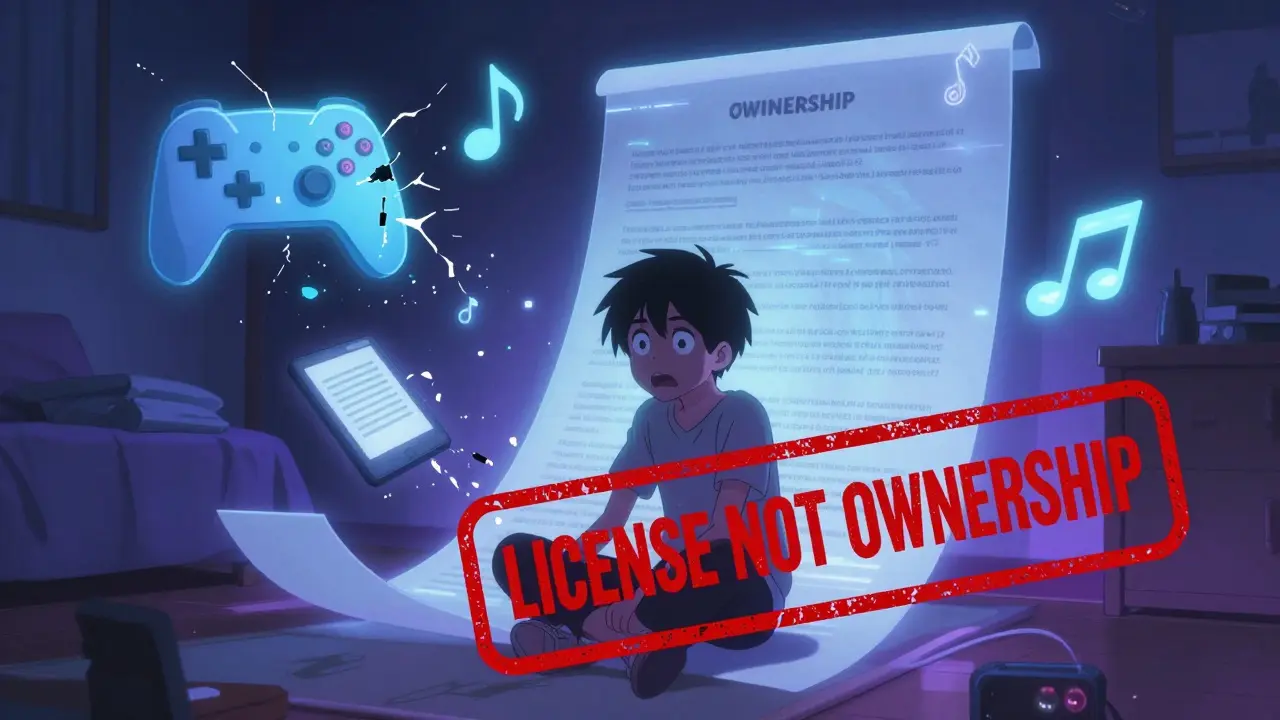
Most digital purchases aren’t sales - they’re licenses. Learn what you really own online, how California’s new law forces transparency, why blockchain offers real ownership, and what steps you can take to protect your digital assets.
Read More