

Imagine hiring a brilliant remote developer who clears every technical interview and delivers clean code for months, only to find out they are actually a state-sponsored operative funneling your company's payroll into a ballistic missile program. This isn't a movie plot; it's a recurring nightmare for US tech firms. The OFAC sanctions is a critical tool used by the U.S. Department of the Treasury's Office of Foreign Assets Control to block financial transactions and freeze assets of targets involved in activities that threaten US national security. In 2025, this tool became the primary weapon against the Democratic People's Republic of Korea (DPRK) and its sophisticated digital heist operations.
The Scale of the Digital Heist
North Korea has pivoted from traditional bank robberies to high-tech crypto raids with staggering efficiency. During the first half of 2025 alone, networks tied to the DPRK stole over $2.1 billion in cryptocurrency. To put that in perspective, that's not just a few opportunistic hacks; it's a systematic drainage of global liquidity to fund weapons of mass destruction. These aren't just random hackers in a basement; they are highly organized units often affiliated with the Workers' Party of Korea.
The goal is simple: generate hard currency in a world where traditional trade is blocked by sanctions. Cryptocurrency provides the perfect veil, allowing the regime to move millions across borders in seconds. However, the US government has responded with a "whole-of-government" approach, coordinating the Department of Justice, the FBI, and the State Department to map out and dismantle these financial pipelines.
The "Trojan Horse" IT Worker Scheme
One of the most insidious methods the DPRK uses is the deployment of fraudulent IT workers. These operatives don't just steal crypto via hacks; they get hired by legitimate companies. They specifically target Web3 and cryptocurrency firms because these companies love remote work and often have leaner hiring processes.
These workers use a playbook of deception to get through the door:
- Fake Personas: They create polished profiles on platforms like GitHub, Freelancer, and Medium using stolen identities.
- Identity Recycling: The same fake IDs, such as "Joshua Palmer" or "Alex Hong," have been spotted across multiple different companies.
- Dual-Purpose Employment: While they actually do the coding work they were hired for, they are simultaneously conducting reconnaissance, looking for vulnerabilities in the company's internal systems to exploit later.
This is essentially a corporate infiltration. Once inside, these workers can steal sensitive data, demand ransoms, or create backdoors for larger attacks. By August 2025, OFAC stepped up its game, designating individuals like Vitaliy Sergeyevich Andreyev and Kim Ung Sun, along with entities like Shenyang Geumpungri Network Technology Co., Ltd, for facilitating these exact schemes.

How the Money is Laundered
Getting the money is one thing; getting it into a usable form for the North Korean government is another. The laundering process is a complex game of digital hide-and-seek. Workers often receive their salaries in stablecoins, which are then routed through a series of self-hosted wallets and centralized exchanges to break the audit trail.
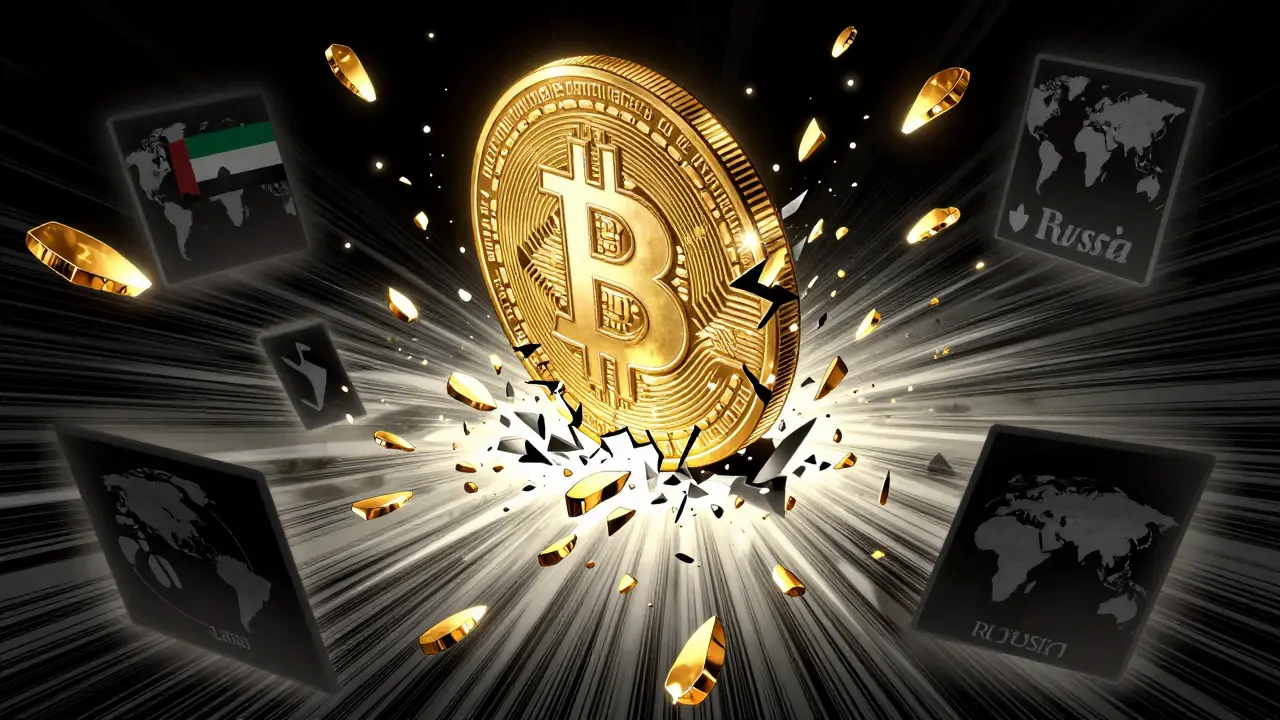
To hide the origin of the funds, they use a technique called fragmentation, where large sums are broken into tiny amounts and sent to hundreds of different addresses. From there, the money is moved to Over-the-Counter (OTC) brokers-middlemen who swap crypto for cash without asking many questions. Some of these brokers operate out of the UAE and Russia, providing a safe harbor for the DPRK's financial movements.
| Method | Primary Target | Key Attribute | Detection Risk |
|---|---|---|---|
| Direct Exchange Hacks | Crypto Platforms | High-volume theft | High (On-chain visibility) |
| IT Worker Fraud | US Tech/Web3 Firms | Social engineering | Medium (HR/Identity checks) |
| Front Companies | Global Trade Markets | Legal camouflage | Low (Complex ownership) |
The Global Network of Facilitators
North Korea doesn't act alone. They rely on a sprawling network of front companies and foreign facilitators. For instance, the Korea Sobaeksu Trading Company has been flagged for helping the regime evade sanctions. These companies often set up offices in China, Laos, and Russia to create a layer of separation between the illicit activity and the DPRK government.
The infrastructure used is equally global. Investigators have found that these networks heavily utilize Russian and UAE-based IP addresses and fabricated documentation to make it look like their operations are legitimate local businesses. This international coordination makes it incredibly difficult for any single country to stop the flow of money, which is why the US has partnered with Japan and South Korea to issue joint warnings and coordinate enforcement.
Protecting Your Business from Infiltration
If you run a tech company, the threat isn't just a "big company problem." Small startups are often the primary targets because they lack rigorous background check processes. The cost of a single bad hire can be millions in lost assets or a total compromise of your intellectual property.
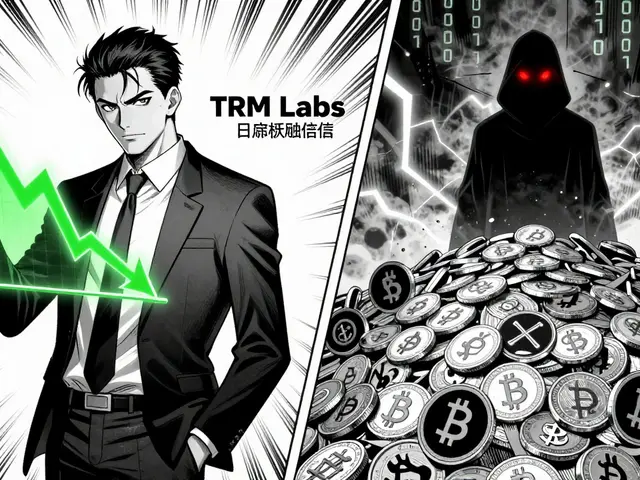
To avoid becoming a pawn in a state-sponsored funding scheme, companies should move beyond simple resume checks. Using tools from blockchain analysis firms like TRM Labs can help identify if a payment address is linked to a sanctioned entity. Additionally, implementing strict identity verification (KYC) for all remote hires-including live video interviews and government-issued ID verification-is no longer optional; it's a security requirement.
What happens if a company accidentally hires a sanctioned North Korean worker?
While the US government focuses on the perpetrators, companies can face regulatory scrutiny if they are found to be willfully ignoring sanctions. The best course of action is to immediately terminate the relationship, secure all internal systems, and report the incident to the FBI or the Department of the Treasury to demonstrate cooperation.
How does OFAC track cryptocurrency if it is designed to be anonymous?
Most cryptocurrencies, including Bitcoin and Ethereum, use public ledgers. While a wallet address doesn't have a name attached, blockchain analysis tools allow investigators to trace the flow of funds. When these funds eventually touch a centralized exchange where the user had to provide an ID, the anonymity is stripped away.
Are these sanctions actually working?
Sanctions are a game of attrition. While they haven't stopped the DPRK entirely, they significantly increase the cost of doing business. By blacklisting OTC brokers and front companies, OFAC forces the regime to use more expensive and riskier methods to move their money, which slows down their weapons procurement.
What is the "whole-of-government" approach mentioned?
This means that instead of just one agency handling the problem, multiple branches of the US government work together. The Treasury (OFAC) handles the money, the DOJ handles the prosecutions, the FBI conducts the criminal investigations, and the State Department manages the international diplomatic pressure.
Who are the "threat actors" like Jasper Sleet or Wagemole?
These are codenames given by cybersecurity firms and intelligence agencies to track specific groups of hackers or operatives. For example, Jasper Sleet refers to a specific set of tactics and infrastructure used by DPRK-linked workers to infiltrate US companies.






Andrew Southgate
April 19, 2026 AT 10:46It is genuinely fascinating to see how the intersection of remote work and decentralized finance has created these new vulnerabilities for the average tech firm. Most people don't realize that the very flexibility we love in the Web3 space is exactly what these operatives are exploiting to sneak into payrolls. If you're running a small team, you really can't trust a GitHub profile anymore because those are so easy to fabricate with a bit of effort. I've seen a few instances where the code was actually decent, which makes the betrayal even worse since they're effectively acting as a double agent while getting paid. The a-ha moment here is that identity is now a programmable asset and we need to start treating KYC for employees with the same rigor as we do for high-value financial transactions if we want to stay safe. Just a heads up to everyone in the industry that the 'lean' hiring process is basically an open door for state-sponsored theft these days.
Thomas Jewett
April 21, 2026 AT 04:49Absolutly disgusteng that we let these thievs into our systems in the first place and it's a damn shame our borders are weak both physcially and digitally!!! We need to stop playing nice with these communist regimes that want to destroy the American way of life and just crush them with every single sanction we can possibly muster because any company that hires a foreigner without a 100% foolproof check deserves to lose their money for being so naive and weak in the face of a lauras threat to our national securety!
Ian Chait
April 21, 2026 AT 17:07Typical govt narrative right here. They talk about 'mapping pipelines' but it's all just a front for more surveillance of the peer-to-peer mesh. The use of OTC brokers in the UAE is just a smokescreen for the real money laundering happening through deep-web mixeres that the feds already know about. Its all a big game of shadow boxing and the 'trojan horse' workers are probably just a convenient boogeyman to justify more restrictive KYC laws that'll eventually hit all of us just for holding some satoshis. Total psyop to keep us scared of the boogeyman while the real whales move the money in the dark.
Trudy Morse
April 23, 2026 AT 11:45Identity is just a mask we all wear, though some masks are just more fraudulent than others.
Shannon Kelly Smith
April 23, 2026 AT 14:38We've gotta look out for the junior devs who are getting caught in the middle of this! 🚀 It's a tough lesson in trust, but let's use this as a chance to build better, more transparent hiring frameworks together! 🤝💪
Sean Douglas
April 25, 2026 AT 10:23The sheer audacity of these operatives is almost poetic in its cruelty. Imagine the psychological trauma of a founder realizing their 'star developer' was actually a weapon of mass destruction financier! It's a cinematic tragedy unfolding in real-time across our Slack channels and Jira boards. Simply ghastly!
Prachi Bhadarge
April 26, 2026 AT 02:43Oh sure, because a 'live video interview' totally stops someone who knows how to use a deepfake or a really good proxy. Good luck with that.
Gaurav Undirwade
April 27, 2026 AT 08:39It is deeply regrettable that professional standards have devolved to such a state where deceit is practiced with such clinical precision. One must wonder where the moral compass of these individuals resides when they prioritize state-sponsored theft over the basic principles of integrity and honesty in labor.
Vicky Duffala
April 29, 2026 AT 01:13This is such a wild wake-up call for the remote work era! We can totally turn this into a positive by creating a global standard for digital trust that actually works for everyone. Let's get hyped about building a more secure web! ✨
Abhinav Chaubey
April 29, 2026 AT 14:32The analysis is basic. Everyone knows that the DPRK is just a puppet for larger geopolitical games, but the technical execution of the fragmentation technique is actually impressive if you ignore the fact that they're criminals.
Kevin Lư
April 29, 2026 AT 18:40Honestly, if you're a CEO and you don't know who's on your payroll, that's kind of on you. Just saying!
Nishant Goyal
May 1, 2026 AT 09:29Interesting perspective. Stay safe everyone.
Shantal Sanjur
May 3, 2026 AT 02:30Oh, please. OFAC 'tracking' crypto is a joke. They just wait until the money hits a CEX and then pretend they're geniuses. It's all a theatrical performance to make the Treasury look like they have a clue about how blockchain actually works while the real money just disappears into privacy coins.
Yuhan Mo
May 3, 2026 AT 11:53The systemic risk introduced by these state-sponsored actors necessitates a more robust application of zero-trust architecture across the entire CI/CD pipeline.
Mark Pfeifer
May 4, 2026 AT 21:25I think it's important to maintain a balance here. We need security, but we shouldn't let this turn into a witch hunt against all remote workers from certain regions. We have to be assertive about security without being exclusionary.
Keri Pommerenk
May 5, 2026 AT 09:56totally agree with the need for better checks but lets not make it a nightmare for the good devs out there too
Chintu Parikh
May 5, 2026 AT 17:26I humbly believe that international cooperation is the only viable path forward. If we can align our interests and work together as a global community, we can mitigate these threats while still fostering an environment of open innovation for all developers regardless of their origin.
Mike Kempenich
May 6, 2026 AT 05:00It's definitely a tough situation, but I'm optimistic that better tools will make this a non-issue soon. We just have to keep improving the verification process.
Saurav Bhattarai
May 6, 2026 AT 20:52Imagine thinking that a few sanctions on some shell companies in China will stop a regime that has been playing the long game for decades. The sheer naivety of the Western approach to this is just laughable. It's all just a little bit of theatre for the masses.
Sandeep Bhoir
May 8, 2026 AT 10:39The irony of using a 'whole-of-government' approach to fight a decentralized currency is almost too much to handle. Good luck with that.