
Imagine launching a crypto exchange and having your entire user base frozen because you missed a single filing deadline. That is the reality for operators in Japan, where the Japan crypto licensing framework is one of the world's most stringent regulatory regimes, requiring strict adherence to both statutory laws and self-regulatory standards. If you are looking to enter this market or simply want to understand why Japanese platforms feel so different from their global counterparts, you need to grasp how the Financial Services Agency (FSA) and the Japan Virtual Currency Exchange Association (JVCEA) keep a tight grip on every yen that moves.
| Aspect | Requirement/Status |
|---|---|
| Regulator | Financial Services Agency (FSA) |
| Primary Law | Transitioning from Payment Services Act (PSA) to Financial Instruments and Exchange Act (FIEA) |
| Cold Storage | Minimum 95% of user assets must be offline |
| Leverage Limit | Maximum 2x (reduced from 4x in 2023) |
| Active Licenses | 21 registered exchanges as of mid-2025 |
The Shift from PSA to FIEA: Why It Matters
For years, crypto was treated like money under the Payment Services Act (PSA) which classified virtual currencies as legal property but focused primarily on payment functionality. But the landscape changed dramatically on September 2, 2025. The FSA announced a landmark move to shift oversight of many crypto activities to the Financial Instruments and Exchange Act (FIEA) a law traditionally used for stocks and bonds, now applied to investment-oriented digital assets. This isn't just bureaucratic shuffling; it signals that Japan views crypto less as a toy and more as a serious asset class similar to securities.
Why would regulators do this? Because the market evolved. In 2022, only 12% of new listings were security tokens or tokenized real-world assets. By late 2025, that number hit 35%. Treating these complex instruments under a simple payment law left gaps in investor protection. Under the new FIEA umbrella, exchanges dealing with investment tokens face stricter disclosure requirements and liability standards. For traders, this means higher transparency but also potentially slower listing times for new projects that don't fit neatly into the "payment" box.
Who Actually Gets Licensed?
Getting a license here is not for the faint of heart. As of June 2025, only 21 platforms hold active registrations. That might sound small, but consider that 17 other exchanges had their licenses canceled since 2017 for failing to meet compliance standards. The barrier to entry is intentionally high. To even apply, you must form a Kabushiki-kaisha a joint-stock company under Japanese corporate law, have a physical office in Japan, and appoint a resident manager who takes personal responsibility for compliance.
The financial hurdle is equally steep. You need a minimum capital of 10 million yen (roughly USD 68,000), but that’s just the ticket price. Most applicants spend between USD 500,000 and $1 million over 18 to 24 months to get fully compliant. This includes setting up robust internal controls, hiring specialized compliance officers (who can command salaries around ¥12 million/year), and passing rigorous audits. If you are a startup hoping to launch quickly, Japan is likely the wrong playground. It favors established players like Bitbank, DMM Bitcoin, and GMO Coin who can absorb these costs.
The Role of JVCEA and Token Listings
You might think getting an FSA license is the finish line. It’s actually the starting gun. Enter the Japan Virtual Currency Exchange Association (JVCEA) a self-regulatory organization that enforces standards often stricter than government minimums. Eighteen of the 21 licensed exchanges belong to this body. The JVCEA runs a Token Listing Committee composed of 17 members who act as gatekeepers for what you can trade.
This committee is ruthless. In Q2 2025 alone, they rejected 72% of the 147 applications to list new tokens. They scrutinize whitepapers, require smart contract audits from certified firms like NCC Group, and look for any sign of potential market manipulation. This creates a unique dynamic: Japanese exchanges often lag behind global trends. While a meme coin might be trading wildly on Binance or Coinbase, it could take months to appear on a Japanese platform-if it appears at all. This delay frustrates retail investors who want access to trending assets, but it protects them from rug pulls and pump-and-dump schemes common in unregulated markets.

Security Standards: The 95% Cold Storage Rule
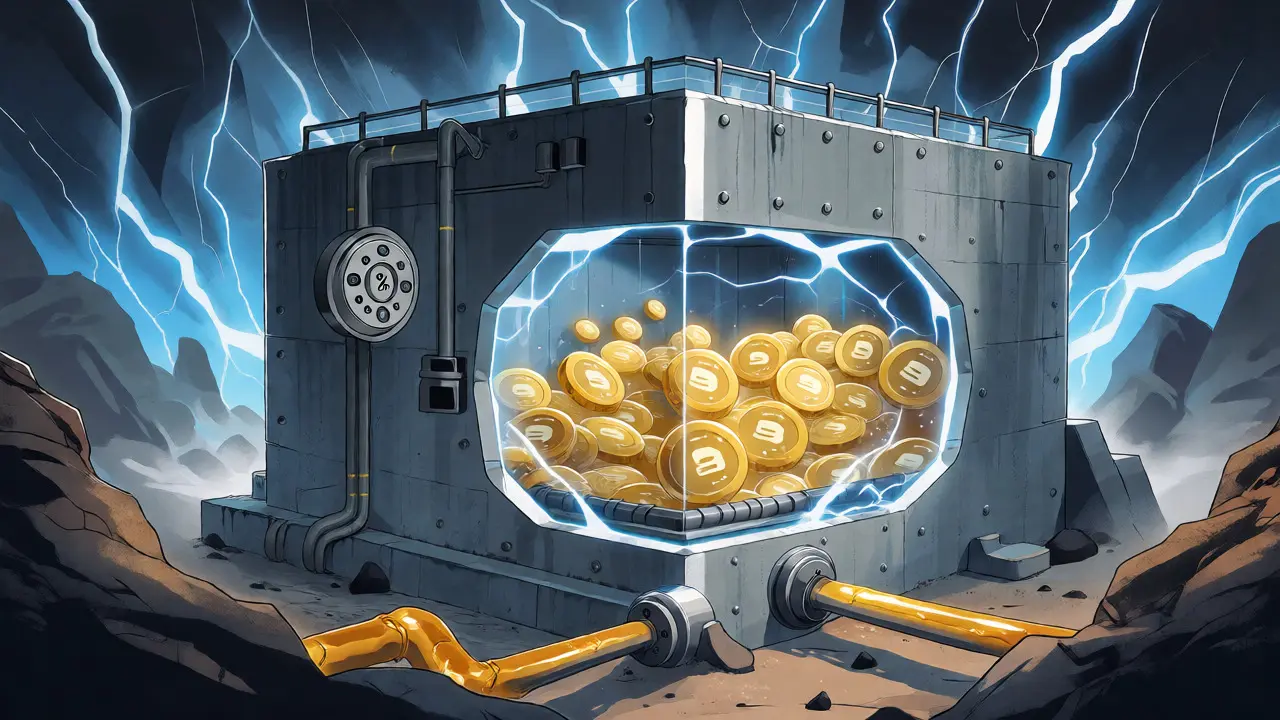
If there is one rule that defines Japanese crypto safety, it is the cold storage mandate. Exchanges must keep at least 95% of user assets in offline wallets. This policy wasn't born out of paranoia; it was forged in fire. After the 2018 Coincheck hack stole $534 million worth of NEM tokens, regulators realized that keeping too much online was a ticking time bomb. Today, technical infrastructure must withstand DDoS attacks exceeding 1 Tbps, and multi-signature wallet systems are standard.
Does this work? Anecdotally, yes. During a security incident in March 2025, users on Bitbank reported no losses despite system breaches, largely because their funds sat safely in cold storage. Critics argue this hurts capital efficiency-funds sitting in cold vaults aren't earning yield-but for the average user, peace of mind is worth the trade-off. Unlike some jurisdictions where exchanges lend out customer deposits without clear consent, Japanese rules force a conservative approach to custody.
Trading Restrictions and Market Impact
Here is where traders often feel the pinch. Japan caps leverage trading at 2x. This limit was reduced from 4x in 2023 after regulators noticed excessive risk-taking during volatile periods. Compare this to Dubai, where the Virtual Assets Regulatory Authority (VARA) allows up to 100x leverage, and you see why professional day traders sometimes leave Japanese platforms. CryptoCompare data suggests a 15% decline in active day traders on domestic platforms following these restrictions.
However, this restriction serves a purpose. It filters out speculative frenzy and encourages longer-term holding. Retail investors seem to appreciate this stability. An FSA Consumer Confidence Report showed that 87% of respondents felt secure using licensed exchanges, compared to just 63% in less regulated markets. The trade-off is clear: you sacrifice high-speed, high-leverage speculation for a safer, albeit slower, trading environment.
Banking Partnerships: The Final Bottleneck
Even if you have your license and your tech stack ready, you still need to move fiat currency. This is the hidden killer for many foreign entrants. Only about 8% of Japanese banks currently service crypto exchanges. Banks are wary due to anti-money laundering (AML) risks and reputational concerns. Establishing a reliable fiat on-ramp requires building trust with institutions like Mitsubishi UFJ or Sumitomo Mitsui, a process that can add months to your timeline.
The good news? The FSA is reviewing rules to potentially allow megabanks to hold Bitcoin directly for investment purposes. If approved, this could unlock massive liquidity and normalize crypto holdings within traditional finance. Until then, exchanges must maintain dedicated banking relationships, which adds operational complexity and cost.
What’s Next for 2026?
We are currently in a transition period. The full integration of crypto under the FIEA is targeted for completion by March 2026. Simultaneously, the Diet is debating the Amendment Act 2025, which will establish the Electronic Payment Instrument and Crypto-asset Intermediary Service Business (ECISB) framework. This new structure aims to clarify roles for intermediaries and may open doors for bank groups to register as exchange operators.
For now, if you are operating in Japan, focus on compliance. The era of "move fast and break things" is over. The era of "move carefully and document everything" has begun. Whether you are an investor or an operator, understanding these layers-from the FSA’s statutory demands to the JVCEA’s listing vetoes-is essential to navigating one of the world’s most sophisticated crypto markets.
How long does it take to get a crypto exchange license in Japan?
The process typically takes 18 to 24 months. This includes forming a local entity, securing banking partnerships, implementing compliance systems, and undergoing rigorous audits by both the FSA and third-party firms.
Can I trade with high leverage on Japanese crypto exchanges?
No. Japan strictly limits margin trading to a maximum of 2x leverage. This is significantly lower than the 10x to 100x leverage available in jurisdictions like Dubai or offshore markets.
Why are new tokens listed slowly in Japan?
New tokens must be approved by the JVCEA’s Token Listing Committee. This committee rejects over 70% of applications after reviewing whitepapers, auditing smart contracts, and assessing market manipulation risks, leading to delays of several months.
What is the minimum capital requirement for a crypto exchange?
The statutory minimum is 10 million yen (approx. USD 68,000). However, practical costs for compliance, technology, and staffing usually push total initial expenditure to between USD 500,000 and $1 million.
Are Japanese crypto exchanges safe?
They are considered among the safest globally due to the mandatory 95% cold storage rule, regular audits, and strict separation of customer assets from exchange liabilities. The FSA actively revokes licenses for non-compliance.