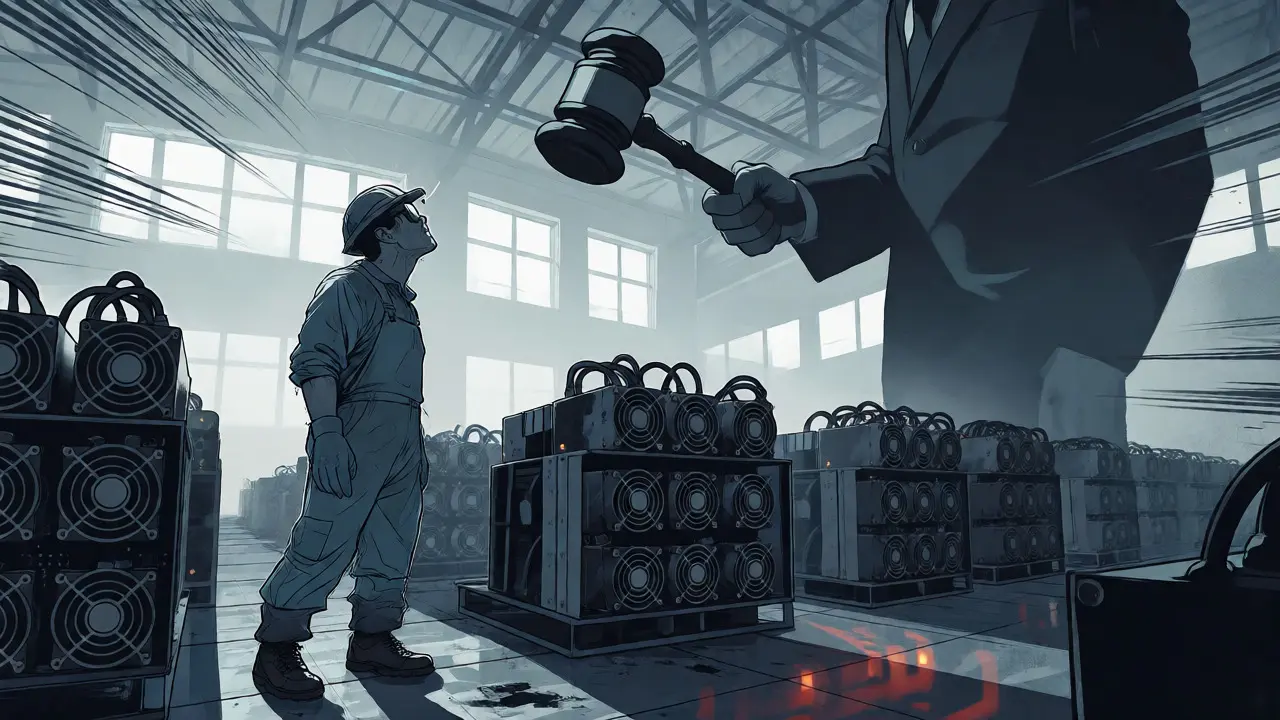
Imagine waking up to find that the country responsible for over half of the world's Bitcoin has just made your job illegal. Not just difficult, but a criminal offense. That is the reality for anyone looking at mining crypto in China today. For years, China was the undisputed king of cryptocurrency mining, fueled by cheap electricity and massive industrial capacity. Then, almost overnight, the lights went out. If you are wondering whether it is possible to mine in China now, or why the government took such a hardline stance, you need to understand the legal landscape that shifted from strict regulation to total prohibition.
This isn't just about banning a hobby. It is about control, energy policy, and the rise of state-backed money. By May 2025, China implemented a comprehensive ban on all cryptocurrency activities, turning what was once a booming industry into a black market operation fraught with risk. Here is exactly what the law says, how they enforce it, and what it means for the global crypto ecosystem.
The Current Legal Status: Zero Tolerance
As of late 2026, cryptocurrency mining in China remains completely illegal. There is no gray area here. The Chinese government does not distinguish between small-scale home miners and large industrial farms when it comes to legality; both fall under the same prohibitive umbrella. The most significant escalation occurred on May 31, 2025, when authorities declared that any form of crypto trading, mining, or ownership constitutes a criminal offense. This moved beyond mere regulatory fines to potential jail time and asset seizure.
You might think this is new, but it is actually the final chapter in a decade-long tightening of screws. In 2013, banks were barred from processing Bitcoin transactions. By 2017, Initial Coin Offerings (ICOs) were banned as unauthorized fundraising. The pivotal moment came in 2021, when the People's Bank of China (PBOC) declared all crypto transactions illegal and ordered a nationwide shutdown of mining operations. Since then, the rules have only gotten stricter. Today, if you are caught running a mining rig, you aren't just breaking a rule; you are facing charges related to financial instability and capital flight.
Why Did China Ban Mining?
It’s easy to assume this is just about controlling technology, but the reasons are more practical and political. Four main drivers pushed Beijing to pull the plug:
- Energy Consumption: Bitcoin mining is energy-intensive. China has aggressive carbon neutrality goals. Allowing thousands of mining rigs to burn through coal-powered electricity conflicted directly with these environmental targets.
- Financial Control: Decentralized currencies operate outside the traditional monetary policy framework. The government wants to maintain tight control over money supply and credit, which cryptocurrencies disrupt.
- Illegal Activities: Authorities linked crypto to money laundering, capital flight, and other illicit financial flows. Banning mining helps curb these underground economies.
- The Digital Yuan: Perhaps the biggest strategic motive is the promotion of the digital yuan (e-CNY). A state-backed central bank digital currency (CBDC) needs adoption. Competing decentralized assets like Bitcoin undermine the credibility and usage of the e-CNY.
Think of it this way: if the government is building its own digital highway (the e-CNY), it doesn’t want private cars (Bitcoin) clogging up the roads.
How Enforcement Works: More Than Just Rules
Banning something is one thing; enforcing it across a vast country is another. China uses a multi-agency approach to hunt down mining operations. You can’t just hide a server rack in a garage without raising flags.
The People's Bank of China leads financial oversight, ensuring banks don’t process crypto-related payments. Meanwhile, the State Administration of Foreign Exchange monitors cross-border transactions. But the real teeth come from physical enforcement. The Ministry of Industry and local power companies track electricity consumption patterns. A sudden spike in power usage in an industrial zone often triggers an inspection. If they find ASIC miners running hot, the equipment gets seized, and the operators face penalties.
Additionally, the Cyberspace Administration tracks digital footprints. Internet service providers monitor traffic associated with mining pools. This creates a comprehensive net where financial, electrical, and digital data intersect to identify violators. It’s a sophisticated system designed to make staying hidden extremely difficult and expensive.

The Global Impact: Where Did the Hashrate Go?
When China shut down, the global crypto network held its breath. Before the ban, China accounted for roughly 65-75% of the global Bitcoin hashrate. When those machines went offline, the network’s security dipped temporarily. But the crypto community adapted quickly.
Miners didn’t disappear; they relocated. The hashrate migrated primarily to the United States, Kazakhstan, Canada, and Russia. This shift had profound effects:
| Region | Status Post-Ban | Key Advantage |
|---|---|---|
| United States | Rapid Growth | Regulatory clarity in states like Texas; abundant renewable energy. |
| Kazakhstan | Initial Surge, Then Stabilization | Low electricity costs; proximity to Chinese hardware suppliers. |
| Canada | Steady Increase | Cold climate reduces cooling costs; stable regulations. |
| China | Underground/Covert | Existing infrastructure; skilled labor; lower visibility. |
The migration also impacted prices. The May 2025 announcement caused Bitcoin to drop from approximately $111,000 to $104,500 within days. Altcoins like Ethereum, Solana, and XRP saw similar volatility. However, the long-term effect has been a decentralization of mining power, reducing reliance on any single jurisdiction.
Is Underground Mining Still Happening?
Despite the official zero-tolerance policy, reports suggest that some mining continues covertly. Studies indicate that China still maintains a notable share of the global hashrate through smaller, dispersed facilities. These aren’t the massive warehouses of old. They are fragmented setups, often integrated into legitimate industrial operations to mask their energy consumption.
However, this comes with high risks. Operators face constant threats of raids, equipment confiscation, and fines. The cost of hiding operations-both financially and logistically-often outweighs the profits, especially as electricity rates fluctuate and monitoring technology improves. While the black market exists, it is far less dominant than the regulated markets in North America.

What Does This Mean for Investors and Miners?
If you are thinking about starting a mining operation, China is off the table. The regulatory risk is too high, and the legal penalties are severe. For investors, the lesson is clear: geography matters in crypto. Regulatory environments in major economies can swing market sentiment violently. Keeping an eye on policy changes in regions like the US, EU, and Asia is crucial for managing portfolio risk.
For the tech sector, the ban accelerated innovation in energy-efficient mining hardware. With fewer low-cost options available globally, miners had to optimize every watt. This drive for efficiency benefits the entire network, making it greener and more sustainable in the long run.
Frequently Asked Questions
Can I buy Bitcoin in China?
Technically, owning Bitcoin is not explicitly criminalized for individuals in the same way mining is, but trading is heavily restricted. Banks cannot facilitate crypto transactions, and exchanges have been shut down domestically. Most purchases happen via peer-to-peer (P2P) methods, which carry higher risks of fraud and legal scrutiny regarding fund origins.
Why did China ban mining specifically?
The primary reasons were energy consumption conflicting with carbon neutrality goals, the desire to eliminate financial risks associated with decentralized currencies, curbing illegal capital flight, and promoting the state-controlled digital yuan (e-CNY).
Did the ban destroy the Bitcoin network?
No. While the initial loss of hashrate caused concern, the network recovered quickly. Miners relocated to countries like the US, Kazakhstan, and Canada. The global distribution of mining power became more decentralized, which many experts view as a positive long-term development for network resilience.
Are there any exceptions for blockchain technology?
Yes. China supports blockchain technology itself, particularly for enterprise solutions and supply chain management, provided it operates under centralized government oversight. The ban is specifically targeted at decentralized cryptocurrencies and speculative trading, not the underlying ledger technology.
What happens if you are caught mining in China?
Penalties include the seizure of mining equipment, heavy fines, and potential criminal charges depending on the scale of the operation and involvement in unlicensed financial activities. Authorities actively monitor electricity usage and banking transactions to detect violations.