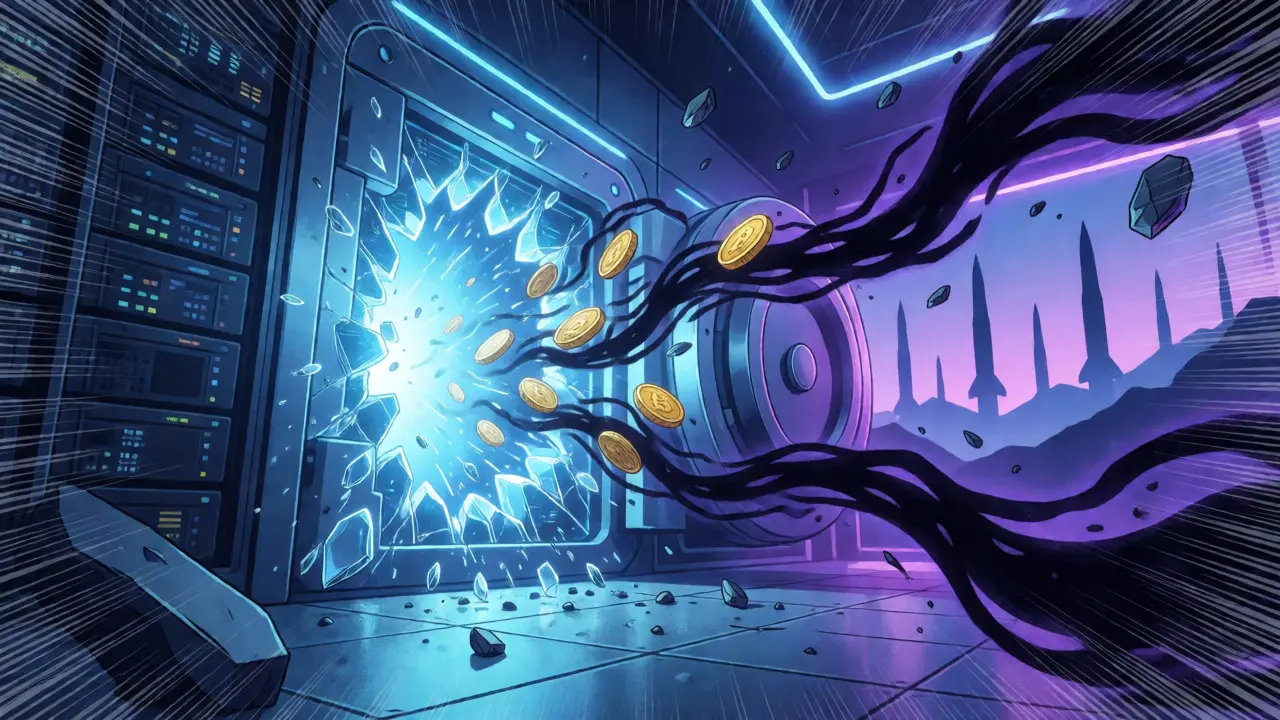
Imagine losing $1.5 billion in a single afternoon. That is exactly what happened to the ByBit exchange in February 2025, thanks to a sophisticated heist orchestrated by state-sponsored hackers from North Korea. This wasn't just a random act of digital robbery; it was the largest single cryptocurrency theft in history, directly funding the regime's weapons programs. If you think this is just a problem for big exchanges, think again. The ripple effects are reshaping how every country monitors money moving across borders.
The global community didn't just sit back and watch. When the United Nations Panel of Experts dissolved in May 2024, leaving a massive hole in sanctions enforcement, eleven nations stepped up. They formed the Multilateral Sanctions Monitoring Team (MSMT). This isn't some bureaucratic club; it's a rapid-response unit designed to track where North Korean stolen funds go and how they get laundered. As of late 2025, this team has documented over $2.17 billion in crypto thefts in just six months. That’s a staggering amount of money flowing out of your pocket and into Pyongyang’s coffers.
The Rise of the Multilateral Sanctions Monitoring Team
You might wonder why we need a new team if the UN was already watching. Here is the reality: the UN structure moved too slowly for the speed of cybercrime. By October 2024, countries like the United States, Australia, Canada, France, Germany, Italy, Japan, the Netherlands, New Zealand, South Korea, and the UK realized they needed a faster mechanism. They created the MSMT to fill that gap. Their job? To monitor violations and report on them without waiting for consensus from all 193 UN member states.
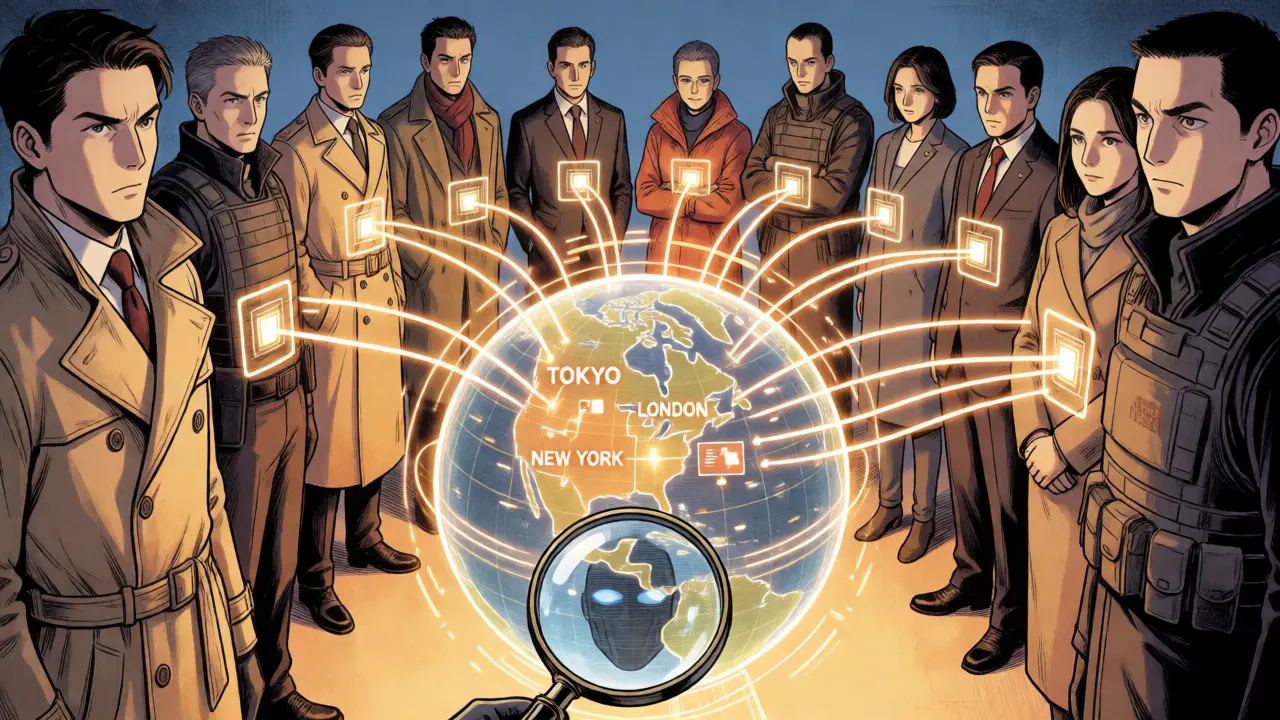
Their first major joint statement in October 2025 called North Korea’s cyber operations a "sophisticated global criminal enterprise." This language matters. It shifts the narrative from viewing these hacks as isolated incidents to recognizing them as organized, state-directed economic warfare. The MSMT doesn't just watch; they coordinate intelligence sharing between financial units in these eleven countries. This means if a wallet address linked to the Lazarus Group pops up in Tokyo, London gets an alert within minutes, not weeks.
How the Heists Work: From Hack to Laundering
So, how do they actually steal billions? It usually starts with social engineering or technical exploits. In the ByBit case, hackers compromised a multi-signature approval system during a scheduled wallet transfer. Once the coins are stolen, the real work begins: laundering. You can’t just dump $1.5 billion into a bank account. The money needs to be cleaned.
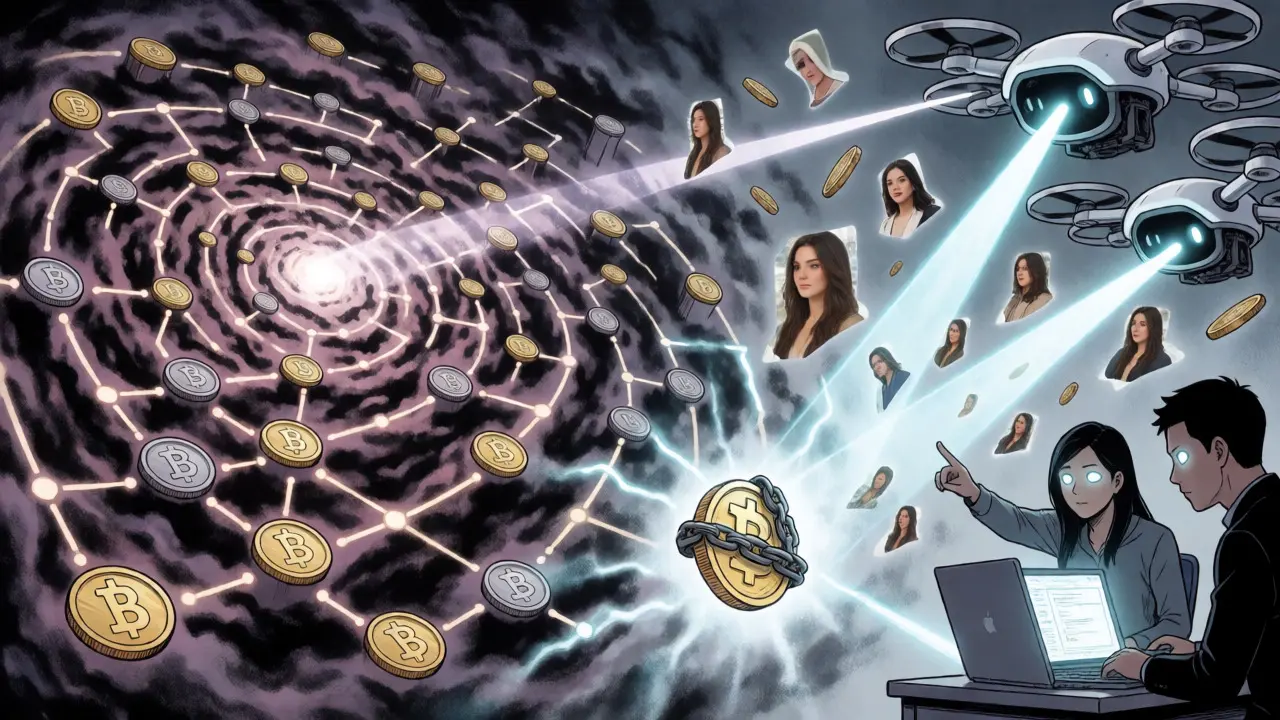
North Korean actors use a mix of decentralized exchanges, cross-chain swaps, and privacy-enhancing technologies to obscure the trail. They rotate through dozens of wallet clustering techniques-reportedly 17 different methods in early 2025 alone-to confuse trackers. They also increasingly rely on AI-generated content to create convincing fake personas. These aren't just coders; they are using generative AI to craft emails and messages that look human, bypassing traditional security checks at tech firms.
Another sneaky tactic involves IT worker infiltration. Thousands of North Koreans have been hired by Western companies under fake identities. While they code software, they also conduct espionage, stealing military technology data while generating revenue for the regime. This dual-purpose strategy makes them harder to spot because their income looks legitimate on paper.
The Role of Blockchain Analytics Firms
Who catches these thieves? Private sector analytics firms play a huge role. Companies like Chainalysis, Elliptic, and TRM Labs provide the tools governments use to trace transactions. Without them, law enforcement would be flying blind. These firms combine blockchain tracing with intelligence integration to attribute attacks to specific groups.
| Organization | Primary Function | Notable Contribution |
|---|---|---|
| Chainalysis | Blockchain Forensics | Documented $2.17B in thefts in H1 2025 |
| Elliptic | Risk Management & Attribution | Analyzed the $1.5B ByBit hack mechanics |
| TRM Labs | Crypto Compliance | Identified 35% of global thefts as DPRK-linked in 2024 |
| OFAC | Sanctions Enforcement | Released 'Red Flags' bulletin for cyber activity |
These firms don't work in isolation. They collaborate with government agencies. For example, a recent success involved freezing $237 million from the LND.fi hack within 72 hours. This rapid response was possible because Chainalysis, Elliptic, and financial intelligence units from five MSMT nations shared data instantly. But let’s be honest: recovery rates remain low, hovering around 12.3%. Why? Because once money hits certain privacy coins or decentralized pools, it becomes incredibly hard to freeze.
Regulatory Shifts and New Rules
Governments are reacting with stricter rules. In April 2025, the US implemented Executive Order 14155, requiring enhanced due diligence for crypto transactions over $10,000. Meanwhile, the European Union is rolling out MiCA II regulations, set to take full effect in January 2026. These laws aim to force exchanges to know exactly who is behind every transaction.
But compliance costs money. Smaller platforms struggle with fees estimated at $1.2 million annually just to meet these standards. Big players like Coinbase and Binance can absorb these costs, but smaller exchanges often lag behind. This creates a loophole: hackers target less regulated platforms where security protocols are weaker. It’s a cat-and-mouse game where regulation moves slower than innovation in hacking.
New Zealand, as part of the MSMT, plays a crucial role in this Pacific region monitoring. Our proximity to Asian markets makes us a key node in tracking funds moving between East Asia and global hubs. The local focus is on ensuring our financial institutions adopt the same rigorous standards as their larger counterparts.
Challenges in Enforcement
Despite the progress, significant hurdles remain. Jurisdictional complexities slow down asset recovery. If stolen funds move through a server in Singapore, then a bank in Switzerland, and finally a casino in Macau, coordinating a freeze requires diplomatic finesse. Non-participating nations sometimes inadvertently facilitate these flows because they haven’t adopted MSMT protocols.
There is also the issue of training. Effective participation in this fight requires specialized skills. The MSMT reports that 487 analysts have been trained in DPRK-specific pattern recognition. But becoming proficient takes 6-8 months. There is a steep learning curve combining traditional intelligence analysis with technical blockchain expertise. Not every country has the resources to maintain such a specialized workforce.
Furthermore, North Korea adapts quickly. They use AI to refine social engineering, making phishing emails nearly indistinguishable from genuine corporate communications. They also deepen ties with Russia, complicating international pressure. When two sanctioned entities cooperate, finding weak links in their financial chains becomes harder for outsiders.
What This Means for You
If you hold cryptocurrency, this isn't just abstract news. It affects security standards everywhere. Exchanges are tightening withdrawal limits and requiring more verification steps. You might see delays when moving large amounts of money. These friction points are the price of increased security.
Investors should pay attention to which exchanges comply with MSMT recommendations. Platforms that share threat intelligence proactively are safer bets. Also, keep an eye on regulatory updates in your jurisdiction. The EU’s MiCA II rules will soon impact anyone trading with European counterparties.
The future holds even more coordination. The MSMT plans to launch a Cryptocurrency Intelligence Fusion Cell in early 2026, funded with $85 million. Modeled after counterterrorism structures, this cell aims to process data in real-time. If successful, it could drastically reduce the time it takes to identify and freeze stolen assets.
Ultimately, the battle against North Korean crypto crime is far from over. The regime views digital currency as a lifeline for its economy. As long as there are vulnerabilities in the global financial system, they will exploit them. The international response is stronger now than ever, but it requires constant vigilance and adaptation from both governments and individuals.
What is the Multilateral Sanctions Monitoring Team (MSMT)?
The MSMT is a coalition of 11 nations established in October 2024 to monitor North Korean sanctions violations. It was formed after the UN Panel of Experts dissolved, aiming to provide faster and more coordinated enforcement against DPRK illicit activities, particularly cryptocurrency theft.
How much cryptocurrency has North Korea stolen?
According to Chainalysis and Elliptic reports, North Korea stole over $2.17 billion in the first half of 2025 alone. The cumulative known value of DPRK-linked crypto thefts exceeds $6 billion since tracking began, with the $1.5 billion ByBit hack being the largest single incident.
Which group is primarily responsible for these hacks?
The Lazarus Group, operating under the direction of the Reconnaissance General Bureau, is the primary actor. They are a state-sponsored hacking collective known for sophisticated attacks on cryptocurrency exchanges and DeFi protocols.
Why is recovering stolen crypto difficult?
Recovery rates are low (around 12.3%) because hackers use complex laundering techniques. These include cross-chain swaps, decentralized exchanges, and privacy coins like Monero, which obscure the transaction trail and make it hard for authorities to freeze assets quickly.
How does AI affect North Korean crypto crimes?
North Korean actors increasingly use artificial intelligence to enhance social engineering tactics. Generative AI helps create convincing fake identities and communications, allowing them to bypass traditional security protocols and infiltrate organizations more effectively.