You bought a digital image. You paid real money for it. But do you actually own it? And is it the original, or just a high-resolution copy of someone else's work? This isn't a philosophical riddle; it’s the core problem that Non-Fungible Tokens (NFTs) try to solve. Before blockchains existed, proving you owned a unique digital file was nearly impossible because files are easily copied. An NFT changes this by creating a permanent, public receipt on a blockchain. It tells the world two things: who holds the key to the asset, and where the asset came from.
But here’s the catch most people miss: an NFT proves you control a token, not necessarily that you hold the copyright or even have access to the actual image file forever. Understanding the gap between "owning the token" and "verifying the art" is crucial before you spend your crypto. Let’s break down exactly how this mechanism works, where it fails, and what you need to check before buying.
The Technical Backbone: How Blockchain Records Existence
To understand why NFTs matter, you first need to grasp what makes them different from Bitcoin. Bitcoin is fungible-my one Bitcoin is identical to yours. You can swap them without any difference in value or function. An NFT is a unique cryptographic asset recorded on a blockchain that represents ownership of specific digital or physical items. Each token has distinct metadata that makes it non-interchangeable.
This uniqueness is enforced by technical standards, primarily the ERC-721 standard, which defines the minimum interface for non-fungible tokens on Ethereum. Proposed in 2018, this standard ensures every token has a unique ID and a record of its owner. When you buy an NFT, you aren’t downloading the JPEG into your wallet. Instead, you’re updating a ledger entry. The blockchain records that Token #12345 now belongs to Wallet Address X. Because the blockchain is immutable, no one can secretly change that history. If you sell it to Wallet Y, the previous transaction remains visible forever. This transparency is the bedrock of trust in the system.
However, the blockchain itself doesn’t store the heavy media files like videos or high-res images because doing so would be prohibitively expensive. Instead, the token stores a link-a hash-that points to where the data lives. This separation between the on-chain token and the off-chain asset is where most confusion-and scams-begin.
Ownership vs. Authenticity: Two Different Problems
People often use these terms interchangeably, but they are distinct concepts with different verification methods. Confusing them leads to bad investments.
Proof of Ownership answers the question: "Who controls this asset?" This is verified through cryptography. If you hold the private keys to the wallet holding the NFT, you own it. You can transfer it, sell it, or burn it. No central authority can stop you. This part of the system works flawlessly. If you send an NFT to the wrong address, it’s gone unless the recipient sends it back. The blockchain doesn’t care about intent; it only cares about signatures.
Proof of Authenticity answers the question: "Is this the genuine article created by the claimed artist?" This is trickier. The blockchain proves that Creator A minted Token B. But if Creator A minted five identical copies and sold them as one-of-a-kind, the blockchain still shows five valid tokens. Authenticity relies on metadata integrity and creator reputation. As noted by blockchain analysts, you can cryptographically prove ownership of an NFT, but without external verification, you cannot be certain the NFT represents the genuine asset intended by the creator.
| Feature | Proof of Ownership | Proof of Authenticity |
|---|---|---|
| Core Question | Who holds the rights? | Is it the original/genuine? |
| Verification Method | Private Key Control | Metadata & Creator Signature |
| Blockchain Role | Records current holder | Records creation event |
| Vulnerability | Losing private keys | Fake metadata or impersonation |
| Legal Status | Strong technical proof | Weak legal enforceability |
The Metadata Trap: Where Things Break Down
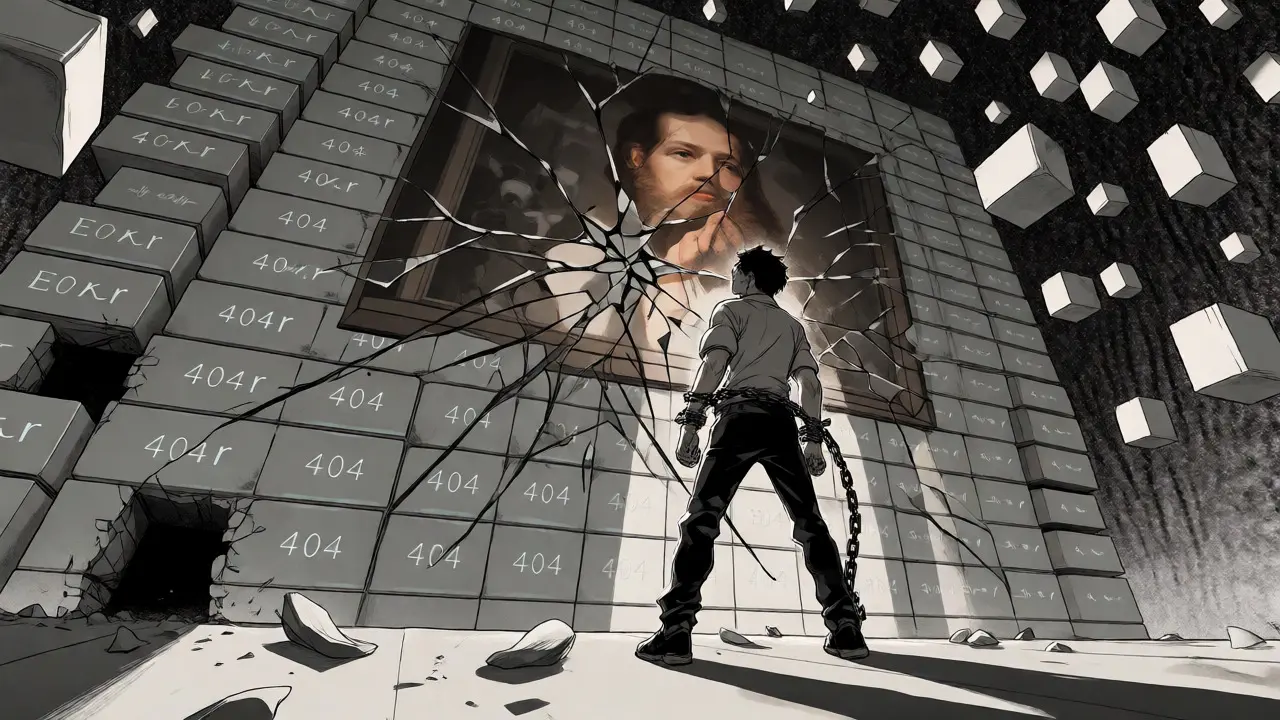
Here is a scenario that keeps collectors up at night. You buy a rare pixel-art avatar. The blockchain says you own Token #999. But when you click the link to view the image, you get a "404 Not Found" error. What happened?
This is the "broken metadata" problem. Since blockchains are small and slow, most NFT projects store their images and descriptions on centralized servers (like Amazon Web Services) or decentralized networks like IPFS (InterPlanetary File System). If the project team stops paying for their AWS bill, the server goes down. Your token still exists on the blockchain, and you still "own" it, but the visual representation is gone. You’re left holding a cryptographic receipt for nothing.
A study by the Stanford Blockchain Research Center found that 22% of examined NFTs had inaccessible off-chain assets due to such failures. To mitigate this, savvy buyers look for projects using permanent storage solutions. Look for links starting with `ipfs://` rather than `http://`. Better yet, check if the project uses pinning services like Filecoin or Arweave, which ensure data persists even if the original creator disappears. Always verify that the metadata hash matches the content you see. If the hash changes, the underlying image might have been swapped out after you bought it.
Real-World Limitations: Legal Recognition and Scams
Does owning an NFT give you legal title to the artwork? In most jurisdictions, no. While the World Economic Forum acknowledges the potential for tokenizing real-world assets, the legal framework lags behind the tech. Buying an NFT typically grants you a license to display the image for personal use, not commercial rights or copyright ownership. Unless the smart contract explicitly states otherwise, you don’t own the intellectual property.
Scammers exploit this ambiguity. A common tactic is the "rug pull," where creators hype a project, sell out the supply, and then vanish. DappRadar reported over 1,200 such incidents in early 2024 alone, resulting in tens of millions in losses. Another issue is counterfeit listings. On major marketplaces like OpenSea, anyone can list a copy of a famous NFT. The marketplace might show it as authentic based on the contract address, but if the seller didn’t verify their identity properly, you might be buying a fake listing of a real token.
Always check the contract address on a block explorer like Etherscan. Verify that the number of owners matches the total supply. If a collection claims to have 10,000 unique items but only 50 wallets hold them, something is fishy. Also, look for creator verification badges on platforms, though remember these are platform-specific and don’t guarantee global authenticity.
Tools and Steps for Verifying Your NFT
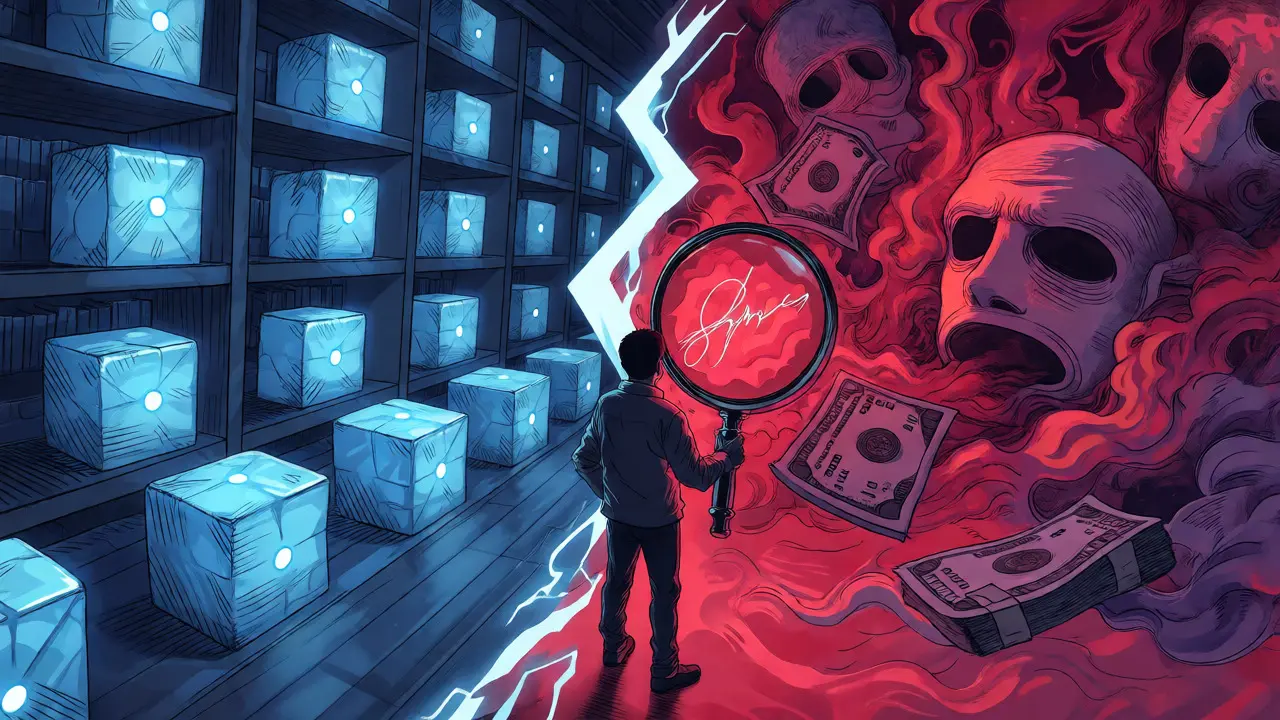
You don’t need to be a coder to verify ownership and authenticity. Here is a practical checklist for any buyer:
- Check the Contract Address: Copy the token’s contract address and paste it into a blockchain explorer (e.g., Etherscan for Ethereum, Solscan for Solana). Ensure the contract is verified and has a reasonable number of transactions.
- Inspect the Metadata Link: Click the IPFS or HTTP link provided in the token details. Does the image load? Is it hosted on a reputable service? If it’s a temporary URL, ask yourself: will this link work in five years?
- Review the Creation Date: Check when the token was minted. Was it minted long before the artist announced the drop? That could indicate a pre-mint or a scam attempt to front-run legitimate sales.
- Analyze Holder Distribution: Use tools like Nansen or Dune Analytics to see who holds the top 10 wallets. If insiders hold 80% of the supply, the price may be artificially inflated.
- Verify the Creator’s Signature: Some advanced projects allow creators to sign messages confirming authenticity. While not universal, checking for these verifiable credentials adds a layer of security.
For beginners, setting up a secure wallet like MetaMask takes about 15-20 hours of learning if you’re new to crypto. Once set up, always double-check addresses when sending funds. One typo means your money is gone forever.
The Future: Bridging Tech and Law
The technology is improving. New standards like ISO/IEC 30173:2024 aim to standardize metadata structures, making authenticity checks easier across different platforms. Regulatory bodies are also catching up. The EU’s MiCA framework now requires stricter KYC procedures for high-value NFT trades, adding a layer of identity verification that complements the cryptographic proof.
We are moving toward multi-layer verification systems. Imagine an NFT that combines blockchain ownership with biometric authentication and legally binding smart contracts. Forrester predicts that by 2027, a significant portion of high-value digital assets will use these hybrid models. Until then, treat NFTs as what they are: powerful tools for tracking provenance, but not magic wands for legal protection.
Does owning an NFT mean I own the copyright?
Not automatically. Most NFTs grant a license to display the asset personally, but copyright usually remains with the creator. Always read the specific terms of service for the project to understand what rights are transferred.
What happens if the website hosting my NFT image shuts down?
If the image is stored on a centralized server, the image may disappear, leaving you with a token that links to a broken page. The token itself remains on the blockchain, but its visual utility is lost. Using decentralized storage like IPFS with pinning services helps prevent this.
Can someone steal my NFT?
Yes, if they gain access to your private keys or approve a malicious smart contract. Unlike banks, there is no customer support to reverse transactions. Securing your wallet and being cautious about signing unknown contracts is essential.
How do I verify if an NFT is authentic?
Check the contract address on a block explorer to ensure it matches the official project. Verify the creator’s social media handles linked to the contract. Look for consistent metadata hashes and avoid listings where the price is significantly lower than the floor price without reason.
Are NFTs legally recognized as proof of ownership?
Legally, recognition varies by jurisdiction. While blockchain provides strong technical proof of possession, it does not automatically confer legal title in all regions. Some places, like Wyoming, have laws recognizing digital assets, but globally, legal frameworks are still developing.