You see an ad for BTCNEXT EXCHANGE promising high returns and low fees. It looks professional. The website is sleek. But before you wire your hard-earned Bitcoin there, you need to know what you are actually dealing with. Most reviews online are vague because the platform itself is elusive. That lack of clear data is often the first red flag in the crypto world.
The Mystery of BTCNEXT
Here is the problem with BTCNEXT EXCHANGE: it does not appear in major regulatory databases or established crypto tracking sites like CoinMarketCap or CoinGecko as a verified top-tier entity. When a search for specific operational details-like founding year, headquarters location, or license numbers-comes up empty, you have to be skeptical. Established exchanges like Coinbase or Binance have thousands of pages of documentation. BTCNEXT has very little public footprint. This obscurity makes it hard to trust with significant capital.
Why does this matter? Because in crypto, anonymity is often a feature for users, but a bug for platforms. If you cannot find out who runs BTCNEXT, where they are registered, or how long they have been operating, you are flying blind. You might be sending money to a shell company that could vanish overnight. Without transparent ownership, accountability is nearly impossible to enforce if things go wrong.
Security and Regulatory Status
Let’s talk about safety. A legitimate crypto exchange must comply with anti-money laundering (AML) laws and know-your-customer (KYC) regulations. Major jurisdictions require exchanges to register with financial authorities. For example, in the US, exchanges often need state-by-state money transmitter licenses. In Europe, MiCA regulations are tightening the net. Does BTCNEXT show proof of these registrations?
Currently, there is no widely recognized evidence that BTCNEXT holds major regulatory approvals from bodies like the SEC, FCA, or ASIC. Many newer or smaller platforms operate in gray areas, claiming to be "regulated" without specifying by whom. If their terms of service do not explicitly name a regulator and a license number, treat that claim with extreme caution. Unregulated exchanges hold your private keys, meaning they can freeze withdrawals or disappear without legal recourse for you.
Security protocols are another critical area. Reputable exchanges use cold storage for the majority of user funds and two-factor authentication (2FA) for account access. They also undergo regular third-party audits to prove they actually hold the assets they claim to. Has BTCNEXT published a recent Proof of Reserves report? If not, you are trusting them on faith alone. Faith is not a security protocol.
Fees and Trading Conditions
Even if we assume BTCNEXT is legit, are the costs worth it? Newer exchanges often lure users with zero-fee trading or extremely low spreads. But watch out for hidden costs. Withdrawal fees can be surprisingly high, eating into your profits when you try to move assets off the platform. Spread markups-the difference between the buy and sell price-can also quietly drain your balance during volatile markets.
| Feature | BTCNEXT (Estimated) | Top-Tier Exchanges (e.g., Kraken) |
|---|---|---|
| Maker/Taker Fees | Often advertised as 0% - 0.1% | 0.16% - 0.26% (Volume dependent) |
| Withdrawal Fees | Variable, often higher than network average | Dynamic, close to network cost |
| Deposit Methods | Limited (Crypto only?) | Fiat (Bank transfer, Card) + Crypto |
| Liquidity | Low to Medium | High |
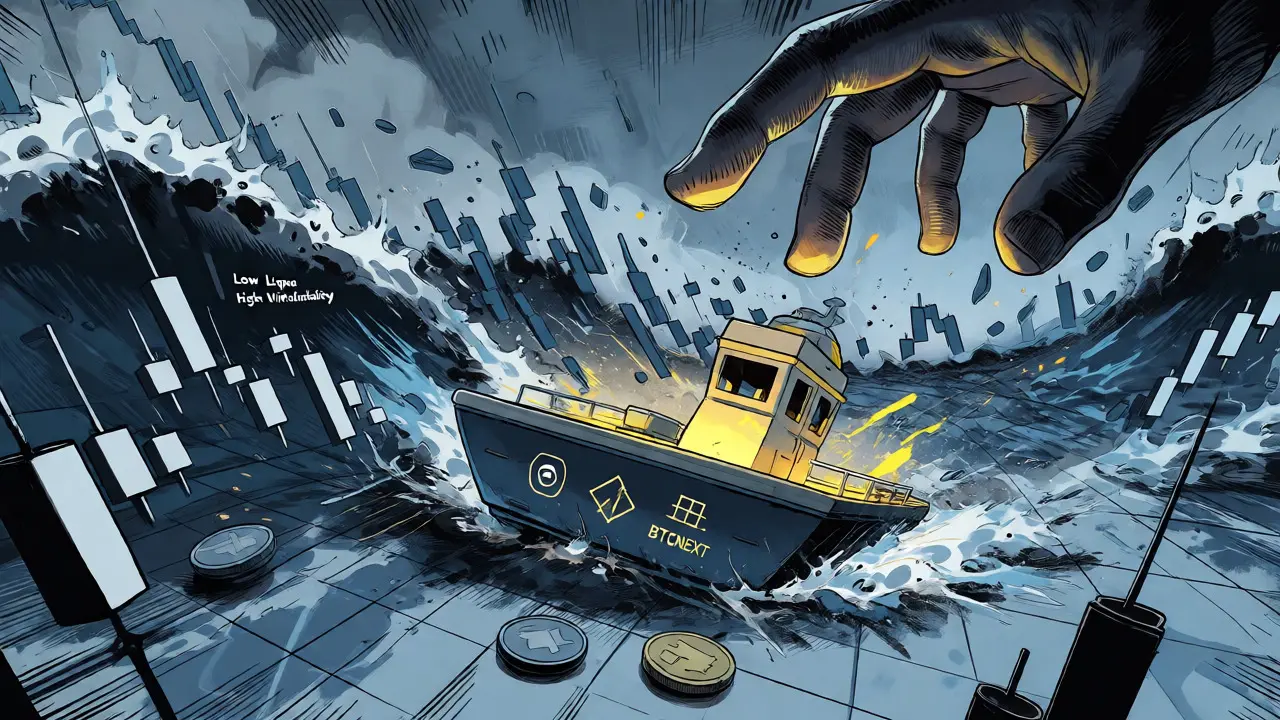
Notice the liquidity column. Low liquidity means large orders can move the market price against you. If BTCNEXT has thin order books, selling a large amount of Bitcoin might result in slippage, where you get less than the current market rate. Always test with small amounts first to see how their engine handles trades.
User Experience and Support
A slick interface doesn’t mean good support. Many scam-like platforms look great but have terrible customer service. Try contacting BTCNEXT support before you deposit anything. Send a simple question via email or live chat. How fast do they respond? Do they give a generic bot answer, or do they address your specific concern? Slow response times are common in smaller exchanges, but unresponsive support is a warning sign.
Check community forums like Reddit or Trustpilot. Look for patterns in complaints. Are users reporting delayed withdrawals? Are they unable to verify their accounts after depositing? Specific anecdotes carry more weight than general star ratings. If you see multiple reports of "withdrawal pending for weeks," that is a serious issue. One unhappy customer is noise; ten unhappy customers with similar stories are a signal.
Red Flags Checklist
Before you hit that deposit button, run through this quick checklist. If you tick more than one box, walk away.
- No Verifiable License: No clear link to a government registry showing their license status.
- Anonymous Team: You cannot find the founders or key executives on LinkedIn or news articles.
- Unrealistic Promises: Guaranteed returns or "too good to be true" interest rates on deposits.
- Poor Online Presence: Website launched recently with no history; social media accounts are new or inactive.
- Forced Referrals: Pressure to invite friends to unlock features or withdraw funds.
This checklist isn't meant to scare you, but to protect you. The crypto space is rife with projects that launch, take deposits, and then cease operations. BTCNEXT fits the profile of many such entities due to its lack of digital footprint. Don't let the fear of missing out (FOMO) override your due diligence.

Alternatives to Consider
If BTCNEXT feels too risky, what should you use instead? Stick to exchanges with proven track records. For beginners, platforms like Coinbase offer ease of use and strong regulatory compliance, though at higher fees. For active traders, Kraken or Binance provide deep liquidity and advanced tools. These platforms have survived multiple market cycles, proving their resilience.
Consider your own needs. Do you need fiat on-ramps? Do you trade altcoins frequently? Do you care about staking rewards? Match those needs with a reputable provider rather than gambling on an unknown entity like BTCNEXT. The peace of mind knowing your assets are insured or segregated in cold storage is worth the slight fee increase.
Final Verdict
Is BTCNEXT a scam? We cannot say definitively without more concrete evidence, but it carries a high risk score due to opacity. It lacks the transparency expected of modern financial institutions. Until BTCNEXT provides verifiable proof of regulation, team identity, and financial health, it remains a speculative option. For most investors, the risk-reward ratio does not justify using BTCNEXT over established alternatives. Keep your main portfolio in trusted venues, and only experiment with small amounts here if you must.
Is BTCNEXT Exchange regulated?
There is currently no widely recognized evidence that BTCNEXT Exchange holds major regulatory licenses from top-tier financial authorities like the SEC or FCA. Lack of public registration details suggests it may operate in a regulatory gray area or be unregulated.
Can I trust BTCNEXT with my funds?
Trust should be cautious. Due to limited information on its founding team, security audits, and regulatory status, BTCNEXT poses a higher risk than established exchanges. Users should start with small deposits and test withdrawal processes immediately.
What are the withdrawal limits on BTCNEXT?
Specific withdrawal limits are not publicly well-documented. Unregulated exchanges often impose arbitrary limits or delays. Check the Terms of Service carefully, as these can change without notice and may restrict accessing your funds during high volatility.
Does BTCNEXT support fiat currency deposits?
Information on fiat support is scarce. Many smaller or newer exchanges only accept cryptocurrency deposits. If BTCNEXT does not support bank transfers or credit cards, moving money in and out becomes more complex and costly due to conversion fees.
How do I contact BTCNEXT support?
Support channels typically include email or live chat. However, response times vary. Test their responsiveness before depositing. Poor support is a common complaint among users of lesser-known exchanges, potentially leading to unresolved withdrawal issues.