

When you hold a governance token, you’re not just owning a piece of crypto-you’re holding a vote. In decentralized finance (DeFi) and DAOs, these tokens give you real power to shape how a protocol runs. No middleman. No CEO making decisions behind closed doors. Just you, your tokens, and a blockchain-based vote that actually matters.
What Governance Tokens Actually Do
Governance tokens are digital voting chips. They’re not meant to be spent like regular crypto for buying coffee or paying gas fees. Instead, they let you weigh in on critical decisions: whether to change transaction fees, how to spend the protocol’s treasury, or even if a new feature should be built. Think of them like shares in a company, but instead of a boardroom, the voting happens on-chain, in full public view.
Take Uniswap, for example. Its UNI token holders voted in 2022 to allocate $160 million from the protocol’s treasury to fund community growth initiatives. That’s not a rumor. That’s a recorded on-chain vote. No approval needed from a venture capital firm. Just token holders deciding what’s best for the network.
Why Holding Them Matters
Holding governance tokens gives you four clear advantages:
- You help steer the project’s future. Want lower fees? Better rewards? A new partnership? You can propose it or vote for it. Governance tokens turn passive users into active participants. If you’re using a DeFi protocol daily, why shouldn’t you have a say in how it evolves?
- You earn more than just price appreciation. Many protocols reward voters with additional tokens or a share of protocol revenue. Some even let you stake your governance tokens to earn yield. It’s not just about holding-it’s about participating.
- You align your incentives with the protocol’s success. If you own governance tokens, your financial interest is tied to the protocol’s health. A better, more widely used platform means your tokens increase in value. That’s a powerful motivator to stay engaged, report bugs, and even help onboard new users.
- You get transparency. Every proposal, vote, and outcome is recorded on the blockchain. No hidden agendas. No backroom deals. You can check the history yourself. That level of openness is rare in traditional finance.
How It Compares to Traditional Systems
In a regular company, shareholders vote on big decisions-but only if they own enough stock. And even then, they rarely get detailed information. Governance tokens flip that model. Anyone with even a small amount of tokens can vote. No minimums. No gatekeepers.
Compare that to a bank deciding to raise fees or change its terms. You can’t vote. You can’t propose alternatives. You just accept it or leave. With governance tokens, the rules aren’t set by a corporation-they’re set by the people who use the service.
Real Examples You Can Check
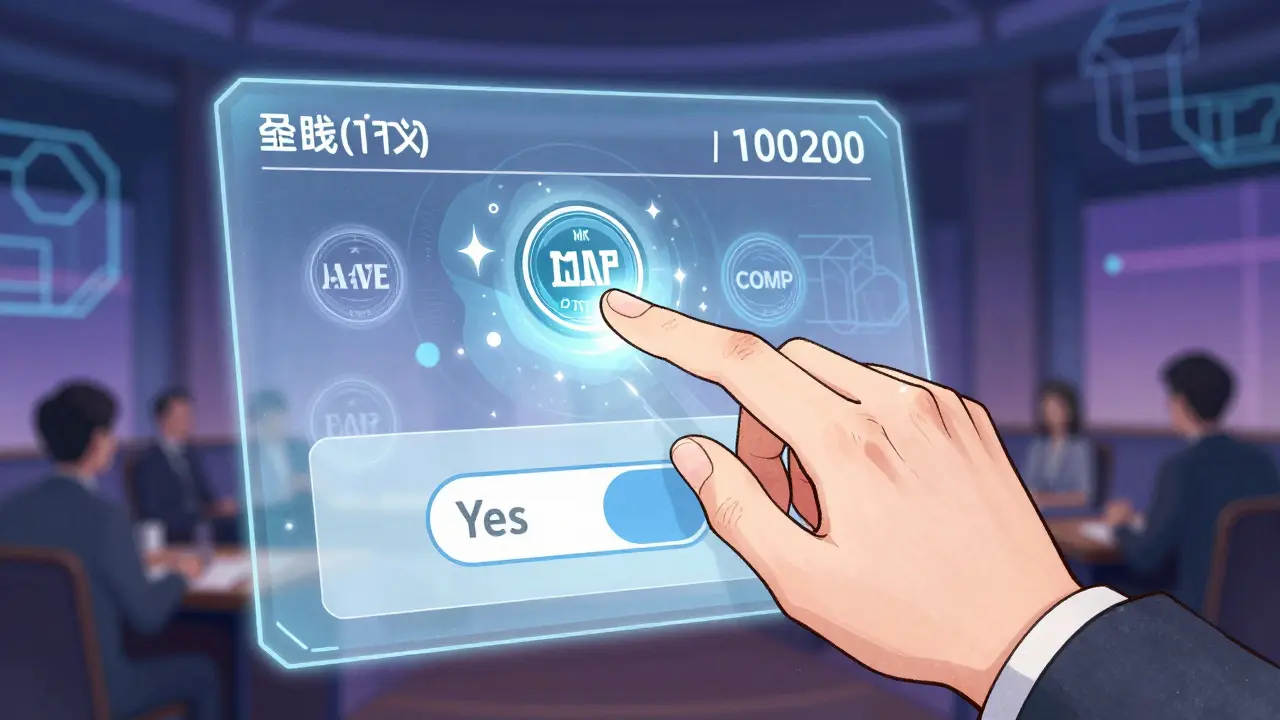
- MakerDAO (MKR): The first major governance token. MKR holders vote on everything from collateral types to interest rates. They even voted to bail out a failing collateral system in 2020-saving the entire protocol.
- Aave (AAVE): Token holders approved changes to interest rate models and voted on which assets to add to the lending pool. They also voted to distribute $100 million in AAVE to users who had been active on the platform.
- Compound (COMP): Introduced time-locked voting. To vote, you need to hold your tokens for at least 7 days. This discourages short-term speculators from swinging votes and encourages long-term commitment.
These aren’t theoretical experiments. These are live systems running with real money and real decisions. And they’re all governed by the people who use them.
It’s Not All Perfect
Yes, governance tokens sound ideal-but they’re not magic. The biggest issue? Low participation. In many DAOs, fewer than 5% of token holders bother to vote. That means a tiny group ends up controlling everything. If 10 people hold 80% of the tokens, they can pass any proposal, no matter how unpopular.
Another problem: complexity. Proposals often read like legal contracts written by engineers. If you don’t understand terms like “liquidity mining” or “oracle price feeds,” it’s easy to vote blindly. Some platforms now offer simplified summaries, but you still need to do your homework.
And then there’s the gas fee hurdle. Submitting a vote on Ethereum can cost $5-$20. For someone holding only $500 worth of tokens, that’s a big barrier. Some newer chains like Polygon or Arbitrum have slashed these costs, making participation more accessible.

How to Get Started
Want to start using your governance tokens? Here’s how:
- Hold the token. Buy or earn governance tokens from the protocol you use regularly. Don’t just hold them in an exchange wallet-move them to your own wallet (like MetaMask or Ledger).
- Find the governance portal. Most protocols have a simple dashboard. Uniswap’s is at gov.uniswap.org. Aave’s is at governance.aave.com. These sites walk you through proposals step by step.
- Read the summary. Skip the dense technical docs. Look for the “Executive Summary” or “What This Means for You” section. Many DAOs now include plain-language explanations.
- Vote. Click the button. It’s that simple. Even if you’re unsure, voting “no” is better than not voting at all. Your voice matters.
What’s Next for Governance Tokens
The system isn’t static. New ideas are already being tested:
- Delegated voting: You can assign your vote to someone else-like a trusted community member or expert-who votes on your behalf. This helps if you don’t have time to research every proposal.
- Reputation-based weighting: Instead of just counting tokens, systems might give more weight to users who’ve been active for years or contributed code, liquidity, or support. This fights the “rich get richer” problem.
- Integration with real-world systems: Some projects are exploring how governance tokens can be used for community grants, nonprofit funding, or even local governance-like voting on city infrastructure projects using blockchain.
The goal isn’t to replace democracy. It’s to make it work better in digital spaces where trust can’t be enforced by law-but can be enforced by code.
Final Thought
Holding a governance token isn’t about getting rich overnight. It’s about claiming ownership. If you’re using a DeFi protocol, you’re already part of its ecosystem. Why not make sure it evolves the way you want? Governance tokens are the first real tool that lets users-not investors, not CEOs-control the systems they rely on. That’s not just innovation. That’s power.
What are governance tokens?
Governance tokens are cryptocurrency assets that give holders the right to vote on key decisions for a blockchain protocol or DAO. These decisions can include changing fees, allocating treasury funds, or approving new features. Unlike utility tokens, they don’t grant access to services-they grant influence over the system’s future.
Can I make money just by holding governance tokens?
You can, but not directly. Holding tokens alone doesn’t pay you. However, many protocols reward voters with additional tokens, share protocol revenue, or offer staking yields. Also, if your vote helps improve the protocol, the token’s price may rise over time. So while you won’t get paid just for holding, active participation can lead to financial upside.
Do I need a lot of tokens to vote?
No-you don’t need a lot to vote. Most protocols let anyone with even one token cast a vote. But if you want to submit a proposal, you usually need to hold a minimum amount-often several thousand dollars’ worth. This prevents spam and ensures serious proposals get attention.
Are governance tokens safe?
The tokens themselves are as safe as any crypto asset-but the voting process carries risks. Malicious actors could try to manipulate votes, or poorly written proposals might harm the protocol. Always research proposals carefully. Never vote based on hype. Use trusted sources like the official governance portal, and check community discussions before voting.
What happens if I don’t vote?
If you don’t vote, someone else will. In most DAOs, less than 5% of token holders participate. That means the decisions are made by a tiny fraction of the community-often large holders or professional voters. By not voting, you’re giving up your influence. Even a single vote adds to the collective voice.





John Fuller
February 25, 2026 AT 16:22Dana Sikand
February 25, 2026 AT 20:55It's wild how something so simple-clicking a button-can actually matter.
Lucy Simmonds
February 25, 2026 AT 23:21THIS IS A SCAM.
THEY SAY 'DECENTRALIZED' BUT IT'S JUST THE SAME OLD BOSS WITH A DIFFERENT WALLET.
YOU THINK YOU'RE POWERFUL?? YOU'RE A SHEEP WITH A TOKEN.
Maggie House
February 26, 2026 AT 23:05It felt scary but also kinda cool??
Like I didn't understand half the words but I read the summary and clicked YES.
Now I'm hooked. What's the next one I should try??
Cameron Pearce Macfarlane
February 27, 2026 AT 15:0995% of people don't care. 5% control everything.
It's not democracy. It's plutocracy with a blockchain sticker.
Fiona Monroe
February 28, 2026 AT 20:01Furthermore, the assumption that low participation rates reflect apathy is reductive; in many instances, users are systematically disenfranchised by gas fees, unintelligible proposal syntax, and lack of accessible educational resources.
The claim that 'your voice matters' is a rhetorical flourish that obscures structural exclusion. A single vote is statistically negligible when 80% of voting power resides in three wallets.
True decentralization requires equitable access-not merely symbolic participation.
Danny Kim
February 28, 2026 AT 23:07That’s not empowerment. That’s a magic trick where you’re the rabbit.
Elizabeth Smith
March 2, 2026 AT 21:08You're not a participant-you're a pawn in a game designed for the rich to get richer.
And you're proud of it?
How many people do you think even know what an oracle price feed is?
You're not voting-you're being manipulated by jargon.
Cathy Sunshine
March 4, 2026 AT 20:29That was a PR stunt.
The real power? The devs still control the multisig.
The votes? Just theater.
It’s all smoke and mirrors.
And you’re buying it.
Pathetic.
Dee Resin
March 6, 2026 AT 00:40It passed.
Two weeks later, the team changed the rules anyway.
So yeah.
My vote mattered.
Like a paper airplane in a hurricane.
Richard Cooper
March 7, 2026 AT 15:10Then I read the proposal.
It was 17 pages.
I gave up.
Now I just hold.
And wait for the moon.
Jeff French
March 8, 2026 AT 16:35Even if 5% vote, that’s 5% more than traditional finance ever allowed.
And delegation? That’s the next layer-letting experts vote for you.
It’s not perfect. But it’s a prototype.
And prototypes evolve.
Tanvi Atal
March 9, 2026 AT 04:14Because it's a waste of time.
And gas fees? In USD? That's a tax on poor people.
This isn't empowerment.
This is a scam with a whitepaper.
Shannon Black
March 9, 2026 AT 19:42While blockchain governance offers novel mechanisms, its current implementation often lacks the educational infrastructure necessary for meaningful engagement.
True democratic participation requires not only access, but also clarity, context, and continuity.