You want to move money on the blockchain without worrying about price swings or regulatory gray areas. If you are operating in Europe, EURØP is a euro-denominated stablecoin fully backed 1:1 with euro reserves and compliant with the EU's Markets in Crypto-Assets (MiCA) regulation. Also known as EUROP, it was launched by Schuman Financial, a French fintech company.
This isn't just another token hoping for the best. It is one of the first electronic money tokens (EMTs) to get the green light from the ACPR, the financial supervisory arm of Banque de France. That means if you are looking for a digital euro that plays nice with European laws, this is the one to watch.
How EURØP Works Under the Hood
Let’s break down what makes this coin tick. At its core, EURØP is a stablecoin. You know the drill: it aims to keep a steady value. Specifically, one EURØP equals one Euro. But unlike some older stablecoins that might hold a mix of cash and corporate bonds, EURØP keeps things simple and safe.
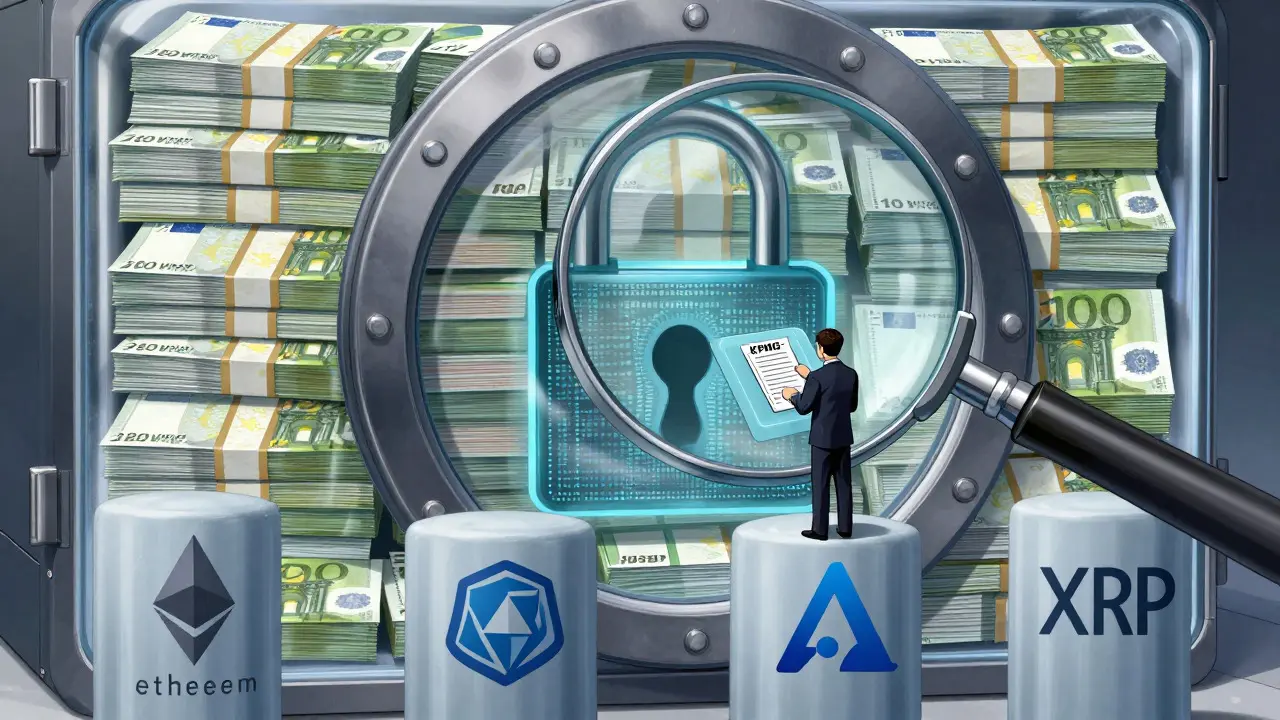
The reserves are held at major European banks like Société Générale. These aren't just sitting in a random account; they are in segregated accounts. This separation ensures that your coins are backed by actual euros, not someone else's debt. Plus, KPMG audits these reserves regularly. In fact, KPMG provides monthly attestations, which is more frequent than the quarterly reports many competitors publish.
Technically, you can find EURØP on several blockchains. It operates as an ERC-20 token on Ethereum, Polygon, and Avalanche. It also uses the XRPL-Token standard on the XRP Ledger. As of mid-2024, the largest supply sits on Avalanche C-Chain, followed by Ethereum and Polygon. This multi-chain approach means you aren't stuck paying high gas fees on Ethereum if you don't want to. You can choose the network that fits your budget and speed needs.
Why Regulation Matters Here
Here is the big differentiator: MiCA compliance. The Markets in Crypto-Assets regulation is the EU's new rulebook for digital assets. Before MiCA, stablecoins operated in a bit of a wild west. Now, they have clear rules.
EURØP is issued by a licensed Electronic Money Institution (EMI). This gives it a level of legal certainty that other euro stablecoins, like EURS or eurt, don't quite have. Those competitors often rely on regulators in Malta or other jurisdictions. With EURØP, you have direct oversight from Banque de France. Simon Peters, a crypto analyst at eToro, noted that EURØP creates a blueprint for regulated stablecoins in Europe. For institutional investors who need to sleep well at night, this regulatory backing is huge. It reduces the risk of sudden bans or legal hurdles.
EURØP vs. Other Euro Stablecoins
You might be wondering how it stacks up against the giants. Let’s look at the numbers and features side-by-side.
| Feature | EURØP (EUROP) | EURS (Stasis) | eurt (Tether) |
|---|---|---|---|
| Regulatory Oversight | ACPR (Banque de France) | Malta FSA | TMS Group / Various |
| MiCA Compliance | Yes (First mover) | In transition | In transition |
| Reserve Auditor | KPMG (Monthly) | Various (Quarterly) | BDO (Quarterly) |
| Market Cap (Approx.) | $7.76M - $9.71M | ~$1.2 Billion | ~$300 Million |
| Primary Use Case | EU Institutional & Payments | General DeFi | Global Trading |
As you can see, EURS has a much larger market cap. That means it has more liquidity. If you try to swap a massive amount of EURØP on a decentralized exchange, you might face slippage. One user reported 1.2% slippage when swapping 50,000 EUROP on Uniswap. For small to medium transactions, this is negligible. For whale-sized moves, you might need to use a centralized exchange or work directly with Schuman Financial.

Who Should Use EURØP?
This coin isn't trying to replace Bitcoin or even USDC everywhere. It has a specific job. It shines in cross-border payments within the Eurozone. Traditional banking systems can take days and charge hefty fees for international transfers. EURØP settles in minutes with zero fees for minting and redemption through Schuman’s portal.
If you are a business sending invoices across Europe, this is a game-changer. You avoid currency conversion risks because everything stays in Euros. You also avoid the volatility of crypto trading. For retail users, it offers a way to participate in DeFi applications that require euro stability. However, keep in mind that most DeFi protocols still prefer dollar-backed coins like USDC. The total value locked for EURØP in DeFi is around $2.3 million, compared to billions for USDC. So, while you *can* use it there, the ecosystem is smaller.
Pros and Cons: The Real Talk
Every tool has its strengths and weaknesses. Here is what you need to weigh before diving in.
- Strong Regulatory Backing: Direct supervision by Banque de France offers superior legal security.
- Transparent Reserves: Monthly audits by KPMG build trust.
- Multi-Chain Support: Accessible on Ethereum, Polygon, Avalanche, and XRP Ledger.
- Limited Liquidity: Fewer exchanges list it, and trading volume is lower than major competitors.
- Wallet Support Issues: Only about 12 major wallets support it natively, which can be frustrating for some users.
- Regional Restrictions: Currently available primarily to EU residents due to licensing terms.
User feedback reflects this mix. On Trustpilot, reviews average 4.2 out of 5 stars. People love the compliance and the fast redemption times-some report getting their euros back in 1.5 business days. But critics point out the limited wallet support. If your favorite wallet doesn't support ERC-20 or XRPL standards properly, you might hit a wall.
How to Get Started with EURØP
Getting your hands on some EURØP is straightforward, but there are steps involved. First, you need a compatible wallet. Since it runs on multiple chains, ensure your wallet supports the specific network you plan to use. MetaMask works well for Ethereum, Polygon, and Avalanche. For XRP Ledger, you’ll need a wallet like Xumm or Ledger Live configured for XRPL.
Next, you need to buy it. As of mid-2024, Coinbase Pro handles the majority of the trading volume. Other exchanges may list it, but liquidity is thinner there. Once you have the tokens, you can transfer them to your personal wallet. For institutional users, Schuman Financial offers an API for direct integration, which requires KYC verification and takes about 2-3 business days to set up.
Remember, because this is a regulated instrument, identity verification is likely required at the exchange level. This is part of the MiCA compliance package. It adds a step, but it keeps the system clean and secure.
The Future Outlook
Where is this going? The European stablecoin market is projected to hit €15.7 billion by 2025. MiCA-compliant tokens are expected to grab a huge chunk of that pie. Schuman Financial is already expanding, adding support for Polygon zkEVM to cut transaction fees by over 80%. They are also planning integrations with the European Payments Initiative (EPI) by early 2025.
There is always the shadow of the Digital Euro, the central bank digital currency expected around 2027. Some worry this will kill private stablecoins. However, experts argue that private solutions like EURØP will coexist, offering faster innovation and broader access for businesses and individuals who need flexible, programmable money today, not in three years.
Is EURØP safe to hold?
Yes, EURØP is considered highly safe due to its 1:1 backing with euro reserves held in segregated accounts at major European banks like Société Générale. Additionally, it is regulated by the ACPR under the EU's MiCA framework, providing strong legal protections. Regular monthly audits by KPMG further enhance transparency and trust.
Which blockchains support EURØP?
EURØP is available on four major networks: Ethereum, Polygon, Avalanche, and XRP Ledger. This multi-chain presence allows users to choose the network that best suits their needs for speed and cost efficiency.
How does EURØP differ from USDC?
The main difference is the currency and jurisdiction. USDC is pegged to the US Dollar and regulated in the United States. EURØP is pegged to the Euro and regulated in Europe under MiCA. If you operate primarily in the Eurozone and need compliance with EU laws, EURØP is the better choice. For global DeFi participation, USDC currently has deeper liquidity.
Can I use EURØP for everyday purchases?
While technically possible, adoption for everyday retail purchases is still low. Its primary use case right now is B2B payments, cross-border transfers within Europe, and institutional finance. However, as more payment processors integrate it, this could change rapidly.
Are there fees for minting or redeeming EURØP?
Schuman Financial offers zero-fee fiat on-ramps and off-ramps for minting and redeeming EURØP through their official portal. However, you will still pay network gas fees depending on the blockchain you use (e.g., Ethereum gas fees can vary significantly).
Who issues EURØP?
EURØP is issued by Schuman Financial, a French fintech company that operates as a licensed Electronic Money Institution (EMI) in France.
Is EURØP available outside of Europe?
Currently, EURØP is primarily targeted at EU residents due to its regulatory structure and licensing terms. While the tokens exist on public blockchains and can be held anywhere, full service features like direct redemption may be restricted to those within the European Economic Area.