

On September 8, 2025, the U.S. Treasury Department hit nine crypto-related entities in Myanmar with sweeping sanctions - not because they were hacking banks, but because they were running forced-labor scam compounds that tricked Americans out of over $10 billion in 2024 alone. This wasn’t just another regulatory move. It was a full-scale crackdown on what the government called modern slavery disguised as cryptocurrency investment.
How the Scams Worked
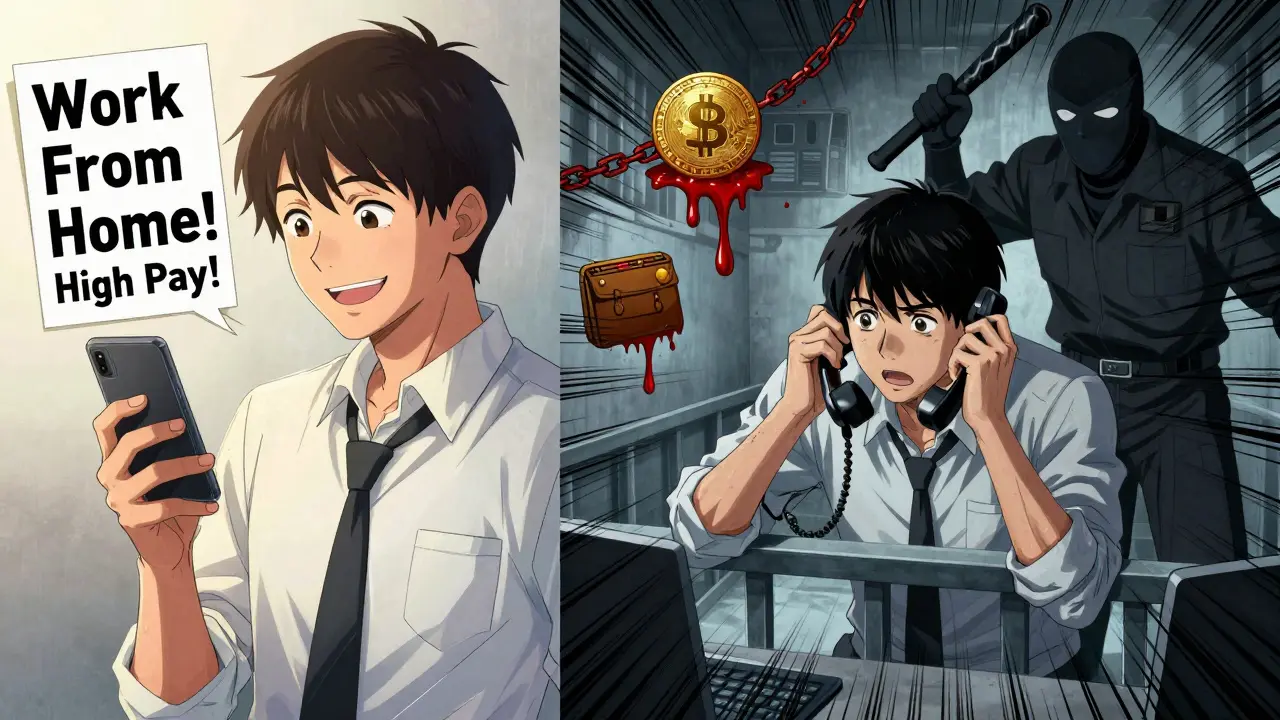
Think of a job ad on LinkedIn or Facebook: "Work from home. High pay. No experience needed." That’s how most victims were lured in. But instead of sitting at a desk, they were flown to Shwe Kokko, a lawless town on Myanmar’s border with Thailand, and locked inside a compound. There, under threat of violence, they were forced to run crypto scams against people back in the U.S.
These victims - often from Southeast Asia, but also from China, India, and even the U.S. - were made to pose as financial advisors, crypto traders, or tech support. They called, texted, and messaged real Americans, convincing them to send money into fake investment platforms. Once the cash was wired into crypto wallets, it vanished into a maze of mixing services, decentralized exchanges, and offshore wallets. No paper trail. No bank. No trace.
Meanwhile, the people running the operation - the bosses - were living in luxury. They drove luxury cars, owned private jets, and paid off local militias to keep the police away. That militia? The Karen National Army (KNA). And according to U.S. officials, the KNA didn’t just turn a blind eye. They took a cut. Every dollar that flowed out of those compounds went straight into their coffers.
The U.S. Response: Sanctions That Hit Hard
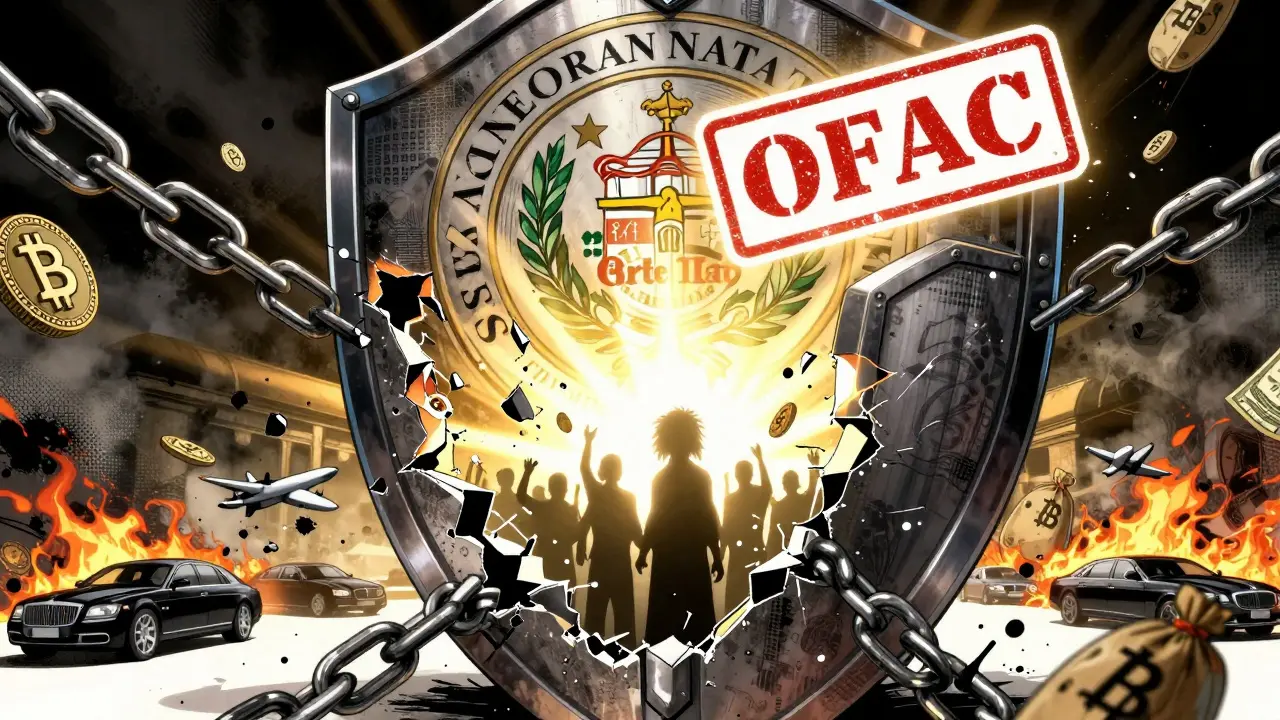
The U.S. didn’t just freeze bank accounts. They went after the whole ecosystem. Under Executive Orders 13851, 13694, 13818, and 14014, the Treasury’s Office of Foreign Assets Control (OFAC) named:
- Nine companies operating in Shwe Kokko
- Ten financial facilitators based in Cambodia
- The Karen National Army (KNA) itself
- Its leader, Saw Chit Thu
- His two sons, Saw Htoo Eh Moo and Saw Chit Chit
Here’s what that means in practice:
- All U.S.-based assets owned by these entities are frozen - no exceptions.
- Any American who sends money to them, even accidentally, could face legal trouble.
- Foreign banks that do business with them risk losing access to the U.S. financial system.
This isn’t just about blocking wallets. It’s about choking off the oxygen these operations need to survive. The Treasury called them a "large network of scam centers across Southeast Asia that steal billions of dollars from Americans using forced labor and violence." That language? It’s deliberate. It turns these from "cybercrime" into "human trafficking with crypto." And that opens up new legal tools.
Why Myanmar? Why Now?
Myanmar’s collapse since the 2021 military coup created a power vacuum. In places like Shwe Kokko, local warlords took control. No courts. No police. No oversight. Perfect for building a criminal empire. The KNA, once a rebel group fighting for ethnic rights, became a protector-for-hire. They provided armed guards, forged documents, and even helped launder money. In return, they got a cut of the profits - millions every month.
And crypto made it easy. Unlike traditional banking, where transactions are monitored and flagged, crypto moves fast, is global, and often anonymous. Scammers used decentralized exchanges to swap stolen Bitcoin for Monero, then moved it through chain-hopping services. By the time anyone traced it, the money was in a wallet with no owner attached.
Why now? Because the losses hit a tipping point. $10 billion in 2024. That’s not just a statistic - it’s more than the GDP of some small countries. The U.S. government had to act. And they did - with unprecedented coordination between Treasury, State, FBI, and Secret Service.
Who’s Really Affected?
Most people think these sanctions hurt the scammers. But they also hurt the victims - the ones forced to run the scams.
Many of the workers in those compounds were kidnapped, sold into slavery, or trapped by debt. They weren’t criminals. They were prisoners. Some were told their families would be killed if they tried to escape. Others were drugged into compliance. The U.S. sanctions don’t target these people. They target the bosses. The ones who built the cages.
But here’s the catch: if you’re a crypto user who sent money to one of these scam platforms - even unknowingly - you’re now at risk. Those wallets are frozen. Those addresses are flagged. If you try to move funds out of them, your own wallet might get flagged too. The Treasury is warning U.S. exchanges to monitor for transactions linked to these sanctioned entities. If you got a refund from a scam, you might need to prove it wasn’t part of the fraud.
What This Means for Crypto Users
If you trade crypto, this affects you. Here’s what to watch for:
- Don’t use wallets tied to Myanmar or Cambodia - even if they look legit. OFAC has published lists of blocked addresses.
- Be wary of "guaranteed returns" - especially from Telegram groups or influencers with no verifiable track record.
- Check transaction history - if your wallet received funds from a sanctioned address, even indirectly, you could be flagged.
- Use regulated exchanges - platforms like Coinbase and Kraken now screen for OFAC violations. Unregulated ones? Not so much.
The U.S. government isn’t trying to ban crypto. They’re trying to cut out the cancer. And that means cleaning up the worst corners of the industry.
What Happens Next?
This is just the beginning. The Treasury said this action "builds on a series of actions taken in the last several months." That means more are coming. Analysts expect:
- Sanctions on Burmese military-linked banks that process crypto flows
- Pressure on Thai and Cambodian authorities to shut down border compounds
- International cooperation to track crypto mixers used by these networks
Chainalysis estimates that $50 billion in crypto fraud occurred globally in 2024. Of that, $10 billion came from Myanmar-linked scams. That’s 20% of the entire market. If the U.S. can shut down just one of these hubs, it could cut global fraud by 10% overnight.
For now, the message is clear: if you’re using crypto to fund slavery, the U.S. will find you. And they’ll freeze everything you own.
Are U.S. citizens banned from using cryptocurrency because of these sanctions?
No. U.S. citizens can still use cryptocurrency. The sanctions target specific entities and wallets tied to Myanmar-based scam operations - not crypto itself. The issue isn’t using crypto; it’s interacting with wallets or platforms linked to sanctioned groups. If you’re using a regulated exchange like Coinbase or Kraken, you’re protected. But if you’re sending money to unknown wallets or using unregulated services, you’re at risk.
Can I get my money back if I sent crypto to one of these scams?
Very unlikely. Once crypto is sent to a sanctioned wallet, it’s frozen. The U.S. government doesn’t return stolen funds - it blocks further movement. If you were scammed, report it to the FBI’s Internet Crime Complaint Center (IC3). You may be eligible for assistance through victim support programs, but recovery of funds is rare. Prevention is the only real defense.
How do I check if a crypto wallet is sanctioned?
The U.S. Treasury’s OFAC website publishes lists of sanctioned addresses. You can search by wallet address using their Sanctions List Search tool. Many crypto exchanges now automatically block transactions to these addresses. If you’re using a non-custodial wallet, always check the history of any wallet you receive funds from. If it’s ever been linked to Myanmar, Cambodia, or the KNA - avoid it.
Why target the Karen National Army (KNA) instead of just the scam companies?
Because the KNA isn’t just a bystander - they’re the enablers. They provide armed protection, help launder money, and control the physical locations where scams operate. Without them, the scam compounds couldn’t exist. By sanctioning the KNA and its leaders, the U.S. is cutting off the support structure. This is a strategic move to dismantle the entire criminal ecosystem, not just the front-end scams.
Did the sanctions stop the scams?
Not overnight. These networks are resilient. Some may have moved operations to new locations, or changed their wallet addresses. But the sanctions have disrupted their funding, scared off investors, and made it harder to move money. Experts say the long-term impact will be significant - especially if international partners follow the U.S. lead. The goal isn’t to end it in a week - it’s to make it too risky and too expensive to keep running.
These sanctions aren’t about punishing crypto. They’re about protecting people - both the Americans who lost their savings, and the ones forced to run the scams. The line between financial crime and human rights abuse has never been clearer. And the U.S. is drawing a hard line.






Phillip Marson
February 26, 2026 AT 03:38So let me get this straight - we’re sanctioning a bunch of scammers who use forced labor to steal billions… but the real crime is that they used crypto instead of wire transfers? 🤡
They didn’t even have to hide behind shell companies. Just slap a QR code on a cage and call it a ‘blockchain startup.’
Meanwhile, my uncle in Florida sent $40k to a guy who promised him moon coins. Got zero help from the feds. But hey - if you’re a victim of a Myanmar slavery ring, now you’re on a government list. Congrats.
It’s not justice. It’s PR with a blockchain twist.
Elana Vorspan
February 27, 2026 AT 13:54This is actually one of the most heartbreaking things I’ve read all year 😭
People just trying to survive - kidnapped, drugged, forced to lie to strangers… and then the system treats them like criminals when they try to escape?
I hope the U.S. follows up with real victim support - not just freezing wallets. These people need housing, therapy, legal aid. Not just sanctions.
Also… can we PLEASE stop calling it ‘crypto fraud’? It’s modern slavery. Let’s name it right.
Danny Kim
February 28, 2026 AT 01:01Oh wow, the U.S. finally noticed that criminals use crypto?
Groundbreaking.
Let me guess - next they’ll sanction people who use cash to buy guns or Bitcoin to buy weed?
Meanwhile, the real money laundering? Wall Street. Private equity. Hedge funds. All legal. All tax-deductible.
But hey - at least we can feel good about punishing people who can’t vote or hire lawyers.
Cathy Sunshine
March 1, 2026 AT 05:13How profoundly postmodern - the commodification of human suffering through decentralized ledgers.
The blockchain, in its purest form, was meant to liberate - yet here we are, watching it become the scaffolding of neo-feudal exploitation.
Is this not the Hegelian dialectic in real time? Thesis: crypto freedom. Antithesis: forced labor networks. Synthesis: U.S. Treasury sanctions - a bureaucratic necropsy on the corpse of digital utopianism.
…I need a drink.
Shannon Black
March 1, 2026 AT 19:17As someone who has worked in international development for over two decades, I find this response both necessary and deeply inadequate.
The sanctions are a symbolic gesture, not a structural solution.
What we need is coordinated regional enforcement - not just U.S.-led asset freezes.
Thailand, Cambodia, and Laos must be held accountable. Not just as bystanders - but as active enablers.
And we must stop treating victims as collateral damage. They deserve asylum, not surveillance.
Richard Cooper
March 2, 2026 AT 03:31So people got tricked into scamming other people… and now the government froze their wallets?
That’s messed up.
Also… why is everyone so shocked? This has been going on for years.
Just say no to random Telegram groups.
That’s it.
Done.
Dee Resin
March 2, 2026 AT 14:22Let me get this straight - the U.S. is sanctioning a warlord… but not the American investors who funded his jet?
Who do you think paid for those luxury cars? Not the guy in the compound.
It’s always the same story: punish the workers. Ignore the bosses.
Also - why are we surprised? We let crypto run wild for a decade. Now we’re mad it got bloody?
Classic.
Tanvi Atal
March 2, 2026 AT 23:15Why is this even news? Every third crypto influencer I follow is from Myanmar.
Also - $10 billion? That’s less than what Elon spent on Twitter.
Stop acting like this is a crisis. It’s just another crypto scam.
Move on.
Sony Sebastian
March 4, 2026 AT 08:34From a blockchain governance perspective, this is a textbook failure of non-KYC on-chain identity verification.
The KNA’s involvement represents a critical vulnerability in the consensus layer of transnational criminal coordination - specifically, a sybil attack on regulatory compliance infrastructure.
Had there been a sovereign DID layer integrated with Chainalysis’ anomaly detection engine, the entire network could have been quarantined pre-2023.
Also - the Monero-to-Bitcoin bridge was poorly architected. No proof-of-stake audit trail. Unacceptable.
Megan Lavery
March 5, 2026 AT 13:50I’m so glad the government is finally doing something.
My cousin got scammed last year - she thought she was investing in a ‘crypto farm’ and ended up sending $22k to a guy who said he was from ‘Myanmar Tech Solutions.’
She still cries when she talks about it.
These sanctions? They’re not perfect… but they’re a start.
And hey - if this stops even one person from getting kidnapped? Worth it.
Mae Young
March 6, 2026 AT 13:20Oh, so now the U.S. is the moral police of global finance? Let me guess - next you’ll sanction people who use PayPal to buy a used couch?
Let’s not forget: the U.S. has sanctioned countries for less. Venezuela. Iran. Cuba. All while ignoring the fact that American banks laundered billions for dictators… with receipts.
And now you’re mad because crypto made it *easier* to catch the bad guys?
It’s not justice. It’s hypocrisy with a white paper.
Trenton White
March 8, 2026 AT 01:10As someone who lived in Thailand for five years, I’ve seen these compounds up close.
They’re not hidden. They’re advertised.
Billboards on the highway: "Work From Home! High Salary! No Experience Needed!"
And locals? They know. They look away.
Because the money flows. And the guns are real.
Sanctions won’t fix this. Only regional pressure will.
And the U.S. won’t lead it.
Cheryl Fenner Brown
March 8, 2026 AT 16:57i just dont get why ppl keep falling for this 😭
like… if someone on ig says "send me 5 btc and i triple it in 3 days" - its not a miracle its a trap
also why is the karen army even a thing? like… did they just decide to become crime bosses?
also why is the u.s. only acting now? did they wait for the money to hit $10b? lmao
Michael Teague
March 9, 2026 AT 12:51Look - I don’t care if it’s crypto or cash.
Forced labor is wrong.
But why are we acting like this is new?
It’s been going on since 2021.
And no one did anything.
Now that it’s hitting American wallets? Suddenly it’s a national emergency?
Classic.
kati simpson
March 10, 2026 AT 22:36I think this whole situation is really complicated and I don’t want to oversimplify it.
On one hand, the U.S. government is trying to stop terrible things from happening to people.
On the other hand, crypto is supposed to be decentralized and free and not controlled by governments.
And I guess I’m just trying to understand where the line is.
Like - if we start freezing wallets because of who they’re connected to, does that mean we’re moving away from the original idea of crypto?
And what about the people who were forced to work there? Are they being helped? Or are they just stuck with frozen accounts?
It’s not black and white.
And I think we need to talk more about the human side, not just the money.