USDT Trading in Bangladesh: What You Need to Know About Stablecoin Use
When you trade USDT, Tether is a cryptocurrency pegged to the U.S. dollar, designed to hold steady value. Also known as Tether, it's one of the most used stablecoins in countries where banking access is limited or currency controls are tight. In Bangladesh, where the taka faces pressure and official crypto trading is banned for banks, USDT has become a quiet lifeline for traders, freelancers, and small businesses trying to move value across borders.
People in Bangladesh don’t use USDT because they love crypto speculation—they use it because it works. A freelancer in Dhaka getting paid in USD from a U.S. client can convert that to USDT, store it in a wallet, and later trade it for taka through peer-to-peer platforms like Paxful or LocalBitcoins. It’s faster than bank transfers, cheaper than Western Union, and avoids the red tape of formal remittance channels. But here’s the catch: Bangladesh Bank, the central bank of Bangladesh, has declared all cryptocurrency transactions illegal for financial institutions. That means no local bank will touch your USDT. No exchange is licensed. If you get caught trading on a platform that claims to be "regulated," you’re likely dealing with a scam or a shell operation.
That’s why most USDT trading in Bangladesh happens offline or on unregulated apps. You’ll find traders on Facebook groups, Telegram channels, or WhatsApp networks—people swapping cash for USDT in person, or using escrow services with no legal backing. It’s risky. Someone could walk off with your money. A platform could vanish overnight. And if the government cracks down, you have zero recourse. But for many, the risk is worth it. With inflation eating away at savings and remittance fees draining income, USDT offers a way to preserve value. It’s not legal. It’s not safe. But it’s real.
That’s why the posts below matter. You’ll find reviews of exchanges people actually use in Bangladesh—some legit, most not. You’ll see warnings about fake airdrops pretending to be USDT giveaways. You’ll learn about platforms that claim to support taka withdrawals but disappear after you deposit. And you’ll see real examples of crypto scams targeting users who just want to send money home or trade without middlemen. This isn’t about hype. It’s about survival in a system that doesn’t work for everyone. If you’re trading USDT in Bangladesh, you need to know what’s real, what’s fake, and how to protect yourself. The tools are out there. The dangers are too. Let’s get you the facts.
Nov
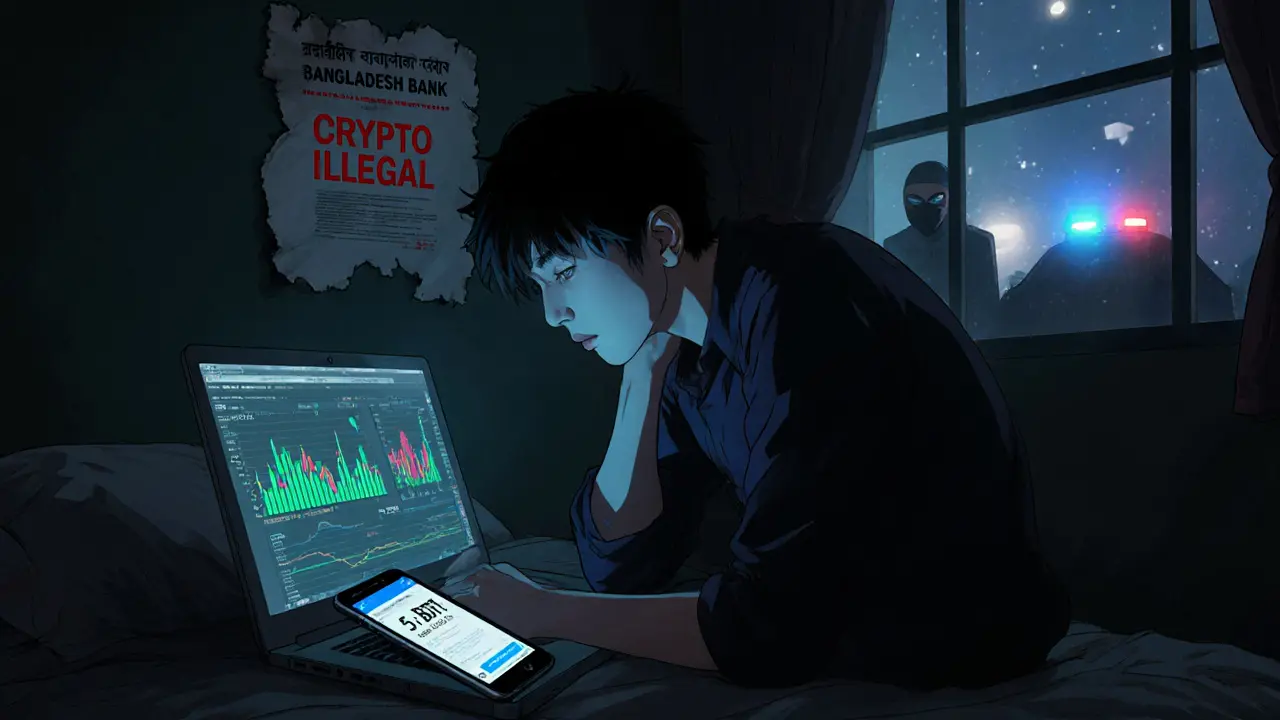
Crypto trading is illegal in Bangladesh, yet many still risk fines, jail, and bank freezes to trade Bitcoin and USDT. Learn the real dangers-from unregulated agents to tax traps and arrests-in 2025's strictest crypto environment.
Read More