Nonce Mining: What It Is and Why It Matters in Crypto Mining
When you hear about nonce mining, the process of finding a specific number that, when combined with block data, produces a hash meeting the network’s difficulty target. It's the mechanical heartbeat of Bitcoin and other proof of work blockchains. Without nonce mining, there’s no security, no consensus, and no new coins. This isn’t theory—it’s what keeps networks running, even as hardware evolves and energy costs rise.
Every time a miner tries to solve a block, they tweak the nonce, a random number added to the block header. They hash it over and over until the output matches the network’s target. This isn’t magic—it’s brute force. The more computing power you throw at it, the higher your chance of success. That’s why hash rate matters so much. It’s not about being smart; it’s about being fast and efficient. Miners don’t guess the right nonce—they test billions per second. And as networks get harder, the nonce becomes more than just a number—it’s the key to profit.
What you’ll find in these posts isn’t a textbook on mining math. It’s real stories from people who’ve seen the rise and fall of mining rigs, exchanges that vanished overnight, and scams hiding behind fake airdrops. You’ll see how nonce mining ties into everything—from the collapse of Bithumb Singapore to the rise of cross-chain DEXs like Elk Finance. You’ll learn why some tokens like XTER and YUZU are tied to mining incentives, and why others like HAI and VLX are dead ends. This isn’t about getting rich quick. It’s about understanding the foundation so you don’t get burned by the noise.
Nov
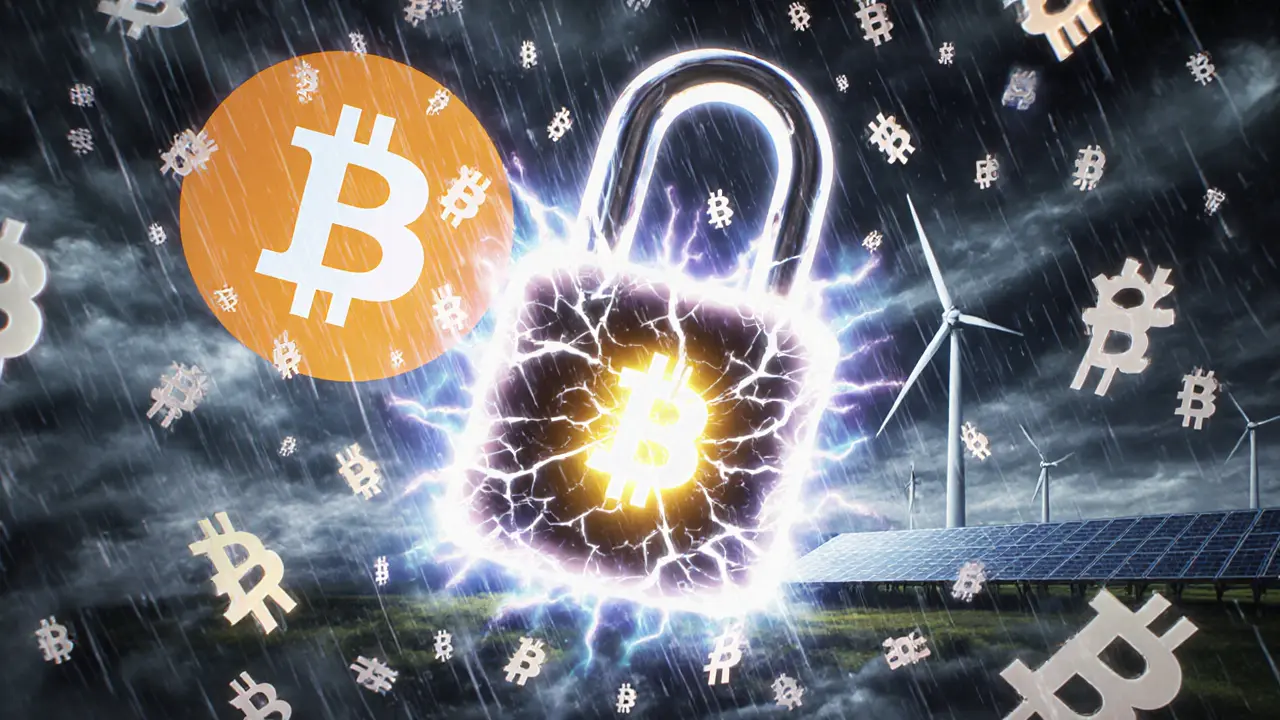
The nonce is the unsung hero of blockchain security, but with energy costs rising and proof-of-stake taking over, its future is uncertain. Here's how it's changing-and why it may not survive beyond Bitcoin.
Read More