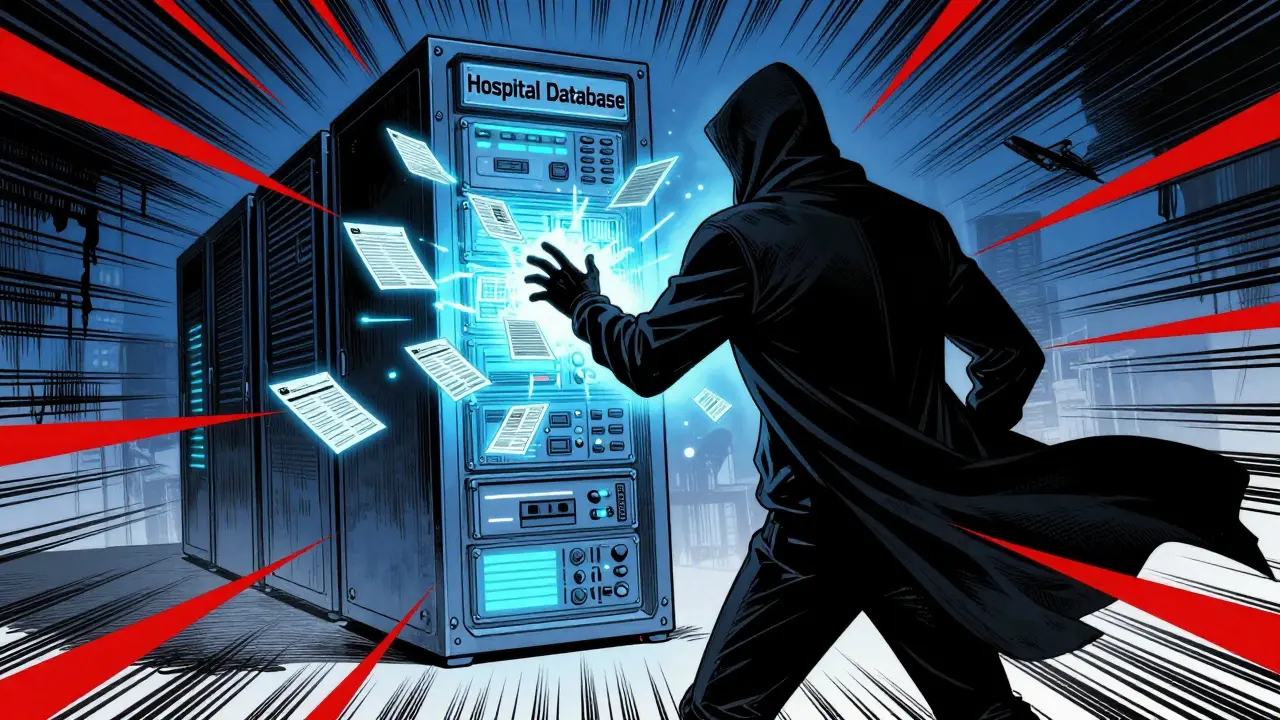
Imagine handing your entire medical history to a stranger. Now imagine that stranger is a hacker who just stole your identity from a hospital database. This isn't science fiction; it’s the reality for millions of people every year. Traditional healthcare systems store sensitive patient data in centralized servers that are prime targets for cyberattacks. But there is a new way to handle this problem. Blockchain healthcare data security is a decentralized system that uses distributed ledger technology to protect sensitive medical information through immutable, encrypted records. Instead of one big target, your data is scattered across a secure network where only you hold the keys.
This shift is not just about better locks on digital doors. It is about changing who controls the door. For decades, hospitals and insurance companies have held the reins to our health data. With blockchain, that power shifts back to the patient. You decide who sees what, when they see it, and for how long. If you are wondering why this matters now, look at the numbers. In 2025 alone, healthcare organizations reported billions of dollars in losses due to data breaches and administrative fraud. Blockchain offers a path to stop these leaks before they start.
How Blockchain Secures Medical Records
To understand why blockchain is different, you first need to look at how traditional systems fail. Most Electronic Health Records (EHRs) live in central databases. If a hacker breaches the firewall, they get access to thousands or even millions of records at once. It is like stealing a master key to a building full of safes.
Blockchain works differently. It uses a distributed ledger that spreads copies of the same data across many computers, or nodes, in a network. When a new piece of medical data is added, it is encrypted and linked to the previous record using complex math called cryptographic hashing. Once that link is made, it cannot be changed without breaking the entire chain. Since the chain exists on thousands of computers simultaneously, no single attacker can alter the data without being noticed immediately.
Here is the crucial part: the actual medical files-like MRI scans or blood test results-are usually too large to store directly on the blockchain. Instead, the blockchain stores a unique digital fingerprint (hash) of that file. The file itself might sit in secure cloud storage, but the blockchain acts as the unbreakable seal verifying that the file hasn’t been tampered with. If someone tries to change your cholesterol level in the file, the hash changes, and the blockchain rejects it as invalid.
- Decentralization: No single point of failure. Hackers must compromise multiple nodes simultaneously.
- Immutability: Records cannot be deleted or altered once written, creating a permanent audit trail.
- Encryption: Data is scrambled so only authorized users with specific keys can read it.
- Transparency: Every access attempt is logged, allowing patients to see exactly who viewed their data.
Patient Control and Smart Contracts
The real magic of blockchain in healthcare comes from smart contracts that are self-executing programs stored on the blockchain that automatically enforce rules when conditions are met. Think of a smart contract as a digital vending machine. You put in the right code (permission), and it dispenses the product (data). No human intervention is needed, and no one can cheat the system.
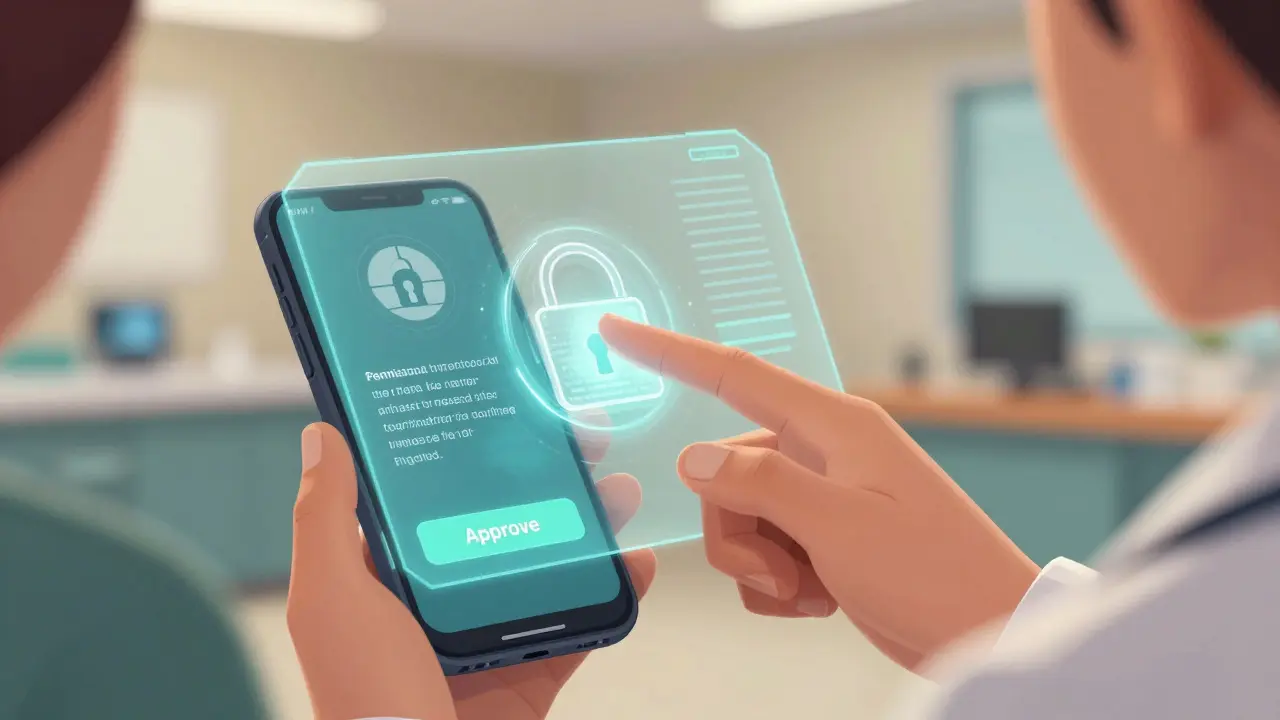
In a practical scenario, imagine you visit a specialist. Under current systems, you fill out paper forms or hope the specialist’s office can log into your primary care doctor’s portal. With blockchain, you grant temporary access via a smart contract. The specialist requests your cardiac history. Your wallet app pops up asking for approval. You click "yes" for 24 hours. The smart contract executes, granting access only for that window. After 24 hours, the access revokes itself automatically. You don’t have to remember to cancel it, and the specialist can’t keep a copy unless you explicitly allow it.
This model relies on cryptographic keys which are pairs of mathematical codes used to encrypt and decrypt data, consisting of a public key for sharing and a private key for ownership. Your private key is like your password, but infinitely more complex. If you lose it, you lose access to your data. If you share it, you give away control. Therefore, key management becomes the most critical responsibility for patients in this ecosystem.

Solving Interoperability and Data Errors
One of the biggest headaches in healthcare is interoperability. Different hospitals use different software systems that often don’t talk to each other. A study by the Identity Management Institute highlighted that healthcare data interoperability is the ability of different information technology systems and software applications to securely exchange and make use of information. Currently, about 40% of patient health records contain errors, partly because doctors have to manually re-enter data from one system to another. Human error is inevitable.
Blockchain creates a universal language for data exchange. Because the ledger is shared, all participants-your GP, the cardiologist, the insurer, and the pharmacy-see the same version of the truth. There is no need to fax records or upload PDFs. The data is already there, verified, and ready to use. This reduces administrative overhead significantly. Industry estimates suggest that blockchain could save the healthcare industry up to $100 billion annually by cutting down on duplicate tests, billing errors, and manual data entry.
| Feature | Traditional Centralized EHR | Blockchain-Based System |
|---|---|---|
| Data Ownership | Hospital/Provider | Patient |
| Breach Risk | High (Single point of failure) | Low (Distributed nodes) |
| Audit Trail | Limited, easily manipulated | Immutable, transparent |
| Interoperability | Poor, requires manual transfer | High, native sharing |
| Cost Efficiency | High administrative costs | Reduced via automation |
Regulatory Compliance: HIPAA and GDPR
You might worry that giving patients control violates privacy laws. Actually, blockchain helps meet strict regulations like HIPAA (Health Insurance Portability and Accountability Act) and US federal law protecting sensitive patient data, as well as GDPR (General Data Protection Regulation) and EU law governing data privacy and citizen rights.
HIPAA requires that patient data be kept confidential and that access be logged. Blockchain does this naturally. Every time someone accesses a record, it is stamped with a timestamp and a user ID on the ledger. This creates an undeniable audit trail. If a nurse looks at your record without authorization, it is recorded forever. This deters insider threats, which are a major source of data leaks.
GDPR includes the "right to be forgotten," which seems to conflict with blockchain’s immutability. However, solutions exist. Since the actual data is often stored off-chain (in external servers) and only the hash is on the blockchain, deleting the off-chain data effectively removes the personal information. The hash remains, but without the data it points to, it is useless to anyone. This hybrid approach satisfies both security needs and legal requirements.
Challenges and Implementation Realities
It is not all smooth sailing. Implementing blockchain in healthcare is expensive and complex. The market for blockchain healthcare security grew from $1.1 billion in 2021 to a projected $5.7 billion by 2026, but adoption is still slow. Why? Because integrating new tech with old systems is hard.
Most hospitals run on legacy IT infrastructure that is decades old. Connecting these systems to a modern blockchain network requires significant technical expertise. Organizations typically spend 12 to 24 months deploying these solutions. Staff training is another hurdle. Doctors and nurses are busy; they don’t have time to learn complex cryptography. The user interface must be seamless. If accessing a patient’s chart takes three extra clicks, it won’t be used.
Scalability is also a concern. Blockchains can be slower than traditional databases when handling high volumes of transactions. While this is fine for updating a medical record once a month, it might struggle during a pandemic surge where thousands of tests are processed daily. Newer technologies like Layer-2 solutions are helping, but the issue isn’t fully solved yet.
The Future of Medical Data Privacy
Despite the challenges, the direction is clear. By 2026, we are seeing early adopters like MedChain and MedRec leading the way. These platforms are proving that patient-controlled health records are viable. As artificial intelligence integrates with blockchain, we will see automated fraud detection and personalized treatment plans based on secure, verified data.
The convergence of IoT medical devices and blockchain is particularly exciting. Imagine your smartwatch monitoring your heart rate and automatically uploading encrypted data to your blockchain health profile. Your doctor gets real-time alerts if something is wrong, without you having to schedule an appointment. This proactive care model saves lives and reduces costs.
For patients, the future means true ownership. You will carry your medical history in your pocket, accessible anywhere in the world, secure from hackers, and shareable only on your terms. It is a small step for technology, but a giant leap for patient privacy.
Is blockchain completely unhackable?
No technology is 100% unhackable. However, blockchain is extremely resistant to attacks because it is decentralized. To hack it, an attacker would need to control more than 50% of the network's computing power simultaneously, which is practically impossible for large networks. The weak point is usually not the blockchain itself, but the endpoints-like your phone or computer-if you lose your private keys or fall for phishing scams.
What happens if I lose my private key?
In a pure blockchain system, losing your private key means losing access to your data permanently. There is no "forgot password" button. To mitigate this, many healthcare blockchain platforms implement multi-signature wallets or recovery mechanisms involving trusted third parties (like family members or legal guardians) to help restore access if you are incapacitated or lose your key.
Does blockchain replace Electronic Health Records (EHR)?
Not exactly. Blockchain acts as a layer on top of existing EHR systems. It doesn't replace the software doctors use to write notes, but it secures the exchange and verification of that data between different EHR systems. It ensures that the data moving between Hospital A and Hospital B is authentic and hasn't been altered.
Is blockchain compliant with HIPAA?
Yes, blockchain can be designed to be HIPAA compliant. By using permissioned blockchains (where only authorized entities can join) and storing sensitive data off-chain while keeping hashes on-chain, providers can meet HIPAA's requirements for confidentiality, integrity, and audit trails. Many healthcare-specific blockchain platforms are built specifically with HIPAA and GDPR compliance in mind.
How much does it cost to implement blockchain in healthcare?
Implementation costs vary widely depending on the size of the organization and the complexity of the integration. Small clinics might pay tens of thousands of dollars for subscription-based access, while large hospital networks could spend millions for custom enterprise solutions. However, these costs are often offset by savings from reduced administrative work, fewer data breaches, and less fraud over time.