Imagine waking up in early 2022, checking your portfolio, and finding out that the platform you trusted with your Artis Turba crypto holdings has permanently shut its doors. For thousands of South African traders, this wasn't a hypothetical nightmare-it was their reality on January 28, 2022. If you are digging through old transaction histories or wondering if your funds are still recoverable, you aren't alone. This review isn't about whether you should sign up today (you can't), but rather understanding why this local player failed, what it offered while it lasted, and the harsh lessons it teaches us about regional cryptocurrency exchanges.
The Rise and Fall of a Local Player
Artis Turba was a South African centralized cryptocurrency exchange based in Centurion that operated from September 2018 until its abrupt closure in early 2022. Founded by Nigel and Nickey, the platform aimed to solve a specific problem for locals: accessing Bitcoin and other digital assets using South African Rand (ZAR) without jumping through hoops on global giants like Binance or Coinbase. The idea was solid. A user-friendly interface tailored for beginners, local banking integration, and a focus on security sounded promising in a market hungry for accessible crypto entry points.
But here is the cold truth: good intentions don't pay server bills. Despite its niche appeal, Artis Turba never gained significant traction. By the time it closed, industry trackers like CoinMarketCap listed it as an "Untracked Listing," meaning trading volumes were so low they barely registered. It serves as a stark reminder that in the crypto world, liquidity is king. Without enough buyers and sellers, even the most intuitive interface feels empty.
What Did You Actually Get?
While it was alive, what did Artis Turba offer? It positioned itself as an entry-level platform. Think of it as the training wheels of crypto trading. It didn't offer complex derivatives, futures, or margin trading. Instead, it focused on simple buy-and-sell functionality for major cryptocurrencies. The asset list was curated rather than exhaustive, including heavy hitters like Bitcoin (BTC), Ethereum (ETH), and Ripple (XRP), alongside others like Tron, Stellar Lumens, and Monero.
The standout feature for many users was the native token, ARTIS. Launched in late 2017, this token had a total supply of 350 million. Holders were promised a share of the trading fees-specifically, 50% of revenue went back to token holders through the "Artis Affiliate Reward Program." In theory, this aligned incentives: the more people traded, the more value accrued to ARTIS holders. In practice, with negligible trading volume, those rewards were likely pennies, not dollars.
| Feature | Detail |
|---|---|
| Operational Status | Defunct (Closed Jan 2022) |
| Headquarters | Centurion, South Africa |
| Fiat Support | ZAR via Wire Transfer only |
| KYC Processing Time | ~48 Hours |
| Native Token | ARTIS (Low utility post-closure) |
| User Rating (Pre-Close) | 4/5 (Based on minimal reviews) |
The Banking Bottleneck
If you ever tried to use Artis Turba, you probably remember the friction with fiat deposits. Unlike modern exchanges where you can load your account instantly with a credit card or EFT, Artis Turba relied strictly on wire transfers. This meant waiting days for funds to clear before you could trade. In a volatile market where prices swing double digits in hours, waiting three days to deposit money is a dealbreaker for active traders.
Withdrawals were similarly slow. While crypto withdrawals happened continuously on the blockchain, cashing out to your bank account required business day processing. This lag created a psychological barrier. Users often felt their money was "stuck" in limbo. For a platform targeting beginners who might panic during market dips, this lack of instant liquidity access was a critical design flaw.
Why Did It Fail?
You might ask, "If the concept was sound, why did it die?" The answer lies in economics and competition. The South African crypto market is small compared to the US or Europe. To survive, a local exchange needs either massive volume to generate fee revenue or significant venture capital backing to sustain losses while growing. Artis Turba had neither.
Global exchanges aggressively targeted emerging markets with lower fees and better tech. When Binance or Luno (another major player in SA) offers instant deposits and deep order books, a smaller platform charging higher effective costs due to spreads struggles to compete. Furthermore, regulatory uncertainty loomed large. While Artis Turba claimed registration with the Financial Intelligence Centre (FIC), independent verification was scarce. Investors grew wary of unverified compliance, especially after high-profile scams elsewhere in the industry eroded trust in smaller, less transparent platforms.
Lessons for Today's Investors
The story of Artis Turba isn't just history; it's a warning label. Here is what you need to look for when choosing a crypto exchange today, inspired by the failures of yesterday:
- Liquidity Matters: Check the daily trading volume. If it's under $1 million, you risk getting stuck with illiquid assets or wide bid-ask spreads.
- Fiat On-Ramps: Prioritize exchanges with instant or same-day fiat deposits. Wire-transfer-only platforms add unnecessary friction.
- Regulatory Transparency: Don't take claims at face value. Look for public proof of licensing or registration with local financial authorities.
- Token Utility: Be skeptical of native tokens that promise revenue sharing. If the exchange fails, does the token have any value left? Usually, no.
For South Africans specifically, the void left by Artis Turba has been filled by more robust international platforms that support ZAR pairs. The lesson is clear: stick with platforms that have proven staying power and transparent operations.
Frequently Asked Questions
Is Artis Turba still operating?
No, Artis Turba permanently ceased operations on January 28, 2022. It is now considered a defunct exchange and appears in various "Exchange Graveyard" listings. There are currently no plans for revival or acquisition.
Can I still withdraw my funds from Artis Turba?
The official withdrawal window closed shortly after the shutdown announcement. Support channels remained open for two months post-closure to assist with final withdrawals. As of late 2025, retrieving funds directly from the platform is highly unlikely without legal intervention or third-party recovery services, though success rates vary.
What happened to the ARTIS token?
The ARTIS token still exists on blockchain networks, but its practical utility vanished with the exchange's closure. Since the token's primary value proposition was tied to trading fee revenue sharing, its market value has effectively become negligible. It trades at fractions of a cent, if at all.
Was Artis Turba regulated in South Africa?
The exchange claimed registration with the South African Financial Intelligence Center (FIC). However, this status was never independently verified by major industry auditors during its operational period. Lack of transparent regulatory documentation contributed to user hesitation and eventual loss of confidence.
Which exchanges replaced Artis Turba for South African users?
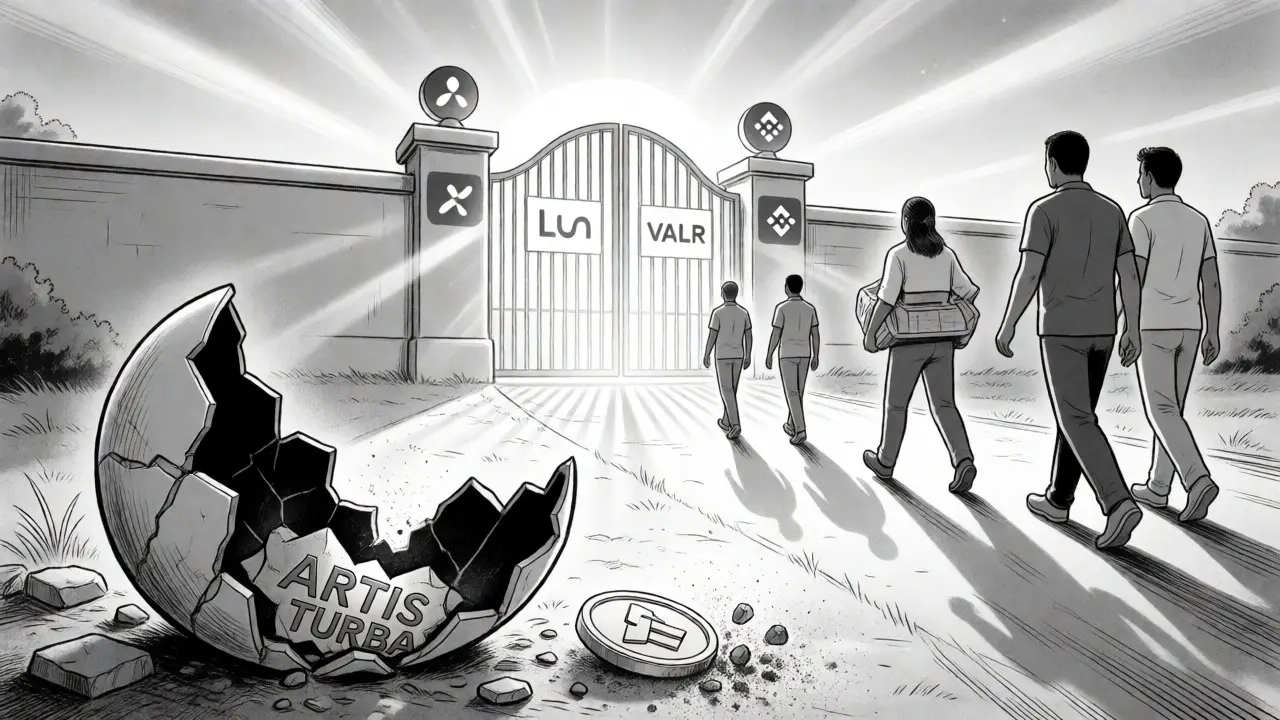
Users migrated primarily to larger platforms with strong ZAR support, such as Luno, VALR, and international giants like Binance and Kraken that offer local banking integrations. These platforms provide higher liquidity, faster fiat processing, and greater regulatory clarity.