Imagine you are driving around a busy city center, circling block after block, trying to find an empty spot. You finally see one, but it’s expensive, or worse, occupied by someone who isn’t there. Now imagine if that empty spot could be rented out by its owner directly to you, instantly, without a middleman taking a huge cut. That is the core promise of ParkCoin, known by its ticker symbol KPK. It is a utility cryptocurrency designed to solve real-world parking problems while also serving as the backbone for a broader digital ecosystem.
But ParkCoin is not just about cars and asphalt. It is also tied to the Koinpark centralized exchange and the Metapark political metaverse. This dual nature makes it a unique asset in the crypto world: part practical infrastructure tool, part speculative ecosystem token. If you are wondering whether KPK is worth your attention, you need to look past the marketing hype and understand how it actually works, where it trades, and what risks are hidden in the fine print.
The Core Utility: Decentralized Parking
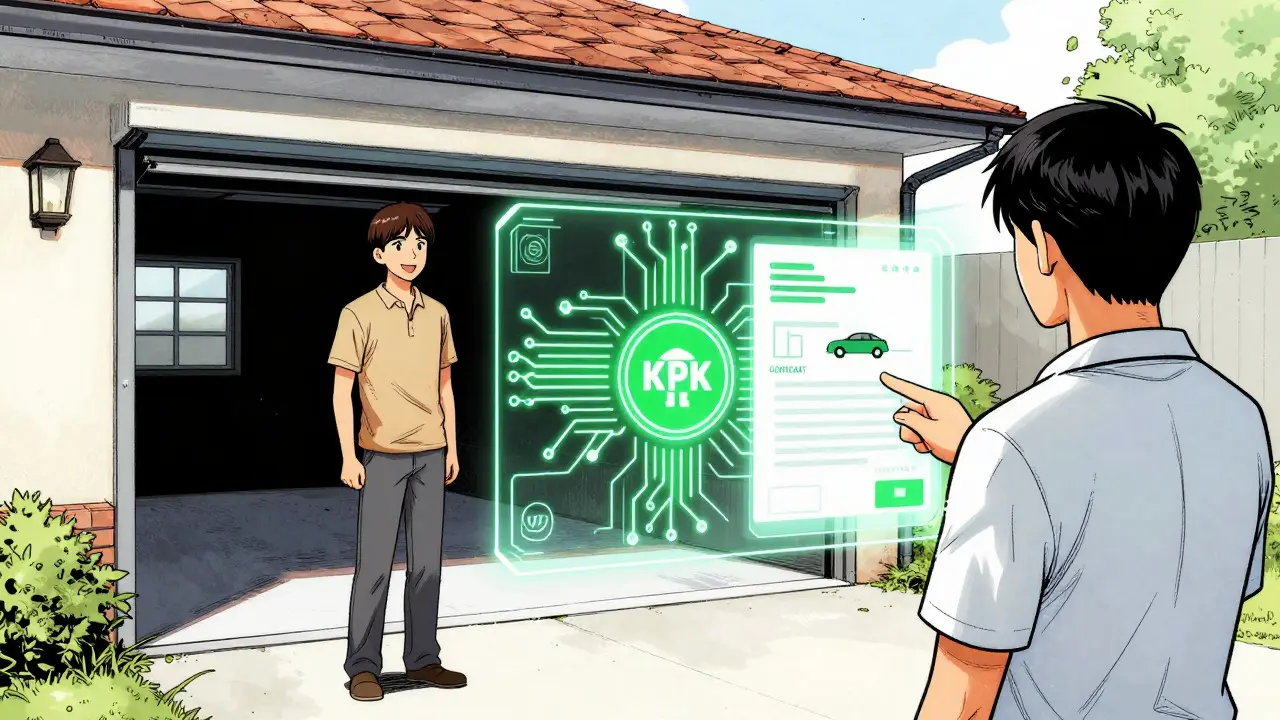
At its heart, ParkCoin aims to fix three major headaches in the parking industry: scarcity, high fees, and fraud. Traditional parking systems rely on centralized companies that charge premium prices for spaces they don't always own efficiently. ParkCoin proposes a peer-to-peer model using blockchain technology and smart contracts.
Here is how the logic flows:
- Space Owners: If you have a driveway, a garage, or an unused parking spot, you can list it on the platform. When someone rents it, you earn KPK tokens.
- Drivers: You use the app to find available spots nearby. You pay for the reservation and time spent using KPK tokens.
- Smart Contracts: These automated agreements handle the transaction. They release payment to the owner only when the driver checks in and out, reducing the risk of no-shows or disputes.
This model attempts to remove intermediaries, theoretically lowering costs for drivers and increasing earnings for space owners. However, the success of this model depends entirely on adoption. For now, the network effect is still building, and finding active listings in major cities remains a challenge for many users.
Beyond Parking: The Koinpark and Metapark Ecosystem
If parking were the only story, ParkCoin would be a niche utility token. But the project has expanded its scope significantly. KPK serves as an ecosystem coin for two other major components: the Koinpark exchange and the Metapark political metaverse.
Koinpark is a centralized cryptocurrency exchange. In this context, holding KPK might offer benefits similar to other exchange tokens, such as potential fee discounts or access to new trading pairs, though specific mechanics like staking rewards or exact discount percentages are often vague in public documentation. The exchange acts as the primary liquidity hub for the token.
Then there is Metapark, described as a "political metaverse." This sounds ambitious. While details on governance models within Metapark are sparse, the implication is that KPK holders may eventually participate in virtual political processes or community decisions within this digital realm. This adds a layer of speculative value, positioning KPK not just as a payment method, but as a governance or status token in a virtual society.
Tokenomics and Supply Confusion
When evaluating any cryptocurrency, supply data is critical. Unfortunately, ParkCoin suffers from significant inconsistencies across different tracking platforms. This lack of clarity is a red flag that investors should note carefully.
| Platform | Total Supply | Circulating Supply | Max Supply | Last Updated Context |
|---|---|---|---|---|
| Coinranking | 9.00 Billion | 9.00 Billion | N/A | Feb 2026 |
| Botsfolio | 9.00 Billion | 0 | 10.00 Billion | Sep 2025 |
| CoinCodex | 10.00 Billion | 10.00 Billion | 10.00 Billion | Feb 2026 |
| FXEmpire | N/A | N/A | 10.00 Billion | Jun 2026 |
As you can see, some sources claim 9 billion tokens exist, while others say 10 billion. Some list zero circulating supply, which contradicts the fact that the token is actively traded. This discrepancy suggests either that issuance has changed over time, or more likely, that data aggregators are pulling from different, outdated sources. For a mature project, this level of opacity is unusual. Always verify the current circulating supply on-chain before calculating market capitalization yourself.
Price Performance and Market Reality
ParkCoin has generally traded close to the $1.00 USD mark since its visibility increased. Between 2024 and mid-2026, prices have fluctuated modestly, ranging from roughly $0.99 to highs of $1.34.
While a stable price near $1 might sound appealing, it masks deeper liquidity issues. Most trading volume for KPK occurs on a single exchange: Koinpark. Major global exchanges like Binance track the price but do not list KPK for direct trading. This concentration of liquidity means that if Koinpark experiences technical issues or regulatory scrutiny, the ability to buy or sell ParkCoin could freeze up quickly.
Market capitalization figures are equally confusing. One aggregator might show a market cap of $10.73 billion based on a 10 billion supply at $1.07, while another shows $0 due to missing supply data. Given the low daily trading volumes (often under $300,000), a multi-billion dollar market cap seems inflated. Treat these numbers with skepticism until on-chain data confirms widespread distribution and usage.
Technical Architecture and Security
One of the biggest gaps in ParkCoin’s public profile is technical transparency. Unlike established projects that publish detailed whitepapers, audit reports, and GitHub repositories, ParkCoin’s technical specifics are vague.
- Blockchain Base: It is unclear whether KPK runs on Ethereum, BNB Chain, or a proprietary chain. References to "Parkscan" suggest a dedicated block explorer, but this does not confirm the underlying consensus mechanism.
- Smart Contracts: While the project claims to use smart contracts for parking rentals, no formal security audits from reputable firms are widely cited.
- Wallet Compatibility: There is no clear list of supported wallets. Users typically hold KPK on the Koinpark exchange, which introduces custodial risk-you do not truly own the keys to your tokens if they sit on an exchange.
For a project dealing with financial transactions and potentially sensitive location data (where you park your car), security is paramount. The lack of disclosed audit results means users are trusting the team’s internal code quality without independent verification.
Who Is Behind ParkCoin?
In the crypto world, anonymity is common, but it increases risk. As of mid-2026, no major aggregator lists named founders, core developers, or a legal entity behind ParkCoin. The team composition remains publicly undisclosed.
Launch dates are also inconsistent. Some sources cite 2021 as the start, others point to March 2023, and Coindesk links a specific block number to June 2023. This fragmented narrative makes it difficult to trace the project’s history or hold anyone accountable for roadmap promises. Without a known team, there is no personal reputation on the line if the project stalls or fails.
How to Get Started with ParkCoin
If you decide to explore ParkCoin despite the risks, here is the typical path most users follow:
- Create a Koinpark Account: Since Koinpark is the primary venue for KPK trading, you will need to register there. This involves standard KYC (Know Your Customer) procedures, depending on your region.
- Deposit Funds: Deposit fiat currency (like USD or EUR) or stablecoins (like USDT) into your account. Note that deposit methods vary by country.
- Trade for KPK: Look for the KPK/USDT or KPK/INR pair. Place a buy order. Be aware of slippage; because liquidity is low, large orders may move the price against you.
- Use or Hold: You can try to use KPK for parking reservations if the service is available in your area, or hold it in hopes of ecosystem growth within Metapark. Alternatively, you can withdraw to a compatible wallet if one is identified, though this step is currently unclear for many users.
There is no official mobile app widely recognized outside the Koinpark ecosystem yet, so most interactions happen through web interfaces. Expect a learning curve if you are new to crypto exchanges.
Risks and Considerations
Before buying any amount of ParkCoin, consider these critical factors:
- Liquidity Risk: With most volume on one exchange, exiting a position during market stress could be difficult.
- Adoption Uncertainty: The parking utility relies on both drivers and space owners joining. Network effects take time, and competition from traditional apps is fierce.
- Regulatory Ambiguity: As a utility token tied to an exchange and a metaverse, KPK may face varying regulations globally. Is it a security? A commodity? The answer changes your rights as a holder.
- Data Opacity: Conflicting supply numbers and unknown team members make fundamental analysis nearly impossible.
ParkCoin represents an interesting intersection of physical infrastructure and digital speculation. It solves a genuine problem-parking inefficiency-but executes it through a lens that lacks the transparency expected of mature financial assets. For early adopters willing to tolerate high risk, it offers exposure to a novel concept. For conservative investors, the missing pieces of the puzzle-audits, team identity, and clear tokenomics-may outweigh the potential upside.
Is ParkCoin (KPK) a good investment?
ParkCoin is a high-risk asset. Its value depends heavily on the adoption of its parking marketplace and the growth of the Koinpark exchange. With limited liquidity, anonymous teams, and conflicting data on supply, it is suitable only for speculative portfolios where you can afford to lose the entire investment. It is not recommended as a long-term store of value without further transparency.
Where can I buy ParkCoin?
The primary place to buy ParkCoin is the Koinpark centralized exchange. Major exchanges like Binance track its price but do not currently list it for direct trading. You will need to create an account on Koinpark and deposit funds to trade for KPK.
What is the total supply of ParkCoin?
Data varies by source. Some platforms report a maximum supply of 10 billion KPK, while others state 9 billion. Circulating supply figures are even more inconsistent, ranging from 0 to 10 billion depending on the aggregator. Always check the latest on-chain data or official announcements for the most accurate figure.
Does ParkCoin have a mobile app?
Currently, there is no widely recognized standalone ParkCoin mobile app for general parking reservations. Most user interactions occur through the Koinpark exchange interface or web-based portals associated with the Metapark ecosystem. Check the Koinpark website for any recent app releases.
Who created ParkCoin?
The specific founders and development team behind ParkCoin are not publicly disclosed in major crypto databases. The project operates with a degree of anonymity, which is common in early-stage crypto projects but adds to the investment risk.
What is Metapark?
Metapark is described as a "political metaverse" connected to the ParkCoin ecosystem. It suggests a virtual environment where KPK holders might engage in governance or social activities. Specific features and launch timelines for Metapark are not clearly detailed in public profiles.
Is ParkCoin listed on Binance?
No, ParkCoin is not listed for direct trading on Binance. Binance tracks the price index for KPK, likely aggregating data from Koinpark, but you cannot buy or sell it directly on the Binance platform.
How does ParkCoin prevent fraud in parking?
ParkCoin uses smart contracts to automate transactions between drivers and space owners. Payments are held in escrow by the contract and released only when the parking session is verified, reducing the risk of non-payment or unauthorized use compared to informal cash arrangements.
What blockchain does ParkCoin use?
Public profiles do not explicitly state the base blockchain (e.g., Ethereum, BNB Chain) used by ParkCoin. It references a block explorer called Parkscan, but technical specifications regarding consensus mechanisms or gas fees are not widely disclosed.
When was ParkCoin launched?
Launch dates are inconsistent across sources. Some profiles cite 2021, others point to March 2023, and Coindesk links a specific block event to June 2023. This suggests an earlier conceptual phase followed by later token issuance or listing events.