Bitcoin Risk in Bangladesh: What You Need to Know About Crypto Danger Zones
When you hear about Bitcoin risk in Bangladesh, the combination of strict government bans, widespread scams, and zero legal protection for users, it’s not just about price drops—it’s about losing money, freedom, or both. Bangladesh banned all cryptocurrency transactions in 2021, making it illegal to buy, sell, or hold Bitcoin or any other crypto. The central bank, Bangladesh Bank, warns that using crypto can lead to criminal charges, including fines and jail time under the Digital Security Act. This isn’t a gray area—it’s a hard line, and people are being arrested for it.
What makes crypto scams in Bangladesh, fraudulent platforms and fake airdrops targeting local users so dangerous is that victims often don’t realize they’re being tricked until it’s too late. Scammers pose as crypto trainers, promise free Bitcoin through fake apps, or create fake exchanges like BTRL or BITEJIU that vanish overnight. These aren’t theoretical risks—they’re daily events. People lose life savings because they trusted a Telegram group or a YouTube influencer promising quick riches. And since there’s no legal recourse, once your crypto is gone, it’s gone for good.
crypto regulations Bangladesh, a total ban enforced by financial and law enforcement agencies means even holding Bitcoin in a wallet can be used as evidence in court. Banks are required to freeze accounts linked to crypto activity. Exchanges operating in Bangladesh are shut down or forced underground. The government doesn’t just discourage crypto—it actively hunts it down. That’s why so many of the posts here focus on exposing fake projects like HAI token scams or VLX GRAND airdrops: they’re not just misleading—they’re dangerous in places like Bangladesh where users have no safety net.
There’s no such thing as a "safe" crypto investment in Bangladesh. Even if you think you’re using a "decentralized" platform, you’re still breaking the law. And if you’re tempted by a high-yield DeFi project or an NFT airdrop promising returns, remember: no amount of profit justifies jail time or a permanent bank ban. The real risk isn’t volatility—it’s the state.
Below, you’ll find real cases of crypto failures, scams, and regulatory crackdowns that mirror what’s happening on the ground in Bangladesh. These aren’t abstract warnings—they’re lessons from people who lost everything. Whether you’re in Dhaka, Chittagong, or just researching global crypto risks, this collection shows you what happens when crypto meets a zero-tolerance policy—and how to avoid becoming another statistic.
Nov
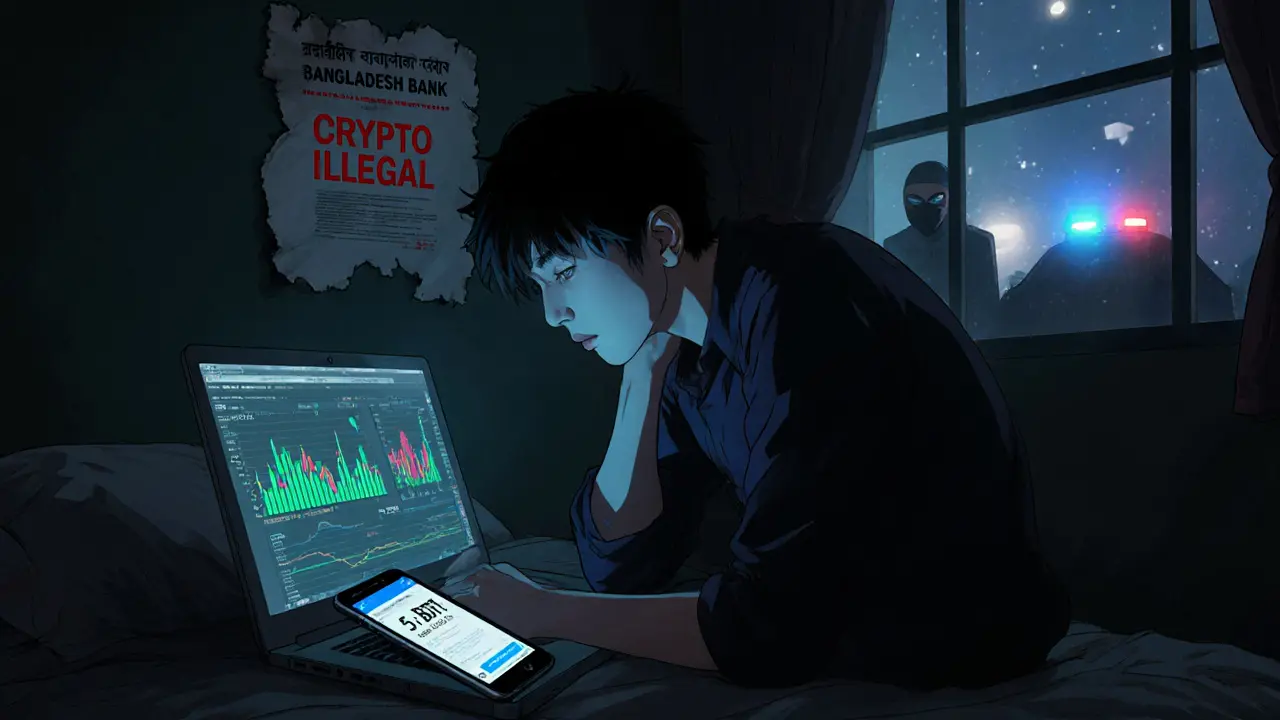
Crypto trading is illegal in Bangladesh, yet many still risk fines, jail, and bank freezes to trade Bitcoin and USDT. Learn the real dangers-from unregulated agents to tax traps and arrests-in 2025's strictest crypto environment.
Read More