

When you start mining cryptocurrency, you’re not just setting up hardware and paying electricity bills-you’re stepping into a legal minefield. In 2026, the rules around crypto mining have changed more in the last two years than they did in the previous decade. What was once a gray area is now a tightly regulated space, especially in the U.S. and EU. If you’re mining Bitcoin, Ethereum Classic, or Litecoin, you need to know what’s legal, what’s required, and what could land you in trouble.
Proof-of-Work Mining Is Legal-And Explicitly Exempt from Securities Laws
The biggest legal hurdle for miners disappeared in March 2025. The SEC’s Division of Corporation Finance issued a clear statement: Proof-of-Work mining does not trigger securities laws. This wasn’t a suggestion. It wasn’t a loophole. It was a formal, public clarification that mining Bitcoin, Dogecoin, and other PoW coins is not selling or offering a security.
Before this, miners lived in fear. Every time the SEC sued a crypto exchange or token issuer, there was a chance they’d come after miners next. That fear was based on guesswork. Now, the SEC has drawn a line. If you’re using computational power to validate transactions and secure a public blockchain, you’re not a securities dealer. You’re a network participant. This applies to any coin that relies on Proof-of-Work consensus, which includes over 70% of active blockchains as of 2026.
But here’s the catch: this only covers Proof-of-Work. If you’re staking Ethereum, Solana, or Cardano, you’re in a different legal category. The SEC hasn’t clarified staking yet. So if you’re running a mining pool that also offers staking services, you’re dealing with two separate legal frameworks-and only one of them is now safe.
Anti-Money Laundering Rules Apply-Even to Miners
Here’s where most miners get caught off guard: you don’t need to run an exchange to be regulated. Under the Bank Secrecy Act, any entity that handles cryptocurrency transactions can be classified as a Virtual Asset Service Provider (VASP). That includes mining pool operators who pay out rewards in crypto.
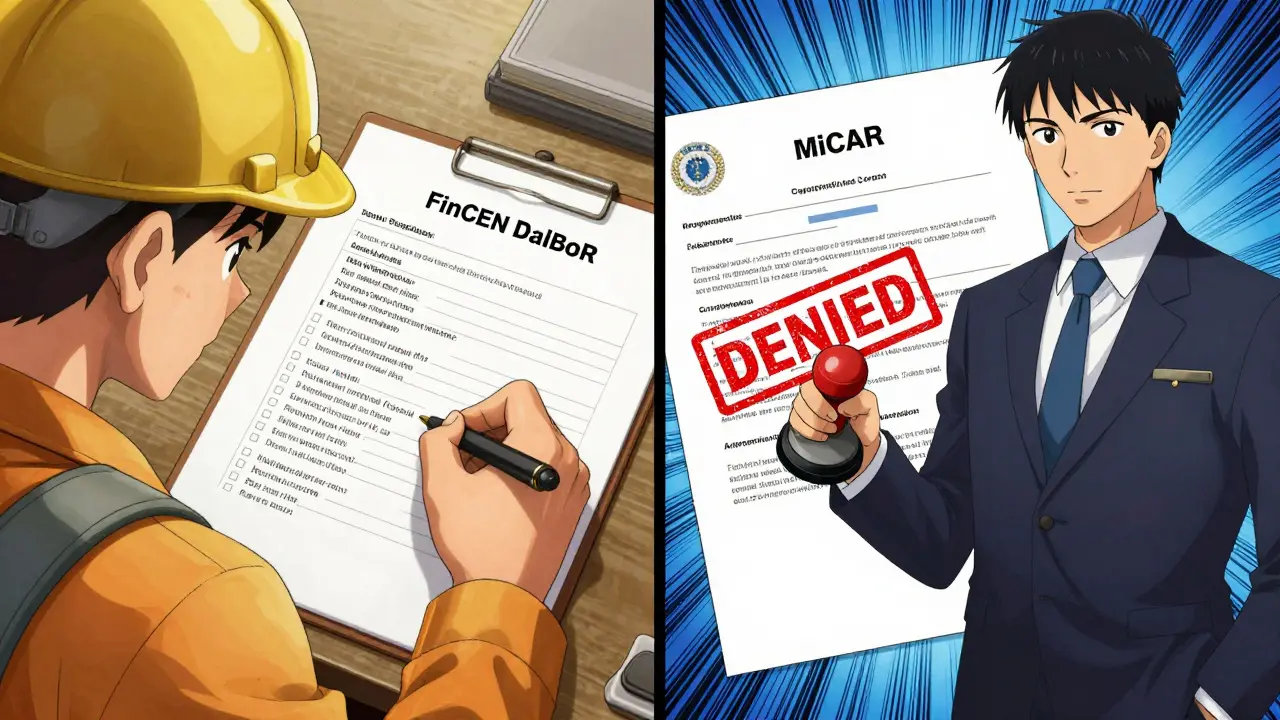
Starting in 2025, FinCEN started enforcing the Travel Rule across all U.S.-based VASPs. If you pay out a mining reward of $3,000 or more to a wallet address, you’re required to collect and store:
- The name and physical address of the recipient
- The sender’s wallet address (yours)
- The transaction hash
- The date and amount of the payout
This isn’t optional. The rule applies to domestic and international payouts. If you’re mining from New Zealand but paying out to a U.S.-based wallet, you’re still bound by U.S. law. Many small miners ignore this because they think, “I’m just one person with a rig.” But if you’re running a pool with 50+ miners and paying out daily, you’re operating like a financial institution. FinCEN doesn’t care how small you think you are-they care about transaction volume.
Failure to comply can mean fines up to $1 million per violation. In 2025, two U.S.-based mining pools were fined for not collecting recipient addresses. One was only paying out $4,000 per week. That’s not a big operation. But it was enough to trigger the rule.
EU Mining Rules Are Even Stricter-And They’re Here to Stay
If you’re mining in the European Union-or even just paying out to EU-based wallets-you’re under the MiCAR regulation. It went fully into effect in December 2024. MiCAR doesn’t just regulate exchanges. It regulates anyone providing crypto services, including mining pools that operate as businesses.
Under MiCAR, you need a license to operate if you’re:
- Running a mining pool with more than 10 active participants
- Offering rewards in Asset-Referenced Tokens (ARTs) or Electronic Money Tokens (EMTs)
- Accepting payments in fiat to cover mining costs
Even if you’re not based in the EU, if you serve EU customers, you need to comply. Many miners in Canada and the U.S. have stopped accepting EU-based miners because the compliance burden is too high. The cost of getting licensed under MiCAR can run $50,000-$150,000 depending on your scale. That’s not feasible for hobbyists.
There’s another layer: the EU’s taxonomy regulation now includes crypto mining under “environmentally harmful activities.” Banks and institutional investors that fund mining operations must now prove their investments align with EU sustainability goals. If your mining rig runs on coal power, you’re not just risking legal action-you’re risking losing access to capital.
The GENIUS Act Changed Everything-But Only in the U.S.
In March 2025, the U.S. passed the GENIUS Act-the first comprehensive federal crypto law in American history. It didn’t just clarify mining. It created a legal pathway for crypto businesses to operate without fear of sudden enforcement.
The GENIUS Act:
- Formally recognized Proof-of-Work mining as a legitimate economic activity
- Required federal agencies to coordinate on crypto regulation instead of acting independently
- Set up a licensing framework for VASPs that’s clearer than anything before
Before this law, the SEC, CFTC, and FinCEN all had different ideas about what mining meant. Now, they’re required to align. That doesn’t mean the rules are simple-but they’re predictable. You know what you need to do. You know who to talk to. That’s a huge shift from 2023, when you could get sued for doing something that wasn’t even illegal.
But remember: the GENIUS Act only applies within U.S. borders. If you’re mining in Texas but sending rewards to a wallet in Germany, you’re still bound by MiCAR. You can’t pick and choose which laws to follow.
State Laws in the U.S. Still Vary-And They Can Kill Your Operation
Even with federal clarity, state laws are still a mess. In New York, you need a BitLicense to operate any crypto-related business-even if you’re just paying out mining rewards. In Texas, you can mine freely. In California, you need to report your energy use to the state. In Wyoming, mining is tax-exempt.
If you’re mining from multiple states-or running a cloud mining service that accepts users nationwide-you need a compliance system that tracks each state’s rules. One miner in Florida was shut down in 2025 because he didn’t file a quarterly energy usage report required by the Florida Department of Environmental Protection. He didn’t even know it existed.
There’s no national database for these rules. You have to check each state’s financial services and environmental agencies. Many miners hire compliance consultants just to keep up.

What You Need to Do Right Now
If you’re mining in 2026, here’s your checklist:
- Confirm your coin uses Proof-of-Work. If it’s PoS, assume securities laws may apply.
- If you pay out $3,000 or more in rewards, start collecting recipient names and addresses. Use a simple spreadsheet or free compliance tool like Chainalysis Reactor (free tier available).
- If you have EU-based miners or pay out to EU wallets, get legal advice on MiCAR. Don’t assume you’re exempt.
- Check your state’s rules. Even if you’re in a “crypto-friendly” state, there might be hidden environmental or tax reporting requirements.
- Keep records for at least five years. FinCEN can audit you anytime.
Most miners think the hardest part is the hardware. It’s not. The hardest part is staying legal. The technology hasn’t changed. The rules have. And they’re not going back.
What’s Coming Next
The SEC is expected to issue formal rules on staking by late 2026. That could mean staking services need licenses, and miners who offer staking rewards could be treated like financial advisors. The EU is pushing to tax crypto mining energy use at the same rate as fossil fuel plants. The U.S. Congress is debating whether to ban crypto mining in federal buildings and on public land.
One thing is certain: the era of “set it and forget it” mining is over. If you want to keep mining, you need to treat it like a business-with legal, financial, and compliance systems in place. Not because you’re trying to be perfect. But because the regulators are watching.







Harshal Parmar
January 24, 2026 AT 06:02Man, I just started mining last month in Bangalore, and this post literally saved my ass. I thought I was just tinkering with some GPUs and paying my electric bill, but now I realize I’m basically running a tiny financial institution without even knowing it. The part about FinCEN’s Travel Rule blew my mind-I’ve been paying out rewards to friends in the US and never thought twice about collecting their addresses. Guess I’m upgrading to Chainalysis Reactor tonight. Also, props to the GENIUS Act-finally, someone in Washington got it right. Hope this trend keeps going.
Matthew Kelly
January 26, 2026 AT 01:05Same here in Ontario! 😊 I’ve been mining LTC on a 3070 since 2023 and never even heard about MiCAR until now. I’ve got two EU guys in my pool-gonna have to kick ‘em out or get licensed. Either way, thanks for the checklist. I’m printing this out and taping it to my rig. Stay safe out there, fellow miners!
Clark Dilworth
January 27, 2026 AT 06:06Let’s not conflate PoW exemption with regulatory immunity. The SEC’s guidance was narrowly scoped to non-securities classification-VASP obligations under BSA remain fully enforceable regardless of consensus mechanism. PoW miners who aggregate and disburse rewards are de facto money transmitters under 31 CFR §1010.100(ff). The GENIUS Act’s preemption only applies to federal agency coordination, not state-level compliance burdens. And MiCAR’s Article 57(3) explicitly extends extraterritorial jurisdiction to non-EU entities serving EU-based recipients. Ignorance is not a defense.
Mark Estareja
January 28, 2026 AT 05:09So let me get this straight-after all the hype about decentralization, we’re now forced to KYC every single miner we pay? Like, who even is this ‘recipient’? Some guy in Moldova using a burner wallet? And now I gotta track his physical address? This isn’t mining anymore. This is becoming a bank. And I didn’t sign up for this. I just wanted to turn electricity into coins. Now I need a lawyer? 😒
Heather Crane
January 29, 2026 AT 22:09Okay, but can we just pause for a second and appreciate how insane it is that we’re at this point?!! We built this entire ecosystem on trust and anonymity, and now we’re being forced into a compliance nightmare that feels like the IRS got a Bitcoin wallet!! I get that regulation is needed, but why does it have to feel so punishing to the little guys?? I’m not a hedge fund-I’m a mom running a 5kW rig in her garage!! Let’s not lose the soul of crypto in the paperwork!!
Catherine Hays
January 31, 2026 AT 00:02Of course the EU is overreacting. They’ve been anti-crypto since day one. And now they’re using climate excuses to kill innovation. Meanwhile, the US is finally getting smart with the GENIUS Act. But why are we still letting foreigners dictate our rules? If you’re mining in America, you should follow American laws. Not some Brussels bureaucracy. Stop catering to Europe. Just ban EU wallets. Done.
Nathan Drake
February 1, 2026 AT 12:20It’s ironic, isn’t it? We created blockchain to remove intermediaries, to decentralize trust, to bypass institutions. And now, the very act of validating transactions-our core contribution-requires us to become intermediaries ourselves. We’re forced to collect names, addresses, transaction hashes. We’re becoming the thing we swore we’d replace. Maybe the real question isn’t ‘what’s legal?’ but ‘what are we becoming?’
Mike Stay
February 2, 2026 AT 05:01As someone who has spent the last decade navigating international financial compliance frameworks-from FATF to AML5-I can say with confidence that the current regulatory trajectory is not only predictable but necessary. The absence of clear standards in 2020-2023 created systemic risk. The GENIUS Act, while imperfect, introduces structural clarity. MiCAR, despite its bureaucratic weight, aligns crypto with established financial norms. The transition is uncomfortable, yes-but discomfort is the price of institutional legitimacy. The alternative-chaotic, unregulated proliferation-would have led to collapse.
Taylor Mills
February 4, 2026 AT 00:39so like… the travel rule? bro. you gotta collect addresses? from who? some guy in russia who uses a vpn and a throwaway wallet? lmao. and mi-car? pfft. europe thinks they run the world. if i mine in texas and pay someone in germany, why do i care about their dumb rules? i just want to mine. not be a cop. also, the feds are full of it. they want control. plain and simple.
Ryan Depew
February 5, 2026 AT 10:35Y’all are overthinking this. I’ve been mining since 2021 and I just use a free Google Sheet to log payouts. If someone asks for my address, I give ‘em my PO box. Nobody’s auditing me. The SEC’s got bigger fish to fry than some guy with 3 rigs in his basement. If you’re paying out under $10k/month, you’re fine. The real targets are the big pools with 500+ miners. Don’t stress. Just keep mining.
Tammy Goodwin
February 7, 2026 AT 05:06I just want to say thank you to the author. I’m a single mom in Ohio who started mining to pay for my daughter’s therapy bills. I didn’t know any of this. I thought I was just doing something cool and techy. Now I’m going to get my state’s environmental reporting form and set up a simple compliance log. This isn’t about being rich-it’s about being responsible. And honestly? I feel proud that I’m doing it right.
Andy Simms
February 7, 2026 AT 21:19For anyone worried about the Travel Rule: use a custodial wallet service like Coinbase Custody or BitGo. They handle the KYC/AML for you automatically. You just send your mining rewards to their address, and they distribute to end users with full compliance. It’s a small fee, but it removes 90% of your legal risk. I’ve been doing this for my pool since Q3 2025. Zero issues. Highly recommend.
Shamari Harrison
February 8, 2026 AT 07:11Let’s not forget the human side. Many miners are hobbyists, students, retirees. They don’t have legal teams. The system is stacking the deck against them. We need community-driven tools-open-source compliance bots, state-specific rule databases, free webinars. Regulation shouldn’t be a privilege for the wealthy. Let’s build tools, not walls. I’ve started a Discord server for small miners to share compliance tips. DM me if you want in.
Nadia Silva
February 8, 2026 AT 22:21It’s amusing how Americans act like the GENIUS Act is some kind of enlightenment. You still have 50 different state laws, and the SEC can still come after you tomorrow if they feel like it. Meanwhile, Canada has a clean, federal framework. Why are we still playing regulatory roulette? If you’re serious about mining, move to Alberta. The power’s cheap, the rules are clear, and no one’s asking for your neighbor’s address.
Roshmi Chatterjee
February 9, 2026 AT 14:26So if I mine in India and pay out to someone in the US, do I need to follow US law? What if I’m not a US citizen? Does the US just get to decide what everyone else does? I mean, I respect the law, but this feels like digital colonialism. Why should I obey a law from a country I’ve never even visited? Just because my wallet is connected to theirs? That’s not justice. That’s power.
Deepu Verma
February 11, 2026 AT 09:56Man, I love how this whole thing is turning into a ‘how to be legal’ guide instead of a ‘how to mine’ guide. I started mining because I liked the tech, not because I wanted to fill out forms. But hey-if this keeps the scammers out and makes crypto more legit, I’m all for it. Just wish the government didn’t make it so damn complicated. I’m gonna use Andy’s custodial wallet tip. That sounds like the smartest move.
MICHELLE REICHARD
February 12, 2026 AT 07:44Wow. What a naive, overly optimistic piece. The SEC didn’t ‘clarify’ anything-they delayed enforcement for political convenience. The GENIUS Act is a lobbyist-written loophole disguised as reform. MiCAR is a protectionist land grab. And you think compliance tools will save you? They’ll just make you easier to track. You’re not a miner anymore. You’re a data point in a surveillance economy. Wake up.
tim ang
February 13, 2026 AT 06:55just got my first $3k payout today… and now i have to ask a stranger for their address?? lmao. i’m gonna send them a meme instead. ‘send me your house or i’ll keep your coins 😘’… but seriously, this is insane. i’m gonna wait till the dust settles. maybe next year. or maybe i’ll just quit. mining was fun. now it’s a job. and i hate jobs.