
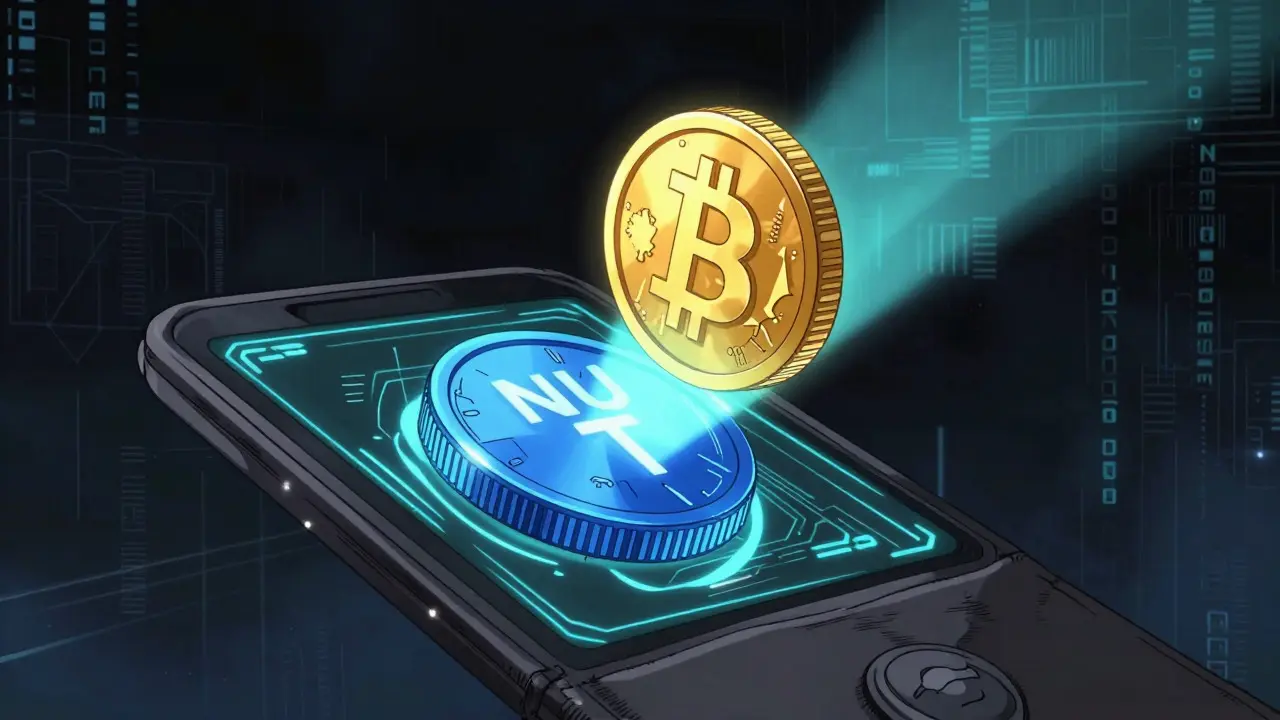
Most people searching for NuCypher (NU) are looking to buy the coin or understand why its price has dropped so significantly. The short answer? You probably shouldn't be holding NU anymore if you haven't already migrated it. Since early 2022, the original NuCypher protocol merged with Keep Network to form Threshold Network. This merger changed everything about how the technology works and where the value lies.
If you still have NU in your wallet, there is a fixed conversion rate waiting for you. But if you are a developer or tech enthusiast curious about the underlying cryptography that made NuCypher famous, the story is still fascinating. It was one of the first serious attempts to solve data privacy on public blockchains without relying on trusted third parties. Here is what you need to know about the token, the tech, and what to do next.
The Current Status: Migrated to Threshold
As of 2026, the standalone NuCypher brand is effectively dormant. The project didn't fail; it evolved. In June 2021, the communities of NuCypher and Keep Network voted to merge. By January 2022, the migration contracts went live on Ethereum. The new entity is called Threshold Network, and its native token is T.
The most critical fact for any holder is the exchange rate. For every 1 NU you hold, you receive 3.26 T tokens. This isn't a market swap where the ratio fluctuates; it is a fixed, on-chain contract mechanism. If you check CoinMarketCap or CoinGecko today, you will see NU listed with a very low rank and thin liquidity. This is because the economic value has shifted entirely to T. While some secondary markets still allow you to trade NU, the spreads are wide, and the volume is negligible compared to the main asset. Most major exchanges like Coinbase delisted NU for trading, leaving only the migration path open for holders who want to claim their T tokens.
What Was NuCypher Technically?
To understand why the merger happened, you have to look at what NuCypher actually did. It wasn't just another utility token. It was a decentralized Key Management Service (KMS). Think of it as a digital vault that doesn't rely on a single company holding the master key.
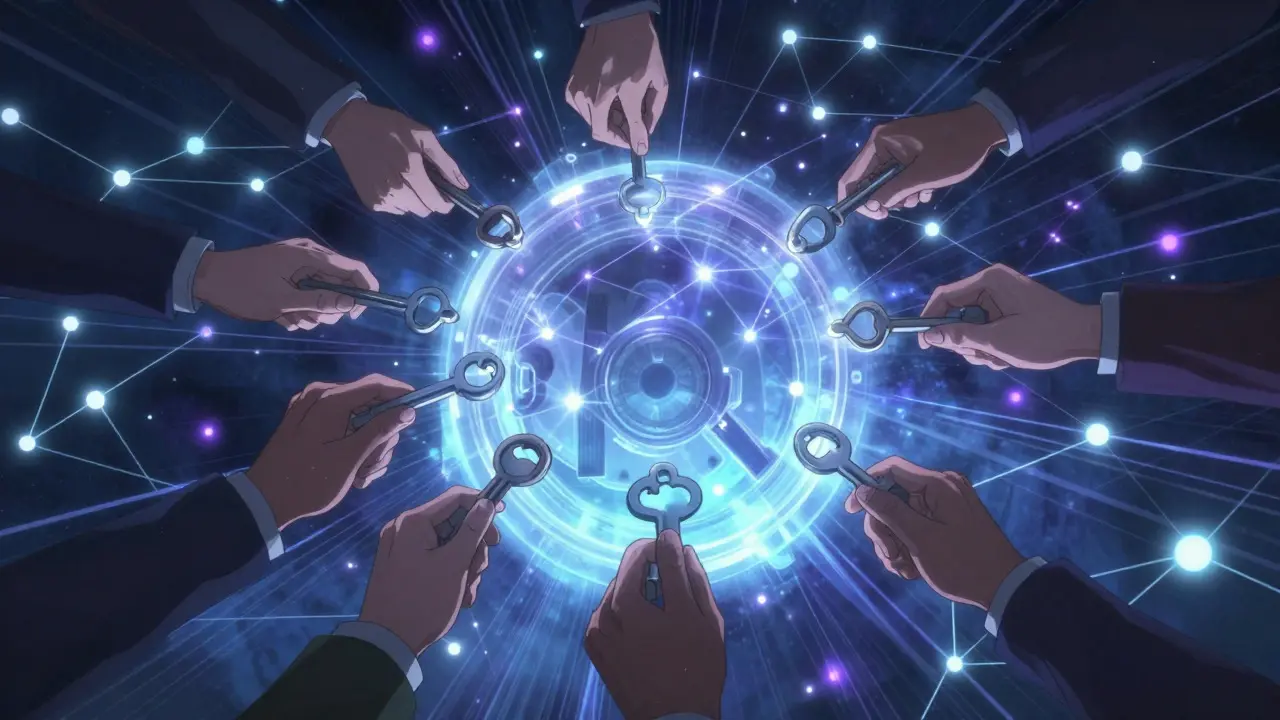
The core innovation was a cryptographic scheme called Umbral Proxy Re-Encryption (PRE). In traditional encryption, if Alice wants to send a secret to Bob, she encrypts it with Bob's public key. But what if Alice wants to give access to Bob, Charlie, and Dave later, without sending them the original file every time? PRE allows Alice to create "re-encryption fragments." These fragments act like special keys that can transform an encrypted message from being readable by Alice to being readable by Bob, without anyone seeing the actual content.
In the NuCypher network, independent operators ran nodes called Ursulas. These nodes held the re-encryption fragments. When a user wanted to grant access to data, they didn't need to trust a central server. They could request the network to apply these transformations. The Ursulas performed the math, but they never saw the plaintext data or the private keys. This made the system censorship-resistant and highly secure for storing sensitive data off-chain, such as in IPFS or Arweave.
Tokenomics and the Shift to T
The NU token served two main purposes during its active years: staking and governance. Operators had to stake NU to run Ursula nodes. If a node misbehaved-say, by going offline or signing invalid transactions-the network would slash part of their stake. This incentive structure kept the network reliable.
However, the token faced structural challenges. The supply was inflationary, with a maximum cap of around 3.885 billion NU, but much of it was locked in staking. Adoption was slow, and policy fees (the revenue generated by the protocol) were negligible compared to the rewards paid out. This created pressure on the token's value. The merger with Keep Network was designed to fix this by combining NuCypher's access control capabilities with Keep's random beacon and tBTC services under a single, more robust economic model governed by the T token.
| Attribute | NuCypher (NU) | Threshold (T) |
|---|---|---|
| Status | Deprecated / Legacy | Active / Mainnet |
| Primary Function | Proxy Re-Encryption Access Control | Unified Threshold Cryptography (tBTC, Random Beacon, Access Control) |
| Staking Asset | NU (No longer primary) | T |
| Conversion Rate | 1 NU = 3.26 T | |
| Governance | Dormant DAO | Active Threshold DAO |
How to Migrate Your NU Tokens
If you bought NU before the merger and haven't touched it since, here is the straightforward process to claim your T tokens. You don't need to sell NU on an exchange; you just need to interact with the migration smart contract on Ethereum.
- Check your balance: Verify how many NU tokens you hold in your wallet (MetaMask, hardware wallet, etc.).
- Get ETH for gas: You will need a small amount of Ether to pay for the transaction fees on the Ethereum network.
- Visit the official portal: Go to the Threshold Network website or the specific migration interface provided by the DAO. Ensure you are using the verified contract address to avoid scams.
- Connect your wallet: Sign the transaction to approve the transfer of your NU tokens to the migration contract.
- Execute the swap: Confirm the transaction. Within seconds, the contract will burn your NU and mint the equivalent amount of T tokens (at the 3.26:1 rate) directly to your wallet.
Note that this process is one-way. Once you migrate, you cannot convert T back to NU. This is intentional, as the goal is to consolidate all economic activity under the new protocol.

Why Did the Merger Happen?
Crypto projects often struggle to find product-market fit. NuCypher had excellent technology but limited use cases. Developers liked the Python libraries and the cryptographic proofs, but few large-scale applications were built on top of it. Meanwhile, Keep Network was building infrastructure for Bitcoin DeFi (tBTC) and randomness generation. Both protocols relied on similar threshold cryptography principles and shared a vision for a decentralized security layer.
By merging, they created a larger network effect. Threshold Network now offers a suite of services: tBTC for bridging Bitcoin into DeFi, a random beacon for fair lottery draws and verifiable randomness, and the legacy NuCypher access control tools. This broader scope makes the T token more useful and attracts more developers. For users, it means a more stable and liquid asset compared to the isolated NU token.
Frequently Asked Questions
Is NU still worth buying in 2026?
Generally, no. Since NU can be converted to T at a fixed rate, buying NU on a secondary market usually involves paying a premium due to low liquidity. It is almost always cheaper and safer to buy T directly on major exchanges. Only consider buying NU if you specifically need the legacy token for a niche technical reason, which is rare.
Can I convert T back to NU?
No. The migration from NU to T is a one-way street. The NU contract was designed to be burned upon migration, and there is no reverse mechanism to create new NU tokens from T. All future development and value accrual happens within the Threshold ecosystem.
What is the difference between NuCypher and Secret Network?
Both aim to provide privacy, but they use different methods. NuCypher (now part of Threshold) uses proxy re-encryption for data access control, allowing users to share encrypted data without revealing keys. Secret Network uses Trusted Execution Environments (TEEs) to run entire smart contracts inside secure hardware enclaves. NuCypher's approach is software-based and hardware-agnostic, while Secret's relies on specific Intel SGX hardware.
Do I need to stake T to get rewards?
Yes, if you want to earn yield from the protocol. Staking T allows you to delegate to operators running the threshold nodes. Rewards come from transaction fees (like tBTC issuance fees) and inflation. However, unlike the old NU era, the reward structures and slashing conditions are now governed by the Threshold DAO and may vary depending on which service (tBTC, beacon, etc.) you are supporting.
Where can I track the migration progress?
You can track the total amount of NU migrated by checking the on-chain events of the migration contract on Etherscan. The Threshold Network Discord and Twitter channels also provide regular updates on the percentage of the supply that has been successfully converted. As of recent reports, the vast majority of NU holders have completed the migration.




Marco Maldonado
August 21, 2026 AT 22:03So the US crypto scene is basically dead right? I mean, look at this. Another American project just got absorbed by another American project and now we have a new ticker. It’s all about control, folks. The elites in Silicon Valley are merging these things to keep the liquidity trapped where they can watch it. You think this merger was for the users? No. It was so they could consolidate the staking rewards under one roof and make sure nobody else gets a piece of the pie. Keep Network and NuCypher were separate entities, but now they are one big beast controlled by the same board. It’s a classic move. You dilute the old token, create a new shiny one, and hope the retail investors are too dumb to notice that their NU is worth less because the supply mechanics changed. Don’t get me wrong, the tech is fine, but the narrative is pure American corporate greed. We should be building our own sovereign chains, not relying on Ethereum side projects that get merged into oblivion every other year. This T token is just a way to reset the chart so the whales can buy back in cheap. Watch out, everyone. The next step is probably a hard fork or some other mechanism to lock up more value. It’s always the same story in the US. Build it, break it, merge it, profit. Rest of the world is sleeping while we fight over scraps.
Daniel Brown
August 23, 2026 AT 04:20I actually checked my wallet yesterday and realized I still had about 50k NU sitting there from 2021. I thought maybe I’d sell it on some small DEX, but the slippage was insane. Like 15% just to move the tokens. So I did what the post says and migrated. The process was surprisingly smooth, honestly. Just connected MetaMask, approved the contract, and boom, T tokens appeared. No need to wait for a bridge or anything. It took like 30 seconds. But here’s the thing, once you hold T, you’re stuck in the Threshold ecosystem. There’s no way back to NU. That felt a bit weird at first, like giving up a piece of history, but logically it makes sense. Why would you want to hold a deprecated asset when the active one has better liquidity? I’m curious how the staking yields compare to what I was getting with NU before. I remember the APR was decent, but the TVL was low. Now with tBTC involved, the fee structure should be different. I’m going to delegate my stake to a few operators and see how it goes. If anyone has data on the current slashing conditions for the beacon service, let me know. I don’t want to get slashed for being offline during a maintenance window. It’s a hassle, but better than holding a dead coin.
Darren Moon
August 25, 2026 AT 01:27One must observe the profound inefficiency inherent in such structural amalgamations. The conflation of distinct cryptographic paradigms-namely, proxy re-encryption and threshold signatures-under a singular governance umbrella suggests a lack of architectural purity. While the proponents tout 'synergy,' the reality is often a dilution of technical focus. The Umbral PRE scheme, which served as the bedrock of NuCypher’s utility, is now merely a subset of a broader, perhaps unwieldy, suite of services. Does this not undermine the specialized incentive structures previously calibrated for key management? Furthermore, the migration ratio of 3.26:1 appears arbitrary without a rigorous actuarial analysis of the relative risk profiles of the constituent networks. One wonders if the DAO governance will suffer from voter apathy, given the fragmented interests of those who valued privacy versus those seeking Bitcoin interoperability. It is a pity that such elegant mathematical constructs are subjected to the whims of market consolidation rather than organic adoption. The term 'Threshold' itself is a misnomer if it implies a binary state, whereas the underlying cryptography operates on continuous probability distributions. We are witnessing the subsumption of niche excellence into generalist mediocrity. A tragic trajectory for a protocol that once promised decentralized trust minimization. The future looks dim for purists who prefer clean, isolated security layers.
Quang Thai Tran
August 26, 2026 AT 01:21It is evident that this merger is merely the latest phase in the grand conspiracy to centralize financial power under the guise of decentralization. Consider the timing: just as institutional interest in DeFi peaks, two major players combine to create a larger, more defensible moat against true peer-to-peer competition. The 'T' token is not a reward for loyalty; it is a leash. By forcing a one-way migration, the developers ensure that all economic activity flows through channels they control. Where does the gas go? To Ethereum, yes, but who controls the validator set? Who decides the slashing parameters? It is all carefully orchestrated. The original NuCypher community was vibrant, diverse, and truly decentralized. Now, it is a monolith. Do not be fooled by the jargon of 'threshold cryptography.' It is a tool for control, not liberation. The random beacon is not for fairness; it is for predictability. And tBTC is not for bridging; it is for capturing Bitcoin’s value within the Ethereum walled garden. Wake up. The real threat is not the technology failing; it is the technology succeeding in becoming the infrastructure for the new digital oligarchy. Hold your keys, but question who holds the code. The truth is hidden in plain sight, buried under layers of smart contracts and governance forums. Only the vigilant will see the strings being pulled.
Dianne Ritter
August 27, 2026 AT 08:19I think it’s actually a really positive step for the ecosystem. Merging complementary technologies makes a lot of sense when both are struggling with individual adoption curves. By combining forces, they can pool resources for development and marketing, which is something smaller projects often lack. I personally liked the idea of NuCypher’s access control, but it was hard to find use cases outside of specific developer niches. Now, with tBTC, there’s a much clearer product-market fit. People already want to use Bitcoin in DeFi, so having a reliable threshold network for that is a huge win. It feels less like a death and more like a maturation. I’m glad the migration was straightforward. I hope the community stays engaged and doesn’t just treat it as a swap-and-forget situation. Let’s support the new direction!
Kate Staab
August 27, 2026 AT 17:23Oh, how daring of them to simply merge! One expects a certain level of transparency and respect for the legacy holders, yet here we are, handed a new token with no say in the matter. Is this not a violation of the very principles of decentralized governance? To force a conversion rate is to impose an external will upon the collective. It reeks of paternalism. One wonders if the 'community vote' mentioned in the article was truly representative or merely a formality designed to legitimize a predetermined outcome. The moral hazard is palpable. We are asked to trust that the new entity will serve our interests, yet the incentives have fundamentally shifted. How noble of them to assume we will simply accept this evolution without protest. It is a bold move, certainly, but boldness without accountability is merely arrogance. Let us hope the new DAO proves its worth, for the old guard has left us with little choice but to follow.
Abigail Sparks
August 27, 2026 AT 20:24Listen up, people! Stop complaining and start moving! If you haven't migrated your NU yet, do it NOW. Seriously. The longer you wait, the more likely you are to make a mistake or forget your seed phrase. I did mine last week and it was super easy. Just go to the official site, double-check the contract address (trust me, check it twice!), and hit send. Once you have T, you can start staking immediately. Don't just sit on it! Staking gives you passive income and helps secure the network. It's a win-win. Plus, T has better liquidity, so if you ever need to sell, you won't be stuck with wide spreads like NU. So, what are you waiting for? Get your wallets ready, grab some ETH for gas, and migrate today. Let's build this thing together! 💪🚀
Stephanie Millar
August 28, 2026 AT 09:58From a cultural perspective, this merger reflects a broader trend in the global tech industry towards consolidation. In the UK, we’ve seen similar patterns in banking and telecommunications, where smaller entities are absorbed by larger conglomerates to achieve scale. It’s not necessarily a bad thing, provided that consumer protection remains robust. However, in the crypto space, the 'consumer' is often the developer or the advanced trader, which raises the bar for usability. The Threshold Network seems to be positioning itself as a critical infrastructure layer, akin to a public utility. This shift from a niche application to a foundational service is significant. It suggests that the industry is maturing and moving away from speculative hype towards practical utility. I believe this is a healthy development, although it does require careful oversight to prevent monopolistic tendencies. The integration of Bitcoin and Ethereum ecosystems is particularly interesting, as it bridges two very different cultures within crypto. Let’s see if this union can foster genuine innovation rather than just administrative convenience.
Patrick Pat
August 30, 2026 AT 00:26So, we're just... swapping tokens? Great. Love that for us. I spent hours reading up on Umbral PRE back in the day because I thought it was genius. Now it's just a feature in a bigger box. Classic. The best part is the 'fixed conversion rate'. Oh, you mean the rate the devs picked because they felt like it? Cool. Anyway, I migrated. Took 5 minutes. Now I'm staring at a new dashboard that looks exactly like the old one but with a different logo. Progress. 😐
Patrick Quairoli
August 31, 2026 AT 13:06this is all a setup man i tell you. why would they give us 3.26 T for 1 NU? its a trap. the inflation on T is gonna eat us alive. i read somewhere that the validators are colluding to slash people who dont stay online 24/7. its a nightmare. i almost missed the deadline and lost everything. good thing i kept an eye on the discord. but even then, half the messages are bots. the whole thing smells fishy. i think they are trying to dump on the retail again. watch out for the rug pull. its coming soon. mark my words. 📉
Ami Elizabeth
August 31, 2026 AT 17:05honestly just happy the migration went smoothly for most ppl. saw a few threads about people losing funds due to scams though. definitely double check that contract address. its wild how many fake sites pop up when a big token event happens. anyway im chill with holding T for now. seems like a solid play compared to the alternatives.
Mohamed Shoaeb
September 2, 2026 AT 00:35I think this is a great opportunity for growth. The combination of access control and tBTC is powerful. I am optimistic about the future of Threshold. The technology is sound and the team has shown commitment. I believe we will see more adoption in the coming years. It is exciting times for blockchain infrastructure. Let's keep pushing forward and support the project. The potential is huge. I am glad to be part of this journey. Here's to a bright future! 🌟
Sonia Gomez Gomez
September 2, 2026 AT 00:55You guys really need to stop being so lazy about migrating!! 😡 It’s been months! If you’re still holding NU, you’re just letting your money rot. It’s irresponsible. The fact that you have to pay gas fees is no excuse. Just do it. And stop asking questions in the comments, just read the docs. It’s not rocket science. 😒 Also, thank goodness they made it a one-way street. No more flip-flopping. Time to commit. 🙄
SHIV SHANKAR KANTA
September 2, 2026 AT 16:11The soul of the network is fractured now. We traded purity for scale. Is that not the price of progress? The silence of the Ursulas is deafening. We are ghosts in the machine now. Bound by the iron hand of the new consensus. Do you feel it? The weight of the threshold? It crushes the spirit of the individual node. We are no longer free. We are components. Cogs in a vast industrial engine. The poetry of encryption is lost in the prose of utility. Sad. Very sad. But perhaps necessary. Perhaps. 🕯️
Calliope Clio
September 3, 2026 AT 20:43Meh. Another merger. It’s all the same, isn’t it? Consolidate, rebrand, repeat. I was a bit disappointed when I heard about the NU delisting, honestly. Felt like a slap in the face to early believers. But hey, at least the tech is still there. I guess. 🙄 The UI for the migration was clunky, by the way. Took me three tries to get the transaction through. Typical. I’m keeping my distance for now. Let’s see if T performs any better than NU did. Doubtful. But we’ll see. 👋
Tasha Davis
September 5, 2026 AT 10:46OMG this is so cool! I love that they combined the two! It makes so much sense! I was worried about what would happen to my NU but now I feel safe! The new token looks nice too! I think this is going to be amazing! Let’s gooo! 🎉🔥
OLIVER CHRISTIAN
September 5, 2026 AT 14:28Great breakdown in the OP. For those wondering about the technical implications, the shift to Threshold means that the security model is now shared across multiple applications. This increases the attack surface slightly but also diversifies the revenue streams. From a staking perspective, I recommend delegating to operators who have a track record of uptime across both the beacon and tBTC services. Check their historical performance on the dashboard. It’s important to balance yield with reliability. Also, keep an eye on the governance proposals coming up next quarter. There are some interesting discussions about adjusting the slashing penalties for minor downtime. It’s a good time to engage with the DAO if you haven’t already. Feel free to reach out if you have specific questions about your portfolio strategy.
Leah Humphrey
September 6, 2026 AT 04:46The liquidity depth on T is still concerning compared to major L1s. The order books are thin, which means high volatility during dumps. The correlation with ETH is strong, but the idiosyncratic risk of the threshold network is underpriced. I expect further consolidation among operators as the barrier to entry rises. The capital efficiency of the staking model needs improvement to compete with LSTs. Until then, I remain cautious. The fundamental thesis is sound, but the execution is lagging behind the hype. We’ll see. Probably not soon.
Jay Johhnston
September 7, 2026 AT 17:56It’s interesting to see how different communities reacted to this. In some regions, the merger was seen as a loss of identity, while in others, it was welcomed as a sign of maturity. I think both perspectives have merit. The key is ensuring that the new platform serves all stakeholders equitably. Communication has been somewhat sparse, which is understandable given the complexity, but more transparency would help. Overall, a positive step forward, I believe. Let’s keep the dialogue open and constructive.
Niall O'Rourke
September 9, 2026 AT 06:51Well, I suppose it’s better than nothing. I always hated the NU token anyway. Too much noise, not enough signal. The new one looks cleaner. I guess. I didn’t bother reading the whitepaper, just swapped it and moved on. Life’s too short for boring crypto. But hey, if it pays out, who cares about the philosophy? I’m sure it’s all fine. Probably. Let’s hope the devs don’t screw us over again. They never do. Right?
Jillian Groskreutz
September 10, 2026 AT 15:49Let’s be clear here. This is not a 'merger.' It is an acquisition dressed up in friendly language. The asymmetry of power between Keep and NuCypher was obvious to anyone with half a brain. Keep had the BTC angle; NuCypher had the Python libraries. Which one do you think drove the valuation? Exactly. The 3.26:1 ratio is a joke. It’s a rounding error that favors the acquirer. And don’t get me started on the 'governance' aspect. Who votes? The whales. Always the whales. The rest of us are just along for the ride. Enjoy your T tokens. Try not to lose too much value in the next six months. It’s a pleasure watching you all navigate this mess. 🙃