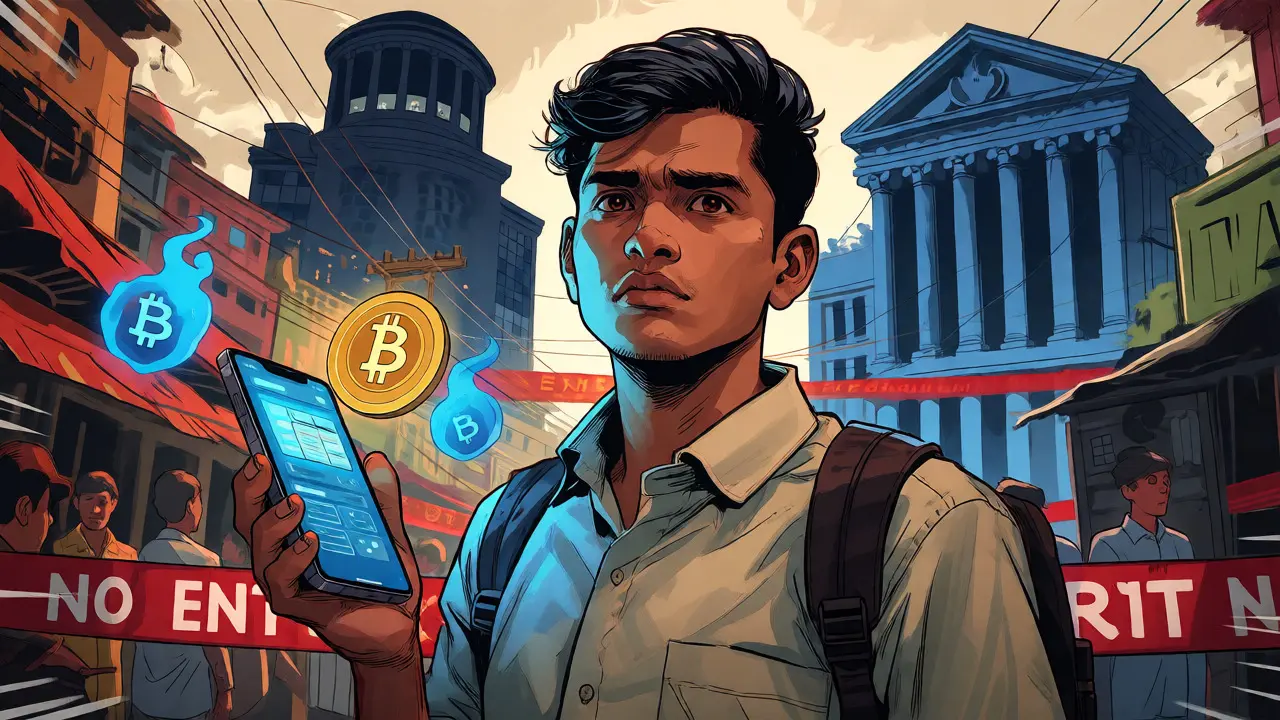
Imagine trying to buy a loaf of bread in a city where baking is illegal. You wouldn't just pay the standard price; you'd pay for the baker's risk of getting caught, the scarcity of the flour, and the trouble of finding someone trustworthy. Now, replace that bread with Bitcoin or Ethereum, and the bakery with a smartphone app. This is the reality of underground crypto market premiums, which are the extra costs users pay to access digital assets in countries where ownership or trading is prohibited. As we move through 2026, these premiums aren't just theoretical concepts-they represent real money lost by everyday people trying to navigate financial exclusion or censorship.
When governments ban cryptocurrency, they don't kill demand. They just push it into the shadows. In places like China, Afghanistan, and Egypt, the gap between the global spot price of Bitcoin and what a local user actually pays can be staggering. These premiums reflect more than just supply and demand; they are a direct measure of regulatory fear, enforcement severity, and technological friction. Understanding how these markets work helps us see the true cost of prohibition and the resilience of decentralized finance.
How Underground Crypto Premiums Actually Work
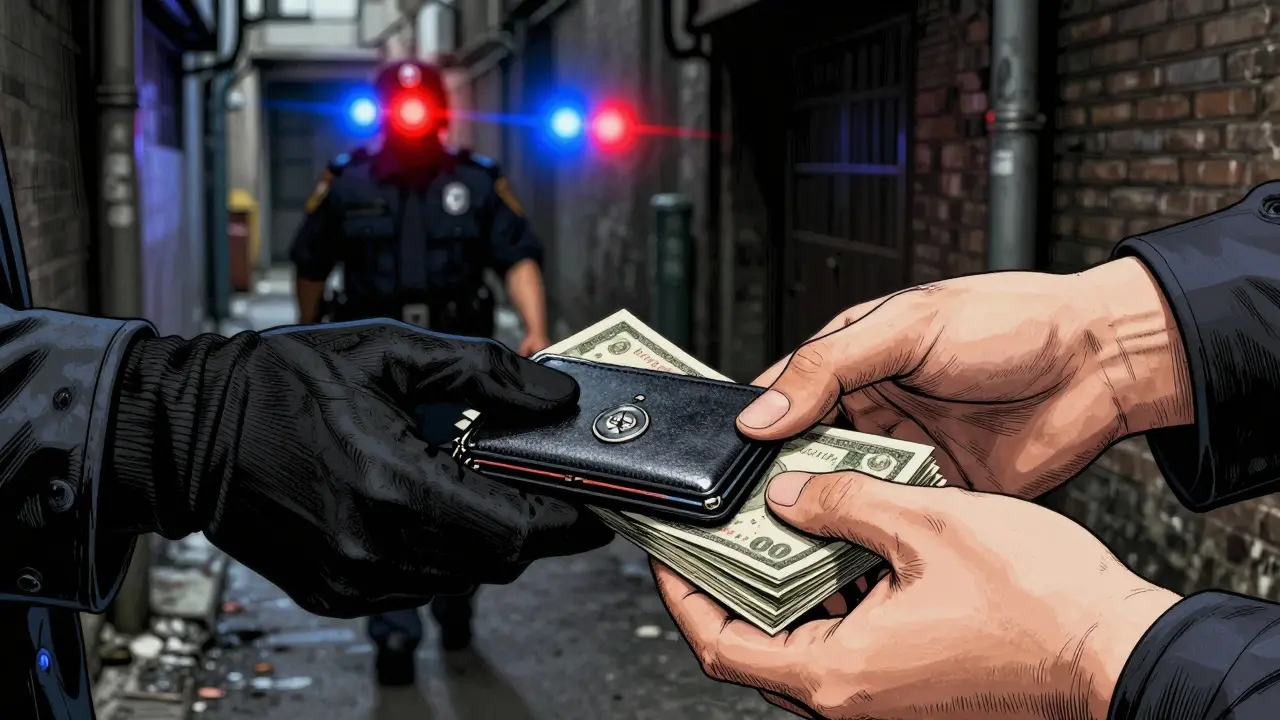
To understand why prices spike in banned regions, you have to look at the economics of risk. In a free market, if Bitcoin trades at $60,000 globally, you should be able to buy it for roughly that amount, minus small fees. But in a banned jurisdiction, the seller faces three major threats: arrest, asset seizure, and social stigma. To compensate for this danger, they charge a premium.
This premium acts as an insurance policy for the seller. If there’s a 10% chance they get raided by authorities, they need to price that risk into every transaction. Additionally, liquidity dries up. On legitimate exchanges like Coinbase or Binance, millions of orders sit ready to match yours instantly. In an underground peer-to-peer (P2P) network, you might wait hours for a counterparty, forcing buyers to accept worse rates just to close the deal quickly. The result is a bid-ask spread that can widen from fractions of a percent to double digits.
Let’s break down the components of this hidden cost:
- Risk Compensation: Sellers charge extra to cover potential legal penalties or confiscated funds.
- Liquidity Discount: Fewer participants mean fewer competitive offers, allowing sellers to dictate higher prices.
- Trust Friction: Without regulated intermediaries, verifying identity requires costly manual checks or reputation systems, adding overhead.
- Technology Costs: Using privacy tools like VPNs, Tor, or air-gapped hardware wallets adds operational expenses that get passed on to the buyer.
It’s not just about greed; it’s basic survival math for those operating outside the law. When you add these layers together, a user in a restricted country might pay 15% to 30% more than someone in London or New York for the exact same asset.
The Landscape of Bans in 2026
Not all bans are created equal. Some countries outlaw mining but allow holding coins, while others criminalize mere possession. The strictness of the law directly correlates with the size of the underground premium. Let’s look at the key players shaping this shadow economy in 2026.
China represents the gold standard of prohibition. After passing sweeping legislation in May 2025 that criminalized personal ownership of cryptocurrencies, Beijing effectively erased any legal pathway for citizens to hold Bitcoin or Ethereum. With the state pushing its Central Bank Digital Currency (CBDC), the digital yuan, private crypto became synonymous with dissent. Because enforcement is so pervasive-utilizing AI-driven surveillance of bank accounts and blockchain analysis-the risk premium here is enormous. Users must rely on highly fragmented, trust-based networks, driving prices significantly above global averages.
Afghanistan offers a different case study. Under the Taliban regime, crypto has been declared "haram" (forbidden) under Sharia law since 2022. The Da Afghanistan Bank (DAB) and FinTRACA actively shut down exchanges and confiscate funds. However, enforcement is inconsistent due to limited technical resources. This creates a paradox: while the legal risk is absolute, the actual probability of being caught varies wildly by region. In urban centers like Kabul, premiums might be lower because enforcement is sporadic, whereas in stricter rural areas, the lack of any accessible infrastructure keeps prices volatile and high.
In contrast, emerging markets like Egypt and Nigeria operate in a gray zone. Egypt imposed a blanket ban but arrested over 100 individuals in 2025 for violations. Nigeria’s EFCC seized millions in crypto assets linked to cybercrime. These actions signal aggressive intent, yet daily life continues with significant crypto usage. Here, the premium isn’t driven solely by fear of jail, but by the cost of avoiding detection. Users pay for privacy-focused coins like Monero or Zcash, which often trade at a discount globally but may command a premium locally due to their utility in evading capital controls.
| Jurisdiction | Ban Type | Enforcement Severity | Premium Driver |
|---|---|---|---|
| China | Total Ownership Ban | Very High (AI Surveillance) | Extreme Risk Compensation |
| Afghanistan | Religious/Economic Ban | Moderate/Inconsistent | Infrastructure Scarcity |
| Egypt | Trading Ban | High (Arrests) | Trust & Verification Costs |
| Nigeria | Partial Restrictions | Moderate (Seizures) | Capital Control Evasion |
Why Privacy Coins Command Higher Rates
In open markets, privacy coins like Monero (XMR) and Zcash (ZEC) often trade below Bitcoin because they are harder to use and less liquid. Flip that script, and you get a fascinating anomaly: in banned jurisdictions, privacy coins can trade at a *premium* relative to their global baseline. Why? Because anonymity is the product.
If you live in a country where owning Bitcoin is a crime, you don’t want your transaction recorded on a public ledger that the government can trace back to your wallet. You want something untraceable. This demand for fungibility drives up the price of Monero locally. A user might be willing to pay 20% more for XMR than the global average because that coin offers a layer of protection that Bitcoin cannot provide without complex mixing services.
This dynamic also affects how transactions happen. Instead of using centralized exchanges, users turn to decentralized exchanges (DEXs) or atomic swaps. These methods remove the middleman but introduce complexity. For the average person, setting up a node or understanding smart contract interactions is daunting. So, local "brokers" emerge-individuals who facilitate these trades for a fee. This human element adds another layer to the premium, turning technology into a service industry built on secrecy.
The Role of Peer-to-Peer Networks
Peer-to-peer (P2P) platforms have become the lifeline for crypto adoption in restricted regions. Platforms like LocalBitcoins (before its closure) or current alternatives like Paxful and HodlHodl allow users to trade directly with each other. In banned jurisdictions, these platforms transform into underground bazaars.
Here’s how the process typically unfolds:
- Finding a Counterparty: A buyer searches for a seller within their specific city or region to minimize travel risk.
- Negotiation: Prices are negotiated manually. The seller lists a rate that includes their risk premium.
- Escrow: A trusted third party (often the platform itself, though risky in banned zones) holds the crypto until payment is confirmed.
- Payment Method: Cash deposits, mobile money transfers, or even gift cards are used to avoid banking trails.
- Release: Once the seller confirms receipt, the crypto is released from escrow.
The vulnerability in this chain is step four. If banks freeze accounts associated with crypto payments, sellers will raise their prices to offset the hassle of dealing with frozen funds. In Nigeria, for instance, the suspension of bank accounts for crypto-related activity has forced many traders to switch to cash-only deals, which increases the physical risk of carrying large sums of money. That physical risk gets baked into the final price you pay.
Technological Workarounds and Their Costs
Technology is both the enabler and the expense in underground markets. To bypass internet censorship, users in countries like China or Iran often rely on Virtual Private Networks (VPNs) or the Tor network. While these tools are cheap individually, the cumulative cost of maintaining secure, anonymous connections adds up.
Furthermore, hardware security becomes paramount. Using a smartphone connected to a monitored network is dangerous. Many serious holders invest in air-gapped laptops or specialized hardware wallets that never touch the internet. These devices cost hundreds of dollars upfront. When you amortize that cost over a few transactions, it contributes to the effective premium of entering the market.
Cross-border transfers also play a role. A user in Afghanistan might send fiat currency to a friend in Dubai via hawala (an informal value transfer system), who then buys crypto and sends it back digitally. The hawala operator charges a fee for this service, and the crypto sender charges a fee for the convenience. Each hop in this chain extracts a toll, widening the gap between the local price and the global market rate.
Risks Beyond the Price Tag
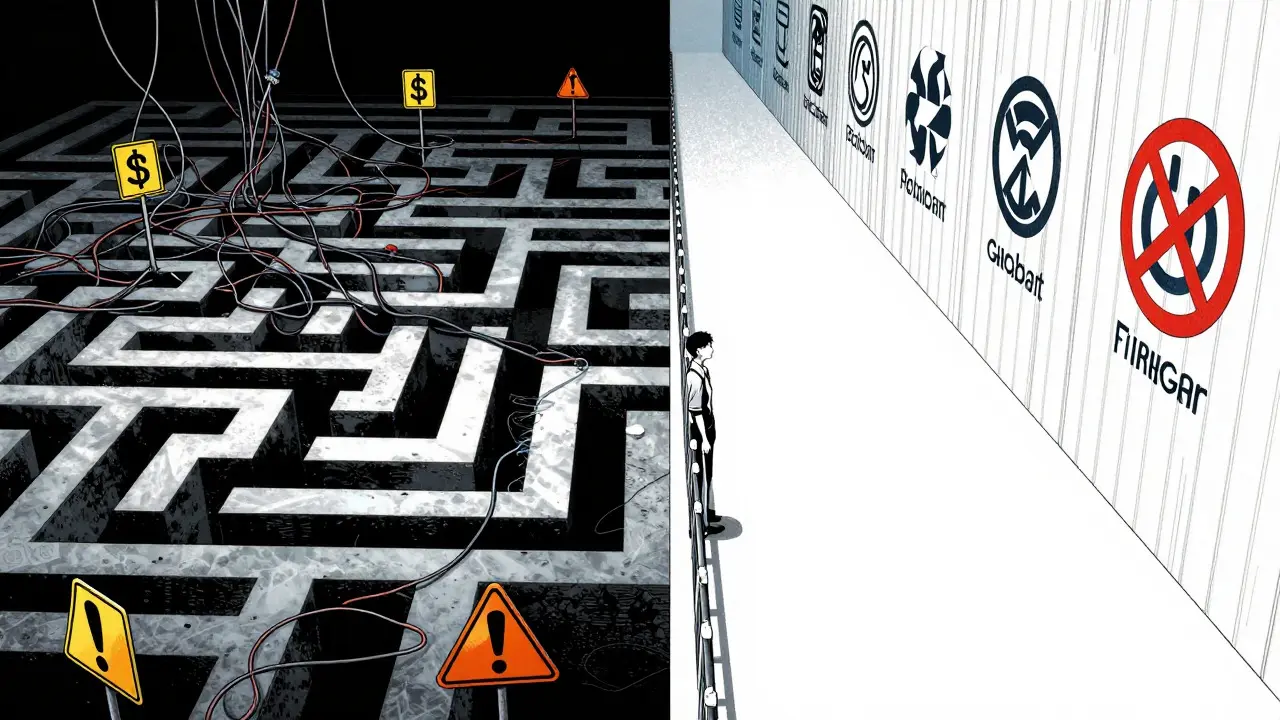
When you focus on the premium, it’s easy to forget the non-financial risks. Paying 25% more for Bitcoin is expensive, but losing everything to a scam is catastrophic. Underground markets thrive on information asymmetry. Sellers know more about the safety of a transaction than buyers do.
Common pitfalls include:
- Exit Scams: Fake P2P ads luring users into sending cash before releasing crypto that doesn’t exist.
- Law Enforcement Stings: Authorities sometimes pose as buyers to track down sellers. If you’re the one initiating the contact, you might walk right into a trap.
- Chain Analysis: Even if you buy privately, if you later move those coins to a regulated exchange, sophisticated analytics firms can link your address to previous illicit activity, leading to de-listing or reporting.
These risks mean that the "true cost" of crypto in banned jurisdictions isn't just the monetary premium-it's the constant vigilance required to stay safe. It’s a mental tax that no spreadsheet can capture.
What the Future Holds
As of mid-2026, the regulatory landscape is shifting. The Financial Action Task Force (FATF) has pushed 99 jurisdictions toward clearer crypto laws. This globalization of regulation could squeeze underground markets further. As compliance becomes cheaper and easier in neighboring countries, arbitrage opportunities might shrink, potentially lowering premiums in some regions. Conversely, if nations like China tighten their digital yuan integration even further, the black market for private crypto could become more entrenched and expensive.
For now, the underground crypto market remains a testament to human ingenuity under pressure. People will find ways to transact, to save, and to escape economic restrictions. But they will pay for that freedom, whether in cold hard cash, in risk, or in the silent premium added to every satoshi they acquire.
What is a typical crypto premium in a banned country?
While exact figures vary daily, premiums in heavily restricted jurisdictions like China or Afghanistan can range from 15% to over 30% above the global spot price. In less strictly enforced areas, premiums might be closer to 5-10%, reflecting lower operational risks.
Why do privacy coins like Monero trade higher in banned regions?
Privacy coins offer enhanced anonymity, which is crucial in countries where crypto ownership is illegal. The demand for untraceable assets drives up their local price relative to transparent coins like Bitcoin, creating a localized premium for fungibility.
Is it safer to use P2P platforms or DEXs in banned jurisdictions?
Decentralized Exchanges (DEXs) offer better privacy as they don't require KYC (Know Your Customer) data, but they are technically complex. P2P platforms are easier to use but often require identity verification, increasing exposure to regulatory scrutiny. The safest option depends on the user's technical skill and local enforcement capabilities.
How does China's 2025 ban affect global crypto prices?
China's ban primarily affects local underground markets rather than global spot prices. However, reduced liquidity from Chinese investors can cause short-term volatility. The main impact is seen in the massive premiums paid by Chinese citizens seeking to retain access to global assets.
Can I avoid paying premiums by using a VPN?
Using a VPN allows access to global exchanges, but most reputable platforms still require ID verification (KYC). If your IP address or bank account reveals your location, you risk account closure. Therefore, while VPNs help, they don't fully eliminate the need for underground channels if local banking is blocked, meaning premiums often persist.