
Imagine walking into a bank and asking to borrow $1 million. You have no collateral, no credit score, and no job offer in hand. In the traditional world, the manager would laugh you out of the building. But in decentralized finance (DeFi), this happens every second. It’s called a flash loan, which is an uncollateralized loan that must be borrowed and repaid within a single blockchain transaction. If you fail to pay it back instantly, the entire transaction vanishes as if it never happened.
This isn’t magic; it’s code. Flash loans are one of the most unique financial primitives ever created, existing only because of how blockchains handle data. They allow developers and sophisticated traders to access massive amounts of capital without risking their own funds. By mid-2026, these loans had facilitated over US$2 trillion in volume across Ethereum-compatible networks. Yet, for most people, they remain a mystery wrapped in technical jargon. Let’s strip away the complexity and look at how this mechanism actually works, who uses it, and why it matters.
The Core Mechanism: Atomic Transactions
To understand flash loans, you first need to understand atomicity, a property of blockchain transactions where an action is either completed entirely or not at all. There is no middle ground. Think of it like sending an email. Either the message arrives in your friend’s inbox, or it sits in your 'Outbox' forever. It doesn’t arrive halfway.
Flash loans rely on this all-or-nothing principle. When you initiate a flash loan, the smart contract checks three things before finalizing the transfer:
- You receive the requested assets (like ETH or USDC).
- You perform your intended action (like trading or rebalancing).
- You return the original amount plus a small fee before the transaction ends.
If step three fails, the blockchain reverts the state to exactly how it was before step one. The lender loses nothing because the loan technically never existed. This eliminates default risk for the lender, which is why they don’t require collateral from you. According to recent analysis by the Bank of Canada in early 2025, this structure creates a "zero default risk" environment that has no parallel in traditional banking systems.
Who Actually Uses Flash Loans?
You might think regular investors use flash loans to get quick cash. They don’t. Because the repayment must happen in the same block (roughly 12 seconds on Ethereum), humans are too slow to execute the strategy manually. Instead, the users are automated bots and smart contracts written by developers.
As of 2024, approximately 85% of flash loan activity comes from automated systems rather than individual manual trades. These bots execute strategies that profit from tiny inefficiencies in the market. Here are the three main jobs these bots do:
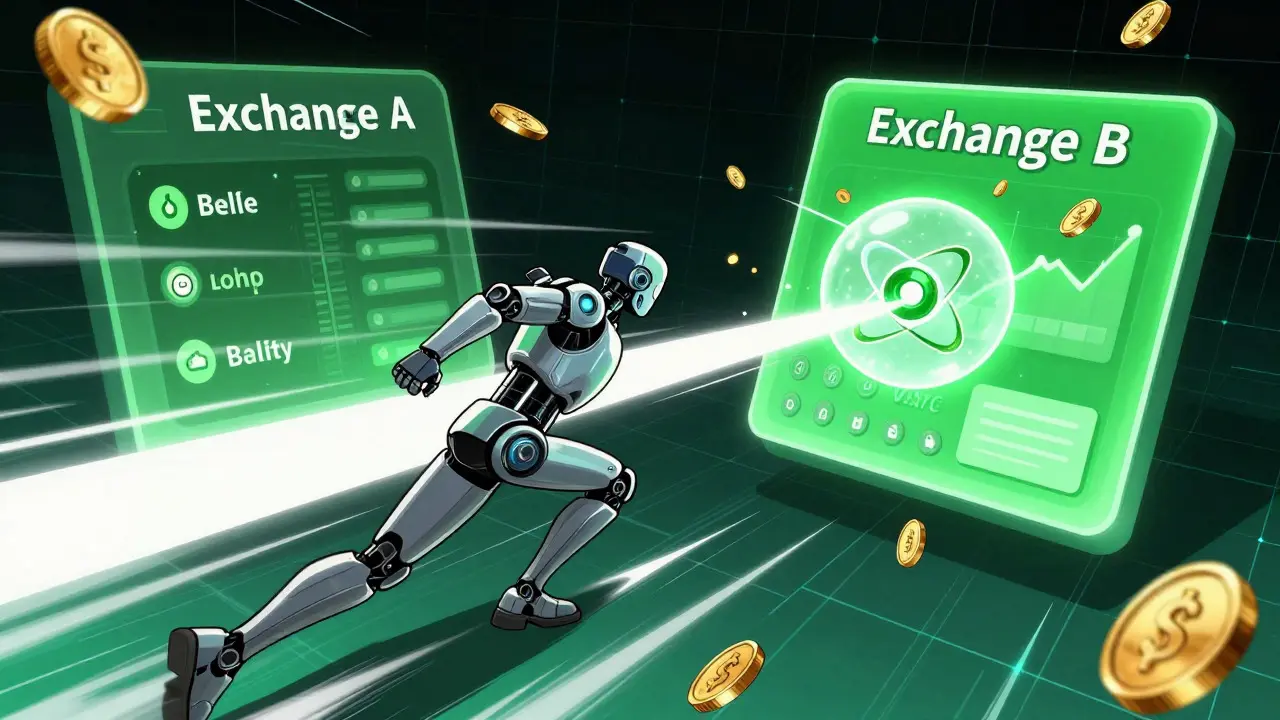
- Arbitrage: If Bitcoin is priced at $60,000 on Exchange A and $60,100 on Exchange B, a bot can borrow millions of dollars worth of BTC, sell it on Exchange A, buy it back on Exchange B, repay the loan, and keep the $100 difference per coin-all in one transaction.
- Collateral Swapping: Imagine you have a loan backed by ETH, but ETH price drops, putting you at risk of liquidation. Instead of adding more ETH, you can take a flash loan of USDC, pay off your ETH debt, swap the ETH for stablecoins, and end up with a safer collateral position without needing extra capital upfront.
- Self-Liquidations: If your position is about to be liquidated by a protocol, you can use a flash loan to pay off your debt yourself. This allows you to avoid the high penalty fees charged by liquidators, keeping more of your money.
How Much Does It Cost?
Since there is no interest rate based on time (because the time is zero), protocols charge a flat fee. This fee compensates the liquidity providers for the gas costs and opportunity cost of having their funds locked in the contract.
| Protocol | Fee Structure | Market Share (Approx.) | Key Feature |
|---|---|---|---|
| Aave | 0.09% of borrowed amount | ~47% | Industry standard, highest liquidity |
| Balancer | Variable based on pool weights | ~19% | Draws directly from custom liquidity pools |
| Uniswap V2 | 0.30% trading fee (Flash Swaps) | ~15% | Integrated directly into swap mechanics |
Aave remains the dominant player, handling nearly half of all flash loan volume. Their 0.09% fee means if you borrow $1 million, you pay $900 regardless of whether the transaction takes 1 second or 12 seconds. For large-scale arbitrageurs, this is incredibly cheap compared to traditional margin trading fees.
The Technical Barrier: Why You Can't Just Click a Button
One common misconception is that you can log into a website and click "Take Flash Loan." Currently, that interface doesn’t really exist for the average user. To use a flash loan, you typically need to write a smart contract in Solidity.
The developer documentation for Aave explicitly states that users "must have a good understanding of EVM, programming, and smart contracts." This is not a beginner-friendly tool. It requires knowledge of:
- Solidity Programming: Writing the logic that borrows, acts, and repays.
- Gas Optimization: Failed transactions still cost gas. If your code is inefficient, you’ll burn money on failed attempts.
- ERC-20 Standards: Understanding how tokens move between contracts.
For an experienced developer, setting up a basic flash loan script might take 2-5 days. For a novice, it could take months of learning. This high barrier to entry keeps the space dominated by professional teams and sophisticated bots, which is why retail investors rarely interact with them directly.
Security Risks: The Dark Side of Instant Capital
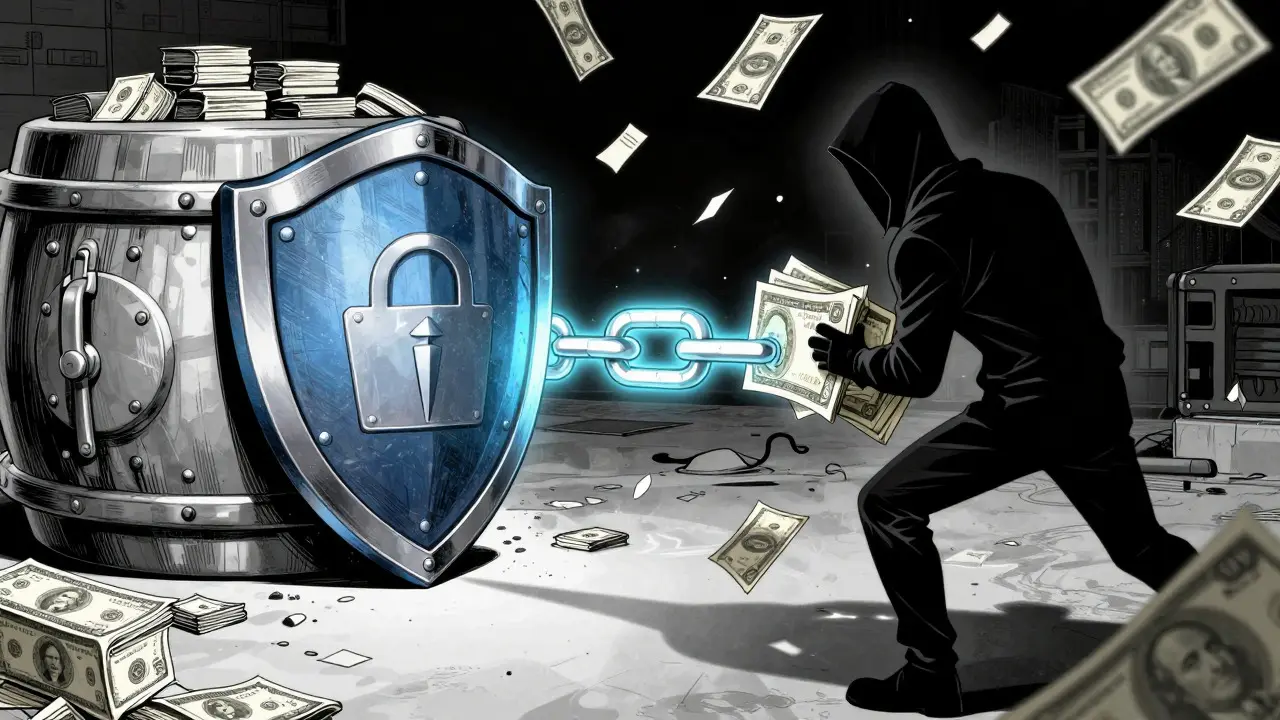
While flash loans are risk-free for lenders, they introduce new risks for the broader ecosystem. The ability to borrow hundreds of millions of dollars instantly makes them a powerful weapon for attackers.
In what are known as "flash loan attacks," malicious actors borrow huge sums to manipulate the price of an asset on a decentralized exchange. For example, an attacker might borrow enough DAI to crash the price of a specific token, then use that distorted price to drain funds from a lending protocol that relies on that price feed. Once the loot is secured, the loan is repaid, and the attack leaves little trace other than the drained funds.
Data from Amberdata in 2023 highlighted several such incidents where protocols lost millions due to poor oracle design rather than flaws in the flash loan mechanism itself. However, the industry is adapting. Aave’s v3 upgrade, released in late 2024, introduced enhanced security measures to mitigate some of these vectors. Additionally, cross-chain solutions like Chainlink’s CCIP are being developed to make these tools safer and more versatile across different blockchains.
Flash Loans vs. Traditional Lending
To truly appreciate flash loans, compare them to the alternatives:
- Traditional Bank Loans: Require credit checks, collateral, and weeks of processing. Flash loans require none of this but last only seconds.
- Standard DeFi Loans (e.g., MakerDAO): Require you to lock up collateral (like ETH) to borrow stablecoins. You pay interest over time. Flash loans require no collateral and no time-based interest, but demand instant repayment.
Flash loans aren’t better or worse; they serve a completely different purpose. They are a tool for efficiency and leverage in algorithmic trading, not for buying a house or funding a startup.
Future Outlook: Where Is This Going?
By 2026, flash loans have matured from a novelty into foundational infrastructure. The focus is now shifting toward abstraction. Developers are building interfaces that allow non-coders to trigger pre-set flash loan strategies, potentially lowering the barrier to entry. Furthermore, the integration of cross-chain capabilities means we may soon see flash loans moving assets between Ethereum, Solana, and other chains seamlessly.
However, regulators are watching. The Bank of Canada and other central banks continue to study the systemic implications of such high-leverage, uncollateralized instruments. While no specific bans have emerged, the scrutiny ensures that protocols must maintain rigorous security standards. For now, flash loans remain the engine room of DeFi efficiency, powering the markets behind the scenes.
Can I use a flash loan to get free money?
No. Flash loans are not a source of income. You must repay the loan plus a fee within the same transaction. If you cannot generate a profit through arbitrage or another strategy to cover the fee, the transaction will revert, and you will lose the gas fees paid to the network.
What is the maximum amount I can borrow?
There is no universal limit. The maximum depends on the available liquidity in the specific pool you are borrowing from. On major protocols like Aave, pools often contain hundreds of millions of dollars in assets, allowing for very large loans if the strategy supports it.
Do I need coding skills to use flash loans?
Currently, yes. Most flash loan interactions require writing and deploying a smart contract in Solidity. While some platforms are beginning to offer simplified interfaces for specific strategies, general-purpose flash loan usage remains a developer-centric task.
Are flash loans safe for lenders?
Yes, structurally they are very safe. Because of atomicity, if the borrower does not repay the loan plus the fee, the entire transaction is reverted. The lender never loses principal, though they may face risks if the underlying protocol is hacked via manipulation attacks.
Which cryptocurrencies can be used in flash loans?
Most major liquid assets are supported, including Ethereum (ETH), Wrapped Ether (WETH), Tether (USDT), USD Coin (USDC), and Dai (DAI). The availability depends on which assets are deposited in the liquidity pools of the protocol you are using.